Lost Legends: Exploring Extinct Dog Breeds of History
You're about to explore a world where extinct dog breeds tell tales of history and culture. Discover breeds like the English White Terrier, which succumbed to inbreeding, or the Hawaiian Poi Dog, lost to genetic dilution. The Talbot and Southern Hound excelled in tracking but vanished centuries ago. These dogs didn't just disappear—they influenced modern breeds, like how the Bullenbeisser contributed to today's Boxer. Extinctions highlight the need for conservation and genetic awareness. If you're curious about how these lost legends continue to shape our canine companions, there's much more to discover ahead.
Key Takeaways
- Extinct dog breeds reflect historical changes and human impact on canine evolution.
- Genetic issues and cultural shifts significantly contributed to the extinction of various dog breeds.
- Extinct breeds like Talbot and Bullenbeisser influenced the development of modern breeds.
- Conservation efforts are crucial for preserving the genetic legacy of extinct dog breeds.
- Public awareness and research are vital for understanding and maintaining canine heritage.
Extinct Breeds Overview
Extinct dog breeds tell fascinating stories about our history and societal changes. As you explore these lost breeds, you uncover how genetic health issues and specific breeding practices often led to their eventual demise. The English White Terrier, for instance, suffered greatly from inbreeding, which resulted in severe health problems. Within just 30 years of its Kennel Club introduction, it vanished, highlighting the importance of sound breeding practices in maintaining healthy breeds. Crossbreeding also played a significant role in the extinction of unique cultural breeds.
The Hawaiian Poi Dog and the New Zealand Kuri lost their distinct traits when mixed with European breeds, erasing their roles in indigenous societies. This loss emphasizes how crossbreeding can impact the survival of culturally significant breeds. In recent history, the Sakhalin Husky's extinction in 2012 demonstrates how historical events can threaten breed survival. Pet ownership involves ongoing responsibilities, including care and expenses, which are crucial for the well-being of existing breeds.
As you delve into canine history, you realize the importance of conservation efforts in preserving these stories. Documenting extinct breeds not only helps us understand their genetic legacy but also guides future breeding practices, ensuring the survival of today's vulnerable breeds.
Turnspit and Working Dogs
Exploring the history of Turnspit and working dogs reveals their pivotal roles in past societies. The Turnspit Dog, bred in 16th century England, played a crucial part in historical culinary practices. These sturdy, small dogs were designed to run tirelessly in a wheel that turned meat for even cooking. Their sad expressions and boundless stamina made them well-suited for this labor-intensive task.
Yet, as technological advancements like mechanical roasting methods emerged, the need for Turnspit Dogs diminished, leading to their extinction by the early 20th century. These changes also reflect how some modern breeds, like the Dachshund, have adapted and thrived due to their versatility and low-maintenance needs. This extinction underscores how societal needs and the changing relationship between humans and dogs have influenced the fate of working breeds.
Much like the Turnspit Dog, other working dogs, such as the St. John's Dog and the Curly-Tailed Kuri, vanished due to similar shifts. These breeds were once indispensable, yet their roles became obsolete due to technological and societal changes. The story of the Turnspit Dog is a reminder of how quickly things can change. As humans developed new methods to meet their needs, the demand for certain dog breeds, once essential, disappeared, transforming the landscape of canine companionship forever.
Genetic Issues in Breeds
When considering the extinction of dog breeds, genetic issues emerge as a critical factor. You've got breeds like the English White Terrier, which suffered from severe inbreeding. This led to genetic health issues, such as deafness, ultimately driving it to extinction within just 30 years. Similarly, the Tweed Water Spaniel faced extinction due to crossbreeding with Golden Retrievers. This practice diluted its genetic distinctiveness, leading to a loss of unique characteristics and its eventual disappearance by the late 19th century.
Aggressive breeding practices also played a role in the extinction of breeds like the Bullenbeisser. Prioritizing fighting capabilities over genetic health resulted in a breed that couldn't sustain itself and was eventually replaced by the Boxer. The Hawaiian Poi Dog also suffered from genetic dilution due to crossbreeding, which compromised its unique traits and cultural significance, leading to its extinction.
Moreover, the Curly-Tailed Kuri's extinction highlights how crossbreeding with European dogs diluted its genetic distinctiveness, resulting in the loss of its unique characteristics. In each case, genetic health issues and the loss of genetic identity contributed significantly to their disappearance. Additionally, the importance of understanding a dog's dietary needs is crucial, as misconceptions about nutrition can impact their health and longevity.
Cultural Canine Breeds
While genetic issues played a significant role in the extinction of many dog breeds, cultural factors also contributed to their disappearance. Take the Hawaiian Poi Dog, a cultural symbol for Polynesian settlers. It wasn't just a companion; it also served as a food source. However, interbreeding with Western dogs led to its extinction by the early 20th century. Similarly, the Kuri was cherished by the Māori in New Zealand for both hunting and companionship. This breed faced extinction in the 19th century due to interbreeding with European dogs and over-hunting.
The Salish Wool Dog, bred by the Coast Salish people, was unique for its wool, which was used in weaving. Unfortunately, it declined sharply after sheep were introduced and was last seen in the early 20th century. The Hair Indian Dog, known for its speed and agility, was used by the Hair Satu people for hunting hares. It vanished by the late 1800s due to interbreeding. Lastly, the Talton Bear Dog, bred in British Columbia for hunting bears, faced competition from larger European breeds, leading to its extinction in the 1970s. These cultural canine breeds are now lost legends. The Baishan Fir, a critically endangered conifer, illustrates the ongoing threats to unique species due to habitat destruction and climate change.
Recent Extinction Cases
The haunting silence left by the Sakhalin Husky's disappearance reminds us of nature's fragility. Once resilient sled dogs, they thrived in harsh climates until 2012 when the last known member passed, marking their extinction. This loss didn't happen overnight. After World War II, their numbers dwindled, and the absence of breeding programs sealed their fate. You can imagine the stark landscapes they once traversed, now devoid of these lost travelers.
Similarly, the Hawaiian Poi Dog vanished by the early 20th century. As a unique pariah breed carried by Polynesians, it succumbed to crossbreeding and shifting societal values. Their extinction wasn't just about genetics; it mirrored changing human priorities and a disconnect from cultural roots.
The Kuri, cherished by the Māori in New Zealand, faced a similar demise. By the 19th century, crossbreeding with European dogs and over-hunting led to their extinction, erasing a small but significant piece of indigenous history.
Lastly, the versatile Tweed Water Spaniels met their end in the late 19th century. Crossbreeding with Golden Retrievers and a decline in favor contributed to their disappearance, leaving behind echoes of their once crucial role in retrieving waterfowl.
Hunting Dog Histories
Legacy weaves through the tales of hunting dogs, revealing their pivotal roles in human history. The Bullenbeisser, also known as the German Bulldog, was a formidable force in boar hunting. Unfortunately, this powerful breed became extinct in the early 20th century due to crossbreeding and the advent of firearms, which transformed hunting practices. Similarly, the Braque du Puy, a French hunting dog, excelled in bird hunting with its speed and agility. This breed also faced extinction as crossbreeding diluted its unique qualities, compounded by a lack of conservation efforts.
Another fascinating story is that of the Tweed Water Spaniel from Scotland. It was renowned for its retrieving prowess in waterfowl hunting but vanished by the late 19th century, primarily because of crossbreeding with Golden Retrievers. The Talbot's tale is one of ancient prestige, tracing back to the 11th century. Despite its exceptional tracking abilities, it became extinct as faster hunting dogs took precedence by the 18th century.
The Southern Hound, among the oldest scent hounds, excelled in tracking deer and hares but was ultimately outcompeted by more efficient breeds, leading to its extinction by 1881. The Maremma Sheepdog is a livestock protection dog known for its devoted nature, serving as a dependable guardian for flocks.
Influence on Modern Breeds
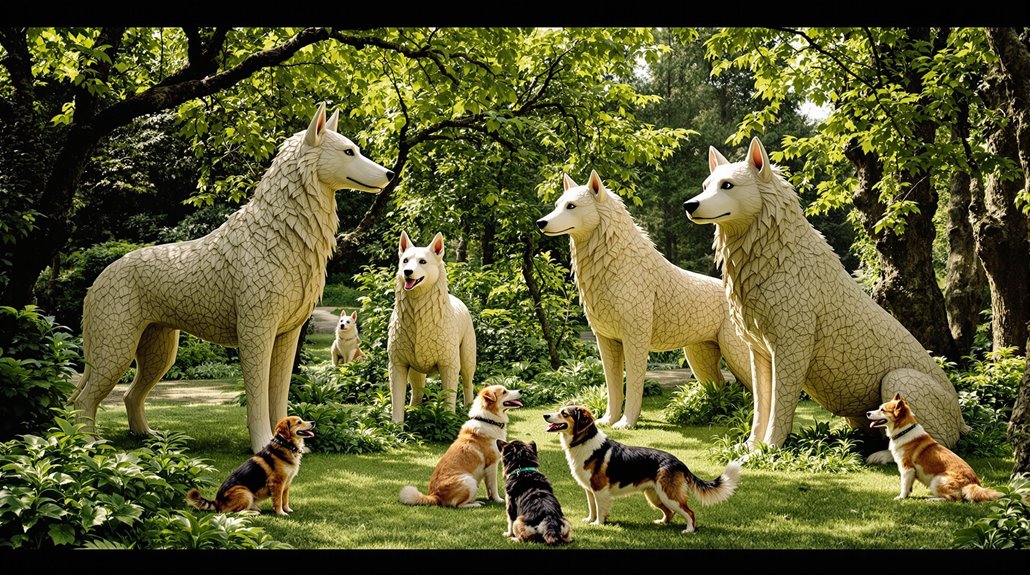
Exploring the influence of extinct dog breeds on modern breeds reveals a fascinating lineage of traits and characteristics that continue to shape today's canine companions. The Cordoba Fighting Dog, renowned for its fierce temperament, played a critical role in the emergence of the Dogo Argentino. Even after its extinction, its legacy is seen in the Dogo's strength and tenacity. Similarly, the Bullenbeisser, or German Bulldog, is an ancestor of the modern Boxer. Crossbreeding it with the English Bulldog before its extinction enhanced the Boxer's muscular build and agility.
The Molossus, an ancient Greek breed, is another significant contributor to the canine gene pool. Known for its size and strength, its influence is still felt in modern mastiff breeds like the English Mastiff and Neapolitan Mastiff. The Old English Bulldog, despite disappearing after bull baiting was banned, significantly impacted the French Bulldog's genetic makeup. Lastly, the Talbot, famed for its tracking skills, is a direct ancestor of breeds such as the Beagle and Coonhound. These extinct breeds have profoundly influenced modern breeds, ensuring their traits continue to thrive in today's breed development.
Canine Conservation Efforts
While extinct dog breeds have left an indelible mark on today's canine companions, efforts to conserve and revive these lost lineages are gaining momentum. You might be surprised at the dedication behind canine conservation, where various organizations and breed clubs document extinct dog breeds. This isn't just about preserving historical records—it's about educating the public on the rich tapestry of canine diversity and highlighting the importance of breed conservation.
Reviving near-extinct breeds is at the forefront of these efforts. Through responsible breeding practices and genetic analysis, enthusiasts work to prevent further loss of our canine heritage. Breed registries and databases play a crucial role here, tracking genetic lines and demystifying historical breeding practices, which could potentially aid in reviving lost breeds.
Educational initiatives, including workshops and community outreach, are vital. They raise awareness about the significance of preserving canine genetics and the grave consequences of breed extinction. Moreover, genetic testing and research into the DNA of extinct breeds offer insights into their unique characteristics and health issues. This knowledge informs future breeding practices, ensuring existing and related breeds continue to thrive, reflecting the legacy of their extinct ancestors. Additionally, wildlife advocacy promotes responsible ownership and environmental awareness, ensuring that the revival and preservation efforts are aligned with ethical and ecological considerations.