Heavyweights of the Canine World: Largest Dog Breeds by Weight
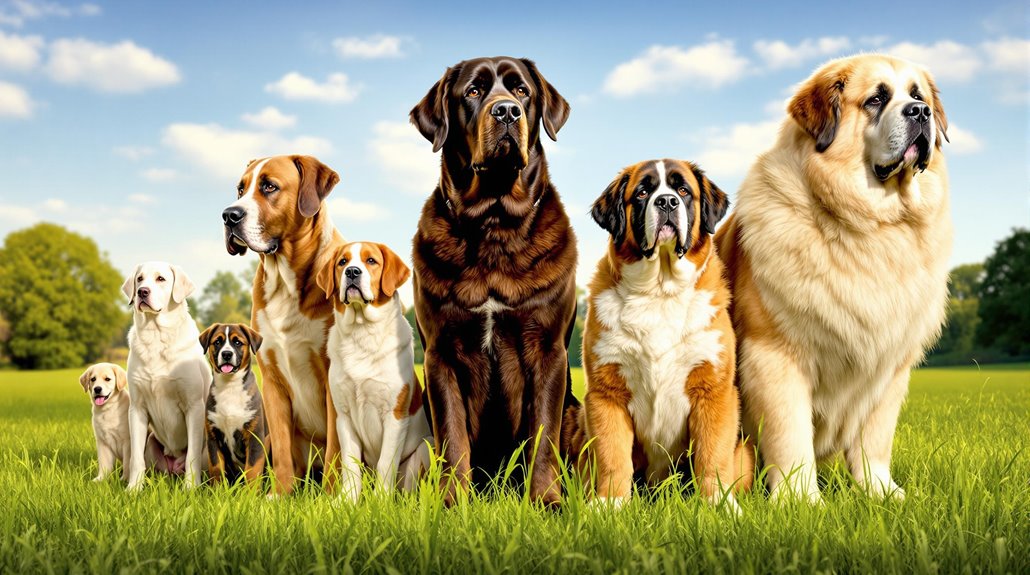
When it comes to the heavyweight champions of the canine world, the English Mastiff leads the pack, weighing between 160-230 pounds, with past records hitting 343 pounds. Following closely, the Neapolitan Mastiff and Saint Bernard impress with their weights ranging from 150 to 200 and 140 to 180 pounds, respectively. Don't overlook the Dogue de Bordeaux, Newfoundland, and Tibetan Mastiff, each boasting their own hefty measurements and distinct traits. These gentle giants are not only known for their size but also for their protective instincts, making them unique companions. Discover more about these remarkable companions below.
Key Takeaways
- The English Mastiff is the heaviest breed, with weights ranging from 160 to 230 pounds.
- Neapolitan Mastiffs typically weigh between 150 and 200 pounds, noted for their distinctive loose skin.
- Saint Bernards weigh 140 to 180 pounds, known for their rescue history in alpine environments.
- The Dogue de Bordeaux can weigh up to 145 pounds, renowned for its strength and loyalty.
- Newfoundlands weigh 120 to 150 pounds and are celebrated for their exceptional swimming abilities.
Overview of Massive Breeds
When you think of massive dog breeds, the English Mastiff likely tops the list with its impressive weight range of 160 to 230 pounds. This breed is known not only for its size but also for its gentle temperament and loyal disposition, making it a giant with a heart of gold. Right alongside are the Neapolitan Mastiffs, another massive breed weighing between 150 to 200 pounds. Despite their intimidating appearance, they're surprisingly gentle, showcasing a unique blend of strength and serenity.
Turning to the Saint Bernard, you're looking at a breed that pairs a robust build with a friendly nature. Weighing between 140 to 180 pounds, these dogs are famous for their historical role in alpine rescues. Their gentle and patient demeanor makes them wonderful companions. Similarly, the Dogue de Bordeaux, or French Mastiff, is a breed that commands attention with its massive head and weight of up to 145 pounds. Known for their loyal disposition, they form strong bonds with their families.
Adding to the list of loyal and gentle breeds is the Boxer, who ranks 18th in AKC popularity and is known for its intelligence and affectionate nature, making it an excellent family companion. While each breed stands out with its massive build and distinct characteristics, they share a common thread of loyalty and gentleness, traits that endear them to many owners.
Top Heaviest Dog Breeds
Among the world's heaviest dog breeds, the English Mastiff stands out prominently. Known as the heaviest dog breed, male English Mastiffs typically weigh between 160 to 230 pounds. Remarkably, one named Aicama Zorba holds the record at an astonishing 343 pounds. Their massive size is both awe-inspiring and intimidating to behold.
Next on the list are Saint Bernards, weighing in at about 140 to 180 pounds. They're famous not only for their size but also for their gentle nature, having historically served as rescue dogs in the Swiss Alps. Their calm demeanor makes them gentle giants despite their imposing stature.
The Neapolitan Mastiff, with its average weight ranging from 110 to 150 pounds, boasts an impressive appearance thanks to its large, wrinkled body. Meanwhile, the Dogue de Bordeaux, or Bordeaux mastiff, weighs between 110 to 145 pounds and is notable for having the largest head relative to body size among all breeds.
Lastly, the Tibetan Mastiff, weighing over 90 pounds, is recognized for its imposing look and thick coat. Originally bred to protect livestock, they are both protective and majestic. Each of these breeds brings unique traits to the table. Some of these heavyweights have a natural instinct to seek companionship, reflecting their deep-rooted connection with humans.
Breed-Specific Characteristics
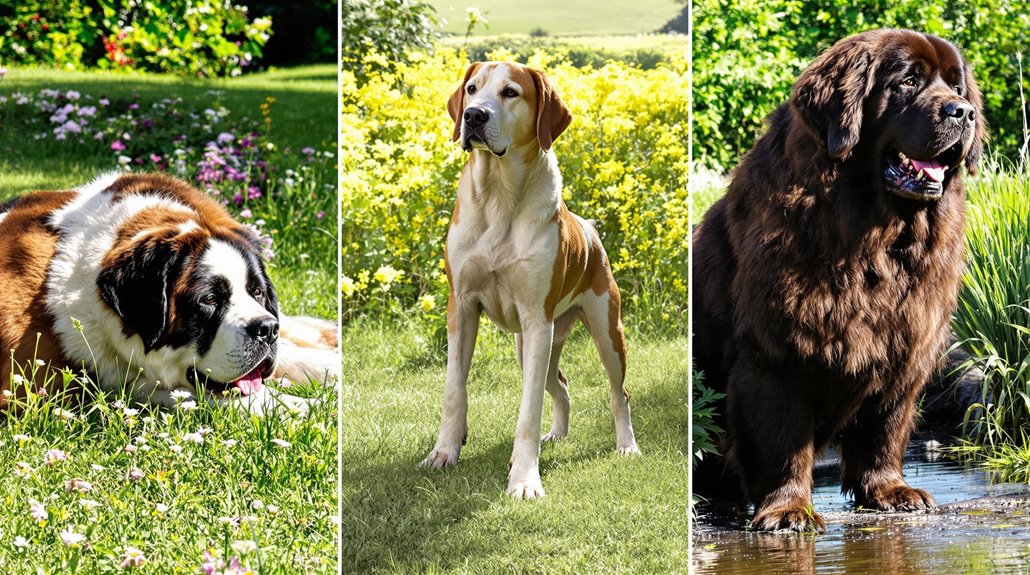
Each of these magnificent dog breeds boasts unique characteristics that set them apart. The Neapolitan Mastiff, with its distinctive loose, wrinkled skin, is renowned for its protective nature. Weighing between 110 to 150 pounds, this breed is vigilant and devoted, always ready to watch over its family. On the other hand, the English Mastiff, one of the heaviest breeds, stands out with males weighing between 160 to 230 pounds, and some reaching a colossal 343 pounds. Despite their size, they're known for their calm demeanor and can be gentle giants with the right training.
The Dogue de Bordeaux catches your eye with its massive head, the largest relative to body size among dog breeds. Weighing between 110 to 145 pounds, it combines strength with loyalty, making it a steadfast companion. The Saint Bernard, famous for rescue work in the Swiss Alps, weighs between 140 to 180 pounds and charms with its friendly and gentle nature. Lastly, the Newfoundland, weighing 120 to 150 pounds, is famed for its swimming prowess and gentle disposition. This makes it an ideal family companion, loved for its nurturing and calm temperament. The Canaan Dog's protective instincts and strong family bonds make it an excellent watchdog, providing security and affection to its household.
Health and Wellness Tips
Caring for these gentle giants goes beyond appreciating their unique characteristics; their health and wellness require attentive management. Large breeds, like the English Mastiff, are prone to health issues such as hip dysplasia and obesity, which necessitate regular veterinary check-ups. These visits are crucial for early detection and management of potential problems. Proper nutrition plays a significant role, as large breeds often need specially formulated dog food to support their size and prevent weight-related health problems.
Exercise is another key factor, but you should avoid over-exercising young giant dogs to protect their developing joints and prevent injuries. Maintaining a healthy weight is vital, as excess weight can exacerbate predisposed conditions like heart disease and joint problems, potentially reducing their lifespan. Being proactive with weight management ensures your dog's longevity and quality of life.
Regular grooming and dental care contribute to overall well-being, with routine dental check-ups necessary for maintaining oral health.
Awareness of common genetic conditions in large breeds is essential. Regular screenings for cancers and heart issues are advisable for breeds like the Great Dane and Saint Bernard. By understanding these needs and addressing them promptly, you can help your beloved large breed lead a healthy, fulfilling life. Prioritize their well-being through thoughtful care and attention.
Training and Socialization
Training and socialization are vital components in raising a well-behaved large dog. For giant breeds, early socialization is crucial to ensure they develop into well-adjusted adults. By exposing them to various environments, people, and other animals during their formative months, you help enhance their adaptability and reduce anxiety. Early socialization also plays a significant role in mitigating aggressive tendencies, promoting friendly interactions with other pets and humans.
Consistent training is essential for these large breeds, as they often exhibit stubbornness. Utilizing positive reinforcement techniques, such as treats and praise, encourages good behavior and strengthens the bond between you and your dog. Patience and understanding are key, especially since giant breeds typically take longer to mature both mentally and physically, often reaching maturity around 2-3 years of age.
Enrolling your large dog in structured training programs, like the AKC S.T.A.R. Puppy program, provides a solid foundation for both training and socialization. These programs offer guidance and support, ensuring your dog receives the consistent training they need. By investing time and effort into their early development, you set your giant breed up for a lifetime of positive experiences and harmonious interactions. It's important to recognize that long-term commitment is essential for the well-being of large breeds, as they require consistent care and attention throughout their lives.
Historical Roles and Purposes
Many of the largest dog breeds have fascinating historical roles that highlight their strength, loyalty, and unique skills. Take the Saint Bernard, for example, a breed historically bred for rescue work in the challenging Swiss Alps. Their loyalty and strength were indispensable in life-saving missions. Similarly, the Newfoundland stands out as a working breed developed for water rescue, assisting fishermen with its powerful swimming abilities, making it a vital companion on the water. The gentle nature of the Saint Bernard also makes it ideal for families, showcasing their adaptability beyond historical roles. Mastiffs, including the English Mastiff and Bullmastiff, were bred for their protective instincts and imposing presence. Initially used in blood sports, these guarding dogs eventually transitioned to estate protection roles. Their ability to deter potential threats made them ideal for safeguarding property.
In agricultural settings, the Anatolian Shepherd played a crucial role. This breed was specifically developed for livestock protection, showcasing not only loyalty but also natural guarding abilities. Meanwhile, the Irish Wolfhound served as both a hunting and guarding dog. Historically, it was used for coursing wolves, thanks to its impressive size and speed, emphasizing its role in protecting livestock and property.
These breeds exemplify how their historical purposes continue to influence their characteristics today.
Choosing the Right Breed
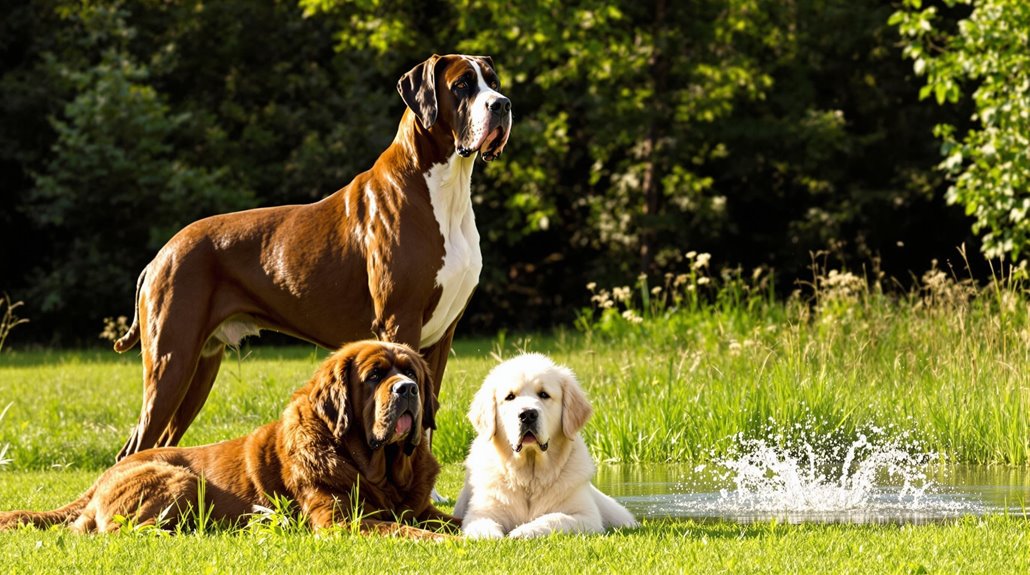
When choosing the right large dog breed, it's essential to consider several key factors to ensure a good match for your lifestyle. First, think about the breed's weight. English Mastiffs, for instance, can weigh between 160-230 pounds, demanding sturdy furniture and a solid back for lifting. Temperament is crucial; if you prefer a calm companion, the Great Pyrenees, known for their gentle nature, might suit you. On the other hand, if you're ready for a more active dog, consider breeds with higher energy levels like the Cane Corso.
Assess your living space carefully. Large dogs like the St. Bernard or Newfoundland need ample room to roam. They're not ideal for small apartments. Health concerns are another consideration. Many large breeds, such as the English Mastiff, are prone to hip dysplasia and heart issues, requiring regular vet visits. Training and socialization needs are critical for good behavior in all breeds, regardless of size.
Some breeds like the Bullmastiff require experienced handlers for effective training, while others, like the Irish Wolfhound, are more naturally easygoing. Make sure you're prepared for this commitment. By evaluating these factors, you'll find a large dog that fits seamlessly into your life.