Xoloitzcuintli: Meet the Ancient Mexican Hairless Dog
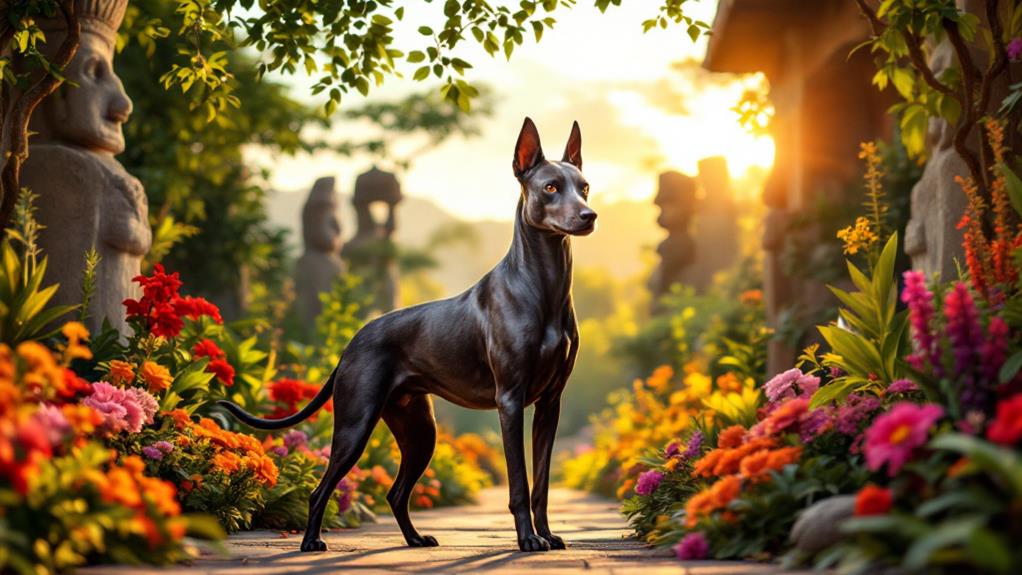
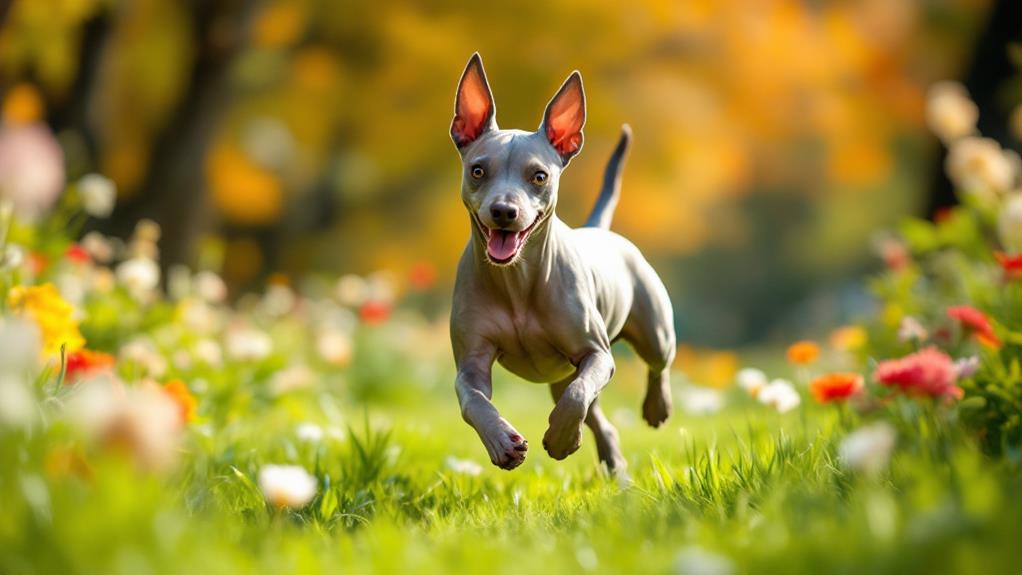
Meet the Xoloitzcuintli, Mexico's ancient and fascinating hairless dog. Named after the Aztec god Xolotl, this breed's history stretches back over 3,000 years. Xolos were revered by Aztecs and Mayans as healers and protectors, believed to guide souls in the afterlife. Their sleek bodies and striking features make them easily recognizable. Despite mostly being hairless, about one in five puppies are born with a coat. Caring for a Xolo involves special skin attention, but their loyalty and affection are rewarding. Uncover more about this extraordinary breed's lively cultural legacy and unique traits.
Understanding the Name Xoloitzcuintli
The name "Xoloitzcuintli" may seem intimidating at initial glance, but it holds deep cultural significance. It's a name that combines "Xolotl," the Aztec god of the underworld, with "itzcuintli," meaning dog in the Aztec language. This gives you insight into its roots and the cultural weight behind this unique hairless dog breed. Known more commonly in English as the Mexican hairless dog, the Xoloitzcuintli is celebrated for its aesthetic and historical importance.
When you encounter a Xoloitzcuintli, you're likely struck by its striking absence of fur. However, it's noteworthy to mention that approximately 1 in 5 puppies are born with a full coat. This is because hairlessness is a recessive genetic trait in these dogs. Despite their differences in appearance, both the hairless and coated Xolos share the same intelligence, loyalty, and affectionate nature, making them exceptional companions.
Pronouncing and spelling "Xoloitzcuintli" can be tricky, so many people opt for the simpler "Xolo." This nickname not only simplifies communication but also honors the dog's deep connection to its Aztec heritage, reminding you of their timeless legacy.
Historical Significance and Origins
Delving into the historical significance of the Xoloitzcuintli reveals a fascinating expedition that spans over 3,000 years. As the oldest dog breed in the Americas, the Xoloitzcuintli has a rich and long history intertwined with ancient civilizations like the Aztecs and Mayans. The Aztecs believed these dogs possessed healing properties, which made them invaluable companions in life and death. Their spiritual role was profound, as they were seen as guides for souls in the afterlife, illustrating a deep connection to the spirit world.
The breed's name, derived from the Aztec god Xolotl, who was linked to lightning and death, underscores their significance. Combining "Xolotl" with "itzcuintli," meaning dog, their name embodies their revered status. Archaeological findings support this, as Xoloitzcuintli remains have been unearthed in burial sites dating back approximately 5,500 years. These revelations highlight their importance in pre-Columbian societies, where they were often buried alongside their owners.
Their presence in these ancient cultures underscores a long history of companionship and spiritual belief. The Xoloitzcuintli's enduring legacy is a reflection of its profound role in human history and spirituality.
Physical Characteristics and Varieties
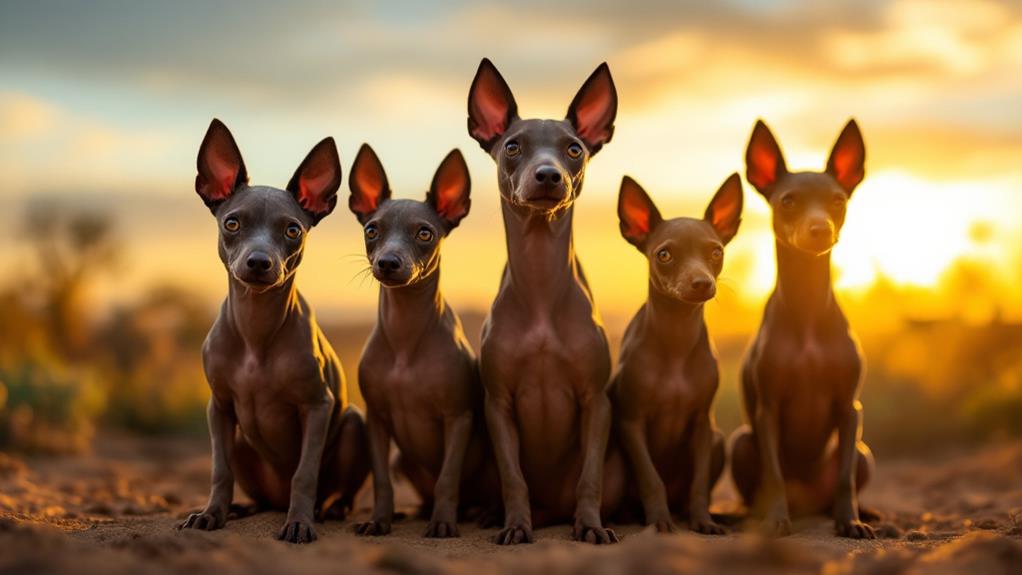
With an intriguing blend of size options, the Xoloitzcuintli, or Xolo, offers three distinct varieties: Toy, Miniature, and Standard. The Toy Xolos stand under 14 inches, offering a compact choice for those who prefer smaller dog breeds. Miniature Xolos range from 14 to 18 inches, providing a slightly larger option. The Standard variety, the largest, measures between 18 and 23 inches. Each size retains the breed's signature physical traits, making them easily recognizable.
The Xoloitzcuintli is most famous for its hairless variety. This unique feature sets them apart from other dog breeds. Hairless Xolos have tough, resilient skin, often with some coarse hair on their head, tail, and feet. But if you prefer a coated dog, fear not—Xolos can also come with a sleek, short coat. Regardless of hair type, they exhibit a range of colors, including black, gray, brown, and red.
Despite the differences in size and coat, all Xolos share consistent physical traits. They have a sleek, athletic body, almond-shaped eyes, and distinctive bat-like ears. These characteristics make the Xoloitzcuintli a truly unique and versatile breed.
Cultural and Artistic Legacy
Celebrated not only for its physical traits but also for its deep-rooted cultural significance, the Xoloitzcuintli stands as a powerful symbol in Mexican history and art. This unique breed has captured the imagination of artists, enriched cultural rituals, and played an essential role in commemorative events like Día de los Muertos. Here are four ways the Xoloitzcuintli's legacy continues to shine:
- Artistic Influence: Renowned artists such as Diego Rivera and Frida Kahlo often featured Xolos in their works. Kahlo's beloved dog, Señor Xototl, appears in her paintings, underscoring the breed's cultural importance.
- Cultural Rituals: Xolos are integral to Día de los Muertos, where they symbolize a guide for souls in the afterlife. Their presence during these celebrations highlights their spiritual significance.
- Traditional Dress: During cultural events, Xolos are adorned in traditional Aztec regalia, reinforcing their status as symbols of Mexican heritage and pride.
- Modern Media: The breed's representation in Pixar's film "Coco" has helped to raise their cultural icon status, introducing their story to a global audience.
Legends, Myths, and Beliefs

The Xoloitzcuintli, steeped in rich legends and myths, embodies a mystical connection to the spiritual world. According to Aztec legend, this ancient breed was created by the Aztec god Xolotl. These sacred dogs were believed to guide souls through the underworld, symbolizing their deep connection to life after death. Their importance in Mesoamerican cultures was profound, as they were often sacrificed and buried alongside their owners to guarantee safe passage to the afterlife.
Their unique physical traits, such as wrinkled skin and pointed ears, were seen as signs of their link to the spirit world, enhancing their mystical reputation. This aura of mystery continues in modern folklore, where Xolos are sometimes mistaken for the mythical Chupacabra, further solidifying their enigmatic and supernatural associations.
Cultural narratives emphasize the Xoloitzcuintli's protective qualities. Many believed these dogs could ward off evil spirits, offering a sense of safety and security to their guardians. As you investigate these fascinating tales, you'll uncover how the Xoloitzcuintli has maintained its revered status over centuries, a demonstration of its enduring spiritual and cultural significance in Mexican history.
Role as Healers and Protectors
Throughout history, the Xoloitzcuintli has played a crucial role as both a healer and protector. This ancient Mexican breed is more than just a loyal companion; it's a spiritual guardian. In Aztec tradition, Xoloitzcuintlis were believed to ward off evil spirits, offering their owners a sense of safety and peace. Their protective instincts were so cherished that they were often buried with their owners, ensuring safe passage to the afterlife.
As healers, Xoloitzcuintlis were valued for their warm bodies, which provided comfort and relief for numerous ailments. In remote villages, their presence was seen as a natural remedy, and even today, many celebrate their soothing warmth. Despite modern skepticism, the psychic bond between you and your Xolo remains undeniable.
Consider these fascinating aspects of the Xoloitzcuintli's role:
- Spiritual Guardians: They kept evil spirits at bay and safeguarded their human companions.
- Healing Warmth: Their body heat was a source of relief for aches and pains.
- Afterlife Protectors: Often buried with owners for protection in the afterlife.
- Modern Companionship: Their intuitive nature strengthens the bond with you, echoing their ancient roles.
Embrace the timeless connection you share with these remarkable dogs.
Caring for Your Xolo
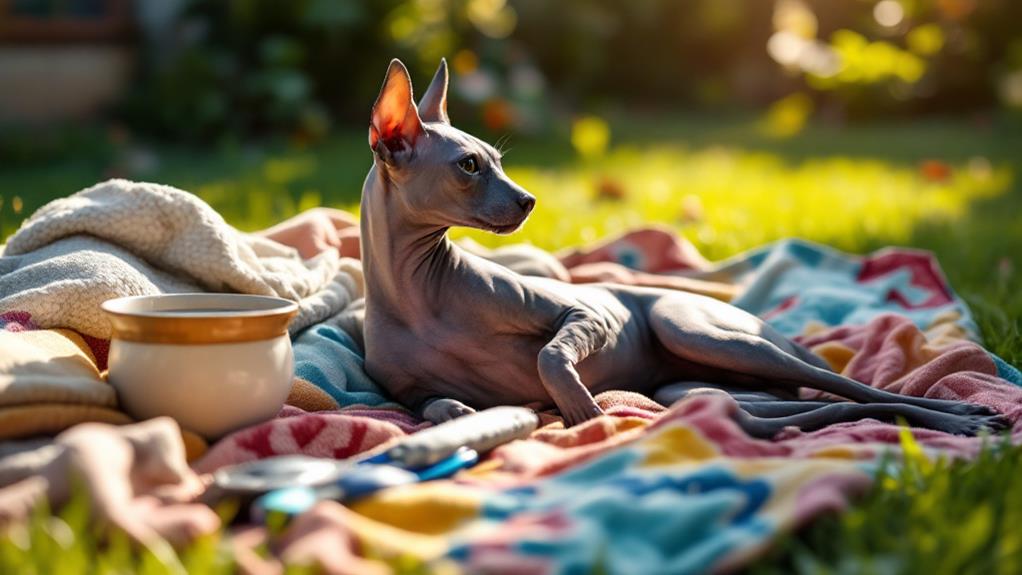
Caring for your Xoloitzcuintli involves understanding their unique needs, especially regarding skin health. Their hairless nature means you'll need to bathe and moisturize them regularly to prevent dryness and irritation. Using a canine sunscreen during the summer is important to protect their sensitive skin from sunburn. In winter, a cozy coat will help shield them from chilly weather. To manage the natural oils they produce, which can cause acne, gently clean their skin with a damp cloth frequently.
A balanced diet is fundamental for maintaining their general health. Make certain their meals are nutritious and suited to their specific needs. This, paired with consistent moderate exercise, helps keep them energetic and curbs any destructive tendencies. Remember, they don't require intense workouts, just regular, moderate activity.
Regular veterinary check-ups are significant to guarantee your Xolo's long-term health and happiness. During these visits, focus on health tests, including hip, cardiac, and patella evaluations. Monitoring these areas helps catch any potential issues early, assuring a longer, healthier life for your beloved pet. By understanding and addressing their specific requirements, you'll make sure your Xoloitzcuintli thrives.
Global Recognition and Popularity
After ensuring your Xoloitzcuintli receives the best care, it's intriguing to see how this unique breed has captured global attention. The Xoloitzcuintli, officially declared Mexico's national dog in 2020, stands as a cultural icon, symbolizing the rich heritage of Mexico City. Its global recognition skyrocketed after the 2017 Pixar film "Coco" featured the breed, introducing it to a broader audience and highlighting its cultural significance.
Several factors contribute to the Xoloitzcuintli's growing popularity:
- Unique Appearance: The breed's distinctive hairless look and warm body temperature make it irresistible to dog enthusiasts worldwide.
- Cultural Celebrations: Xolos often appear in Día de los Muertos celebrations, further promoting them as a cultural icon in contemporary society.
- Reputable Breeders: The expanding community of reputable breeders has made the breed more available in shelters and dog shows globally.
- Media Exposure: The film "Coco" played a significant role in highlighting the Xoloitzcuintli's cultural relevance, bringing it into the limelight.
As you admire this remarkable breed, it's important to acknowledge the efforts of reputable breeders and cultural enthusiasts who have played a vital role in its resurgence and global appeal.