Will a Dove Make a Great Pet Bird? What to Expect
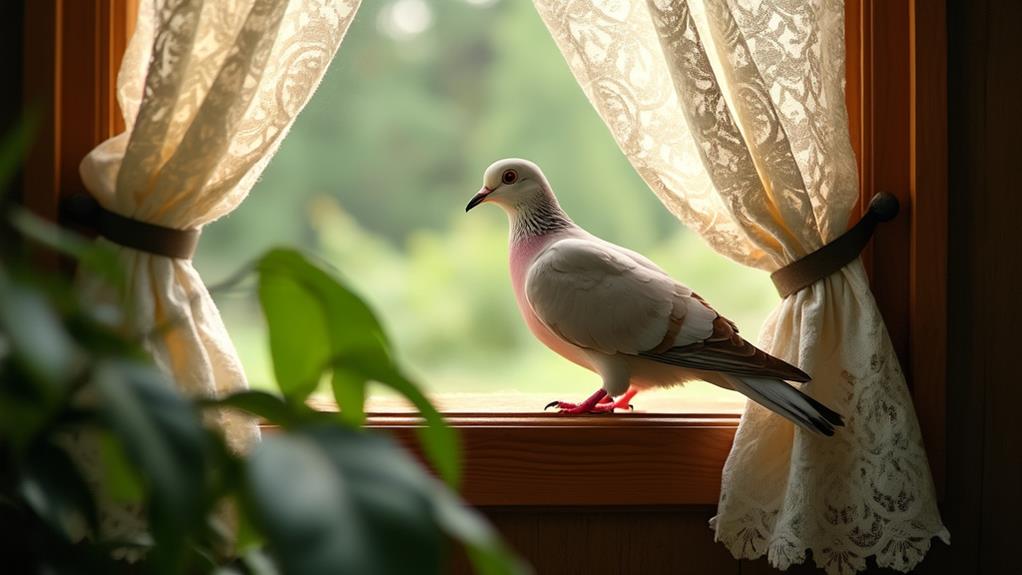
Doves make wonderful pet birds due to their gentle and sociable nature. They're ideal companions for quieter households and rarely show aggression. Keep in mind, doves thrive in pairs, so consider adopting two to improve their happiness and social interaction. Their lifespan can exceed 20 years, so be prepared for a long-term commitment. You'll need a spacious cage, a balanced diet of pellets, grains, seeds, and fresh water, along with annual check-ups from an avian vet to guarantee they stay healthy. If you're ready for a dedicated relationship, doves could be your perfect pet bird. Investigate further to learn about their specific care needs.
Key Takeaways
- Doves are gentle and sociable birds, ideal for companionship in quieter households.
- They thrive in pairs, enhancing their happiness and social interaction.
- A long lifespan of over 20 years indicates a significant long-term commitment.
- A spacious cage, proper diet, and regular veterinary check-ups are essential for their well-being.
- Their calm demeanor and low-maintenance nature make them suitable for dedicated bird owners.
Characteristics of Pet Doves
Doves captivate with their gentle and sociable nature, making them delightful companions for pet enthusiasts. As pet birds, they thrive on companionship, often doing best in pairs to guarantee their happiness. You'll find that their calm demeanor fits well into quieter households, as they rarely exhibit aggressive behaviors. This makes them an excellent choice if you're looking for a serene and low-maintenance pet bird.
Male doves are generally more vocal, filling your home with their soothing coos throughout the day. In contrast, females are quieter and less demanding, which can be a comforting trait if you prefer a more peaceful environment. Regardless of gender, doves' sociable personality is a significant part of their charm, making certain they quickly become cherished members of your family.
When it comes to their diet, doves require a balanced mix of seeds and grains, with fresh fruits and vegetables to maintain their health. This straightforward dietary need makes them relatively easy to care for. Furthermore, with a lifespan of over 20 years in captivity, doves represent a long-term commitment, offering you years of companionship and joy as beloved pet birds.
Choosing the Right Dove
With their gentle nature and straightforward care needs, doves make wonderful pets, but selecting the right one requires careful consideration. Initially, consider the species. Diamond doves are smaller, more colorful, and may appeal to those looking for a lively addition, while ring-necked doves are larger and recognized for their distinctive neck markings. Whichever you choose, gentle handling is key to building trust and fostering a strong bond.
Temperament plays an essential role, so look for a dove with a calm demeanor. Remember, personalities vary widely, and younger doves might be easier to socialize. Since doves are social creatures, adopting them in pairs is highly recommended. They thrive on companionship and can become lonely if left alone.
When choosing your feathered friends, check their health status and background. Reputable breeders or rescue organizations can provide valuable insights into their upbringing and any potential health concerns. Look for doves with clean feathers and clear eyes, as these are good indicators of health. Avoid birds showing signs of illness or distress.
Dove Housing Requirements
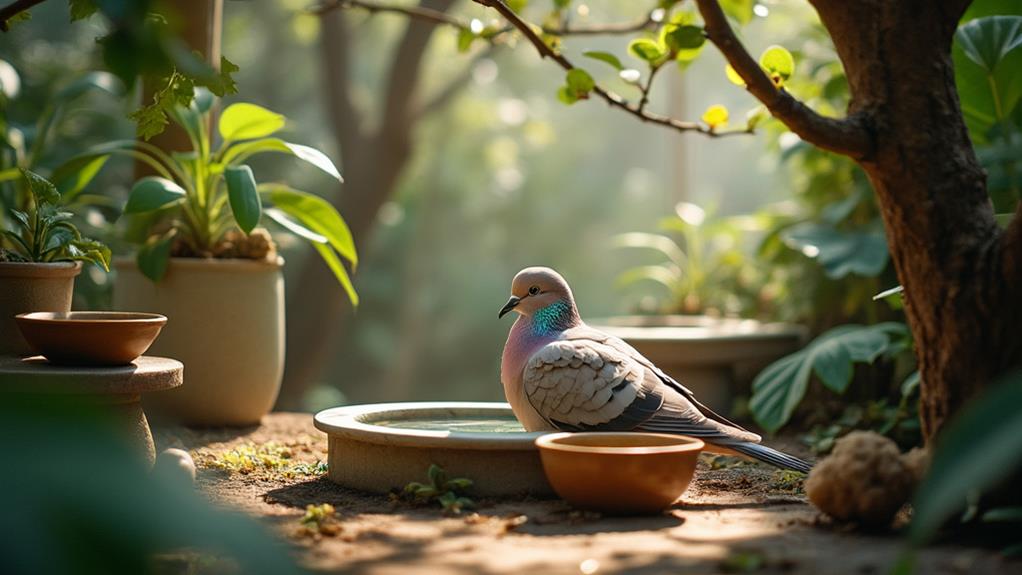
Setting up a proper home for your doves means guaranteeing they have enough space and the right environment. When considering dove housing requirements, aim for a cage that's at least 24 inches long, 36 inches wide, and 24 inches high for a pair of doves. Larger dimensions are always better to give them ample room for flying and movement. The bar spacing should be ⅜-inch or smaller, which prevents escapes and keeps your feathered friends safe.
Opt for a stainless steel cage, as it's durable and non-toxic, unlike wood or galvanized wire, which can be harmful. Inside the cage, provide different perches, toys, and grooming supplies. These elements are crucial for their mental stimulation and physical health. Don't forget to include a shallow bathing dish several times a week, allowing your doves to maintain their feathers and hygiene.
Creating the perfect habitat isn't just about size; it's about enriching their lives. By meeting these dove housing requirements, you'll guarantee your doves have a safe, stimulating, and comfortable environment. This will help you keep your doves healthy and happy in their new home.
Essential Diet and Nutrition
A well-balanced diet is fundamental for your pet doves' health and happiness. To guarantee they thrive, focus on an indispensable diet and nutrition plan that includes high-quality pelleted food, which should account for about 60-70% of their intake. This foundation will help your doves receive the necessary vitamins and minerals they need, including vitamin D, which is crucial for their general well-being.
Supplement their diet with a variety of grains and seeds to mimic their natural foraging behavior, keeping them content and engaged. Fresh chopped fruits and vegetables can be offered as occasional treats, but make certain they don't exceed 10% of their diet. Safe options include carrots, broccoli, and berries, while avoiding harmful foods like avocado and chocolate.
To support bone health, provide digestible grit, such as crushed oyster shells, daily. This aids in calcium intake, a fundamental element for your doves' strength and vitality. Always guarantee fresh, clean water is available to them, and steer clear of processed foods to maintain their general well-being. By providing a balanced diet, you'll help guarantee your doves lead healthy, happy lives.
Socialization and Interaction
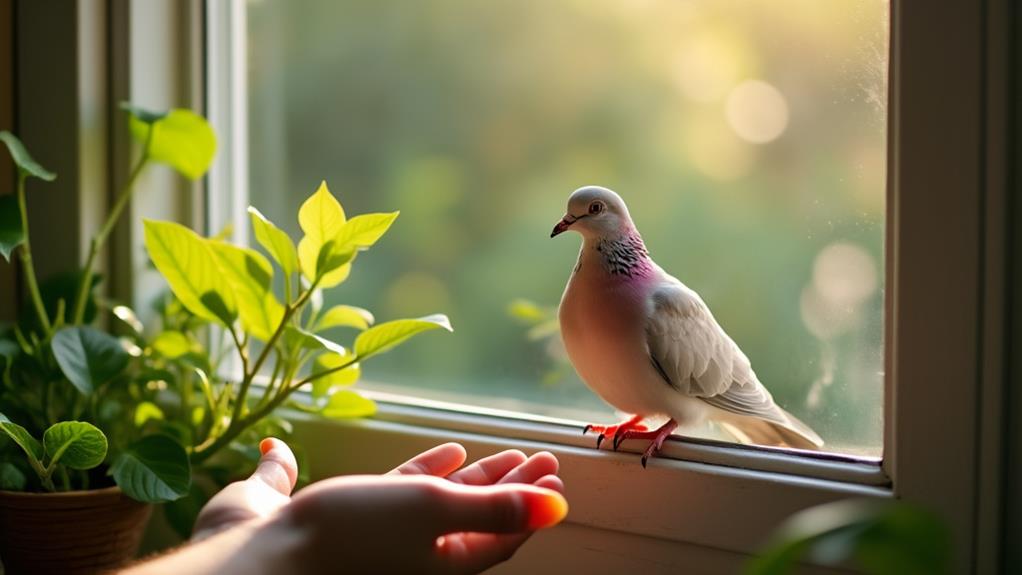
Doves naturally thrive on companionship, so it's essential to keep them paired up for better well-being and interaction. When you have two doves, they're more likely to engage in socialization, enhancing their happiness and health. If you're considering a dove as a pet, keep in mind that regular interaction is key to a strong bond. Handle them several times a week to encourage tameness and familiarity.
Male doves are quite vocal, often cooing throughout the day. This vocalization can serve as a form of interaction, while females tend to be quieter and may require less handling. Be patient, as doves need time to adjust to new environments and owners. It's significant not to force them into socialization; let them come to you at their own pace.
While doves aren't as interactive as parrots, they appreciate gentle handling. They might enjoy perching on your hand or arm, providing a unique opportunity for connection without being overly demanding. This gentle approach helps build trust and reinforces their social nature. With time and patience, you'll find that doves can be delightful companions, bringing a sense of calm and beauty to your home.
Exercise Needs for Doves
Ensuring your doves get regular exercise is vital for their health and happiness. Doves have specific exercise needs that require your attention. They need out-of-cage exercise several times a week to maintain their physical health and provide mental stimulation. A large cage alone isn't enough; you should provide ample space for flying. A minimum cage size of 20x30x36 inches is recommended for a pair. This size allows them some room, but they still need supervised free flight in a safe environment.
During these sessions, let them stretch their wings and engage in natural behaviors. This not only prevents obesity but also helps them stay healthier and happier. You'll notice a difference in their behavior, as exercise reduces the likelihood of developing behavioral issues. Social interaction plays a key role here. Keeping doves in pairs facilitates play and exploration, enhancing their general well-being, and making them better pets.
Health and Veterinary Care
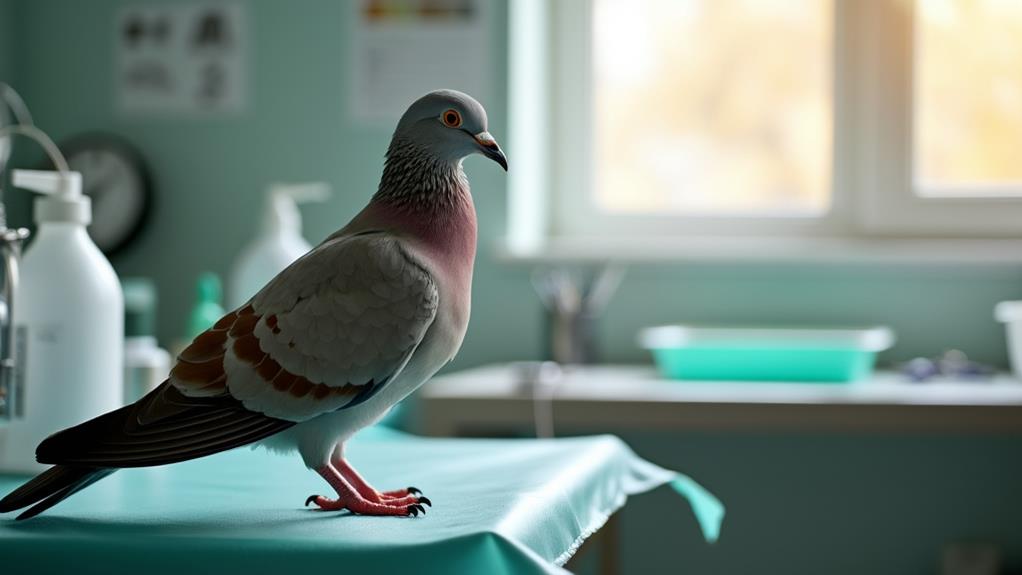
While exercise keeps doves fit and mentally stimulated, their general health also depends on proper veterinary care. Annual check-ups with an avian veterinarian are vital for guaranteeing your dove stays healthy. These specialists understand the unique needs of birds and can catch potential issues early. Doves are particularly sensitive to respiratory problems, so maintaining a smoke-free environment and avoiding harmful fumes is fundamental.
Keep an eye out for any signs of illness, such as lethargy or changes in eating habits. Prompt attention to these signs can make a significant difference in your dove's health. When it's time for a veterinary appointment, transport your dove in a secure cage with access to food and water, protecting them from extreme temperatures. This guarantees they arrive safely and stress-free.
Here's a quick checklist to maintain your dove's health:
- Annual check-ups with an avian veterinarian.
- Smoke-free environment to prevent respiratory issues.
- Prompt attention to signs of illness like lethargy.
- Secure transport to vet appointments with food and water.
- Consult an avian veterinarian for any abnormal behaviors or health concerns.
These steps help guarantee your dove remains a happy, healthy companion.
Understanding Dove Behavior
When you tune into the gentle cooing of your dove, you're tapping into their primary mode of communication. Male doves, in particular, are more vocal, serenading throughout the day with their soft calls. As a pet, your dove's cooing is not only soothing but a sign of their comfort and well-being. While they're social creatures that thrive in pairs, doves generally prefer minimal handling. Unlike parrots, they won't seek out constant petting or interaction, making them a more low-maintenance companion.
Doves are known for their gentle and docile nature. You won't have to worry about aggressive behaviors, like biting or chewing, as these are rare in doves. However, regular socialization outside their enclosure is essential. This interaction helps them bond with you and adjust to their environment, enriching their life as a pet.
Each dove has its own personality, influenced by upbringing and social experiences. Some may be more affectionate and interactive, while others might be more reserved. Understanding your dove's unique behavior will help you foster a nurturing environment, ensuring your pet is happy and well-adjusted. Welcome their quiet charm, and you'll find a loyal companion.
Safety Precautions for Doves
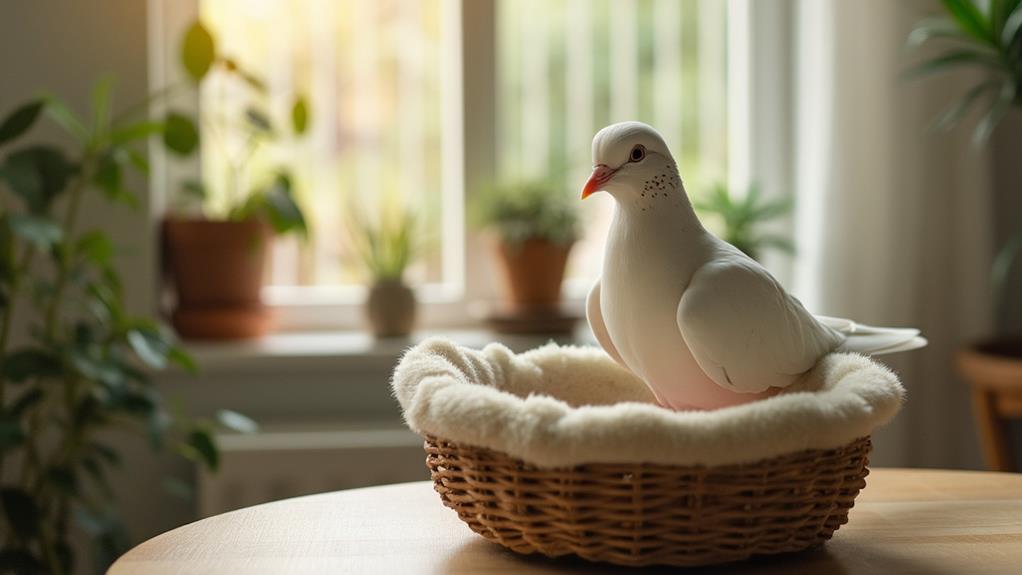
As you enjoy the gentle companionship of your dove, it's crucial to prioritize their safety and well-being. Doves have specific needs and sensitivities that require careful attention. Follow these safety precautions for doves to create a secure environment for your feathered friend.
- Air Quality: Doves have sensitive respiratory systems. Keep their space free from smoke, harmful fumes, and strong odors to prevent respiratory issues.
- Pet Interactions: Avoid housing doves with cats or dogs. These animals can pose a risk of injury or stress to your dove, as they may view the bird as prey.
- Outdoor Safety: If you're using an outdoor aviary, opt for stainless steel habitats. This provides a strong barrier against predators and guarantees your dove's safety.
- Choking Hazards: Regularly inspect their environment for small objects they might ingest. These can pose choking hazards or lead to other health complications.
- Child Supervision: Always supervise children when they interact with doves. This supervision helps prevent accidental harm and teaches children how to handle doves gently.
Long-Term Commitment and Care
Taking on the responsibility of a dove means you're in for a long-term commitment that can last over 20 years. Doves require dedicated care and attention to thrive in your home. Their lifespan means you'll be planning for the next couple of decades, making certain they have everything they need to live a happy and healthy life.
To begin with, you'll need a spacious habitat. A cage with minimum dimensions of 20x30x36 inches is necessary to provide them with enough room to move around comfortably. Beyond just space, their diet is essential. High-quality pellets combined with fresh vegetables form the backbone of their nutrition, and you must provide fresh water daily to keep them hydrated.
Doves are social creatures, and they thrive on interaction. Regular socialization is critical, as they do best in pairs. Engaging with them daily guarantees they don't feel lonely, which can lead to health issues. Finally, commit to scheduling annual veterinary check-ups. These visits monitor their health and catch potential problems early. By understanding these needs, you'll be prepared for the long-term commitment that comes with caring for a dove.