The Best Spiders to Keep as Pets: A Complete Guide
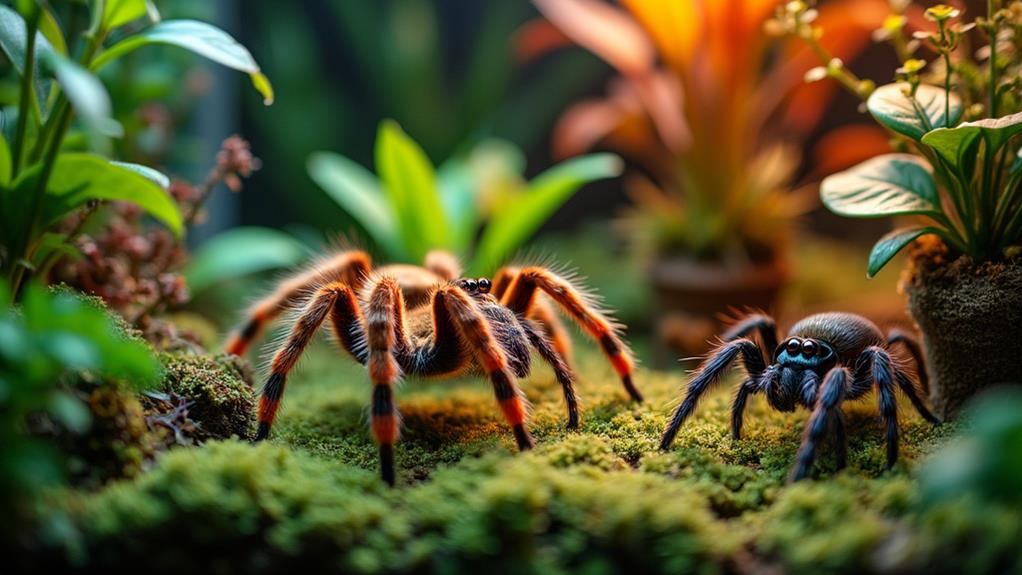
If you're considering a pet spider, beginners might find species like the Chilean rose, Mexican Red Knee, or Honduran Curly Hair ideal due to their docility and easy care requirements. Spiders offer a low-maintenance alternative for small spaces and need straightforward care like feeding live insects and checking humidity. However, handle them with care since most are venomous, and secure enclosures to prevent escapes. Check local regulations as some spider species may not be legal in your area. Immerse yourself in their fascinating world, and you'll uncover the intricate balance of commitment and intrigue spider ownership involves.
Key Takeaways
- Mexican Red Knee tarantulas are ideal for beginners due to their gentle temperament and striking appearance.
- Chilean Rose tarantulas offer easy care and a docile nature, making them perfect for novice spider enthusiasts.
- Honduran Curly Hair tarantulas thrive in low-maintenance environments and are known for their calm demeanor.
- Beginner-friendly tarantulas are typically docile and easy to handle, reducing risks for new owners.
- Checking local laws is essential to ensure the legality of the chosen spider species.
Benefits of Pet Spiders
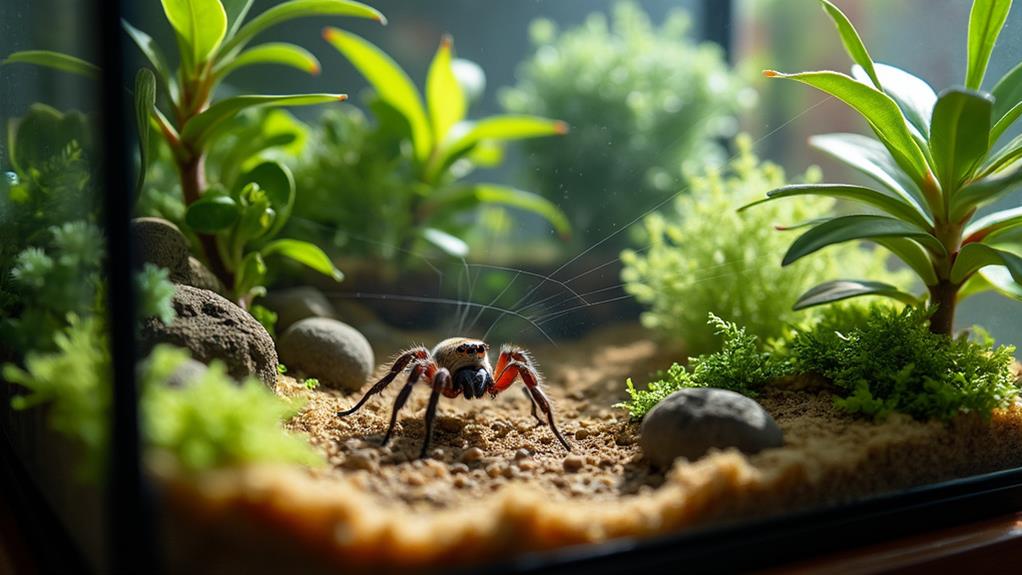
Pet spiders offer a unique and rewarding experience for enthusiasts seeking low-maintenance companions. Unlike traditional pets like dogs and cats, pet spiders such as tarantulas and jumping spiders require minimal daily care. They thrive in compact living spaces, making them perfect for small apartments or homes. You can comfortably house them in a small terrarium, which is an excellent choice if you're limited on space.
As a beginner spider owner, you'll find species like the Chilean rose tarantula ideal due to their docile temperaments and low venom potency. These terrestrial species are not only easy to handle but also intriguing to observe. Watching their unique behaviors can spark your interest in arachnology, offering an educational glimpse into ecosystems.
Feeding your pet spider is straightforward and cost-effective, as they typically consume insects available at pet stores. In general, the expenses associated with keeping an exotic pet like a spider are generally lower than those for other pets. This affordability, combined with their enthralling characteristics, makes pet spiders an excellent choice for anyone looking to investigate the world of exotic pets without the burden of high maintenance.
Challenges of Spider Ownership
Owning a spider presents its own set of challenges that require careful reflection. For initial-time or novice pet owners, understanding these challenges is significant. Most spiders possess venom, and while not all are dangerous, some species have potent venom that necessitates careful handling. Allergic reactions or defensive behaviors can pose risks, so educating yourself is key.
Spiders, especially tarantulas, are notorious escape artists. Ensuring a secure enclosure is fundamental to prevent escapes and maintain safety in your home. Proper care involves understanding the environmental requirements of your chosen species. This includes temperature, humidity, and habitat needs, which can be intimidating for beginners but are crucial for your spider's health.
Life expectancy is another factor to reflect on. While most spiders live just a few years, certain tarantulas can live up to 30 years. This disparity might not align with your long-term pet ownership expectations, so contemplate carefully about your commitment.
Handling poses a risk, as dropping a tarantula can cause fatal injuries due to their fragile bodies. Not all spiders tolerate handling well, so researching proper techniques is fundamental. Ongoing education and dedication are necessary to meet these challenges successfully.
Choosing Your Spider
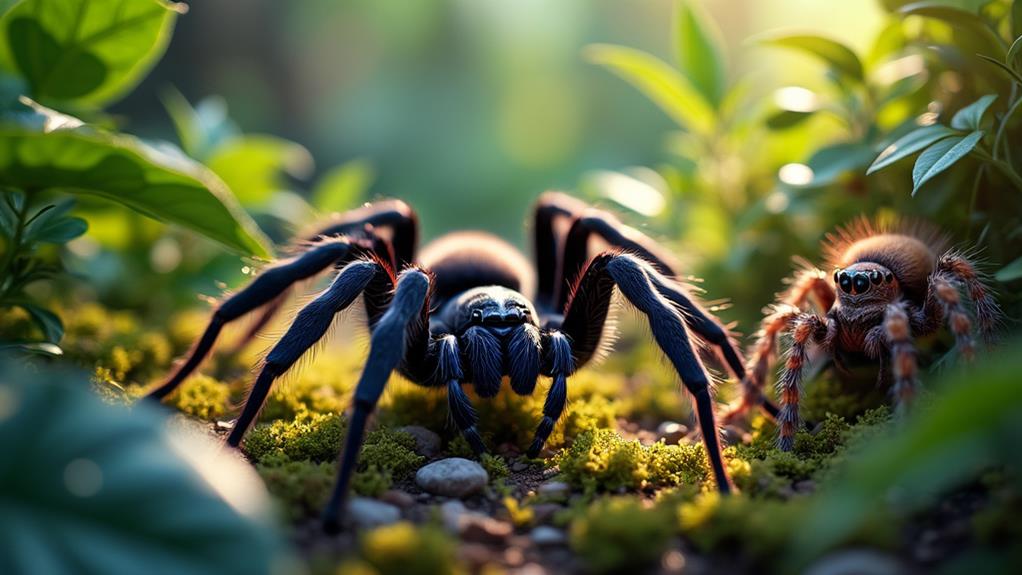
After considering the challenges of spider ownership, it's time to focus on selecting the right species for you. As a beginner, you'll want a pet spider that's easy to care for and well-suited to your comfort level. Certain species, like the Chilean rose tarantula, Mexican Redleg, and Costa Rican Zebra, are the best beginner choices due to their docile nature and low venom potency. These spiders make great introductions to the world of arachnid companionship.
When choosing your spider, consider the following:
- Local Laws: Check your local regulations to verify the species you're interested in is legal to own where you live. Some regions have restrictions on certain tarantulas or house spiders.
- Care Requirements: Assess the specific needs of each species, including housing, environment, and diet. Understanding these will help you provide the right conditions for your spider.
- Handling Risks: Research the handling risks associated with your chosen species. Some spiders may react defensively, so it's vital to learn the proper handling techniques.
Essential Care Tips
Proper care is fundamental to keeping your spider healthy and happy. Start by making certain you've got a suitable enclosure that fits your spider's needs. Regardless of whether it's a terrestrial or arboreal setup, each species has specific habitat requirements. Ventilation, substrate, and enclosure size all play significant roles in creating the best living environment for your pet.
Monitoring humidity levels is another important part of spider care. Species like pink-toed tarantulas need higher humidity, while others, like Chilean roses, prefer drier conditions. Keep a close eye on these levels to guarantee your spider stays in peak health.
Feeding your spider live insects regularly is fundamental. Adults typically eat every 5-10 days, while juveniles may need feeding every 3-7 days. Adjust frequency according to development and species requirements.
Regular cleaning of the enclosure is significant to prevent mold and waste buildup. Use spot cleaning techniques and sanitize the habitat before introducing your spider to minimize health risks.
Recommended Spider Species
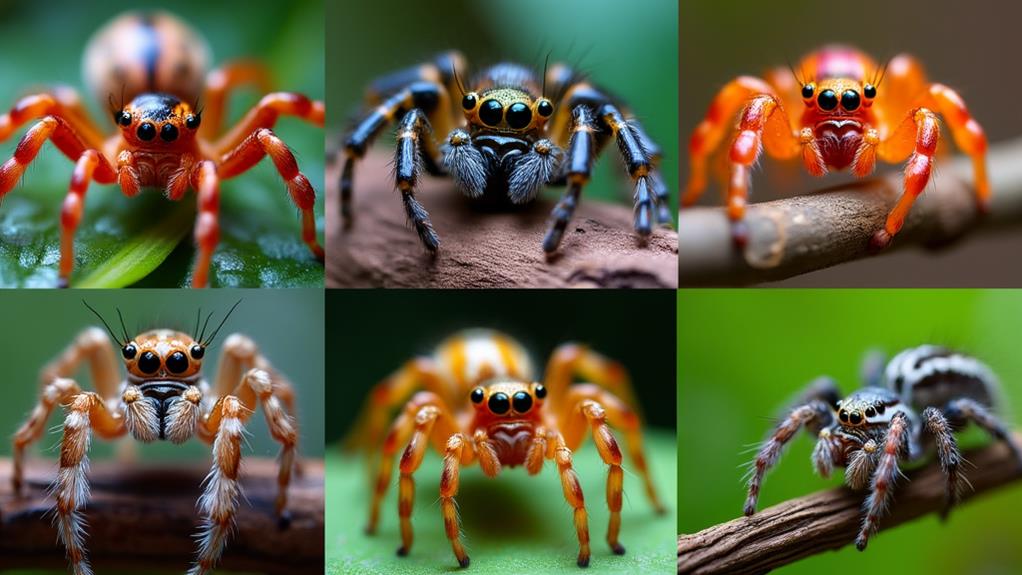
Once you've mastered the basics of spider care, it's time to contemplate which species might be the best fit for you. For beginners, it's a good idea to start with tarantulas known for their gentle nature and ease of care. Here are three beginner-friendly options:
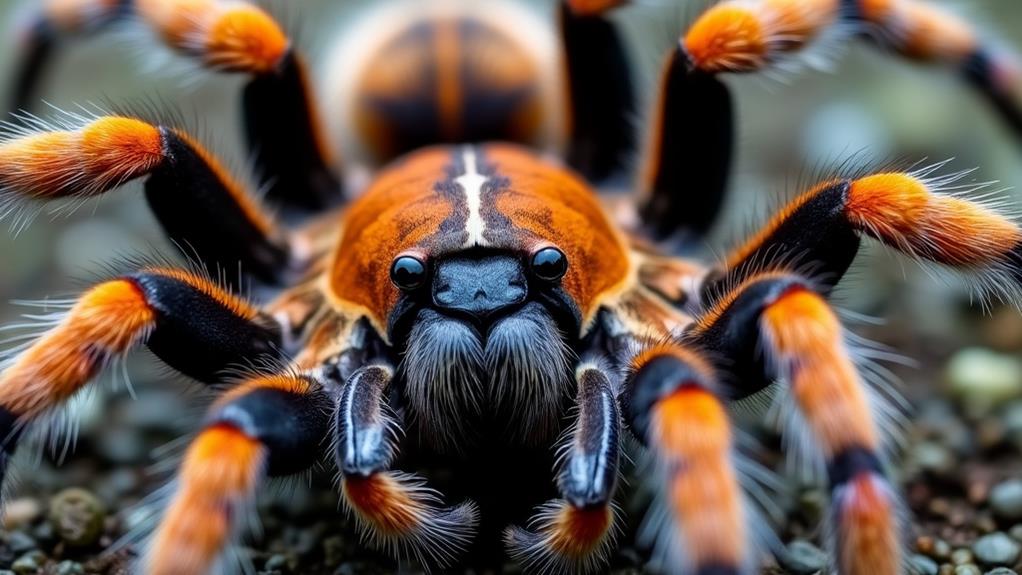
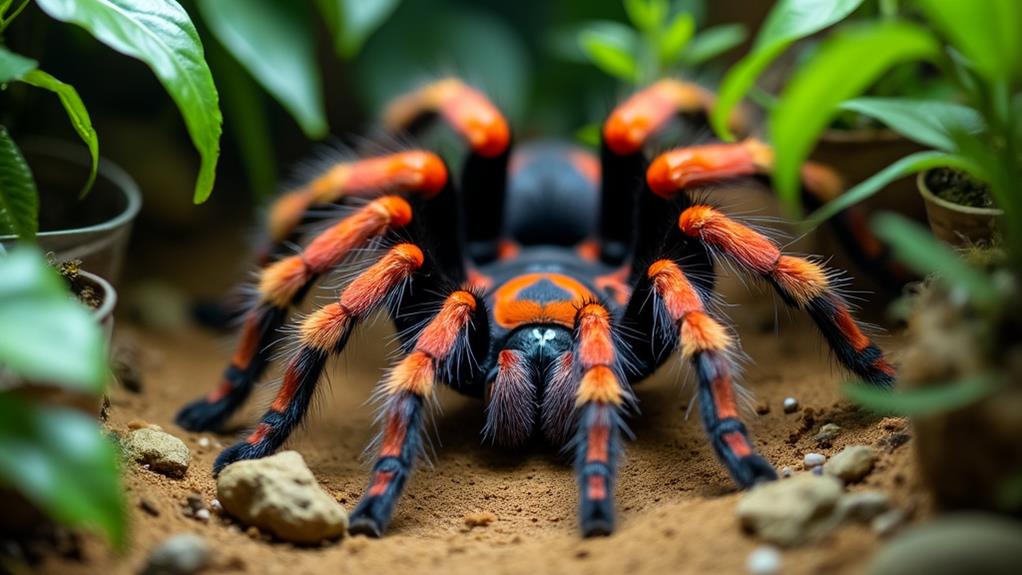
- Mexican Red Knee (Brachypelma smithi): This tarantula is visually striking with its lively red and black coloring. Its gentle temperament makes it an excellent choice for novice keepers, ensuring a smooth introduction to keeping these fascinating pets.
- Honduran Curly Hair (Brachypelma albopilosum): Known for its calm demeanor, this tarantula is low-maintenance, thriving in a habitat with dry substrate and a moist corner. Its laid-back nature makes it a great pet for those who prefer a relaxed experience.
- Chilean Rose (Grammostola rosea): With its smaller size and docile nature, this species is ideal for those new to spider keeping. It's easy to care for, requiring minimal attention while still providing an engaging pet experience.
While buying a pet spider, it's best to avoid species that are more aggressive or challenging to care for, as they may not be suitable for beginners.
Misconceptions and Safety
Many people think tarantulas are aggressive and deadly, but this is far from the truth. Most tarantula species are actually docile, and their bites generally cause symptoms no worse than a bee sting. These misconceptions often arise from sensationalized portrayals in media. In reality, tarantulas' gentle nature and low maintenance requirements make them excellent choices for beginner pet owners.
However, keeping spiders as pets does require some precautions. Initially, recognize that all spiders possess venom. If you're allergic, even a mild bite could result in a significant allergic reaction. Thus, it's vital to exercise caution when choosing and handling your pet spider. Proper handling is fundamental for both your safety and the spider's well-being. Dropping a tarantula can be fatal due to their delicate bodies, so always handle them with care.
Another key aspect of owner safety is the use of secure enclosures. Many spider species are adept escape artists. You'd want to make sure your pet's habitat is escape-proof to avoid the challenge of recapturing an escaped tarantula. By understanding these factors, you can safely enjoy the companionship of these fascinating creatures.