Peruvian Inca Orchid: The Noble and Elegant Hairless Dog Breed
The Peruvian Inca Orchid is an elegant, hairless dog brimming with rich cultural significance. Originating around 300 B.C. and celebrated as Peru's national dog, this noble breed comes in three sizes and two coat types. Hairless varieties need specific skin care, including moisturizing and sun protection. They're known for their affectionate loyalty and agility, making them excellent companions. Regular exercise, a quality diet, and frequent veterinary visits are essential for their well-being. Training with positive reinforcement improves their adaptability. If you investigate further, you'll uncover the deep connection between this lively breed and its historical roots.
Breed Overview
With roots tracing back to around 300 B.C. in Peru, the Peruvian Inca Orchid is a striking breed known for its elegant and slender build. As the national dog of Peru, this breed enchants with its unique appearance and affectionate nature. You'll be pleased to know that the Peruvian Inca Orchid comes in three sizes: small, medium, and large. The small size ranges from 9.75 to 15.75 inches in height, the medium from 15.75 to 19.75 inches, and the large from 19.75 to 25.75 inches, with weights spanning 8.5 to 55 lbs.
This dog breed is particularly fascinating due to its coat varieties. The hairless variety showcases smooth skin that's often warm to the touch, while the coated variety features short to medium hair with potential feathering. Regardless of the coat type, each Peruvian Inca Orchid exudes an undeniable grace. Their loyal and affectionate temperament makes them excellent companions, especially for families. They're not just elegant; they're energetic and require regular exercise and mental stimulation. In general, you'll find the Peruvian Inca Orchid to be an enchanting blend of beauty, history, and charm in the world of dog breeds.
Historical Significance
Throughout history, the Peruvian Inca Orchid (PIO) has held a prominent place in Peruvian culture, dating back to 350 BC. This ancient Peruvian breed has been immortalized in pottery by the Moche and Incan civilizations, highlighting its deep-rooted presence. The Moche, Chancay, and Chimu valued the PIO for its body warmth, using it in traditional medicine for its purported therapeutic benefits. Such a connection to healing raised the PIO beyond a mere pet, solidifying its role in cultural practices.
During the Inca Empire, the Peruvian Inca Orchid took on spiritual significance, embodying guardianship and serving as protectors of sacred spaces. This role mirrored its revered status within these ancient societies, emphasizing its integral presence in spiritual and everyday life. The breed's lineage faced challenges during the arrival of the Spanish conquistadors, who brought larger dogs, threatening the PIO's purity. However, dedicated breed preservation efforts guaranteed its survival, maintaining its legacy.
In 2001, the PIO was recognized as the national dog of Peru, a symbol of its enduring significance and emblematic of Peruvian heritage. Today, it stands as a celebrated representation of cultural identity and historical resilience.
Unique Traits
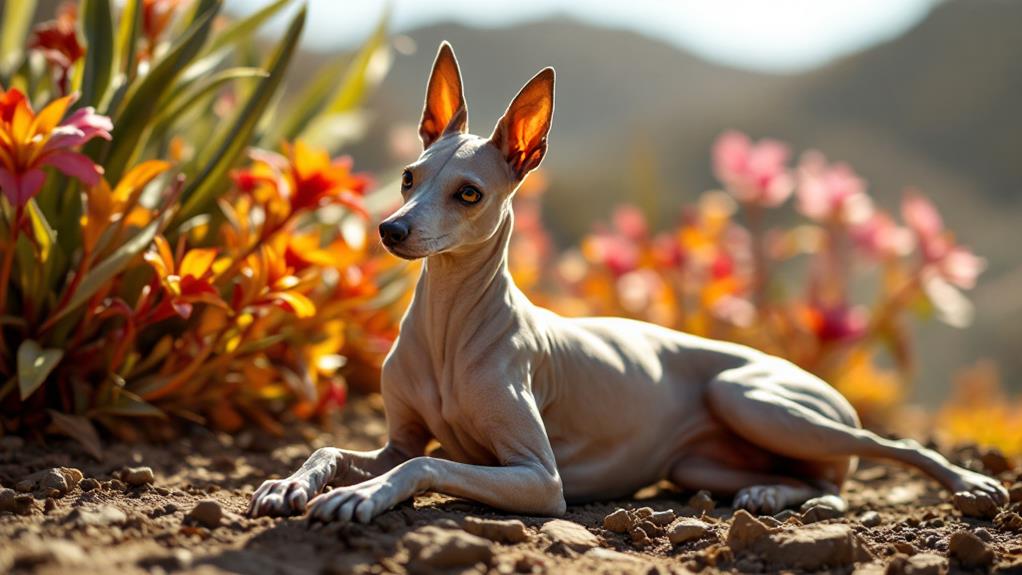
Beyond its historical significance, the Peruvian Inca Orchid's unique traits make it a standout among dog breeds. Known for its elegant sighthound lineage, this breed's distinct characteristics are enchanting. Available in three sizes—small, medium, and large—the Peruvian Inca Orchid caters to a variety of preferences, with sizes ranging from 9.75 to 25.75 inches and weights from 8.5 to 55 pounds.
The hairless variety is perhaps the most striking, showcasing smooth skin that requires specific care to maintain its health. Regular moisturizing is vital to keep the skin soft and supple, and sunscreen application is imperative to protect against sunburn and sensitivities. Notably, the hairless variety might have an incomplete set of teeth, adding to its unique charm.
Agility is another hallmark of the Peruvian Inca Orchid, making it an excellent hunter and lively companion. Their alertness and lively demeanor guarantee that they're always ready for action, regardless of it being chasing a toy or exploring the outdoors. These unique traits, combined with their varied sizes and distinctive appearance, truly make the Peruvian Inca Orchid a breed like no other, offering companionship that's both graceful and dynamic.
Care Requirements
Caring for a Peruvian Inca Orchid involves understanding its specific needs to secure a healthy and happy life. This unique breed, especially the hairless variety, requires regular moisturizing to prevent dry skin. Make certain to apply a gentle moisturizer to keep their skin supple. For outdoor activities, don't forget to apply sunscreen to the hairless variety to protect their sensitive skin from sunburn.
A high-quality diet rich in protein is significant for maintaining their energy levels and general health. Providing a balanced diet will guarantee they remain lively and active. Daily exercise is also fundamental; a brisk 20 to 30-minute walk will keep your Peruvian Inca Orchid physically and mentally stimulated. They thrive in active environments, so engage them in playtime or agility exercises.
Regular veterinary check-ups are critical to monitor their health and prevent potential health problems. This breed is sensitive to extreme temperatures, so it's significant to offer a comfortable indoor living environment. Soft bedding will protect their skin and provide a cozy resting place. By addressing these care requirements, you'll foster a fulfilling life for your Peruvian Inca Orchid.
Health Considerations
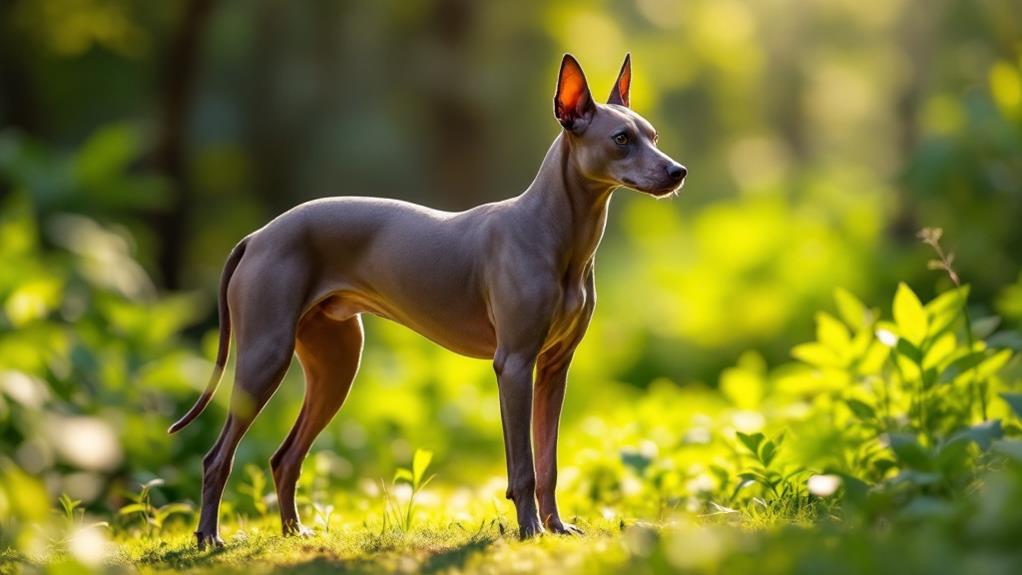
The Peruvian Inca Orchid's health requires keen attention due to its unique vulnerabilities. This breed is prone to specific health conditions, including an incomplete set of teeth, particularly in the hairless variety. Regular teeth brushing and dental examinations during veterinary check-ups are essential to prevent oral health issues. Furthermore, their skin conditions, like acne and lesions, necessitate vigilant care.
Applying sunscreen is critical to protect their delicate skin from sunburn, especially since their hairless nature leaves them more exposed. Regular veterinary check-ups are vital not only for skin evaluations but also to monitor any genetic predispositions, such as epilepsy, which can lead to seizures. You'll need to be mindful of signs of irritable bowel disease (IBD) too, as it can impact nutrient absorption and affect their dietary needs.
Due to these potential health conditions, selecting a reputable breeder who is aware of and actively works to minimize these issues is significant. By being proactive about their health, you can guarantee your Peruvian Inca Orchid remains a happy and healthy companion. Balancing these considerations with their care routine will help manage their unique health profile effectively.
Training and Socialization
Starting with early socialization, the Peruvian Inca Orchid flourishes when introduced to diverse people and environments from a young period. This helps them develop good behavior and adaptability, significant for a well-rounded companion. To effectively train your Peruvian Inca Orchid, you should focus on three key strategies:
- Positive Reinforcement: This breed responds well to rewards and encouragement. Use treats, praise, and playtime to reinforce desired behaviors, making training both effective and enjoyable for your dog.
- Consistency: Given their potential for stubbornness, maintaining a consistent routine is fundamental. Keep commands clear and routines steady to guarantee your dog understands expectations and reduces confusion.
- Exercise: Regular exercise, about 20-30 minutes daily, is critical. It not only prevents behavioral issues but also keeps your dog mentally stimulated, which is significant for their well-being.
Be aware that excessive barking can be a challenge with this breed. Specific training techniques may be necessary to manage and mitigate this behavior effectively. By committing to early socialization, positive reinforcement, and consistent training, you can nurture a well-behaved and happy Peruvian Inca Orchid.