Most Exotic Domestic Cat Breeds: Discover Unique and Rare Cats
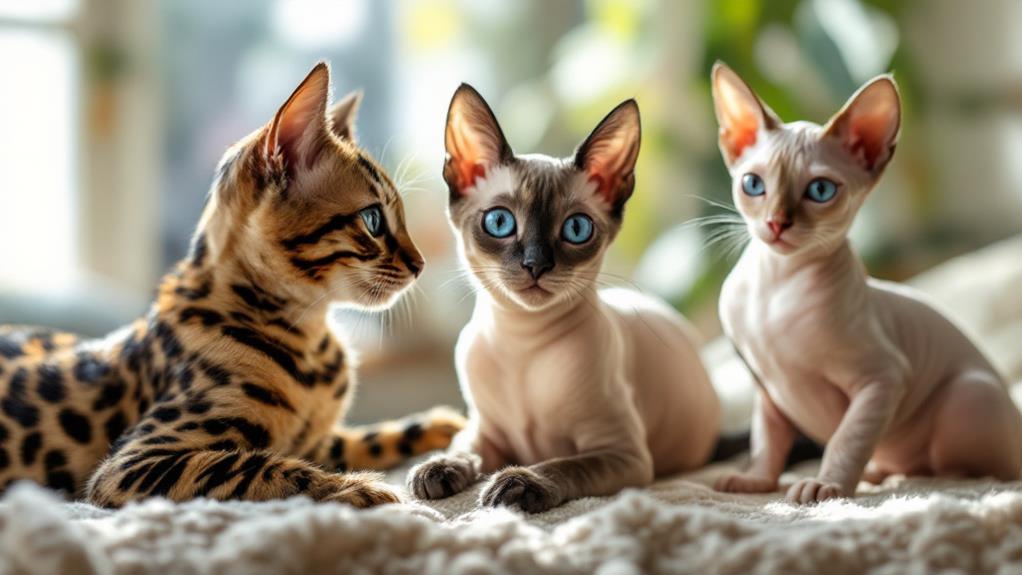
You're about to delve into the enchanting world of exotic domestic cat breeds that stand out with their unique looks and personalities. Imagine Bengals with their mini-leopard spots or Savannahs mixing wild serval charm with feline traits. Sphynx cats draw attention with hairless, affectionate playfulness, while Egyptian Maus impress as the fastest, naturally spotted breed. Toygers give a nod to tigers with their striking stripes. These rare cats require special care, diet, and attention, often reflecting their lively nature. Embracing their uniqueness goes beyond just ownership, inviting you to uncover more about each fascinating breed.
Rare Breeds Overview
Rare domestic cat breeds captivate feline enthusiasts with their unique blend of physical traits and personalities. These rare breeds, like the Ashera and American Bobtail, often result from geographic isolation and limited breeder interest. Their distinctiveness makes them highly sought after by cat lovers who appreciate exotic cat breeds. The Egyptian Mau, with its striking green eyes, and the affectionate Chartreux are perfect examples of cats with distinctive characteristics that set them apart.
Owning one of these rare breeds can be a rewarding experience, but it is crucial to recognize the high ownership costs associated with them. Prices can soar into the thousands due to scarcity and the unique traits of these breeds. Furthermore, many of these cats, including the Scottish Fold and Bengal, have specific health concerns. You'll need to be prepared to meet their specialized care needs, including grooming and dietary considerations.
Adoption is encouraged for those interested in rare domestic cat breeds. It not only helps alleviate the issue of homeless cats but also supports responsible breeding practices. By choosing adoption, you contribute to preserving these unique feline traits while enjoying the affectionate and playful nature of these extraordinary cats.
Unique Traits and Abilities
Feline enthusiasts often marvel at the unique traits and abilities that set exotic domestic cat breeds apart from their more common counterparts. Take Abyssinians, for instance. Their agility and playful nature make them natural athletes, constantly engaging in interactive play that showcases their impressive athleticism. Bengals, on the other hand, are incredibly intelligent, often learning tricks like fetching due to their high problem-solving abilities and innate curiosity. If you're looking for a cat that can keep you on your toes, these breeds are sure to impress.
Savannah cats are another standout with their remarkable speed and endurance. They resemble their wild serval ancestors, making them one of the most active breeds. Their energetic nature means they require plenty of space to roam and investigate. Meanwhile, American Bobtails thrive in family settings thanks to their adaptable and playful personality, making them great companions for households with other pets.
Then there's the LaPerm, known for its affectionate demeanor and unique curly coat. This rare cat breed isn't just visually striking but also makes for an engaging companion. With each breed offering such distinct qualities, you're sure to find one that perfectly fits your lifestyle.
Care and Ownership Tips
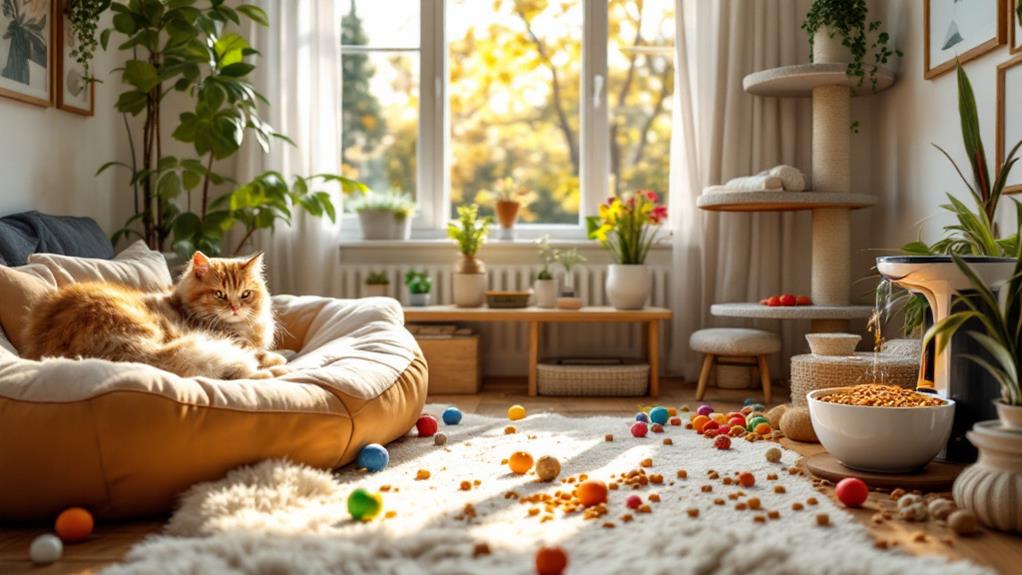
When considering the care and ownership of exotic domestic cat breeds, you'll find that each breed's distinct needs must be carefully addressed to guarantee a healthy and happy pet. For instance, the Egyptian Mau, known for its striking appearance and agility, is one of several rare cat breeds that often require specialized diets. You'll need to research the specific dietary and health needs of your chosen breed to make certain they're getting the right nutrition and veterinary care.
Grooming is another critical aspect. While some exotic cats like the LaPerm need regular grooming due to their curly coats, others, such as the Sphynx, require skincare to maintain their health. Regular grooming sessions also provide opportunities for socialization, helping your cat become well-adjusted and friendly with humans and other pets.
Active breeds like the Savannah and Bengal thrive on mental stimulation and ample playtime. Without these, they may resort to destructive behavior. Providing toys and interactive activities can keep them engaged and content. Finally, familiarize yourself with local regulations concerning exotic cat ownership, as certain breeds might have restrictions. Understanding these ownership tips will help you create the best environment for your exotic feline companion.
Legal Considerations
Steering through the legal landscape of exotic cat ownership is vital for potential owners. Legal regulations can vary widely depending on where you live. Some states in the U.S. require exotic cat breeds like the Savannah to be several generations removed from their wild ancestors before they're considered legal. It's important to explore local laws to grasp any specific ownership restrictions that might apply to your desired breed.
Before you bring an exotic cat home, make certain to check if you need any specific permits or licenses. This guarantees you're aligned with legal obligations and prevents any nasty surprises down the line. Ignoring these requirements can lead to fines or, in the worst-case scenario, animal confiscation.
If you're renting, rental agreements may have their own set of rules regarding exotic breeds. It's vital to review lease terms carefully to avoid conflicts with property management. Understanding these legal considerations not only protects you legally but also guarantees the well-being of your feline friend. Thorough research and preparation are your best allies in steering through the complexities of exotic cat ownership, guaranteeing a smooth adjustment into your home.
Activity and Stimulation
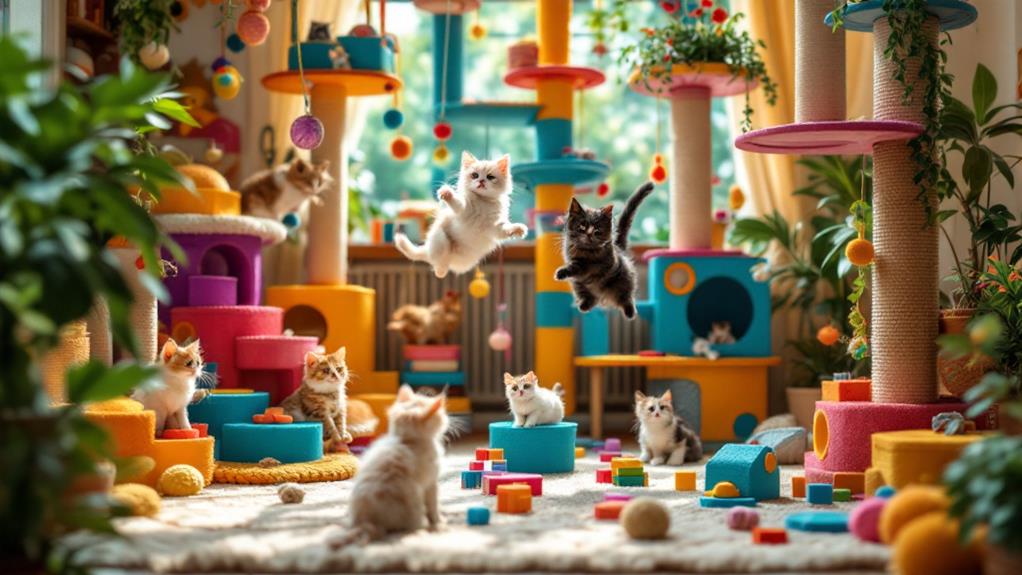
Exotic domestic cat breeds like Bengals and Savannahs are high-energy companions that require ample activity and stimulation to stay happy and healthy. These cats thrive on engaging environments, so it's vital to integrate interactive toys into their daily routine. Regular playtime is significant, offering the chance for both mental challenges and physical exercise. You can introduce puzzle toys to keep their minds sharp and prevent boredom-related mischief. These mental challenges are not just fun for your feline but also beneficial for their general well-being.
For many exotic breeds, like Abyssinians and Chausies, climbing and discovery are favorite pastimes. Consider investing in cat trees or interactive play structures that allow them to climb and investigate safely indoors. These enhancements to your home support their natural instincts and cater to their adventurous spirits. If possible, supervised outdoor adventures can further provide the stimulation they crave, fulfilling their need for investigation.
Aim to spend at least 30 minutes to an hour each day engaging with your exotic cat. This dedicated playtime not only addresses their physical well-being but also strengthens your bond, ensuring a happy and enriched life for your feline friend.
Litter Box Preferences
Many exotic cat breeds have distinct litter box preferences that you should consider to keep them comfortable and happy. Understanding these preferences can make a significant difference in your cat's wellbeing. For instance, larger litter boxes are often necessary for exotic breeds like Bengals and Savannahs, providing enough space for their size and activity level. Regular cleaning is vital since these cats are particular about hygiene and may refuse to use a dirty litter box.
When it comes to litter types, some exotic cats might favor specific options, such as clumping litter or crystal litter, both of which help control odor and simplify cleaning tasks. Experimenting with different textures and scents can be advantageous due to their individual preferences. Furthermore, consider the appeal of covered litter boxes for some breeds, offering privacy and a sense of security.
To sum up, here's what you should keep in mind:
- Larger litter boxes: Fundamental for space and comfort.
- Specific litter types: Clumping or crystal litter for odor control.
- Regular cleaning: Maintains hygiene and encourages use.
- Covered litter boxes: Provides privacy and security.
- Individual preferences: Experiment with textures and scents.
Addressing these needs can guarantee your exotic cat remains content and stress-free.
Exotic Breed Profiles
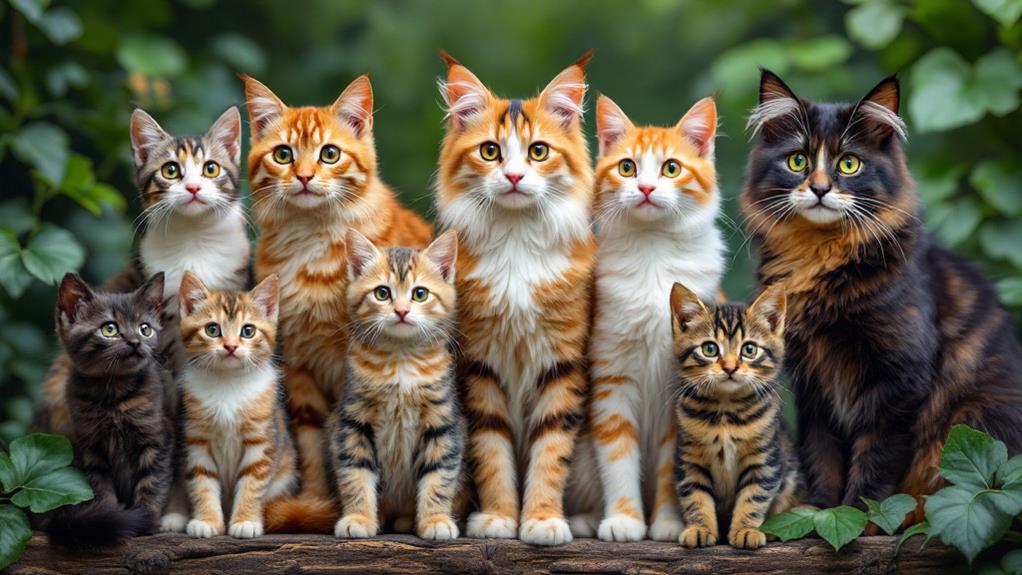
Among the fascinating world of exotic domestic cat breeds, you'll find a rich tapestry of unique characteristics and traits that make each one special. Bengal Cats captivate with their striking appearance, resembling mini leopards with their beautiful, spotted coats. Their high energy levels and intelligence mean they love engaging in playful activities like fetching and even playing in water.
Savannah Cats, a blend of serval and domestic cats, boast a unique charm. They can weigh up to 25 pounds and are renowned for their dog-like loyalty and playful nature. Their striking appearance and friendly demeanor make them a rare breed you won't easily forget.
Sphynx Cats turn heads with their hairless bodies and distinct skin texture. Their lively disposition and affectionate nature mean they constantly crave human attention, making them delightful companions.
The Egyptian Mau, the only naturally spotted domestic cat, stands out with its striking green eyes and incredible speed, running up to 30 mph. Their playful personality contributes to their exotic allure.
Toyger Cats, with their tiger-like stripes, embody the playful nature, friendliness, and rare breed status, making them a truly unique enhancement to any household.