Long-Haired Cat Breeds: Gorgeous Cats With Luxurious Coats
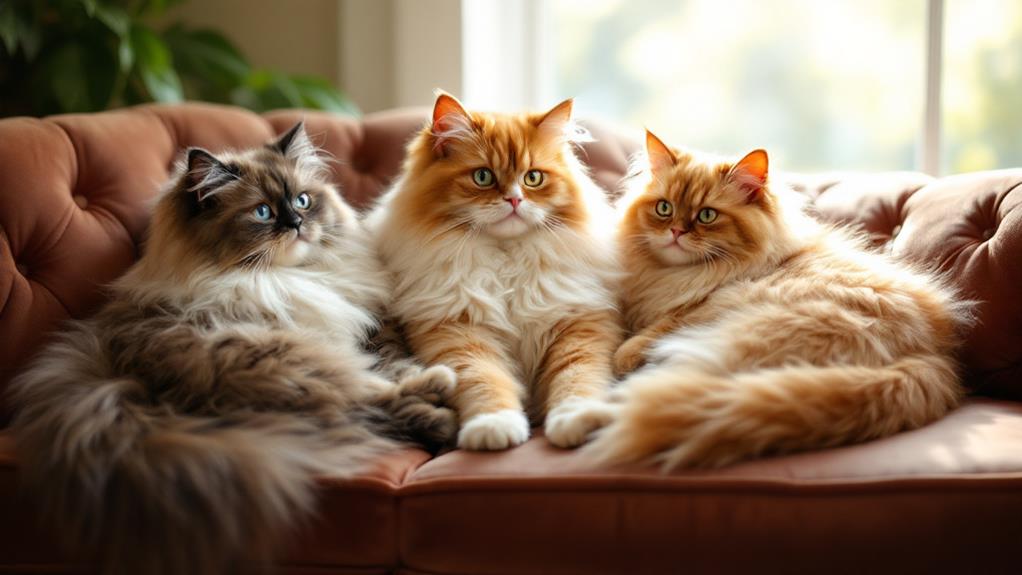
Long-haired cat breeds like the Maine Coon, Persian, Ragdoll, and Siberian are enchanting with their luxurious coats and affectionate temperaments. You'll find Maine Coons sporting a thick, water-resistant coat, while Persians dazzle with their elegant fur. Ragdolls' plush coats demand less grooming, contrasting the Siberian's regular maintenance needs. Each breed carries unique features that adapt to cold climates, thanks to their origins in harsh environments. Caring for these beautiful cats involves consistent grooming and high-quality nutrition. Regardless if you've already picked a favorite or are still deciding, there's plenty more to know about these gorgeous feline companions.
Popular Long-Haired Breeds
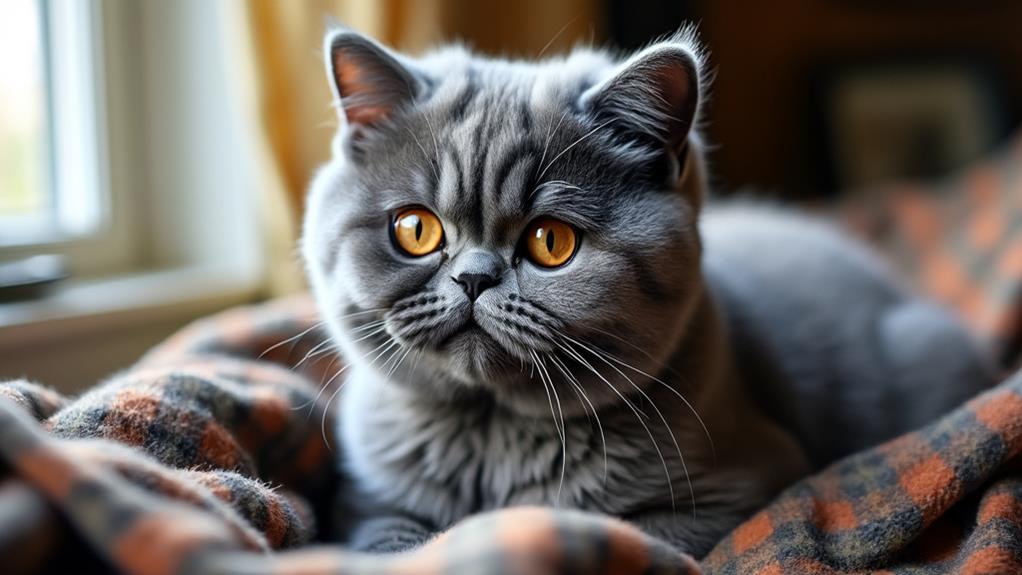
Regarding popular long-haired cat breeds, the Maine Coon often steals the spotlight. With its friendly temperament and thick, water-resistant coat, it's a gentle giant among cats. You'll need to commit to regular grooming to keep their luxurious coats in top shape. Likewise, Persians are another beloved breed, instantly recognizable with their flat faces and elegant fur. Their luxurious coats demand daily grooming to prevent unsightly matting, but their beauty makes the effort worthwhile.
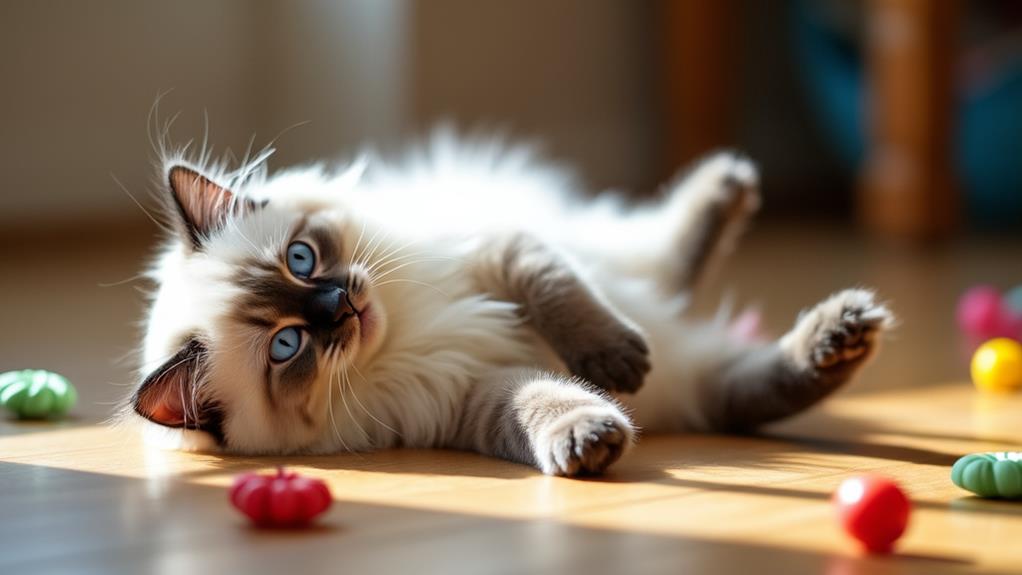
If you're looking for a cat with a docile nature, the Ragdoll might be your perfect match. This breed is famous for going limp when held, and its plush coat requires minimal grooming compared to other long-haired breeds. For those residing in colder climates, the Siberian cat is an excellent choice. Its triple-layered, water-resistant coat and playful, affectionate personality make it a delightful companion. However, regular grooming helps manage their thick fur.
Unique Coat Features
When exploring unique coat features among long-haired cat breeds, you'll find an array of fascinating traits. Take the Persian and Ragdoll, for instance, with their luxurious fur that requires diligent grooming to stay mat-free and shiny. These breeds are the epitome of a fluffy cat breed, with coats that captivate any cat lover.
The Maine Coon stands out with its thick double coat, which is water-resistant and perfect for cold climates. This insulating undercoat makes it well-suited for outdoor adventures, even in harsh conditions. Another breed with a cold-weather advantage is the Norwegian Forest Cat, boasting a semi-long coat and dense undercoat, designed to endure the bitter cold while maintaining its rugged beauty.
For something a bit different, the LaPerm offers curly coats, which can vary from gentle waves to tight ringlets. This unique feature is the result of a natural genetic mutation that also reduces shedding compared to other long-haired cats. Ultimately, Birmans showcase their striking blue eyes and distinctive colorpoint coats, with a cream body contrasted by darker points on their ears, face, paws, and tail, adding to their elegant charm.
Grooming Essentials
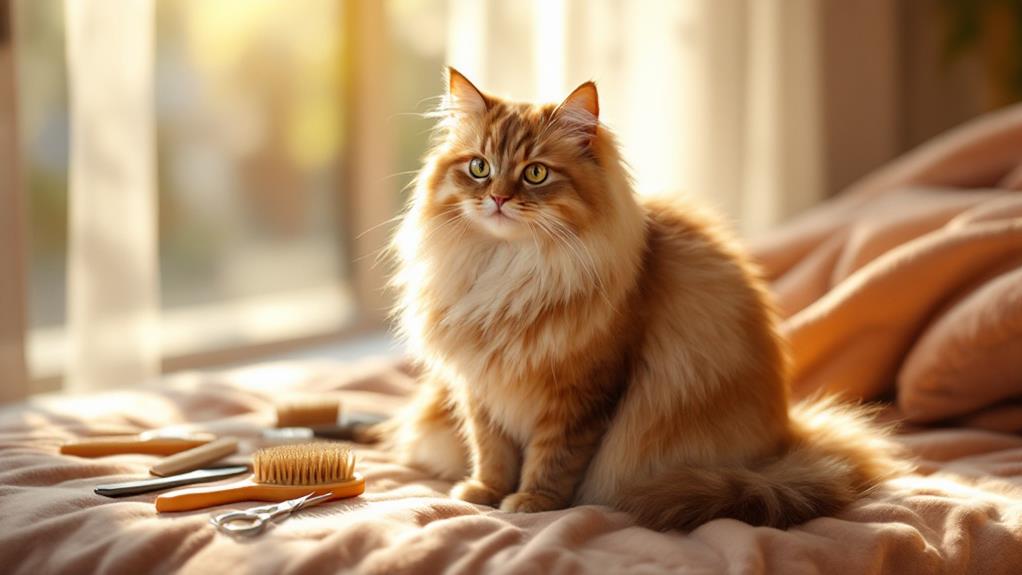
Exploring the unique coats of long-haired cat breeds can be enchanting, but maintaining their beauty requires attention to grooming necessities. Regular grooming is vital for these breeds to prevent matting, reduce shedding, and keep their coats shiny. Daily brushing is a must for high-maintenance breeds, while others may require brushing every few days. Quality grooming tools like slicker brushes, wide-toothed combs, and nail clippers are fundamental in caring for their distinctive coats.
You should frequently check for mats in dense fur areas, as they can become uncomfortable for your cat. Gently separate matted fur with your fingers instead of pulling to avoid causing pain. Regarding bathing, only bathe long-haired cats when necessary. Use cat-specific shampoos and guarantee a thorough rinse to prevent skin irritation. Consider professional grooming services for bathing if needed.
Nutrition plays a significant role in maintaining healthy skin and fur. Feeding your cat a high-quality diet rich in omega fatty acids can improve their coat's health. By focusing on these grooming fundamentals, you'll guarantee your long-haired cat remains not only beautiful but also comfortable and healthy.
Origins and History
Long-haired cats boast a fascinating history rooted in the cold, northern regions of the world. In places like Russia, Iran, and Turkey, domestic cats developed long-haired breeds as a response to harsh climates. These regions experienced cold winters, so natural selection favored cats with longer coats for better insulation. Historical evidence even hints that long-haired breeds may have traveled on Viking ships, spreading across Europe.
Among the earliest known long-haired breeds is the Persian breed. It's believed to have descended from the Turkish Angora, with its unique features evolving over centuries. Both breeds originated in regions where cold temperatures demanded thick, water-resistant coats to protect against the elements. This adaptation is evident in other long-haired breeds like the Maine Coon and Norwegian Forest Cat, which also hail from colder climates.
The genetic traits responsible for long hair in domestic cats are linked to recessive genes. This means that while these luxurious coats are less common than their short-haired counterparts, they are a beautiful reminder of the adaptability and resilience of these cats. Their trek from the northern regions to homes worldwide showcases their enduring appeal and distinctive charm.
Benefits and Challenges
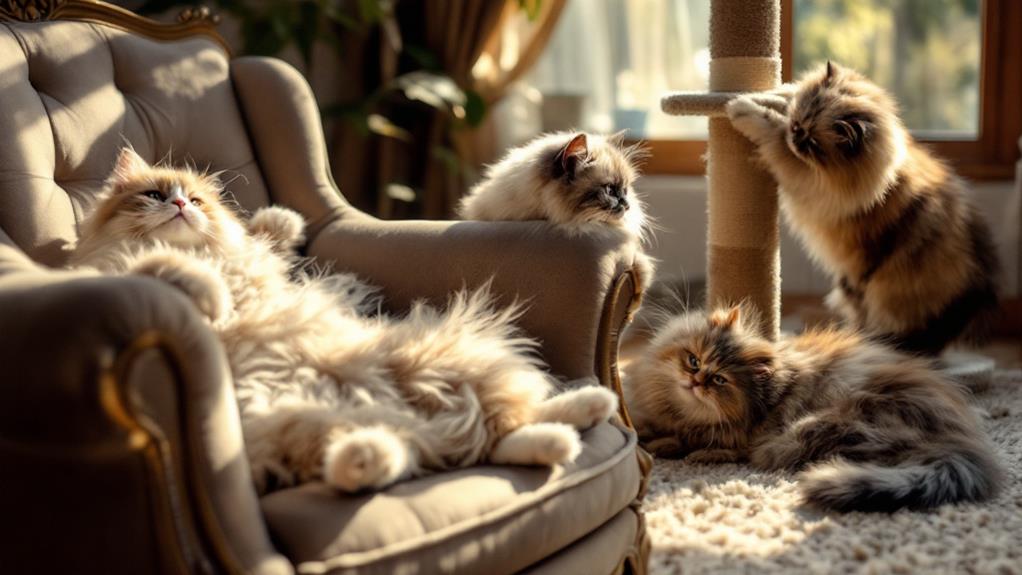
Moving from their historical roots to their modern-day allure, these cats bring both beauty and responsibility into your home. Long-haired cat breeds like Persians and Maine Coons enchant with their luxurious coats, offering both aesthetic pleasure and emotional support. Their affectionate temperaments make them family-friendly companions, ideal for providing warmth and companionship. However, this beauty comes with grooming needs that require your attention. Regular brushing is crucial to prevent matting and maintain their stunning appearance. Some breeds demand daily brushing, while others might suffice with every few days, depending on their coat's maintenance requirements.
Be prepared to manage the shedding that accompanies these breeds, as it can lead to extra cleaning around your home. Consider your willingness to accept this aspect before committing. Moreover, watch for potential health issues like hairballs and skin conditions. These cats thrive on regular interaction and play, further cementing their need for a committed and engaged owner. In return, their gentle nature and ability to bond closely with families make them rewarding pets. Balancing their care with your lifestyle guarantees that both you and your feline friend enjoy a harmonious and fulfilling relationship.