Leopard Gecko Care Guide: Everything You Need to Know as an Owner
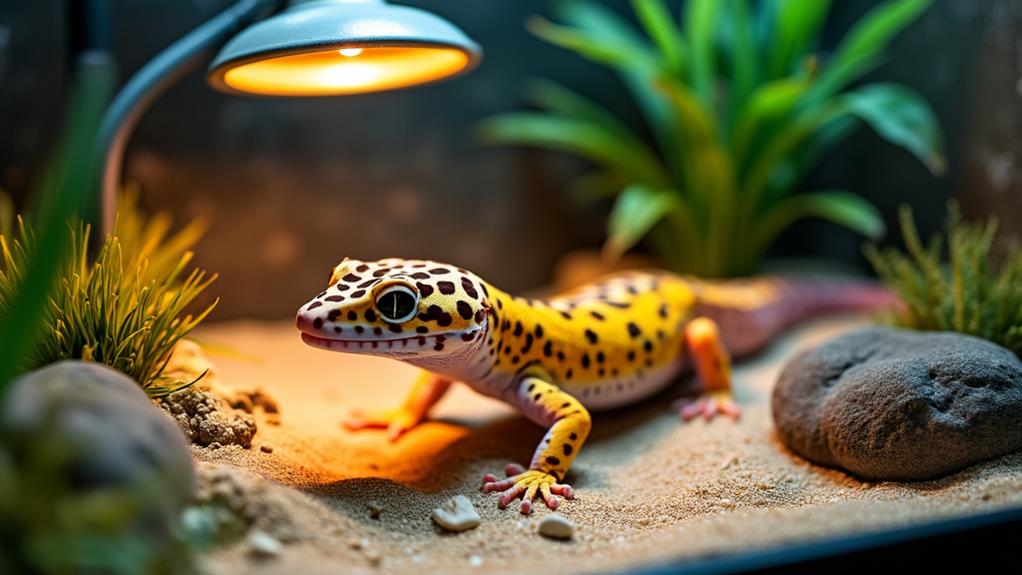
Caring for a leopard gecko means creating a proper environment and offering a diet that matches their natural habits. Set up a 10-gallon terrarium for one gecko with a warm side at 85-90°F and a cool side about 75°F. Include hiding spots and maintain a humidity level of 30-40%, with a moist hide for shedding. Feed them gut-loaded insects such as crickets, and dust them with calcium a few times a week. Regular vet check-ups verify they're healthy, and daily spot cleaning keeps their habitat clean. To truly understand everything about them, there's much more to investigate.
Key Takeaways
- Provide a terrarium of at least 10 gallons with proper temperature and humidity levels.
- Maintain a temperature gradient: warm side 85-90°F, cool side 75-80°F.
- Feed a diet of gut-loaded insects, dusted with calcium supplements 2-3 times weekly.
- Ensure daily fresh water availability and a damp hide for humidity.
- Conduct regular veterinary check-ups and clean the enclosure every two weeks.
Species Overview
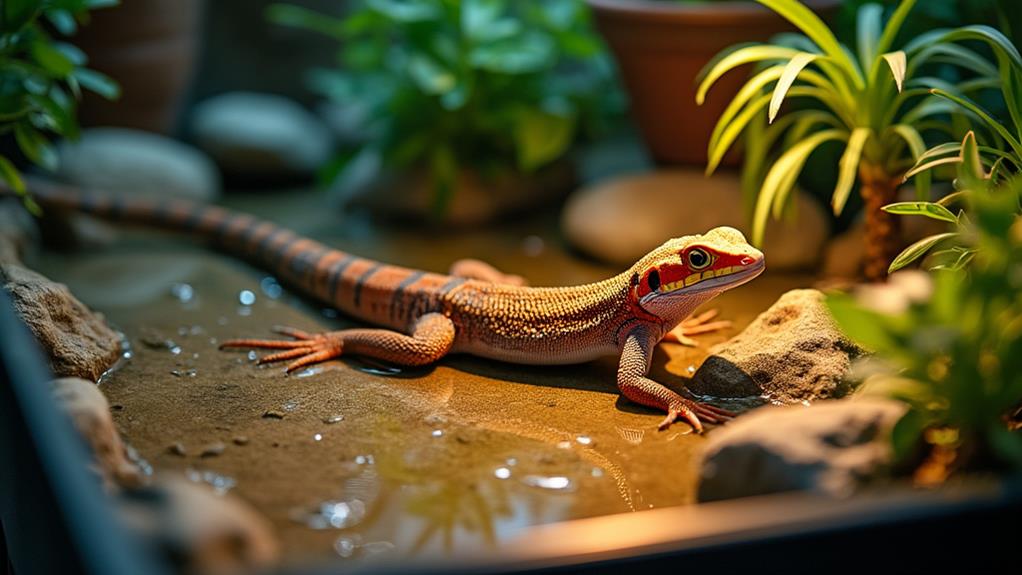
When you're considering a pet reptile, the leopard gecko stands out as a fantastic choice. Known scientifically as Eublepharis macularius, this exotic pet is native to the arid regions of Pakistan, Northern India, and Afghanistan. Their docile nature makes them ideal for beginners seeking a low-maintenance companion. With proper care, leopard geckos can live between 15-18 years, with some even surpassing 20 years, offering a long-term commitment to your household.
These geckos reach an adult size of 7-9 inches and display a wide range of color and pattern morphs, which makes them especially popular among reptile enthusiasts. Their activity peaks during dusk and dawn, as they are nocturnal creatures. You'll find them communicating through unique vocalizations and expressive tail movements.
To guarantee your gecko thrives, maintaining the right habitat is vital. While specific housing details are covered in the next section, keep in mind that their natural environment's temperature and humidity levels are key to their well-being. Providing a stable temperature is fundamental, as it influences their activity and health. With the right conditions and attentive care, your leopard gecko will be a lively and fascinating enhancement to your family.
Housing and Environment
Creating a suitable habitat for your leopard gecko is fundamental to its health and happiness. Start with a minimum size terrarium of 10 gallons for one gecko, but consider a 20-gallon tank if you're housing more than one. This extra space guarantees they have ample room to investigate and thrive. Incorporate diverse hiding spots using non-toxic materials like half logs, caves, or cardboard boxes. These should be placed on both the warm and cool sides of the enclosure to allow your gecko to regulate its body temperature effectively.
An appropriate temperature gradient is essential. The warm basking area should be 85-90°F, while the cool side should sit at 75-80°F. Nighttime temperatures can safely drop to about 70°F. Maintaining a humidity level of 30-40% is crucial, with damp hides reaching up to 80% to assist in shedding. Use a hygrometer to monitor these levels accurately.
Regular cleaning is key to a healthy environment. Spot clean daily and perform a full clean every two weeks to prevent waste and bacteria build-up. Here's a quick checklist for their habitat:
- Minimum size: 10 gallons for one gecko
- Temperature gradient: 85-90°F warm side, 75-80°F cool side
- Hiding spots: Non-toxic materials on both sides
- Humidity level: 30-40%, with damp hides at 80%
- Regular cleaning: Spot daily, full clean bi-weekly
Temperature and Lighting
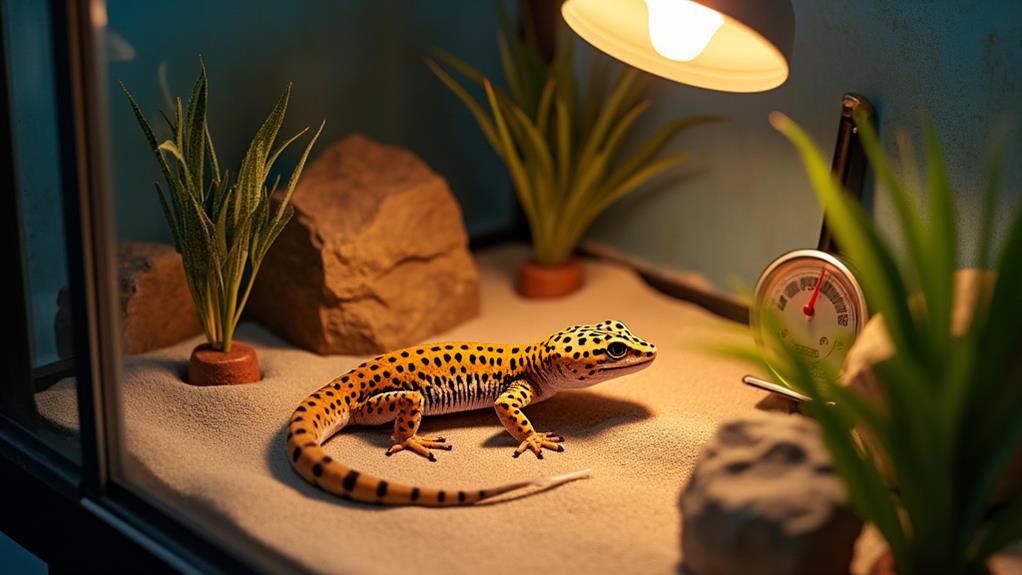
To keep your leopard gecko healthy and comfortable, focus on maintaining the right temperature and lighting within its enclosure. Leopard geckos thrive in a daytime temperature range of 80-82°F, with a warm area reaching 85-90°F for basking. Since they don't bask like other reptiles, an under-tank heater should be your primary heat source. This setup allows them to absorb heat from below, closely mimicking their natural environment. At night, it's okay for the temperature to drop to around 70°F, which aligns with their nocturnal habits.
A temperature gradient is vital. Make sure there's a cool side of about 75°F, which helps your gecko thermoregulate effectively. Use a reliable thermostat to keep these temperatures consistent, and lay down reptile carpet to prevent burns from direct contact with the heater.
Lighting is also significant. Implement a light cycle of 10-12 hours daily, although UVB lighting isn't necessary due to their nocturnal nature. Ultimately, regular monitoring of the enclosure's conditions is fundamental. Keep the humidity at 30%-40%, using a hygrometer to maintain this level. Properly balancing temperature, lighting, and humidity guarantees your leopard gecko's health and well-being.
Feeding and Nutrition
Feeding your leopard gecko a balanced diet is vital for its health and well-being. Leopard Geckos need a diet primarily consisting of live insects like crickets and mealworms. To guarantee proper nutrition, feed your gecko live insects that have been gut-loaded for at least 24 hours before feeding. Juveniles require daily feeding, while healthy adults typically need feeding every 2-3 days. It's imperative to practice portion control to prevent obesity, as overfeeding can lead to health issues. Look for fat reserves in their tails as an indication of a healthy adult.
To improve their diet, dust the insects with calcium powder 2-3 times a week. This helps in providing necessary calcium and vitamin D, vital for bone health. Moreover, offer multi-vitamins once a week for juveniles and bi-monthly for adult geckos.
Don't forget to provide fresh water daily. Use a shallow, tip-proof dish to prevent spills and guarantee your gecko stays hydrated. Regularly clean and refill the water dish.
- Daily feeding for juveniles, every 2-3 days for adults
- Crickets and mealworms as primary food
- Calcium powder 2-3 times weekly
- Fresh water available daily
- Gut-loaded insects before feeding
Health and Wellness
Guaranteeing your leopard gecko's health and wellness involves regular veterinary check-ups and vigilance for any signs of stress or illness. It's essential to monitor for symptoms like lethargy, hiding, weight loss, or abnormal shedding. These could signal underlying health issues that need immediate attention. Providing proper Leopard Gecko Care means maintaining a clean habitat to prevent infestations from mites and parasites, both of which can greatly impact your gecko's well-being.
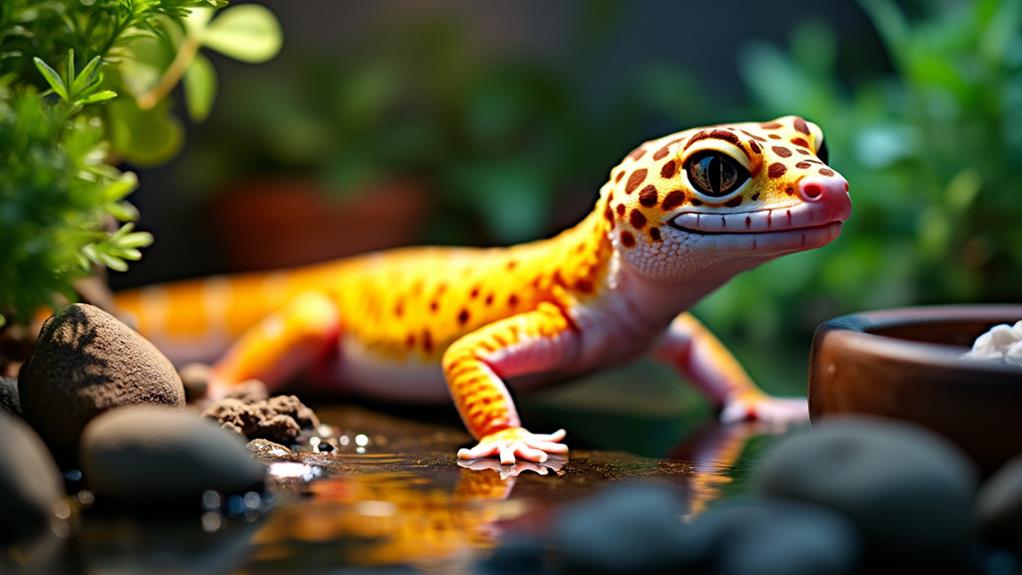
Hydration plays a crucial role in your gecko's health. A humid hide not only aids in shedding but also guarantees their skin remains healthy and functional. A balanced diet is another cornerstone of Leopard Gecko Care. Supplement their meals with calcium to prevent metabolic bone disease, a common issue in reptiles. Without adequate calcium, your gecko could suffer from weak bones, which can lead to severe health problems.
Regularly checking their environment and diet guarantees your gecko stays lively and active. Remember, early detection of any health issues through veterinary care can make a considerable difference in your gecko's life. With careful attention to their needs, you'll support a healthy, flourishing pet.