How to Train Your Dog at Home: Tips for Effective Training
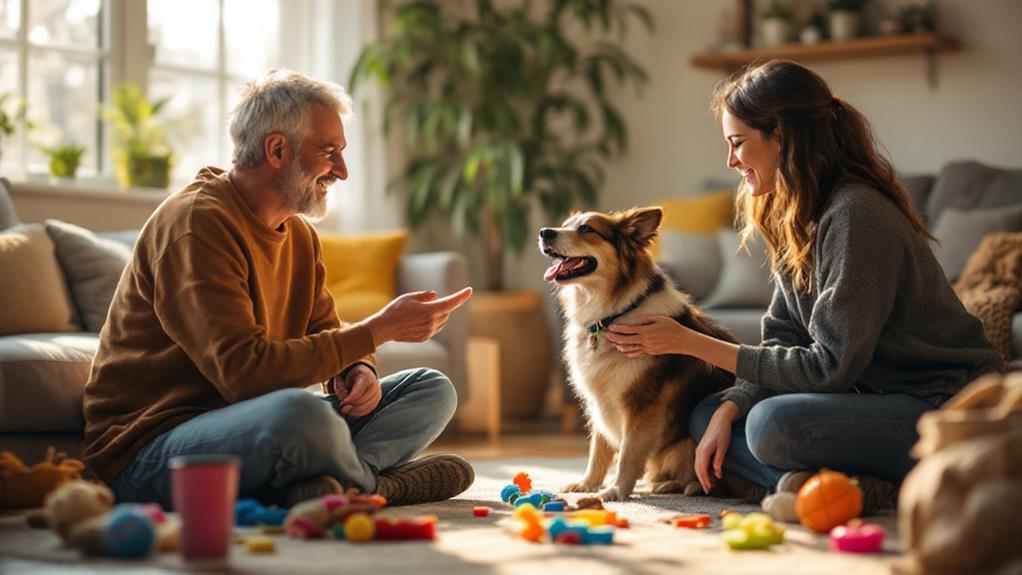
Training your dog at home is both rewarding and crucial for a strong relationship. Start by using positive reinforcement with treats and praise to encourage desired behaviors. Stick to short, consistent sessions, focusing on basic commands like "sit" and "stay." Establish a regular routine for housetraining, and use a designated area for bathroom breaks. For leash training, a no-pull harness helps, and socializing in controlled settings improves confidence. Managing behavioral issues involves identifying triggers and maintaining a consistent training approach. By using these key elements, you'll set your dog up for success and uncover more training insights.
Benefits of Training Your Dog
Training your dog at home offers numerous benefits that can transform your relationship with your furry friend. By focusing on dog training, you establish basic obedience, which improves safety and communication. A well-trained dog is less likely to engage in dangerous behaviors or run away during off-leash activities. This clear communication strengthens your bond, creating a positive relationship filled with mutual understanding.
Using positive reinforcement during training can greatly reduce behavior issues like aggression and anxiety. It promotes a harmonious household where your dog feels secure and understood. Training your dog also provides mental stimulation, essential for intelligent breeds prone to boredom. This engagement not only prevents destructive behaviors but also improves their general well-being.
Socializing your dog through training is another key benefit. It helps them become well-adjusted, confident, and comfortable in different environments, regardless of whether it's around various people or other pets. This aspect of dog training guarantees your dog can handle diverse situations with ease. Ultimately, training your dog at home empowers you to nurture a well-behaved, happy companion, enriching both your lives and strengthening your lifelong connection.
Understanding Canine Learning
Grasping the nuances of canine learning can greatly improve your training efforts. In dog training, positive reinforcement is vital. Rewarding your dog for following basic commands increases the chances they'll repeat those actions. However, timing of rewards is significant. Immediate rewards help your dog connect the action with the treat, enhancing their learning retention.
Consistency in commands is another important aspect. Using the same words and gestures reduces confusion and helps your dog understand exactly what you expect. If you say "sit" one day and "sit down" the next, your dog might not know what to do. Stick to the same commands for clarity and effectiveness.
Recognizing canine body language is also beneficial. Dogs communicate a lot through their posture, tail movements, and facial expressions. By understanding these cues, you'll better gauge your dog's emotional state and reactions, making your training sessions more productive.
Essential Training Techniques
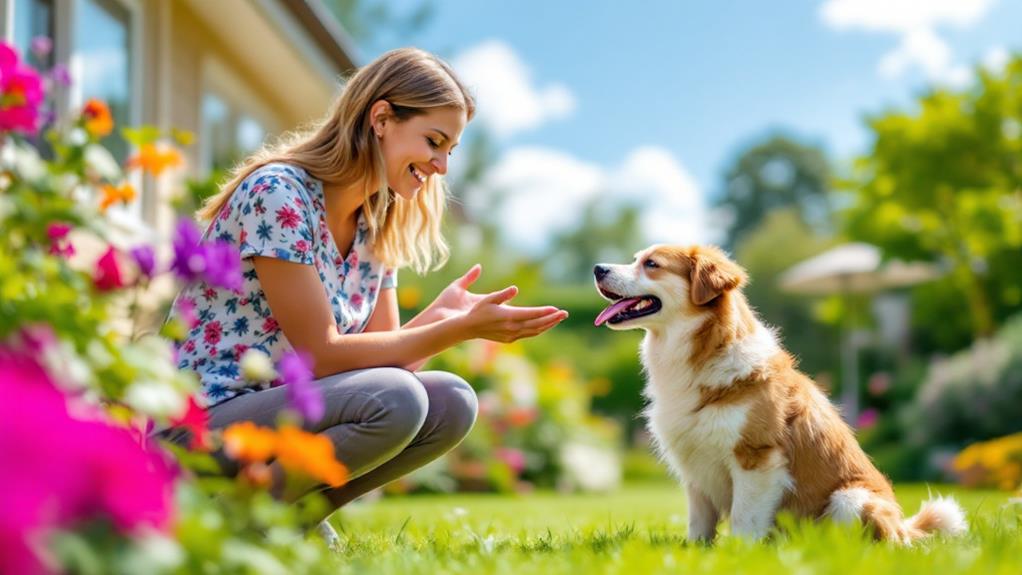
Mastering critical training techniques can make a world of difference in your dog's behavior and your relationship with them. Start with potty training, which is fundamental for both puppies and adult dogs. Use consistent methods and designate a specific elimination area to help establish proper habits. Positive reinforcement, like treats or praise, encourages your dog to continue the desired behavior.
Leash training is another important aspect of dog training. A no-pull harness is a great tool to prevent pulling and lunging during walks, ensuring safe and enjoyable outings. Crate training provides your dog with a secure space, aiding in housebreaking and offering a comforting retreat. Fostering a positive association with the crate makes it a welcomed sanctuary rather than a place of confinement.
Teaching your dog their name improves recall and focus, strengthening communication during training. Consistent training expectations are key, as dogs thrive on routine and clear guidelines. Reinforce basic commands regularly to promote better behavior. By integrating these fundamental training techniques, you'll create a harmonious environment where your dog knows what's expected, making the process smoother and more rewarding for both of you.
Basics of Obedience Commands
When you teach your dog basic obedience commands like "Sit," "Stay," "Come," "Down," and "Leave It," you lay the groundwork for a well-behaved companion. These commands are essential for ensuring safety and creating a bond of trust between you and your dog. Begin with short, focused training sessions, ideally lasting 5-10 minutes. This is especially significant for puppies, who may have shorter attention spans. Consistency is key in obedience training, so use clear cues and body language for each command to help your dog understand what's expected.
Positive reinforcement through treats or praise is critical. When your dog responds correctly, reward good behavior to increase the likelihood of them repeating it. This approach not only makes training sessions more effective but also strengthens your relationship with your dog. Always end on a positive note by wrapping up with a familiar command. This leaves your dog with a sense of accomplishment, setting the stage for successful future training sessions.
Effective Housetraining Methods
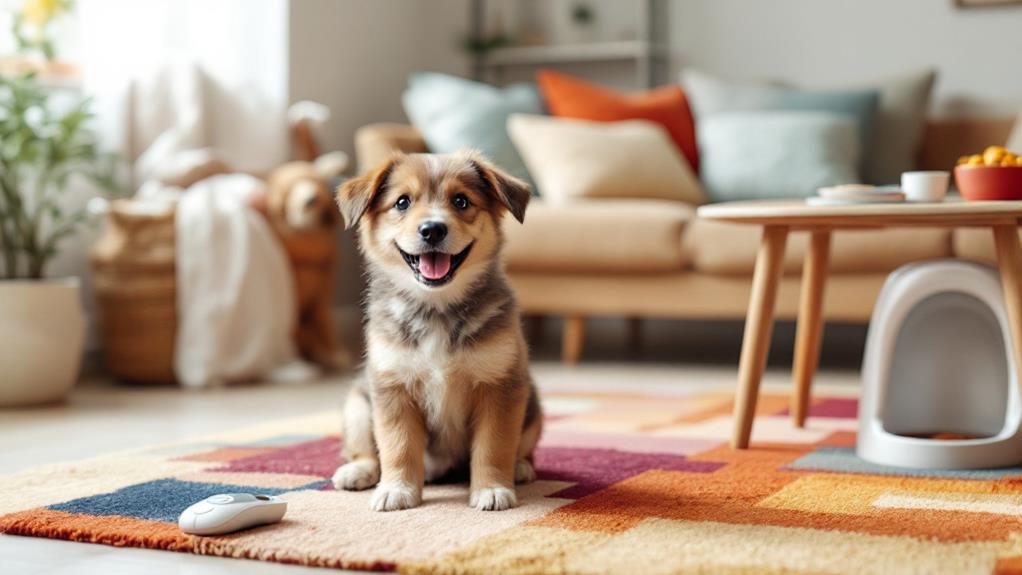
Many dog owners find housetraining to be a vital part of integrating a new pet into their home. To start, establish a consistent routine for your dogs by scheduling regular potty breaks, ideally every 1-2 hours for puppies. This consistency helps them understand when it's time to go outside. Designate specific areas in your yard for elimination to create a clear association between those spots and bathroom needs. This association reinforces positive habits over time.
Use positive reinforcement to encourage desired behavior. When your dog successfully uses the designated area, immediately reward them with treats and praise. This encourages them to repeat the behavior. It's important to monitor signs that your dog needs to go out, like sniffing, circling, or whining. Recognizing these signs early can prevent accidents indoors.
Crate training is another effective housetraining method. Dogs naturally avoid soiling their sleeping area, so using a crate can promote bladder control. Confirm the crate is a comfortable, safe space. By combining crate training with positive reinforcement and a consistent routine, you'll find housetraining your dog becomes a manageable task, resulting in a well-adjusted pet in your home.
Leash Training and Socialization
Leash training and socialization are vital components of raising a well-behaved dog. Start by introducing your dog to a leash and a no-pull harness. This guarantees safe and comfortable walks, promoting positive interactions right from the start. Use loose leash techniques to train your dog to walk calmly beside you. This prevents pulling or lunging during outings, giving you better control and guaranteeing a pleasant experience for both of you.
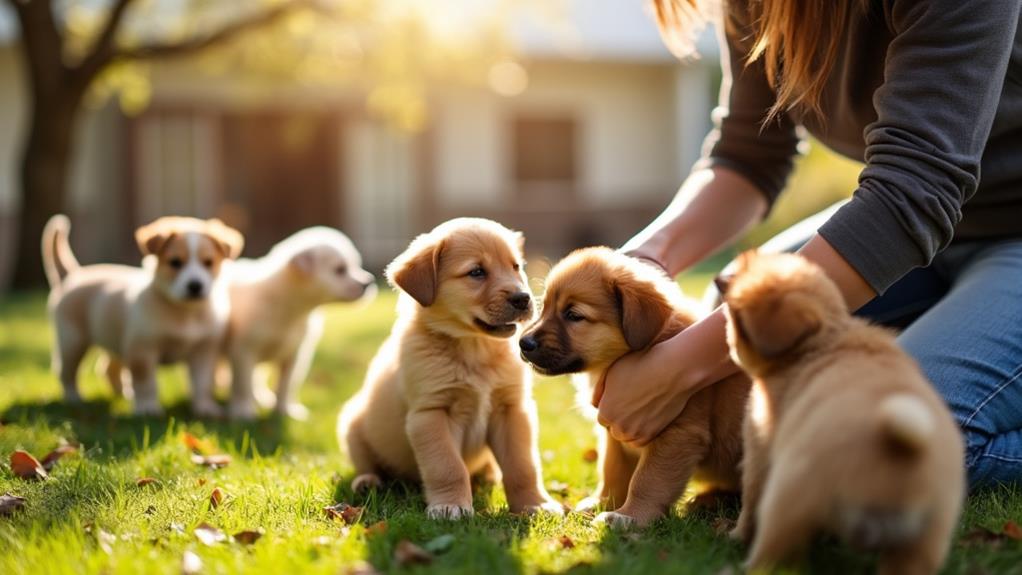
Early socialization is fundamental. Expose your dog to new people, animals, and environments to promote acceptance and prevent fear-based behavior problems. Controlled socialization settings, like puppy classes or playgroups, provide great opportunities for your dog to interact positively with others. These environments help your dog understand how to behave in social settings, building confidence and establishing basic dog skills.
Reinforce good leash manners and positive interactions with treats and praise. This approach creates a well-adjusted, confident dog that enjoys walks and social settings. Training classes can further support your efforts, offering structured guidance. Remember, consistent practice and patience are key. Controlled socialization and proper leash training guarantee your dog becomes a happy, well-behaved companion.
Managing Behavioral Issues
Building on the foundation of leash training and socialization, addressing behavioral issues becomes the next step in raising a well-mannered dog. To effectively train your dog, start by identifying the root causes of behavioral issues, such as boredom or anxiety. Recognizing these triggers allows you to modify unwanted behaviors effectively. Early socialization plays a critical role in preventing fears and aggression, helping your dog become more adaptable to diverse environments and reducing potential issues.
Managing the dog's environment is another crucial strategy. Keep your dog away from situations that might reinforce undesirable actions. For instance, if jumping on guests is a problem, try using barriers until your dog learns proper greetings. Positive reinforcement techniques, like rewarding good behavior immediately, encourage your dog to repeat desired actions. Consistency in rewarding these actions helps redirect negative habits.
It's also important to watch for signs of stress or discomfort during training. Addressing these signs promptly can prevent escalation of behavioral issues and guarantee a more positive training experience. By combining these approaches, you create a supportive environment that helps your dog thrive, making the training process both effective and enjoyable.
Advanced Training Resources
For those looking to improve their dog's training, numerous advanced resources are available to support your journey. You can investigate a variety of advanced training resources like books, online courses, and videos that offer step-by-step guidance for teaching complex commands and tricks. These materials can help you grasp new training methods and techniques that raise your dog's skills.
Consider joining local dog training clubs or attending workshops for hands-on experience. These venues provide access to professional trainers who can offer personalized guidance, tailoring techniques to suit your dog's needs. They also foster a community atmosphere where you can share experiences and learn from others.
Many trainers advocate for Clicker Training, which effectively marks desired behaviors and boosts communication between you and your dog. Online platforms such as The Spruce Pets and the Association of Professional Dog Trainers (APDT) offer a wealth of articles, forums, and support groups. These resources guarantee ongoing learning and troubleshooting whenever you're facing challenges.
Engaging in dog sports like agility or obedience competitions provides structured environments for skill development and socialization. By leveraging these advanced training resources, you and your furry companion will continue to grow and thrive together.