How to Take Care of Your Dog During Emergency Situations
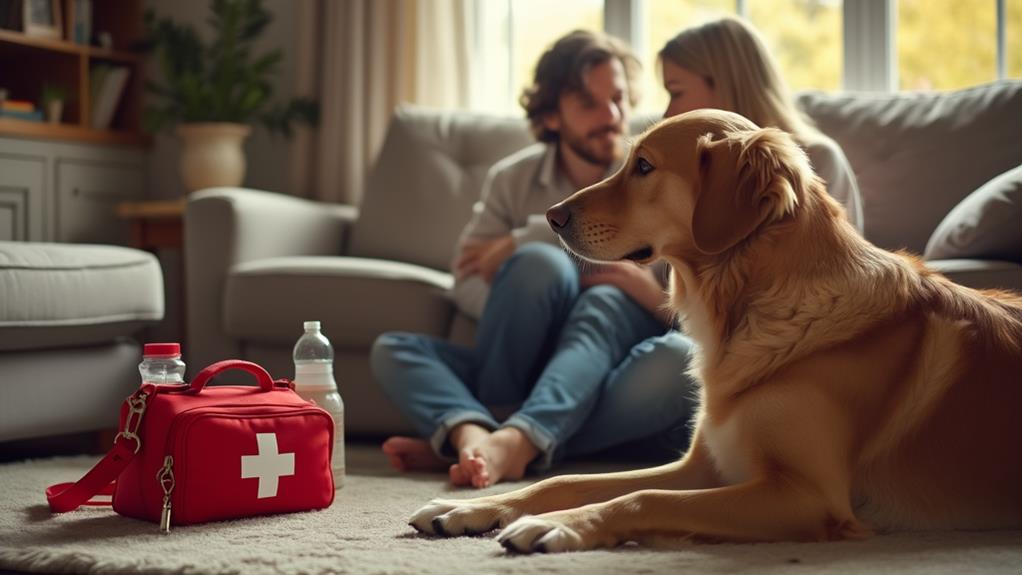
In emergency situations, start by assembling an emergency kit for your dog with necessities like food, water, medications, and a primary aid kit tailored for pets. Keep vaccination records and microchip info in a waterproof pouch. Identify pet-friendly shelters and practice evacuation drills including your dog for a seamless escape. Equip your travel kit with collapsible bowls, a leash, and familiar items like toys for comfort. Monitor your dog's behavior for distress and guarantee a stable post-disaster environment. Update your dog's identification info and use emergency stickers for rescue alerts. By preparing comprehensively, you're ready for any situation that arises.
Key Takeaways
- Assemble an emergency kit with food, water, medications, and comfort items for your dog.
- Identify pet-friendly evacuation locations and practice evacuation drills with your dog.
- Equip your dog with an ID collar and microchip for quick identification.
- Monitor local emergency alerts and follow officials' instructions during emergencies.
- Familiarize yourself with dog first aid techniques and recognize signs of canine distress.
Emergency Preparedness for Dogs
How prepared are you for an emergency regarding your dog? It's essential to have a solid plan for your pet, guaranteeing their safety and comfort during unexpected situations. Start by assembling an emergency kit that includes necessities like three days' worth of food, collapsible bowls, necessary medications, and vaccination records. Don't forget a primary aid kit tailored for your dog's needs. This kit is your lifeline for your pet in case of sudden evacuations.
Keeping your dog's ID tag and microchip information up-to-date is important. In the chaos of an emergency, a current ID tag can be the quickest way to reunite with your pet if you get separated. Furthermore, have an emergency contact listed who can be reached in case you're unavailable.
Regularly familiarize your dog with a carrier or travel crate. Leave it accessible at home and use treats to encourage them to enter it willingly. This reduces stress during travel or evacuations. Practicing evacuation drills that include your dog helps them know where to go and what to expect. By planning for your pet's needs, you guarantee their safety and reduce stress for both of you.
Creating a Safety Plan
When planning for emergencies, consider your dog's specific needs to create a thorough safety plan. As responsible pet owners, it's significant to prepare your pets for any emergency situations. Start by identifying pet-friendly shelters and evacuation locations in advance. Knowing where you can safely take your dog reduces stress during evacuations.
A reliable buddy system is also fundamental. Coordinate with neighbors or friends who can help care for your dog if you're unable to do so. Exchange contact information with these trusted individuals, guaranteeing they're aware of your dog's needs and routines. This network provides peace of mind, knowing someone can step in when emergencies arise.
Keep your dog's identification information, like microchip details and vaccination records, easily accessible. Store these documents in your emergency go-bag, allowing quick access during hurried evacuations. This guarantees your dog can be identified and treated if separated from you.
While assembling an evacuation kit is essential, practicing evacuation drills with your dog is similarly significant. Familiarize them with entering carriers and following commands to make changes smoother. By implementing these steps, you'll be well-prepared to protect your furry friend during emergency situations.
Assembling a Dog Emergency Kit
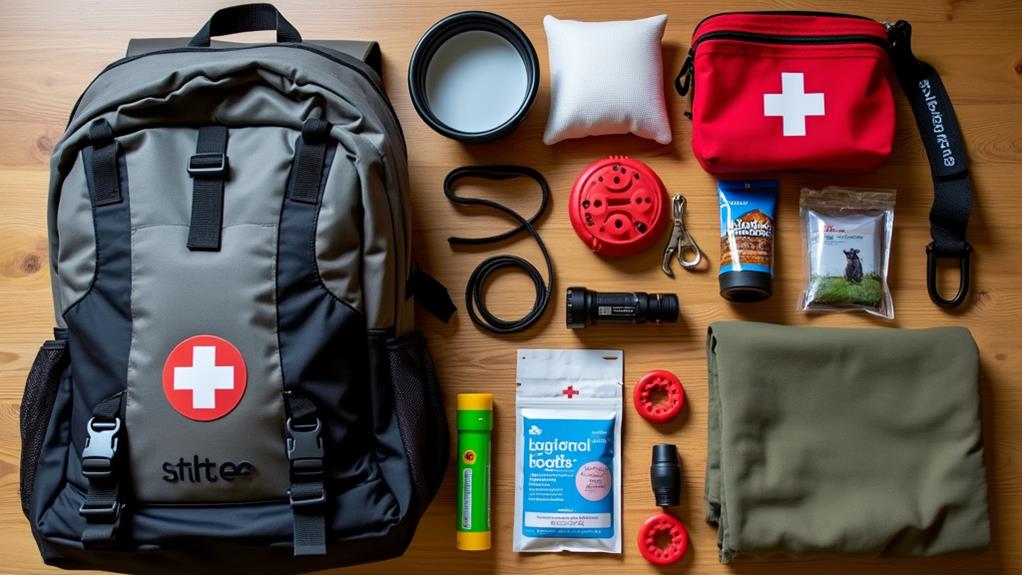
Preparing your dog's emergency kit is crucial for guaranteeing their safety and comfort during unexpected situations. Start by gathering a supply of non-perishable dog food that'll last at least three days, and store it in waterproof containers. This way, your pet has enough sustenance during an emergency. Don't forget to pack a collapsible water bowl along with a sufficient supply of water—ideally one gallon per dog per day—to keep your pup hydrated.
Assemble a primary aid kit specifically for your pet. Include items like gauze, antiseptic wipes, scissors, and any necessary medications, all clearly labeled with instructions. Having these supplies on hand can make a critical difference in how effectively you manage minor injuries or health issues during an emergency.
It's significant to be prepared with crucial documents, too. Keep copies of your dog's vaccination records, medical history, and microchip information in a waterproof pouch. This guarantees easy access during emergencies and streamlines any necessary interactions with veterinarians or authorities.
Lastly, include familiar items like a favorite toy or blanket in your dog emergency kit. These can help reduce stress and provide comfort, offering a bit of normalcy when everything else feels chaotic.
Dog Travel Preparation
With your dog emergency kit ready, it's time to focus on travel preparation to guarantee your furry friend is safe and comfortable during emergencies. Initially, familiarize your dog with a pet carrier. Leave it accessible at home and encourage your dog to enter using treats and familiar bedding. This will make the carrier a comforting space during a stressful situation.
Your travel kit should be well-equipped. Include collapsible water and food bowls, making sure they're lightweight and easy to pack. Store a sufficient supply of dog food in waterproof containers to keep it fresh. Don't forget a first aid kit specifically for pets, as it will be vital if minor injuries occur.
Keep a leash, harness, and muzzle handy in your travel kit to guarantee safe handling during emergencies. Pack a two-week supply of your dog's medications, clearly labeled for easy identification. This will prevent any confusion when administering them on the go.
Regular practice is key; frequently load and unload your dog from the vehicle or carrier. These rehearsals will help reduce anxiety and guarantee a smoother travel experience when emergencies arise. Planning and practice will secure your pet's safety and comfort.
Large Dog Evacuation Tips
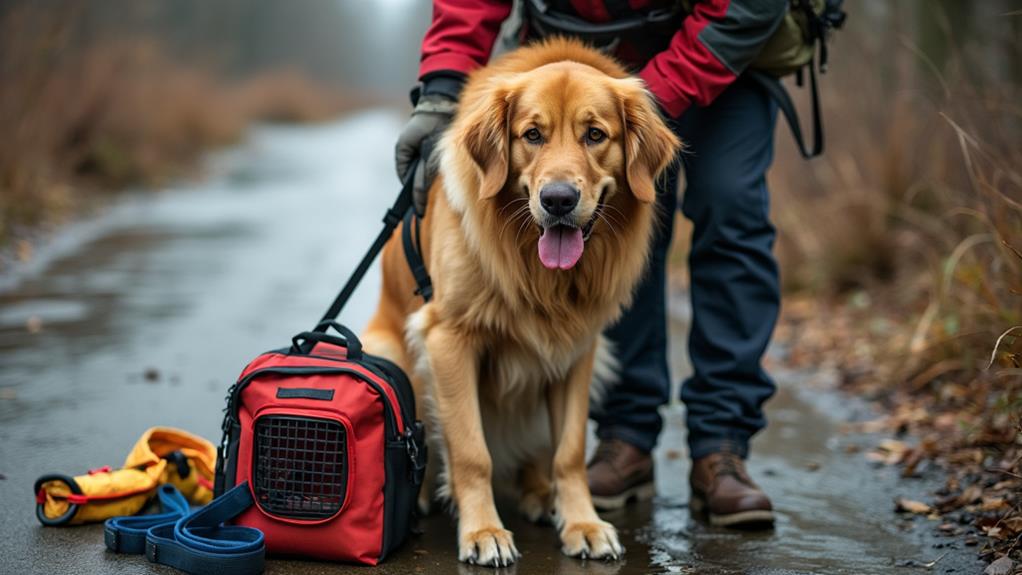
During emergencies, it's vital to have a plan specifically for evacuating large dogs. Start by confirming your dog is equipped with a collar bearing identification tags and a microchip. This will expedite their identification and reunion process if separated. Carefully plan your evacuation routes, focusing on pathways that accommodate large animals. Be proactive in identifying transport options like trailers or vans that can safely carry your dog to safety.
It's important to evacuate large dogs early. They often need more time to settle down and be loaded into vehicles, so allow yourself ample time to manage this process efficiently. Familiarize your dog with the carriers or vehicles you plan to use. Employ positive reinforcement to make sure they feel comfortable and less stressed during these changes.
As you plan, confirm that your chosen destination offers adequate sheltering for large dogs, including necessities like food, space, and medical supplies. Check if nearby animal hospitals can cater to large breed needs in case of medical issues. By preparing in advance, you guarantee your dog's safety and well-being during emergencies, making the evacuation process smoother for both you and your furry friend.
Staying Alert and Informed
Being informed is important in relation to safeguarding your dog during emergencies. To stay informed, regularly monitor local wireless emergency alerts and weather updates. This will keep you aware of potential threats in your area. Download the FEMA app for timely alerts from the National Weather Service, guaranteeing you have access to critical emergency information. During emergencies, always follow the instructions of local officials, as they provide significant guidance on evacuation routes and safety measures that could save your pet's life.
Make certain to contact your local emergency management office to understand specific threats in your area. Familiarize yourself with common disasters and their impacts on pets. This knowledge will help prepare you and your dog for specific emergencies. At the initial sign of severe weather, bring your pets indoors. This not only protects them from harm but also reduces their stress.
Being proactive and prepared can make a considerable difference in your dog's safety during emergencies. By staying informed and maintaining communication with local authorities, you can effectively mitigate risks and guarantee your pet's well-being during crises. Remember, your attentiveness can genuinely save your pet's life.
Post-Disaster Dog Care
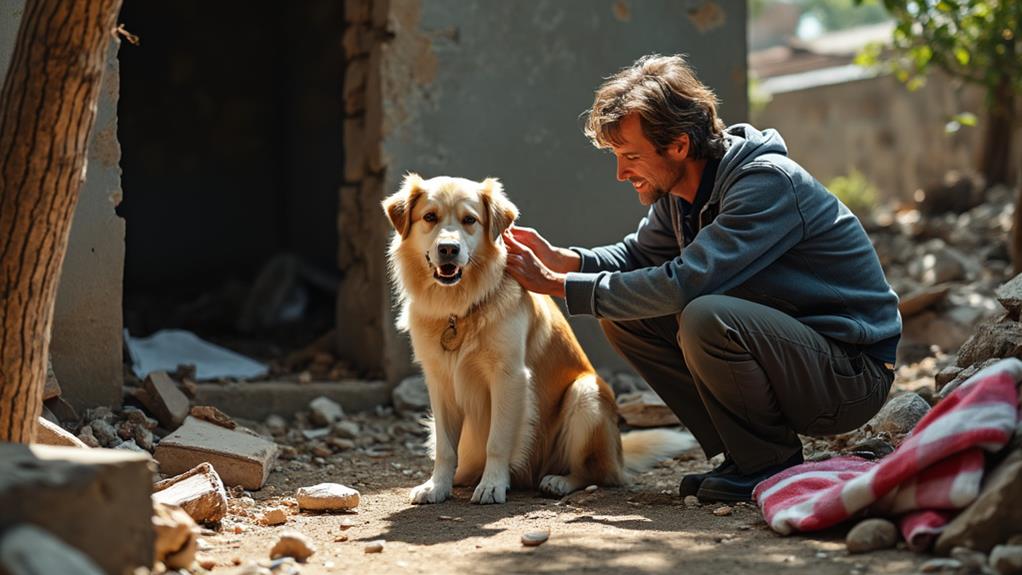
In the aftermath of a disaster, it's vital to closely monitor your dog's behavior and environment. Familiar scents and surroundings may have changed, leading to increased anxiety or aggression. To help your dog feel secure, inspect your home and yard for hazards like sharp objects, chemicals, or exposed wiring. Before letting your dog investigate outside, make sure these dangers are eliminated, providing a safe place for them to roam.
Re-establishing routines is important to guarantee your pet regains a sense of normalcy. Stick to regular feeding, walking, and playtime schedules. This consistency will provide guidance and comfort, reducing stress for your furry friend. During this period, closely monitor your dog for signs of distress, such as lethargy or unusual behavior, and contact a veterinarian if needed.
To further ease your dog's adjustment back to normalcy, have a plan in place that includes:
- Supplying familiar items like bedding or toys to help reduce stress.
- Setting up a designated area where your dog can retreat when feeling overwhelmed.
- Providing extra attention and affection to reinforce their sense of security.
Dog First Aid Essentials
After ensuring your dog's environment is safe post-disaster, it's likewise vital to be prepared for any injuries with a well-stocked primary aid kit. Your pet primary aid kit should include items like bandages, antiseptic wipes, gauze, scissors, and any medications specific to your dog's health needs. Having these supplies on hand means you're ready to address minor injuries immediately.
Familiarize yourself with basic primary aid techniques to manage different emergencies. For instance, if your dog is bleeding, apply gentle pressure and raise the wound to control bleeding. You should also learn how to perform rescue breathing and CPR, which involves clearing your dog's airway and administering the right ratio of compressions to breaths.
Recognize signs of distress in your dog, such as uncontrolled bleeding, lethargy, or changed breathing patterns. These symptoms may warrant emergency veterinary care. Even if your dog seems to recover, it's vital to consult your veterinarian, as underlying issues might not be visible right away.
Recognizing Canine Distress
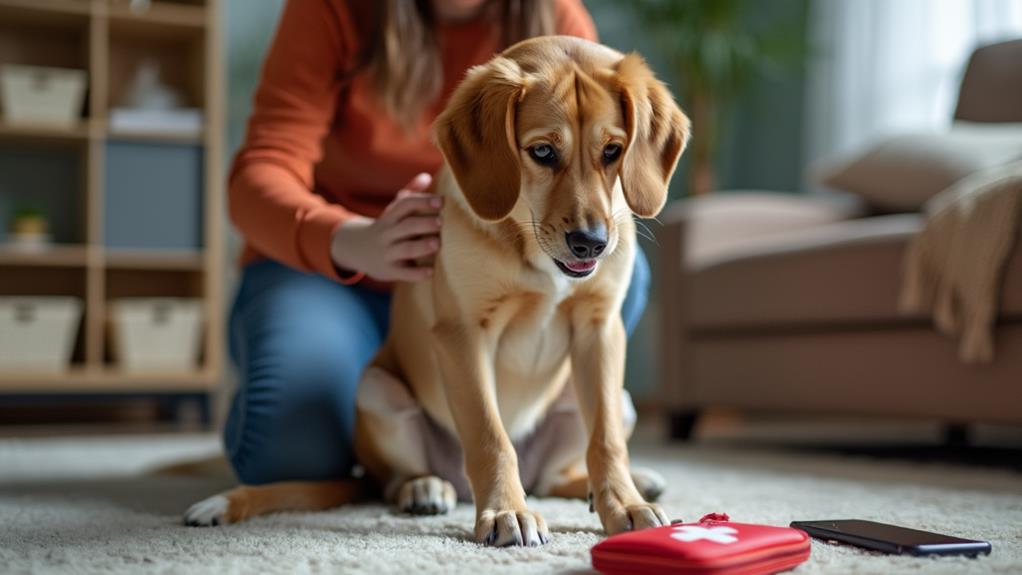
How can you tell when your dog is in distress? Recognizing the signs early can be vital. Start by observing your pet's breathing. Changes in breathing patterns, such as increased effort or abnormal noises, could indicate that your dog is struggling. In such cases, you should monitor closely and be prepared to seek urgent veterinary care if needed.
Keep an eye out for other signs of distress, such as:
- Uncontrolled bleeding: If your dog is bleeding from any part of the body, it's imperative to act quickly. This requires immediate attention to prevent shock and other severe complications.
- Signs of lethargy: A sudden lack of energy or disinterest in food might signal significant underlying health issues. If your dog exhibits these symptoms, it's important to investigate further.
- Collapse or weakness: If your dog suddenly can't stand or loses consciousness, this is a clear indicator that urgent veterinary care is necessary.
Persistent vomiting and diarrhea can also lead to dehydration and indicate serious health problems. Recognizing these signs and understanding what your pet needs in emergencies can make all the difference in ensuring their well-being. Always prioritize their health and safety.
Importance of Identification
Proper identification is vital for guaranteeing your dog's safety, especially during emergencies. When disaster strikes, you might have to leave your pets behind, and the chaos could lead to your pet getting lost. To prevent prolonged separation, it's imperative that your dog wears a collar with an ID tag. This tag should clearly display your name, phone number, and address, greatly enhancing the chances of a quick reunion if your pet wanders off.
Beyond collars, the importance of identification extends to microchipping. A microchip provides a permanent ID that can't be lost or removed. According to the American Humane Association, microchipped pets are 20 times more likely to be reunited with their owners. Verify your microchip company has your current contact details to facilitate prompt communication if your pet is found.
Additionally, don't overlook the value of emergency stickers on your home's windows or doors. These stickers alert primary responders to search for your dog, increasing their chances of being rescued safely. Regularly updating all identification information, including microchip details, guarantees that you can be reached quickly, providing peace of mind in any emergency.