How to Minimize Litter Box Odor: Simple and Effective Solutions
To tackle litter box odor effectively, scoop daily and opt for clumping litter mixed with baking soda or zeolite. Change the litter every 2-3 weeks and wash the box with mild soap to maintain its cleanliness. Choose a well-ventilated, low-traffic area to place the box, reducing both stress for your cat and unpleasant smells. Investigate natural odor absorbers like activated charcoal, and consider supplementary boxes for households with multiple cats. Keep an eye on your cat's health by monitoring litter habits and ensuring a hygienic environment. Uncover more strategies to keep your home smelling fresh and inviting.
Understanding Litter Box Odor
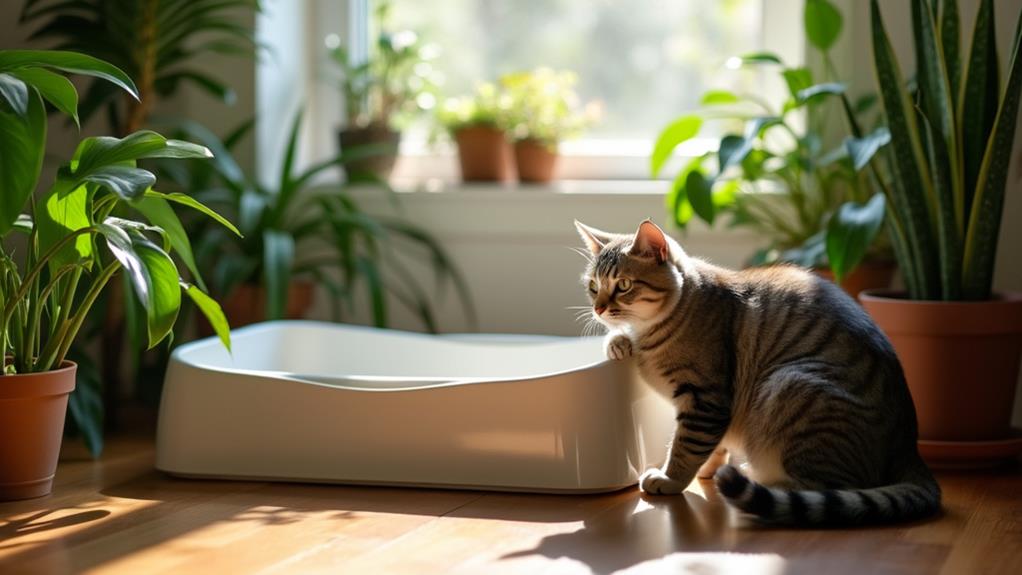
In relation to managing litter box odor, understanding the root cause is vital. Cat urine is the main culprit, with its high concentration of ammonia creating a pungent smell if not managed properly. To effectively control litter box odors, you need to be proactive about scooping the box daily. This simple action prevents odors from becoming trapped and overwhelming, especially in enclosed spaces where they can deter your cat from using the box altogether.
Regular cleaning is significant in your odor management strategy. Aim to completely change the litter every 2-3 weeks, which helps prevent odor buildup. During this time, wash the litter box with mild soap and water to maintain hygiene. Ensuring the box is appropriately sized for your cat can also help, as it reduces improper usage that leads to unpleasant smells.
Choosing the Right Litter
Understanding litter box odor is just one part of the equation; choosing the right litter plays an essential role in maintaining a fresher environment for both you and your cat. As a cat owner, you have a variety of types of litter to choose from, each offering unique benefits for odor control. Clumping litter is a popular choice because it forms solid clumps around waste, making it easier to remove and helping to control odors more effectively. This type of litter guarantees a cleaner environment by trapping moisture quickly.
For improved odor control, consider litters that contain baking soda or zeolite. These additives neutralize unpleasant smells, helping to keep your home smelling fresh. Plant-based litters, while often pricier, are an eco-friendly alternative that excels in absorbing odors naturally. If you're looking for superior absorbency, silica-based litters might be the best option. They capture moisture and odors for longer periods, reducing the frequency of litter changes.
Testing different litter types is vital to finding the best fit for your cat's preferences and your home's specific needs. By carefully selecting the right litter, you can effectively minimize litter box odor.
Importance of Daily Scooping
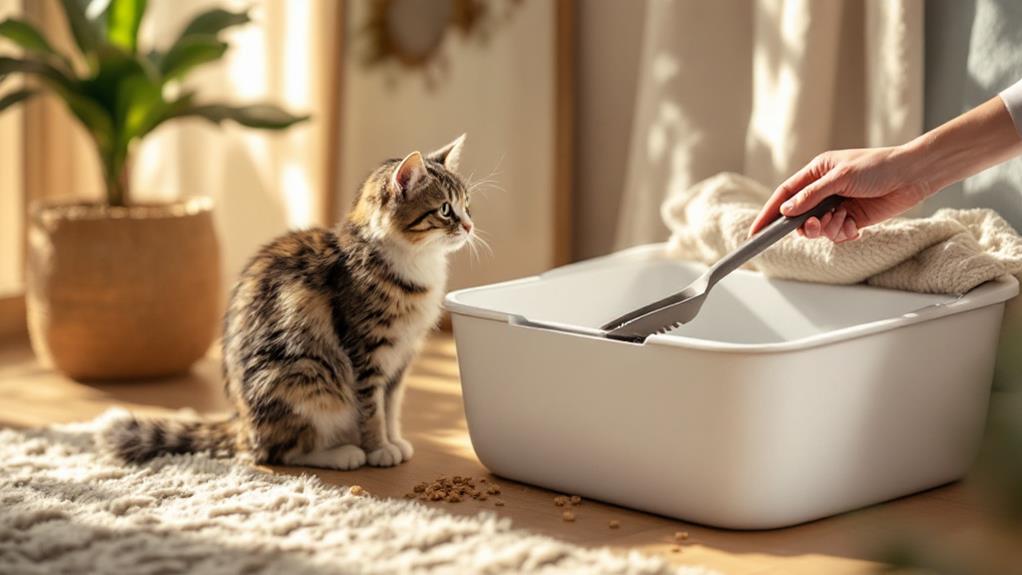
With regard to keeping your cat's litter box fresh, daily scooping is crucial. It's the most effective way to minimize odors and prevent those strong smells from taking over your home. Cat waste, if left unattended, can start producing unpleasant odors within hours, making your living space uncomfortable. By committing to a daily scooping routine, you're tackling these smells head-on, making certain that your home remains inviting.
Daily scooping doesn't just benefit you; it also creates a cleaner environment for your cat. Cats are known for their cleanliness, and a litter box that's consistently free of waste encourages your pet to use it regularly. This reduces the risk of litter box aversion, which can occur if the box is too dirty. Embracing a "no-clump-left-behind" mentality guarantees that all waste is removed, enhancing the longevity and effectiveness of the litter used.
Moreover, keeping up with daily scooping helps promote healthier waste management practices. By removing waste regularly, you minimize the spread of germs and parasites, creating a safer environment for both you and your furry friend. Establishing this habit is key to maintaining a fresh-smelling and hygienic home.
Effective Cleaning Routines
A good cleaning regimen is crucial for keeping your cat's litter box smelling fresh and inviting. To control odors effectively, start by scooping the litter box daily. This simple task prevents odor buildup and encourages your cat to use the box consistently. If neglected, the smells can become overwhelming, potentially leading to litter box aversion.
Every 2-3 weeks, change the litter completely. Fresh litter is more effective at controlling odors than old, soiled litter. Incorporate baking soda into the fresh litter to naturally absorb odors without introducing strong fragrances that might deter your cat. This improves your cleaning efforts and keeps the area smelling pleasant.
Don't forget to clean the litter box itself at least once a month. Use mild soap and hot water, and opt for non-abrasive sponges to avoid scratches that can harbor bacteria. This regular washing eliminates bacteria and lingering odors, ensuring a hygienic environment.
For accidents outside the box, apply an enzymatic odor remover. These cleaners break down organic matter and eliminate odors without harsh chemicals, maintaining a fresh and inviting space for both you and your feline friend.
Benefits of Box Placement
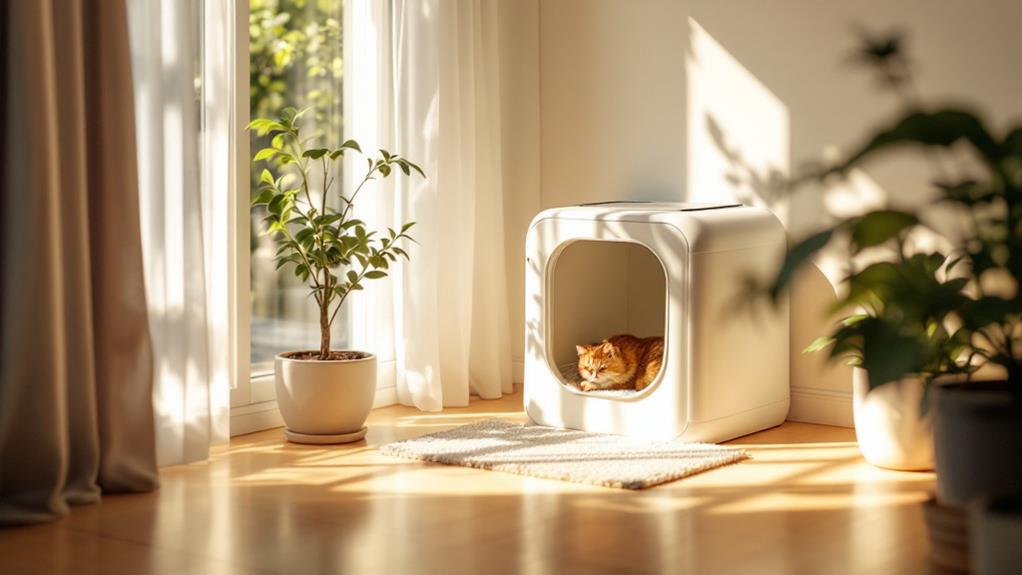
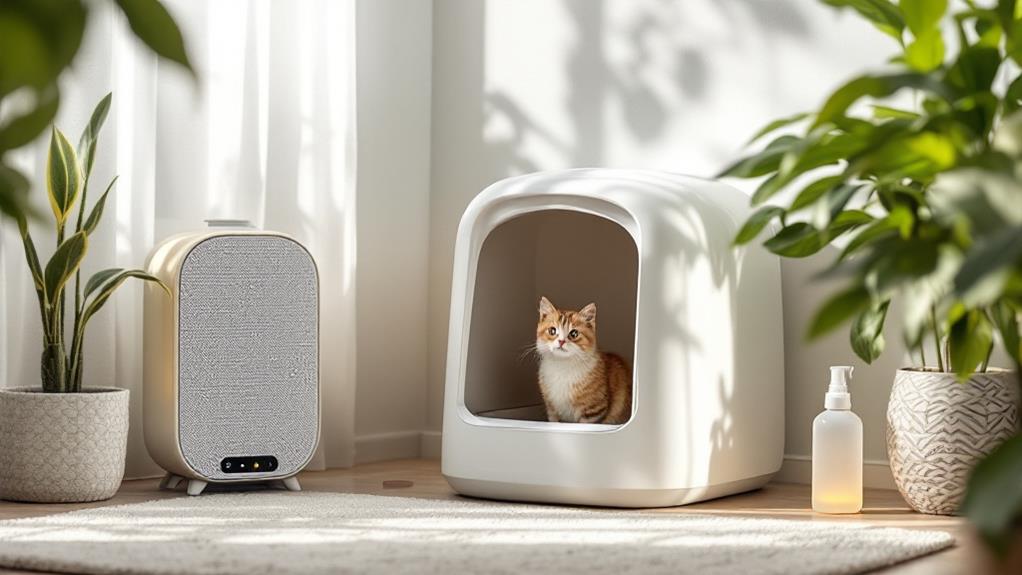
Placing your cat's litter box strategically can greatly improve both its usability and odor control. Start by choosing a quiet, low-traffic area to reduce your cat's stress. This encourages your feline friend to use the litter box regularly, helping to keep odors at bay and minimizing accidents outside the box. A well-ventilated spot is vital for odor management, as fresh air helps disperse unpleasant smells more effectively. Make sure to avoid placing the litter box near noisy appliances or drafty vents, so your cat feels secure and comfortable.
In a multi-pet household, spacing litter boxes throughout the home can prevent territorial disputes and promote consistent usage. It's important to reflect on your cat's behavior when deciding on the litter box location. If you notice any changes in their habits, regularly evaluating and adjusting the box placement can improve comfort and maintain an odor-free environment. By paying attention to these details, you'll create a more pleasant space for both you and your cat. Remember, the right placement can make a significant difference in how well your litter box serves its purpose and how effectively it keeps odors under control.
Exploring Odor Control Products
In relation to managing litter box odor, a range of products can make a significant difference in maintaining a fresh environment. Start by choosing high-quality clumping litter. This type of litter effectively contains waste, reducing the spread of litter box smells. Its ability to clump tightly makes cleaning easier and guarantees that odors are locked in.
For persistent odors, consider using enzymatic cleaners. These odor control products specifically target the molecules in cat urine that cause lingering smells. By breaking down these components, enzymatic cleaners offer a powerful solution for eliminating odors instead of just masking them.
Another option is pet odor eliminators, which can disinfect and neutralize smells in the litter area. Some products utilize ozone technology to eliminate odors without relying on strong fragrances, guaranteeing a scent-neutral environment.
Don't forget about silica-based litters, renowned for their superior absorbency. These litters absorb odors more effectively than traditional clay options, minimizing the chance of unpleasant smells escaping.
Natural Odor Absorbers
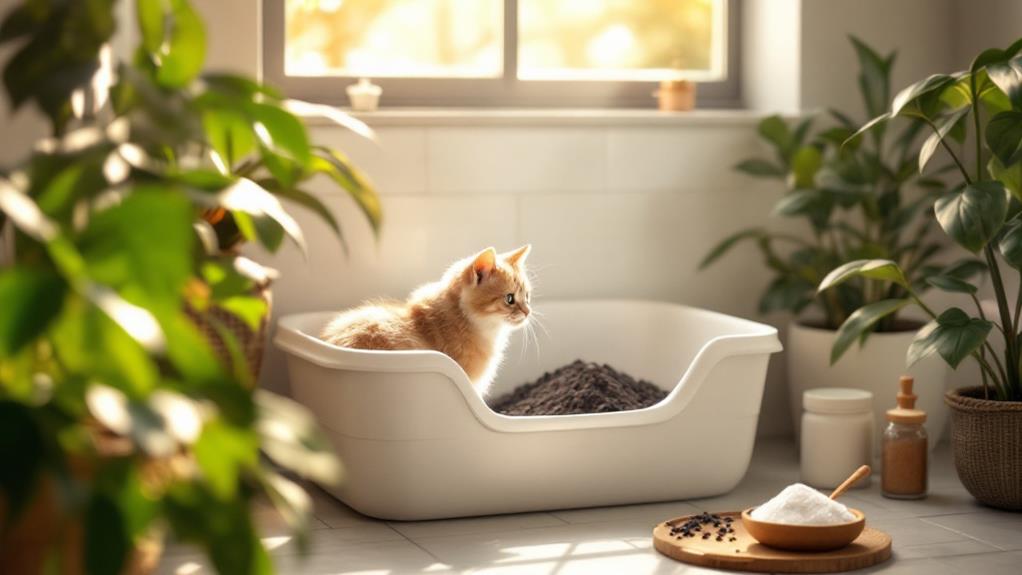
In the context of tackling litter box odor naturally, baking soda stands out as a powerful ally. It's effective in neutralizing unpleasant smells without adding strong fragrances that might deter your cat. Simply sprinkle a layer at the bottom of the litter box before adding your usual litter for improved odor control. For even more odor-fighting power, consider placing an open container of baking soda near the litter box to trap stray odors in the surrounding area.
Activated charcoal is another effective natural solution. Known for its ability to absorb moisture and odors, it helps maintain a fresher litter box environment. You can place small sachets of activated charcoal near the litter box or mix it with the litter itself for maximum effectiveness.
If you prefer cat litter made from natural materials like wood pellets or corn, you're in luck—these often come with inherent odor-absorbing properties. They work in tandem with baking soda and activated charcoal to provide thorough odor control.
Additionally, vinegar can be your go-to natural cleaner. Use a diluted vinegar solution to clean the litter box regularly, which not only disinfects but also deodorizes, making it an essential part of your odor-fighting arsenal.
Managing Multiple Cat Households
While natural odor absorbers like baking soda and activated charcoal work wonders for single-cat homes, managing litter box odor in a multi-cat household requires a bit more strategy. Start by verifying you have the right number of litter boxes: one per cat plus one extra. For instance, if you have two cats, aim for three boxes, which helps avoid territorial disputes and guarantees everyone has access. Scooping the litter box daily is vital in preventing waste buildup that leads to unpleasant odors.
The type of litter you choose also plays a significant role. Opt for high-quality litter with strong odor-controlling properties, like clumping litters containing baking soda or zeolite. These can help manage odors effectively in a multi-cat environment. Furthermore, regularly replacing the litter every 2-3 weeks prevents odor accumulation and allows for a thorough cleaning of the litter boxes.
Monitoring Cat Health
How often do you really check your cat's litter box? Daily scooping is more than just a chore; it's an important part of monitoring your cat's health. By consistently attending to litter box maintenance, you can detect early signs of health issues. Changes in your cat's waste, such as unusual color or consistency, can signal urinary tract infections or dietary problems. Regular monitoring helps you spot these changes promptly, allowing for early intervention.
Litter box maintenance is also critical for preventing the spread of parasites like toxoplasma, which can endanger both your cat and your family. Monitoring the frequency and consistency of your cat's litter box use is fundamental, especially for male cats who are prone to urinary obstructions. These issues require immediate veterinary attention to prevent severe complications.
Additionally, a clean litter box environment helps avoid behavioral issues like litter box aversion. Cats that find their litter box uninviting may resort to inappropriate elimination, which can lead to further health concerns. By keeping the litter box clean and observing your cat's habits, you're safeguarding their health and minimizing potential problems. Your vigilance guarantees your cat remains healthy and happy.
Innovative Odor Solutions
Many pet owners are constantly on the lookout for effective ways to tackle the persistent issue of litter box odor. Fortunately, several creative solutions can help you maintain a fresh environment. Here are some strategies to contemplate:
- Eco-Friendly Litter: Switching to plant-based, eco-friendly litter can greatly reduce the litter box smell. These alternatives are not only better for the environment but also offer excellent odor control compared to traditional clay litters. Plus, they're biodegradable, making them an ideal choice for eco-conscious households.
- Baking Soda: As a natural odor eliminator, baking soda can work wonders in combating pet odor. Simply sprinkle it at the bottom of the litter box to absorb unpleasant odors. It's a simple, inexpensive solution that can make a noticeable difference in managing the comprehensive smell.
- Enzymatic Cleaners: For any accidents outside the box, enzymatic cleaners are your best bet. They break down odors at the source without using harsh chemicals that could deter your cat. Regular maintenance with these cleaners guarantees that pet odor doesn't linger in your home.