Hardworking Herding Dogs: Best Cattle Dog Breeds for Farms
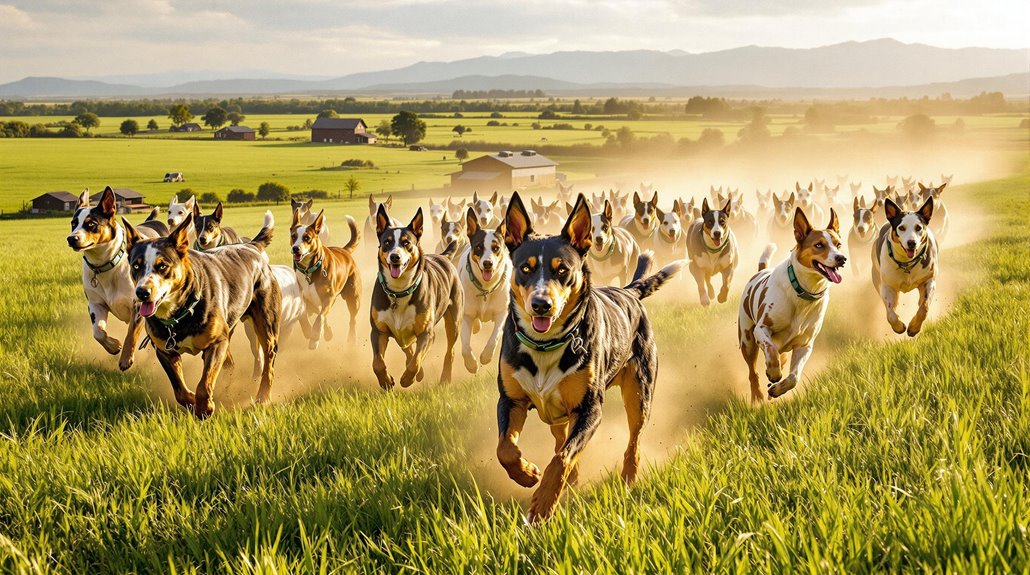
When searching for the best hardworking herding dogs for your farm, consider breeds like Australian Cattle Dogs, Border Collies, and Australian Shepherds. These breeds exhibit exceptional intelligence, loyalty, and a strong work ethic, making them ideal for managing livestock. Australian Cattle Dogs excel in agility and cattle control, while Border Collies are unmatched in their intelligence and need plenty of exercise to stay sharp. Australian Shepherds offer unique herding techniques and high energy. Each breed has distinct traits that suit various farm tasks, ensuring effective livestock management and companionship. Uncover more specifics about their unique characteristics and care.
Key Takeaways
- Australian Cattle Dogs excel in agility and intelligence, ideal for large cattle herding tasks.
- Border Collies are highly intelligent, adaptable, and require significant exercise for peak performance.
- Australian Shepherds possess high energy and exceptional trainability, suitable for various herding tasks.
- Australian Kelpies are versatile with strong herding instincts, thriving in spacious farm environments.
- Pembroke Welsh Corgis are tenacious and agile, utilizing a heeling style for efficient cattle management.
Understanding Cattle Dog Breeds
Cattle dog breeds are known for their intelligence, work ethic, and ability to follow commands, making them indispensable on farms. When managing livestock, you need reliable herding dogs that can adapt to various tasks. Australian Cattle Dogs excel at controlling cattle, using their agility and loyalty to guide them without excessive barking. These working dogs are perfect for any farm that requires a steadfast partner to navigate challenging terrains. Border Collies are another excellent choice.
They're often regarded as the most intelligent herding breed, needing plenty of exercise and mental challenges to stay sharp. Their skills aren't limited to cattle; they can herd various livestock with ease, making them a versatile addition to any farm. Their innate ability to anticipate and respond to livestock movements truly sets them apart. Australian Shepherds, despite their misleading name, originated in America.
These herding dogs utilize unique methods to manage flocks, balancing keen eye and loose-eye techniques. They're adaptable and can handle large groups of sheep efficiently. Early training and socialization are crucial for developing these herding breeds' skills and ensuring effective livestock management. Together, these breeds offer a dynamic range of capabilities for any farm, ensuring effective livestock management and a harmonious working environment.
Top Qualities of Herding Dogs
When selecting a herding dog for your farm, you'll want to prioritize certain top qualities that ensure efficiency and harmony in livestock management. Herding dogs are invaluable assets, but you need to choose wisely. First, focus on intelligence. Intelligent dogs quickly assess situations, anticipate livestock movements, and react to changing conditions. This trait is crucial for effective herding.
Next, consider trainability. Herding breeds should respond well to commands, making training sessions smoother. A dog that learns quickly will be a reliable partner in your daily farm work. Remember, the more trainable the dog, the better it adapts to the unique demands of your farm.
A strong work ethic is another must-have quality. Your herding dog should be eager to work long hours without losing focus. This dedication ensures your livestock are managed efficiently and safely.
Professional training can amplify these qualities. Many herding breeds, like Border Collies, already have a natural aptitude for herding, but professional training hones their skills. Border Collies require approximately 2 hours of daily exercise to maintain their physical and mental well-being, which supports their effectiveness in herding tasks. This ensures your dog remains effective in its roles, avoiding the pitfalls of boredom or misbehavior. Ultimately, these qualities are key to a successful partnership between you and your herding dog.
Australian Cattle Dog Traits
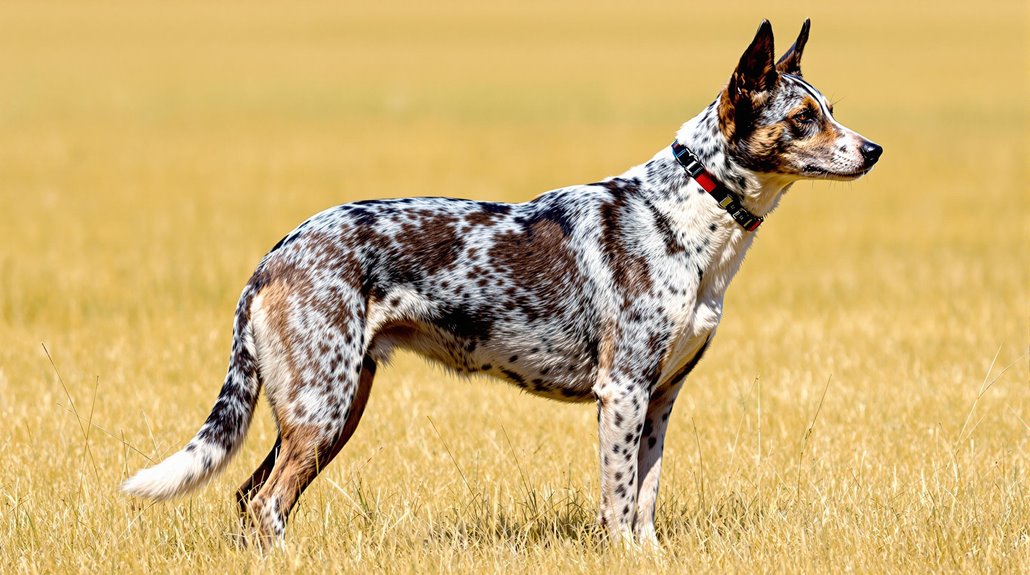
Among the top herding breeds, the Australian Cattle Dog stands out with its remarkable traits. Known for its agility and intelligence, this farm dog is perfect for herding vast cattle stations in Australia. You'll find that the Australian Cattle Dog, also called the Blue Heeler, excels at herding cattle due to its natural heeling instincts. They silently guide livestock by nipping at their heels, directing them without the need to bark.
As a farm dog, the Australian Cattle Dog is built to work long hours, showcasing impressive stamina and dedication to its tasks. It's not just their work ethic that makes them special; their loyalty and affectionate nature mean they form strong bonds with handlers and family members. You'll appreciate their protective instincts when it comes to safeguarding livestock, ensuring your animals are well cared for.
To keep an Australian Cattle Dog happy and healthy, you must provide ample physical and mental exercise. Daily activities are essential as they thrive on challenges and tasks. Their distinctive blue or mottled coat adds to their charm, making them not only effective workers but also striking companions on any farm. It's important to ensure they receive regular veterinary check-ups to detect any health issues early and maintain their well-being.
Australian Shepherd Insights
With its roots firmly planted in the United States, the Australian Shepherd is a herding powerhouse known for exceptional intelligence and versatility. You'll find this high-energy breed perfect for farm life, as they thrive on mental and physical stimulation. As a working dog, the Australian Shepherd is incredibly trainable, making them ideal for herding tasks or participating in dog sports. Their striking merle coats and unique herding style, which skillfully manages large flocks of sheep, set them apart from other breeds.
Australian Shepherds possess a strong herding instinct, so they won't shy away from taking charge. However, this instinct can sometimes lead to playful nipping at the heels of children or other animals. To prevent any unwanted behavior, early training and socialization are essential. This ensures they grow into well-behaved and adaptable companions. Like other intelligent breeds, Australian Shepherds require mental engagement to maintain happiness and prevent behavioral issues due to boredom.
Beyond their working capabilities, Australian Shepherds are affectionate and loyal companions. They form strong bonds with their handlers, making them not only excellent working dogs but also loving family pets. You'll appreciate their dedication and companionship, whether they're rounding up sheep or snuggling by your side at home. With the right environment, an Australian Shepherd can truly shine on your farm.
Border Collie Characteristics
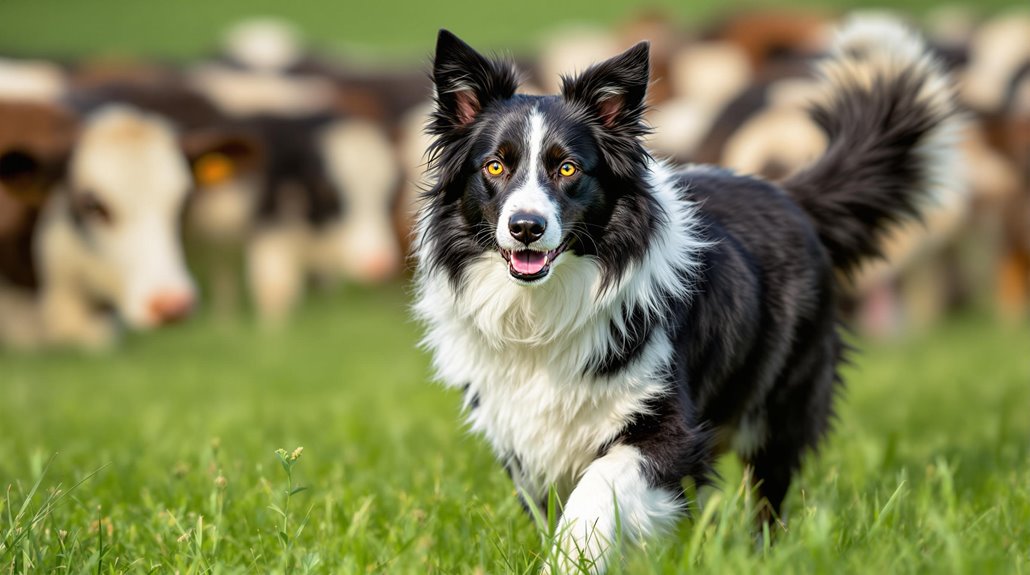
Having explored the remarkable traits of the Australian Shepherd, let's turn our attention to the Border Collie, another exceptional herding breed. Known for its unmatched intelligence, the Border Collie is a breed known for excelling in herding tasks. This working breed can reach impressive speeds of up to 30 mph while managing livestock, making it a dynamic force on any farm. Their natural ability to herd various livestock, including sheep, is enhanced by their unique "header" approach, which involves an intense stare, crouching, and sprinting to guide animals effectively.
Border Collies are not just about speed and technique; they also make excellent companions. Their eagerness to please their handlers and quick learning abilities mean they're ideal for herding and various dog sports. However, owning a Border Collie requires commitment. They need several hours of vigorous exercise and mental stimulation daily to prevent boredom and potential destructive behaviors. Without this engagement, their sharp minds can quickly turn mischievous.
If you're considering this breed, ensure you're ready to meet their exercise and mental needs. The Border Collie is not just a herding dog but also a loyal, hardworking partner on the farm. Like many endangered species such as the White-bellied Heron, Border Collies face challenges that require dedicated care and attention to thrive in their environment.
Exploring the Australian Kelpie
Why do so many farmers choose the Australian Kelpie for their herding needs? It's simple: this herding breed is unmatched in its energy and agility, making it a top choice for managing livestock, especially sheep. With strong herding instincts, Kelpies can work independently, often needing little guidance from handlers. This makes them an ideal partner for your farm, where their energetic nature and determination can shine through.
The Australian Kelpie is not just a cattle dog; it's a versatile worker that adapts to various working roles on the farm. They thrive in spacious environments, where they can roam freely and engage in physical activities necessary for their well-being. Their smooth or double coats, available in colors like black, red, and chocolate, add to their appeal as both a functional and visually striking breed.
However, to harness their full potential, regular training and mental stimulation are crucial. Without it, Kelpies can become bored and may even escape if fencing is inadequate. By providing them with the right environment and challenges, you'll ensure your Australian Kelpie remains a reliable and loyal member of your farm team. Like the Norwegian Buhund, Kelpies are intelligent and confident with strong protective instincts, requiring consistent training and socialization.
Corgi Variations in Herding
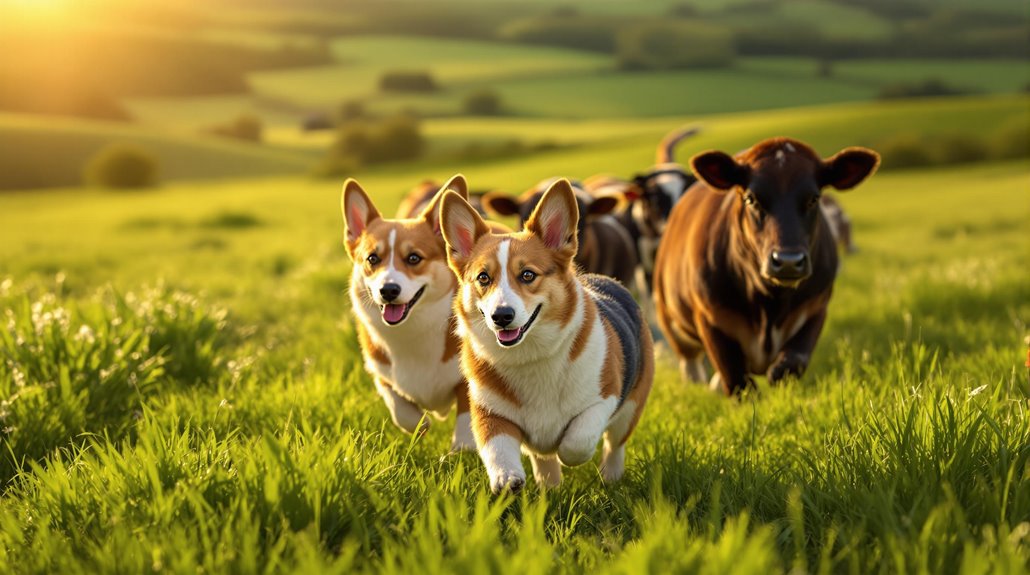
Corgis might surprise you with their herding prowess despite their small size. These energetic dogs are effective cattle herding breeds, originally bred for farm work. The Pembroke Welsh Corgi, for instance, uses a heeling style, nipping at the heels of livestock to guide them efficiently across the farm. Their tenacious personality and agility make them well-suited for managing cattle, even though they might look small compared to other herding breeds. Corgis are not just about herding; they're about companionship too. They possess exceptional qualities that combine their working instincts with affectionate and protective traits toward their families.
If you're looking for a hardworking herding dog that also offers companionship, Corgis fit the bill perfectly. They thrive in active environments and require regular mental and physical engagement, ensuring they remain happy and healthy. Then there's the Cowboy Corgi, a crossbreed of Corgis and heelers, which inherits the herding instincts from both parent breeds. These dogs are known for their energetic and curious nature, making them excellent for farm work.
Both Pembroke and Cardigan Welsh Corgis exhibit strong work ethics, making them reliable partners in managing livestock. Corgis also excel as family companions due to their friendly and gentle temperaments, making them well-suited for households with children.
Choosing the Right Herding Dog
Selecting the right herding dog for your farm is crucial to ensuring smooth and efficient livestock management. When choosing, consider the specific tasks your farm requires. Different herding dogs excel in various styles, such as driving or fetching. Evaluating the energy levels of potential breeds is essential. Breeds like the Border Collie and Australian Cattle Dog need significant exercise and mental stimulation to thrive in a farm environment.
Look for breeds with strong herding instincts and trainability. Australian Shepherds and Kelpies are highly intelligent and learn commands quickly. Their trainability makes them excellent choices for farms needing adaptable working breeds. It's also important to match the breed to your livestock. For instance, Pembroke Welsh Corgis work well with cattle, while other breeds might be better suited for sheep or poultry.
Finally, consider the dog's temperament and bonding capacity. Breeds like the Australian Shepherd and Catahoula Leopard Dog form strong attachments to their handlers, easing training and management.
- Energy Levels: Choose a breed that matches your activity expectations.
- Trainability: Intelligence and quick learning are key.
- Livestock Compatibility: Ensure the dog suits your animals.
- Temperament: Strong bonds with handlers facilitate training.
Adding a small dog to your farm can provide great companionship; breeds like the French Bulldog are known for their friendly temperament and adaptability, making them suitable even in non-herding roles on the farm.
Caring for Your Farm Dog
When it comes to caring for your farm dog, regular exercise is paramount. Herding breeds thrive on activity, needing at least one to two hours of vigorous exercise daily to prevent behavioral issues and keep them in peak condition. Alongside exercise, a balanced diet rich in high-quality proteins and appropriate fat levels is crucial. These nutrients support their high-energy lifestyle and contribute to their overall well-being.
Don't overlook routine veterinary check-ups and vaccinations. They're essential to keep your dog healthy and free from diseases common in working environments. Early socialization and consistent training are also key. These efforts enhance your dog's working abilities and minimize aggression towards livestock and other dogs, ensuring they perform effectively on the farm. The Belgian Sheepdog's herding instincts require supervision around active children, emphasizing the importance of training on the farm.
Your dog's living space matters too. Provide a safe, comfortable area with proper shelter, bedding, and constant access to fresh water. A well-cared-for living environment boosts your dog's happiness and productivity. By focusing on these aspects—exercise, diet, veterinary care, socialization, training, and living space—you'll ensure your farm dog remains a hardworking and integral part of your team, ready to tackle any challenge.