German Pinscher: The Intelligent and Agile Working Dog
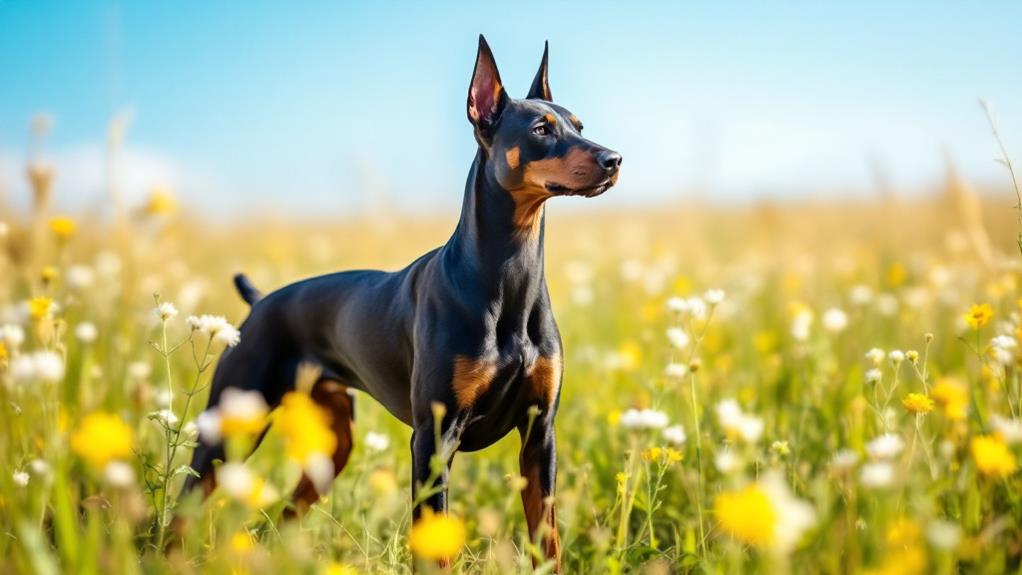
Meet the German Pinscher, a highly intelligent and agile working dog. Standing between 17 to 20 inches, this muscular breed excels in obedience, agility, and tracking. With a powerful prey drive, they need a secure space to roam. These dogs are loyal, protective, and make excellent guard dogs due to their keen senses and territorial instincts. However, they require firm training to manage their confident demeanor and loud barking. Their energy needs daily exercise, and attention to grooming keeps them at their best. Uncover how this versatile companion can bring both adventure and security to your life.
Breed Characteristics
Standing between 17 to 20 inches tall and weighing 25 to 45 pounds, the German Pinscher is a muscular and agile breed. As a medium-sized dog, it exhibits a remarkable balance of strength and grace, making it well-suited for various activities. If you're considering this breed, you'll notice its highly intelligent nature, which allows it to excel in canine sports like obedience, agility, and tracking. Its sharp mind requires mental stimulation, so be prepared to engage in regular training and interactive play.
One of the standout breed characteristics is its strong prey drive, a trait inherited from its vermin-hunting ancestors. This means it's always alert and ready to chase anything that catches its eye, so a secure yard is vital. The German Pinscher is also known for being loyal and protective, making it an excellent guard dog. Its territorial instincts guarantee that your home is well-guarded, but it also means early socialization is important to manage its strong personality.
With a short, smooth coat, grooming is minimal, allowing you to focus more on enjoying activities with this energetic companion. In short, the German Pinscher is a dynamic, intelligent, and fiercely loyal dog.
Historical Background
Tracing its roots back to the 14th century, the German Pinscher stands as one of Germany's oldest and most significant breeds in canine history. Its origins are deeply entwined with the 7th-century Bibarhund. Originally developed as a versatile rat catcher, the German Pinscher was invaluable in controlling vermin populations. Its role as an efficient working dog was further cemented through selective breeding, which contributed to the development of the renowned Doberman Pinscher.
In the aftermath of World War II, the breed faced near extinction. However, thanks to dedicated breeders who focused on selective breeding, the German Pinscher was preserved and continues to thrive today. This breed's historical significance isn't just limited to its survival; its lineage played a fundamental role in the evolution of working dogs as we recognize them.
Consider these points about the German Pinscher's historical path:
- Origins: Traces back to the 14th century.
- Versatile rat catcher: Played a key role in controlling vermin.
- Selective breeding: Essential in preserving the breed post-World War II.
As a part of this breed's rich history, you're engaging with a lineage that has shaped the canine world profoundly.
Temperament and Behavior
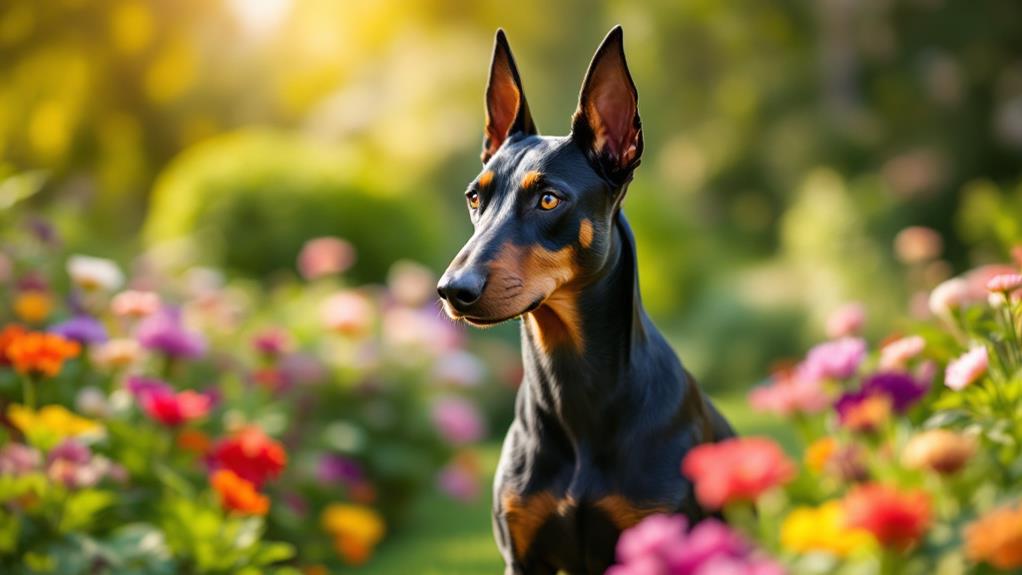
While German Pinschers are known for their confident and courageous demeanor, their strong personality means they require firm and consistent training. Their temperament makes them effective guard dogs, thanks to their protective instincts and keen alertness to intruders. However, this same strong-willed nature can turn into stubbornness if not properly managed. You'll need to establish clear boundaries and reinforce positive behaviors from an early stage.
Socialization plays an important role in shaping the behavior of German Pinschers. Without it, they may develop territorial tendencies and struggle with interactions around children and other pets. Introducing them early to diverse environments and social settings can promote positive behavior, making them well-rounded family dogs. Keep in mind their high prey drive; they might chase smaller animals, so supervision is vital in homes with pets like rodents or small dogs.
German Pinschers are also prone to loud barking, especially when greeting strangers. This behavior can be managed with proper training and socialization, ensuring they don't become a nuisance. With the right approach, these intelligent dogs can become loyal, protective, and loving members of your family, fitting seamlessly into your household.
Training and Socialization
Getting started with training and socialization for a German Pinscher is crucial to harness their intelligence and manage their strong personality. Early socialization helps them adapt to different environments and prevents them from becoming overly bossy. You should start training at a young stage, employing positive reinforcement techniques. This approach works well due to their quick learning abilities and high energy levels, allowing them to excel in obedience training and canine sports.
German Pinschers have a high prey drive, which means careful socialization is necessary to prevent them from chasing smaller animals or showing territorial instincts. Exposing them to diverse settings and experiences improves their adaptability and guarantees they interact well with children and other pets. Short, engaging training sessions are key, as these dogs thrive on mental stimulation and physical challenges.
Consider these tips for effective training and socialization:
- Use positive reinforcement consistently to encourage good behavior.
- Enroll them in obedience classes for structured learning.
- Provide a range of socialization experiences to build confidence.
Health and Wellness

In regard to the health and wellness of your German Pinscher, staying proactive is fundamental. These dogs generally enjoy good health with a lifespan of 12-14 years, but they can be predisposed to genetic health issues like hip dysplasia, eye conditions, and Von Willebrand Disease (vWD). Regular veterinary check-ups are important to catch and manage these potential concerns early on. Conducting routine hip and eye tests will help guarantee your Pinscher remains in peak health.
A balanced diet is essential for maintaining your German Pinscher's vitality. Choose high-quality dog food where real meat is the primary ingredient; this supports their energy levels and general well-being. Alongside a nutritious diet, regular exercise is crucial. German Pinschers are high-energy dogs that require vigorous physical activity daily to prevent boredom and potential destructive behaviors.
Though their short, smooth coat requires minimal grooming, don't forget the basics. Regular brushing and bathing every 6-8 weeks will maintain their skin health and prevent dryness. By focusing on these aspects, you'll help assure a long, healthy life for your intelligent and agile German Pinscher.
Care and Grooming
Taking care of your German Pinscher's coat and grooming needs is vital to their general health and happiness. With their short, smooth coat, grooming is fairly straightforward but still fundamental. Brushing your Pinscher's coat weekly will help manage shedding, especially during seasonal changes. This not only keeps their coat looking sleek but also enhances their overall hygiene and health. Bathing every 6-8 weeks with a gentle shampoo is recommended to maintain their coat's health and prevent skin dryness.
Ear care is another significant aspect of your dog's grooming routine. Regularly cleaning their ears with a gentle solution helps prevent wax buildup and infections. Aim for weekly cleanings to keep their ears healthy and irritation-free.
To guarantee your German Pinscher's overall well-being, remember:
- Regular inspections: Check for skin irritations and maintain their environment for ideal health.
- Eye care: Use a soft, damp cloth for gentle cleaning, watching for any discomfort or excessive tear staining.
- Consistent grooming: Helps maintain their coat and prevents common skin issues.
Role in Family Life

German Pinschers are exceptional family dogs that bring enthusiasm and loyalty into the home. Despite their elegant appearance, German Pinschers are smaller in size, making them a great fit for families with children. They form a strong bond with family members and are good with children, often serving as both playmates and guardians. Their protective instincts and alert nature make them effective guard dogs, adding an extra layer of security to your household.
These dogs thrive on strong family bonds and enjoy participating in a variety of activities to keep their minds and bodies engaged. Their intelligence and willingness to please mean they can take on roles like therapy or service dogs, offering companionship and support to family members in need. However, they require consistent attention and engagement to prevent behavioral issues. This makes them ideal for active families willing to dedicate time to training and socialization.
Incorporating a German Pinscher into your family encourages an active lifestyle. Their energetic personality drives families to engage in physical exercise and outdoor activities, benefiting everyone's well-being. With the right commitment, a German Pinscher can become an indispensable part of your family's life, enhancing both security and joy.