Blue-Tongued Skink Care Guide: Everything You Need to Know
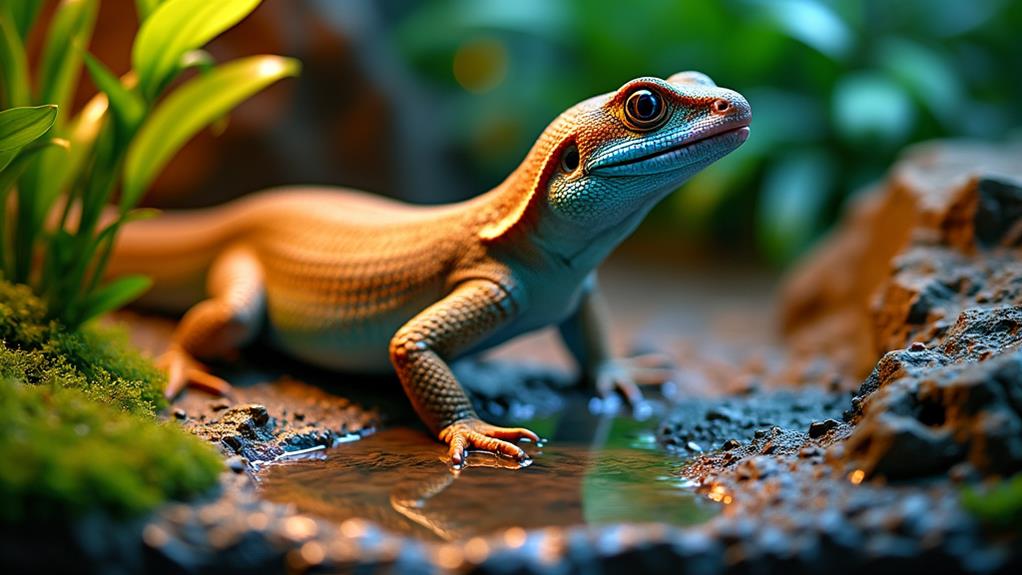
Caring for a blue-tongued skink requires attention to their distinct needs. You'll need a spacious enclosure, at least 4 feet by 2 feet, with secure hide boxes and proper ventilation. Maintain temperatures with a 90-95°F basking spot and 75-80°F on the cooler side; use UVB lighting for their health. Match humidity to their type; northern skinks need 40-60%, while Indonesian skinks thrive at 60-80%. Feed a balanced diet of 60% plants and 40% protein, and keep an eye on their health. Understanding their behavior and environment improves their wellbeing, and there's much more to investigate in their care.
Key Takeaways
- Blue-tongued skinks need a well-ventilated enclosure of at least 8 square feet for adults.
- Maintain a temperature gradient with a basking spot at 90-95°F and cooler areas at 75-80°F.
- Provide a balanced diet of 60% plant matter and 40% animal protein, with limited fruit.
- Ensure humidity levels of 40-60% for Northern and 60-80% for Indonesian skinks.
- Regular veterinary care and monitoring prevent common health issues such as obesity and respiratory infections.
Understanding Blue-Tongued Skinks
Understanding blue-tongued skinks begins with an appreciation for their unique characteristics and natural habitats. These fascinating reptiles belong to the genus Tiliqua and are native to Australia, Tasmania, Papua New Guinea, and Indonesia. Known for their thick bodies, short limbs, and striking blue tongues, skinks can grow up to 24 inches in length and live for 15-20 years, with some reaching over 30 years in ideal conditions. As diurnal creatures, they're most active during the day, exploring their terrestrial habitats.
When caring for blue-tongued skinks, understanding their omnivorous diet is essential. These skinks thrive on a balanced diet comprising about 60% plant matter and 40% animal protein, including fruits, vegetables, and insects. Meeting their dietary needs is important for their health and longevity. Moreover, their care requirements include maintaining appropriate temperature gradients and humidity levels within their habitat. Providing a warm basking spot and a cooler area guarantees they can regulate their body temperature effectively.
Recognizing the blue-tongued skink's natural defense mechanism, where they display their vivid blue tongues to ward off predators, adds another layer to understanding these enthralling reptiles. By focusing on their natural behaviors and environments, you can guarantee a happy and healthy skink.
Enclosure and Space Requirements
When setting up an enclosure for your blue-tongued skink, guaranteeing ample space is fundamental for their comfort and well-being. Adult blue-tongued skinks need a minimum enclosure size of 4 feet long by 2 feet wide by 2 feet high, providing about 8 square feet to accommodate their active nature and size. This space requirement is critical for allowing your skink to move freely and investigate their environment. For juvenile skinks, you can start with a smaller 20-gallon tank, but be prepared to upgrade as they grow.
A well-ventilated enclosure is important. It should have sturdy mesh lids to prevent escapes and guarantee proper airflow, contributing to a healthy habitat. Providing secure hide boxes on both the warm and cool sides of the enclosure helps create a balanced environment and reduces stress for your skink. These hide boxes offer a sense of security and comfort, fundamental for their well-being.
Temperature and Lighting Needs
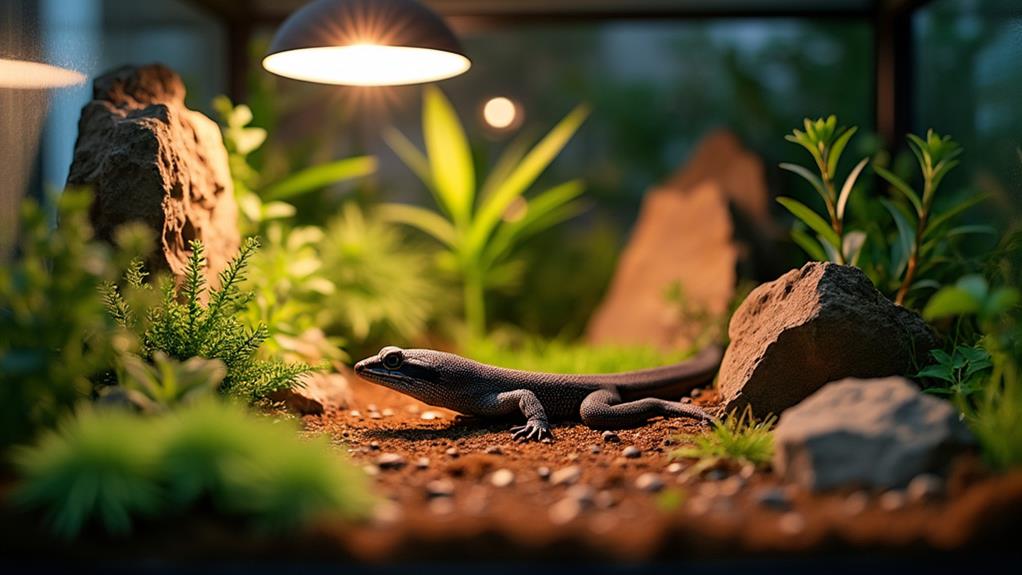
Creating a comfortable environment for your blue-tongued skink goes beyond just providing ample space; temperature and lighting play an essential role in their health and happiness. You'll need to establish a temperature gradient within the enclosure. Set up a basking spot that reaches 90-95°F, allowing your skink to bask and absorb heat. On the cooler side, maintain temperatures between 75-80°F to facilitate proper thermoregulation. This gradient lets your skink choose its preferred zone and helps regulate body temperature effectively.
At night, verify nighttime temperatures don't drop below 70°F. This consistency is important for your skink's comfort during rest. For lighting, full-spectrum UVA and UVB lighting is a must. These lights mimic natural sunlight, supporting vitamin D synthesis and general health. Implement a 12-hour light cycle to replicate day and night, promoting a natural rhythm.
Use high-wattage halogen flood bulbs in the basking area, avoiding hot rocks or under-tank heaters, which can cause burns. Replace UVB bulbs annually, like the Zoo Med ReptiSun 10.0 T5 HO, to maintain effective UV radiation. With these conditions, your skink will thrive in a well-balanced habitat.
Humidity and Substrate Options
While setting up your blue-tongued skink's habitat, it's vital to manage humidity levels according to their specific needs. Northern blue-tongued skinks thrive in humidity levels of 40-60%, while Indonesian blue tongues require higher humidity, between 60-80%. Proper humidity management is key to prevent health issues like respiratory infections and incomplete shedding. To guarantee your skink's well-being, regularly monitor humidity levels using a hygrometer. This tool provides accurate readings, helping you maintain a stable environment that caters to your skink's specific requirements.
When it comes to substrate options, selecting the right one can aid in maintaining appropriate humidity levels and promote cleanliness. Options such as reptile carpet, coconut fiber, and paper towels each offer different benefits. For Indonesian blue tongues, coconut fiber is particularly beneficial as it helps retain higher moisture levels, which is vital for their health. It also promotes cleanliness by absorbing excess water and waste.
In the end, your choice of substrate should complement your efforts in humidity control, enhancing your skink's comfort and health. By carefully balancing humidity and substrate, you create a suitable environment that supports your blue-tongued skink's general well-being.
Nutrition and Feeding Guidelines
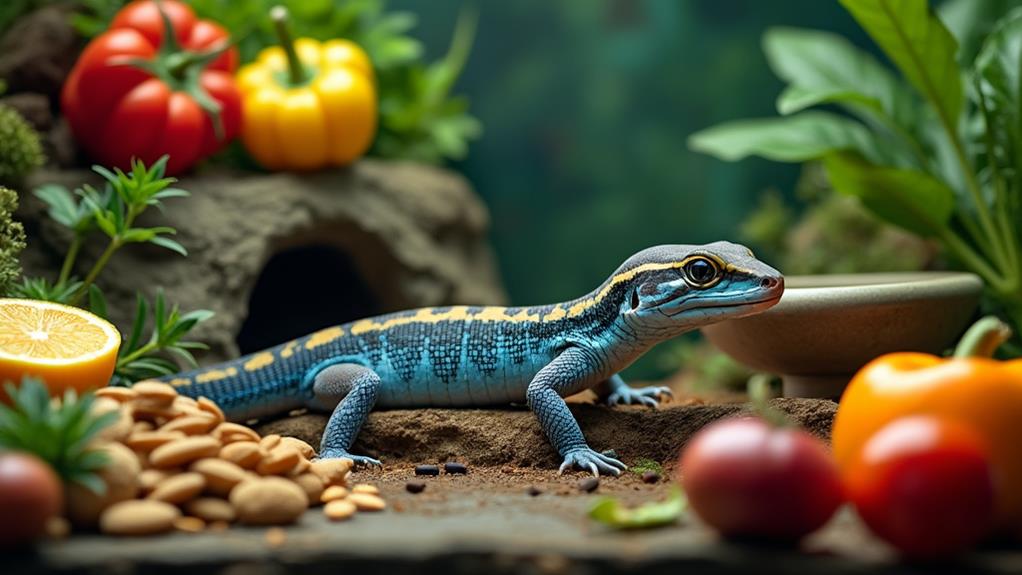
Proper nutrition is vital for your blue-tongued skink's health and well-being. To guarantee they're thriving, provide a balanced diet consisting of 60% plant matter, 40% animal protein, and a small amount of fruit. Dark leafy greens and squash are great plant options, while gut-loaded insects serve as excellent protein sources. It's imperative to supplement with calcium and vitamins to keep your skink healthy and prevent deficiencies.
Feeding habits vary between adults and juveniles. Adults should be fed every 2-3 days, while juveniles require more frequent meals every other day to support their growth. Always provide fresh water in a stable, non-tippable dish, as blue-tongued skinks aren't proficient swimmers and can drown in deep water.
Be mindful of your skink's weight to avoid obesity. Monitor their feeding habits closely and make regular dietary changes to prevent monotony and encourage exploration. Avoid high-fat foods like mealworms, offering them only in moderation. By following these guidelines, you'll help your blue-tongued skink maintain peak health and enjoy a varied and nutritious diet. Remember, a well-fed skink is a happy and healthy pet!
Health and Veterinary Care
Maintaining your blue-tongued skink's health goes beyond just nutrition; it involves regular veterinary care to catch potential issues early. Scheduling annual check-ups is vital to monitor their comprehensive health, including metabolic health. Veterinary care helps prevent and treat common issues like obesity, respiratory infections, and nutritional deficiencies. These health problems can severely impact your skink's quality of life if not addressed promptly.
To guarantee your skink remains healthy, focus on a balanced diet rich in calcium and vitamins. These nutrients are key in preventing nutritional secondary hyperparathyroidism, a condition stemming from calcium deficiency. Without proper supplementation, your skink could experience lethargy and other health complications. Be attentive to signs of illness, such as loss of appetite, abnormal shedding, or changes in behavior. These could indicate underlying issues that require immediate veterinary attention.
Specialized veterinary clinics, like LIBEVC, provide the expertise needed for both routine wellness exams and treatment of specific health concerns. Prompt intervention can make a significant difference in your skink's recovery and long-term health. By prioritizing regular veterinary care, you're taking proactive steps to guarantee your blue-tongued skink leads a healthy, fulfilling life.
Behavioral Insights and Enrichment
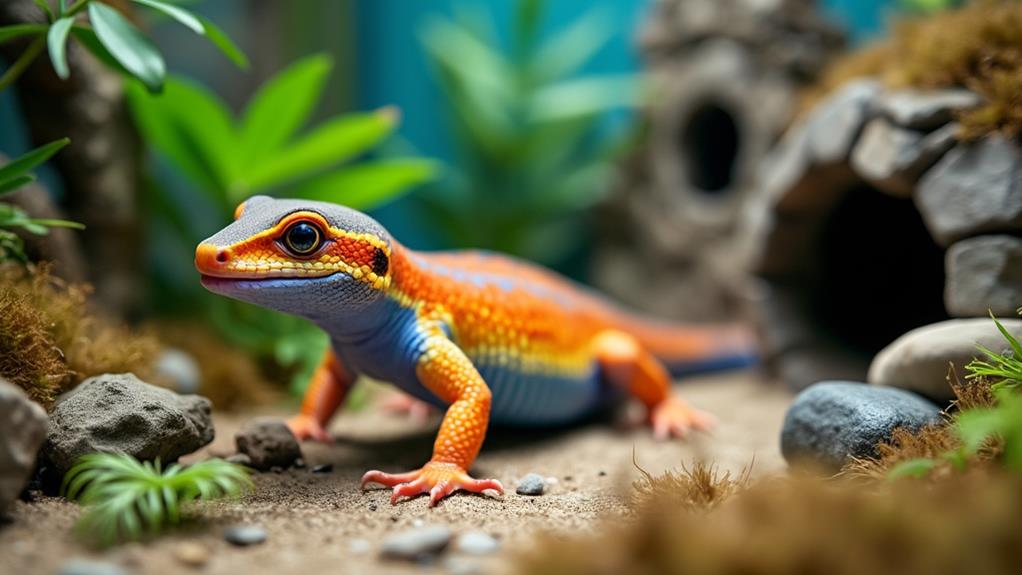
Anyone interested in owning a blue-tongued skink should understand the significance of behavioral insights and enrichment. Recognizing social behaviors is key to building a trusting relationship with your skink. Engaging them in regular interaction fosters trust and reduces stress. Watch for signs of stress like hiding, tail twitching, or defensive posturing. These behaviors indicate discomfort, so it's vital to monitor their body language to guarantee they're comfortable.
To keep your skink mentally stimulated and healthy, enrich their environment with activities that mimic their natural habitat. Consider providing:
- Enrichment activities: Introduce foraging opportunities and climbing structures to promote natural behaviors.
- Interactive play: Engage your skink with toys and gentle handling to prevent boredom.
- Dietary options: Offer a variety of foods to encourage curiosity and maintain nutritional balance.
Routine observation of your skink's behavior is important. It helps you identify any changes that might signify health concerns or discomfort. By incorporating these practices, you'll make certain your skink thrives in a stimulating and safe environment. Understanding their needs and preferences will lead to a happier, healthier pet. Remember, a little effort goes a long way in enhancing your skink's quality of life.
Handling and Socialization
When you bring home a blue-tongued skink, getting them accustomed to handling is essential for building a strong bond. Begin by allowing your skink several days to acclimate to its new environment. This period reduces stress and prepares them for future interactions. Once settled, initiate handling sessions lasting no more than 10 minutes. Gradually increase the time as your skink's comfort with human interaction grows.
Recognizing social behaviors and stress cues is important. Watch for signs like tail twitching, hiding, or defensive posturing, which indicate the skink is stressed. If these occur, pause and allow your skink to feel secure once more. Handling should be a positive experience, so always approach with gentle and calm movements.
Support the entire body of your skink, keeping them close to the ground to prevent injury and improve comfort. Your touch should be firm yet gentle, ensuring they feel secure in your hands. Over time, this consistent approach fosters trust and strengthens your relationship with your skink. Remember, patience and observation are key to understanding their unique social behaviors, leading to rewarding interactions with your blue-tongued companion.
Common Health Issues

Blue-tongued skinks, like any pet, are susceptible to a variety of health issues that require your attention and care. One common health issue is nutritional secondary hyperparathyroidism, often resulting from an inadequate intake of calcium and vitamin D. To prevent this, guarantee your skink's diet is well-balanced and includes the necessary supplements. Respiratory infections are another concern, frequently caused by improper humidity levels or temperature fluctuations in the enclosure. It's vital to monitor these conditions closely to keep your skink healthy.
Incomplete shedding can also be problematic, especially if retained skin accumulates around the toes and eyes. Increasing humidity or providing extra hydration can often resolve this issue. Fungal skin infections may develop from unsanitary living conditions or excessive moisture, making regular cleaning and maintenance of the habitat fundamental.
Obesity is a significant problem, usually due to overfeeding or an unbalanced diet. This can lead to serious health complications, so it's significant to monitor your skink's food intake and maintain a healthy weight.
Here are some tips to mitigate common health issues:
- Maintain ideal humidity levels to prevent shedding and respiratory problems.
- Provide a balanced diet to avoid obesity and metabolic bone disease.
- Keep the enclosure clean to prevent fungal infections.