Year-Round Horse Feeding and Maintenance Tips for Optimal Health
To maintain your horse's ideal health year-round, start with a balanced diet of 1.5-2% body weight in forage daily, adjusting for activity levels and seasonal changes. Provide clean water at all times and consider early morning grazing in spring to manage sugar intake. Monitor your horse's body condition score to guarantee it stays around 5, adjusting feed for weight changes or increased workload. Gradual dietary changes over 12 days help maintain digestive health. Regular dental checks are essential for proper nutrition. Supplements can fill nutrient gaps, but consult a vet for tailored advice. There's more to investigate for maximizing your horse's well-being.
Key Takeaways
- Ensure a balanced diet with 1.5-2% body weight in forage daily for optimal health.
- Adjust diet seasonally, increasing forage in winter and reducing carbohydrates in summer to prevent health issues.
- Maintain regular feeding schedules and access to clean water to support digestion and hydration.
- Conduct routine body condition score assessments and adjust diet based on activity levels and seasonal changes.
- Use supplements to address nutrient deficiencies, enhancing overall health and performance with veterinary guidance.
Digestive System Insights
Understanding a horse's digestive system is fundamental for maintaining its health and well-being. Your horse's digestive system is distinctly designed, consisting of the foregut and hindgut. The foregut, which includes the stomach and small intestine, breaks down starch, protein, and fat. Meanwhile, the hindgut is where microbes digest fiber from roughage, making a diet high in fiber essential for efficient digestion. This fiber promotes microbial fermentation, leading to better nutrient absorption and ideal health.
To guarantee your horse's digestive system functions smoothly, it's critical to mimic their natural grazing habits. Horses naturally graze for up to 18 hours a day, so providing a consistent diet high in fiber supports their digestive health. Regular feeding schedules are key to preventing issues like colic. By maintaining consistency in your horse's diet, you help keep its digestive processes steady and effective.
Feed typically takes 45 to 72 hours to pass through a horse's digestive system. This duration can be influenced by the type of feed and the horse's general health. Therefore, a consistent diet and regular feeding schedules are important in fostering a healthy digestive system and preventing potential problems.
Nutritional Needs Overview
Nutrition is the cornerstone of a horse's health and well-being. Meeting your horse's nutritional needs is vital for maintaining peak body condition and digestive health. Horses require a balanced diet that includes plenty of forage, such as hay or grass, which should make up about 1.5-2% of their body weight daily. This helps support their digestive health and general well-being.
Feeding horses isn't one-size-fits-all. Factors like maturity, breed, activity level, and health conditions greatly affect their energy requirements. Pregnant mares, for instance, need about 30% more feed in their third trimester to support fetal development. Senior horses often require higher protein levels, around 12%-14%, and more easily digestible feeds to help with weight gain and maintain health due to digestive changes.
Regularly evaluating your horse's body condition score (BCS) is vital. An ideal BCS of around five indicates a balanced energy supply and calorie requirement. If your horse's BCS is too low or too high, adjustments to their diet, including protein, vitamins, and minerals, may be necessary. Tailoring your horse's feeding plan guarantees they remain healthy and perform at their best.
Seasonal Feeding Strategies
As the seasons change, so do your horse's nutritional needs, and adjusting feeding strategies is vital for their health. During winter, ascertain your horse consumes 1.5-3% of their body weight in forage daily. High-quality legume hay can help those needing to gain weight due to limited pasture access. For senior horses, consider increasing forage to maintain warmth and body condition; soaked forage pellets are a great option for easier digestion.
In summer, adjust your horse's diet by reducing carbohydrates from grass and grain to prevent digestive issues like colic and laminitis. Instead, focus on low-starch, high-fat feeds to keep energy levels stable. During spring, pay attention to sugar and starch levels in grass to minimize founder risk. Grazing late at night or early in the morning can reduce high sugar intake.
Year-round, regularly assess your horse's body condition and dietary needs to adapt to seasonal changes and meet their unique nutritional requirements. Don't forget to monitor water intake, as hydration is significant across all seasons. By staying attentive and making necessary adjustments, you'll help your horse maintain peak health throughout the year.
Activity-Based Diet Adjustments
When adjusting your horse's diet based on activity levels, it is crucial to align their energy intake with their workload. Horses with increased energy needs due to heavy work require more grain, while those under lighter activity need less. Regularly assess your horse's body condition score to determine if their dietary needs are being met. Here are some key considerations for adjusting your horse's diet:
- Evaluate Activity Level: Determine how much work your horse is doing. Light work horses may need 1-1.5 pounds of grain per hour, while those in heavy work may require considerably more to meet their caloric intake needs.
- Gradual Changes: To maintain digestive health, introduce dietary changes gradually. Allow a adjustment period of about 12 days when modifying grain or forage amounts to prevent digestive issues.
- Nutritional Adjustments: For increased activity, consider feeds higher in fat and lower in starch. This helps maintain energy levels without compromising digestive health, ensuring ideal health.
Consistently monitor your horse's digestion and general health. Any changes might indicate the need for further adjustments in feeding practices based on their activity level. By doing so, you'll support your horse's performance and well-being year-round.
Monitoring Health and Condition
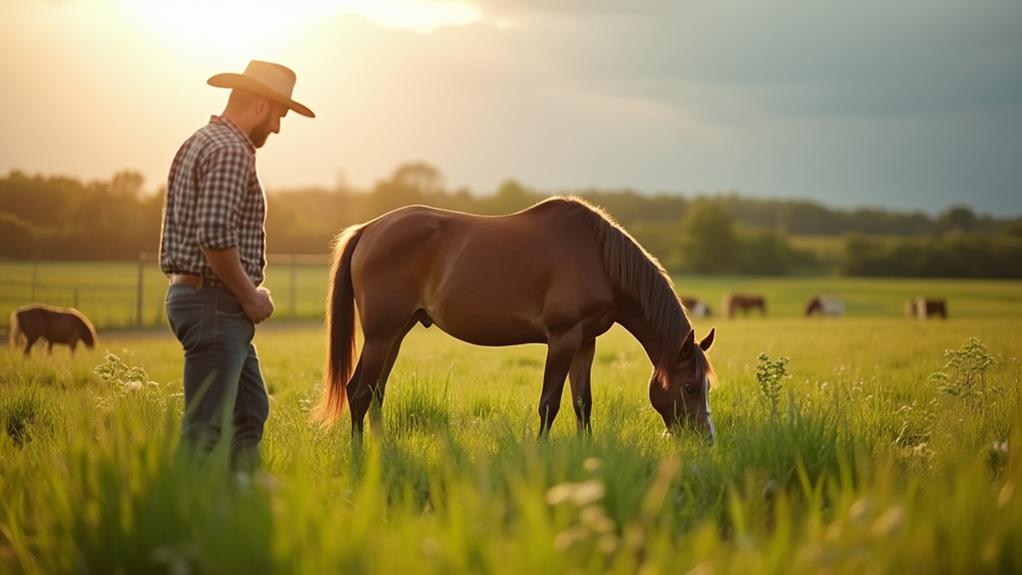
Keeping your horse healthy goes hand in hand with proper diet adjustments. Start by regularly evaluating your horse's body condition score (BCS) on a scale of 1-9, aiming for an ideal score of about 5. This helps guarantee peak health by preventing obesity or underweight issues. Monitoring weight changes closely, especially during seasonal shifts, is vital as a horse's caloric needs change with activity levels, maturity, and environmental conditions.
Pay attention to hydration levels since horses can drink 10-18 gallons of water daily. In winter, reduced water intake can increase the risk of colic, so always provide warmed water during colder months to encourage drinking. Routine checks for dental issues are important too, as problems can impact eating habits and general nutrition. Make dental care a part of regular health maintenance to address these concerns.
Keep a journal of any changes in your horse's behavior, appetite, or physical condition. These could signal underlying health issues requiring veterinary attention. By actively engaging in these practices, you'll help your horses maintain their well-being, guaranteeing they stay on the path to peak health year-round.
Supplement Use and Benefits
Understanding the role of supplements in a horse's diet can significantly impact their health and performance. By addressing specific nutrient deficiencies, supplements guarantee your horse gets essential elements like calcium, vitamins E and B, which are critical for comprehensive health and metabolic processes. Here's how you can optimize your horse's nutritional quality:
- Digestive Health: Use supplements like Zesterra® to improve water intake and promote healthy bacteria in the hindgut. This is especially beneficial for senior horses or those under stress, as it raises gut pH and supports better nutrient absorption.
- Protein Needs: Young and growing horses require 14%-16% protein in their diet for proper muscle and bone development. High-quality supplements can help meet these protein needs efficiently. Senior horses also benefit from supplements that provide 12%-14% protein and easily digestible nutrients to maintain weight and health.
- Individual Needs: Regular assessment of your horse's diet, along with targeted supplements, can optimize health and performance. Consult with a veterinarian to tailor supplement use according to your horse's individual needs.
Related posts