Will the Mexican Red Rump Tarantula Make a Good Pet? A Guide for Spider Lovers
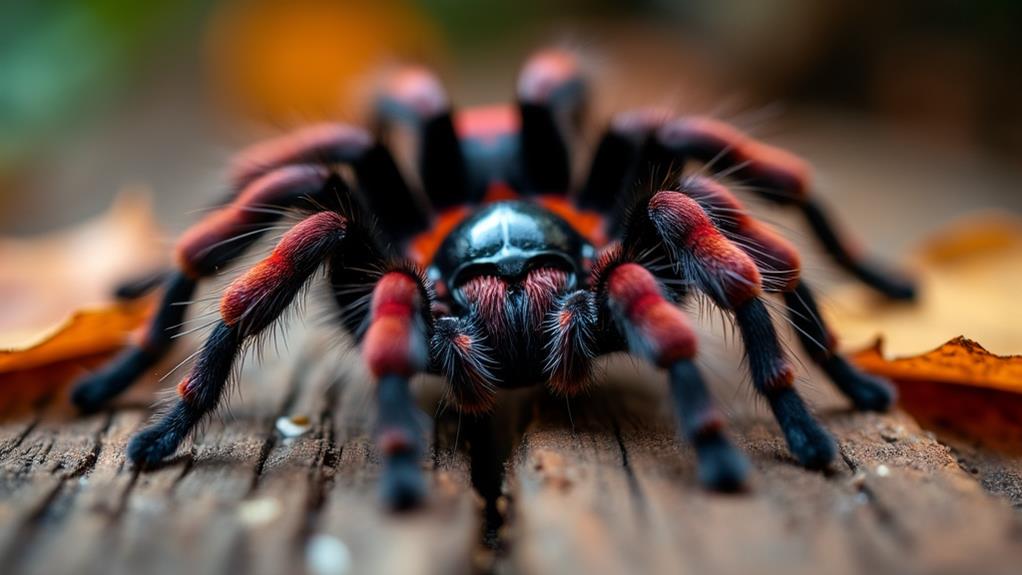
The Mexican Red Rump Tarantula, with its striking red hairs and docile nature, could be an excellent pet for spider lovers. It doesn't grow too large, and its calm demeanor makes it easy to care for. You'll need to set up its habitat correctly—think ample space and dry coco fiber—as it prefers a consistent, warm climate. Like most tarantulas, it's best to avoid handling due to its defensive behaviors. Feeding is straightforward; start with small insects and gradually move to larger ones. Regardless of whether you're a newbie or an enthusiast, you'll find more tips and insights that improve this enchanting experience.
Key Takeaways
- The Mexican Red Rump is docile, making it suitable for beginner tarantula enthusiasts.
- Its striking red hairs and robust body make it visually appealing for pet owners.
- Requires a specific enclosure size and substrate depth for optimal living conditions.
- Adults thrive in dry environments, while spiderlings need monitored humidity levels.
- Observing feeding behaviors is rewarding and minimizes stress compared to handling.
Understanding the Mexican Red Rump
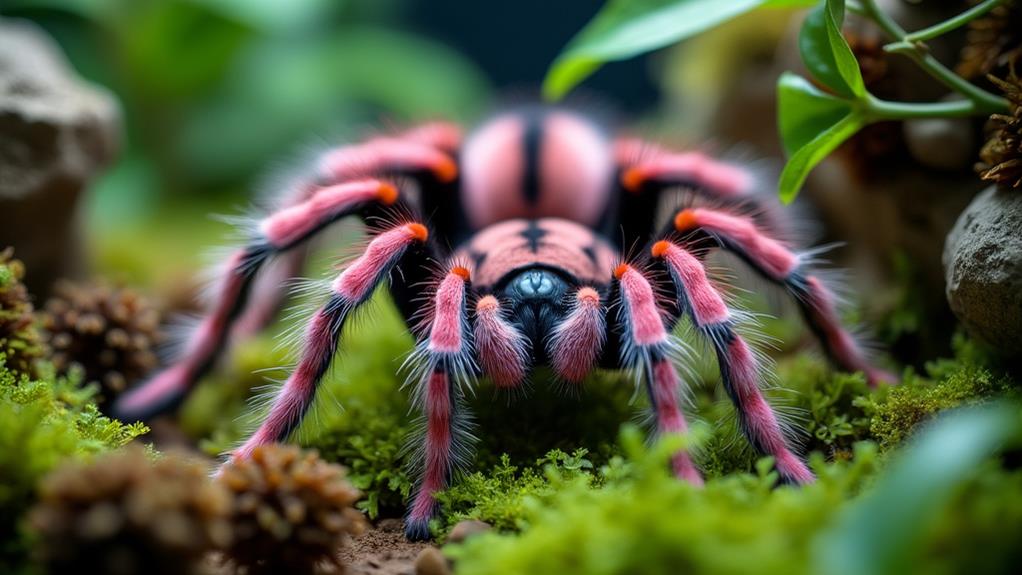
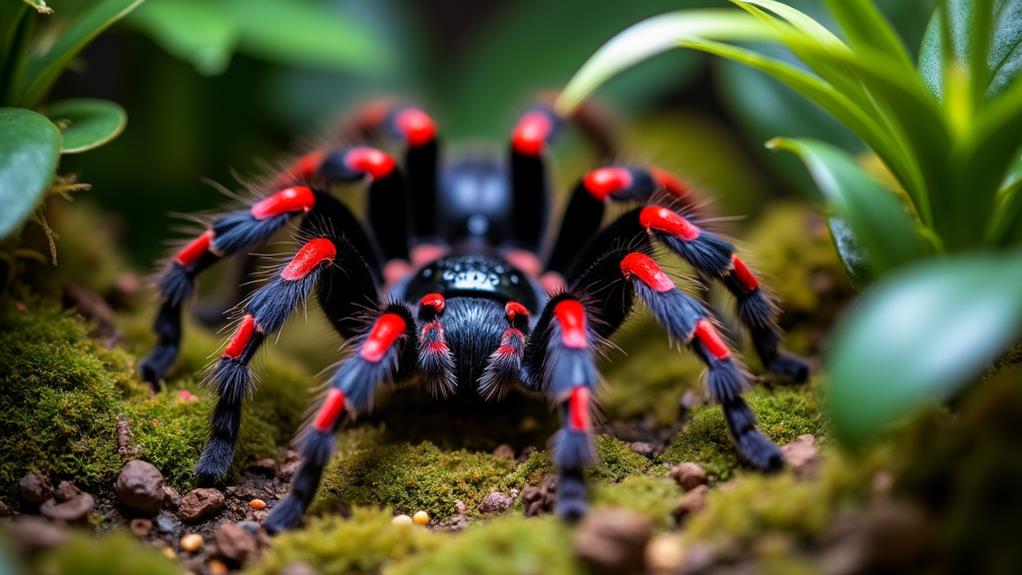
The Mexican Red Rump Tarantula, with its striking red hairs and robust body, is a fascinating species that enthralls enthusiasts and pet owners alike. Native to Central America, this medium-sized tarantula can reach a body length of up to 3 inches, with a leg span of about 6.5 inches. For spider lovers seeking a pet with a calm demeanor, the Mexican Red Rump is generally considered docile. However, you should be cautious during handling, as it may kick urticating hairs when threatened.
Understanding tarantula care is vital for ensuring your spider thrives. The Mexican Red Rump flourishes in a habitat with a dry substrate, mimicking its natural environment. Secure hiding spots are important for its well-being, helping reduce stress. Feeding is straightforward, thanks to its strong feeding response. You can offer large crickets every 7-10 days, catering to its dietary needs.
Growth rates for the Mexican Red Rump are medium, and it typically reaches maturity at around 7 years. By providing the right conditions and understanding its behavior, you can enjoy the company of this fascinating tarantula and create a harmonious living environment for both of you.
Optimal Habitat Setup
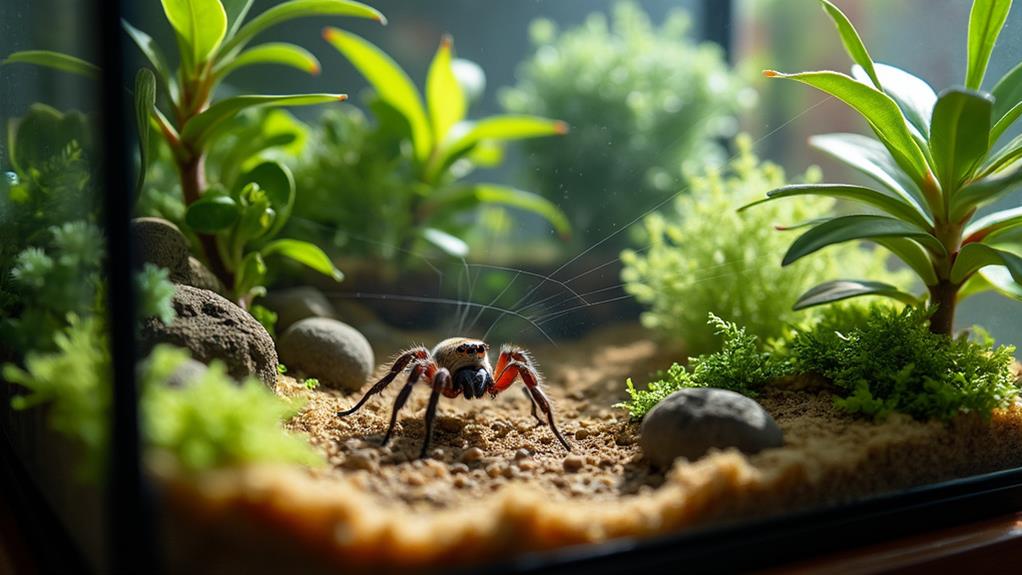
Creating an ideal habitat for your Mexican Red Rump Tarantula involves a few key considerations. Initially, guarantee the enclosure size is at least three times the tarantula's leg span in length and twice its leg span in width. This allows enough room for movement and exploration. For substrate depth, aim for 1.5 times the spider's leg span. Dry coco fiber is an excellent choice, as it closely mimics their natural environment and provides a safe burrowing space.
Include a water dish to maintain hydration, and strategically place hiding spots to offer your tarantula security and comfort. For spiderlings, maintaining humidity levels is vital, while adult tarantulas prefer a dry substrate to avoid mold and mites. A lightly moistened corner can be beneficial, though, to balance conditions.
Keep the ideal temperature between 68°F and 90°F (20°C to 32°C) to support their health and well-being. Avoid sudden temperature fluctuations, which can stress your tarantula. Regularly monitor conditions like temperature, humidity, and cleanliness to maintain a secure environment. This reduces the risk of falls and injuries, guaranteeing a safe home for your eight-legged friend.
Feeding and Growth Tips
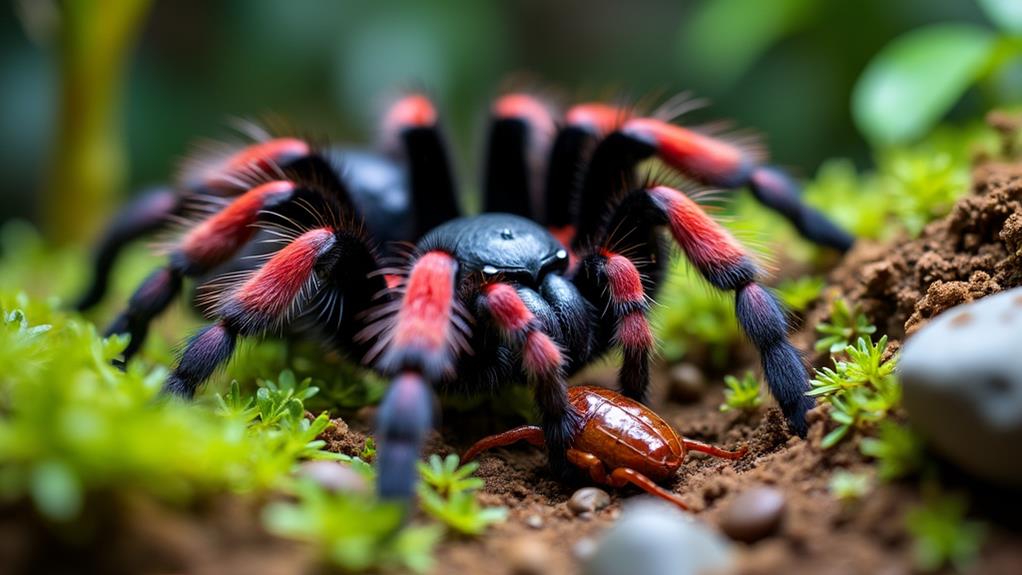
Once you've set up the perfect habitat, it's time to focus on feeding and growth strategies for your Mexican Red Rump Tarantula. Start by feeding your spiderlings small crickets or fruit flies twice a week. As they grow, shift to medium-sized feeders every 5-7 days. Safety is essential for spiderlings, so offer pre-killed crickets to prevent any feeding mishaps. As your tarantula matures, their diet should evolve too.
Adult tarantulas require a more substantial feeding schedule—5-7 large crickets every 7-10 days. A varied diet is key to maintaining their health, so consider rotating different types of feeders. This not only guarantees balanced nutrition but also keeps your tarantula engaged with its meals. Be observant during feeding times, especially during the premolt phase. It's common for their appetite to decrease as they prepare to shed their exoskeleton.
Females typically reach maturity around 7 years of maturity, and the Mexican Red Rump Tarantula exhibits a medium growth rate compared to other species. Monitoring their growth and adjusting feeding habits accordingly will help your tarantula thrive. Proper feeding and attention to growth stages assure your tarantula remains a healthy and fascinating pet.
Behavior and Handling
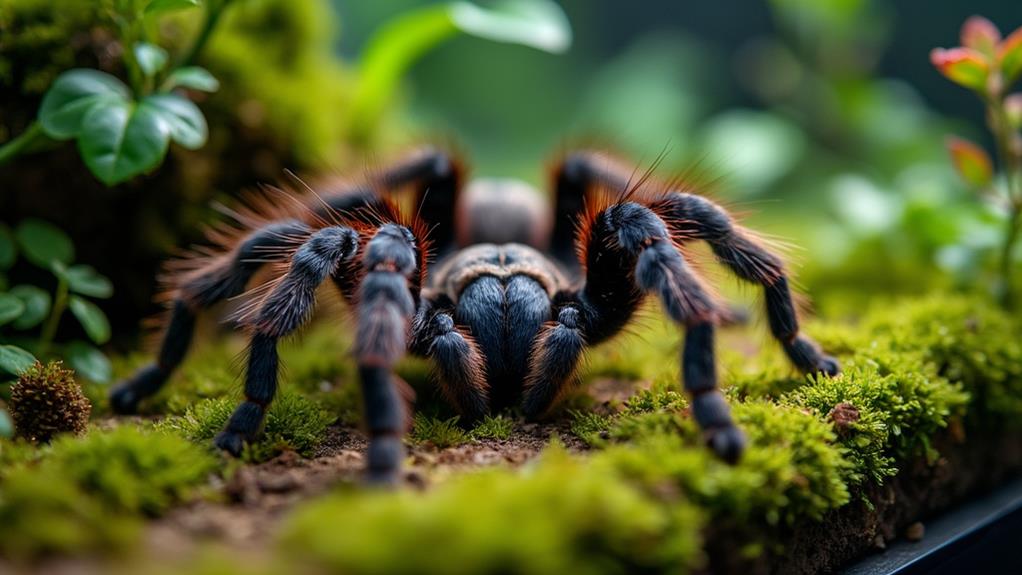
While the Mexican Red Rump Tarantula is generally docile, you'll find that it can exhibit defensive behaviors when disturbed. One of its primary defenses includes kicking urticating hairs, which can be irritating if they come into contact with skin. This defensive behavior is often displayed when the tarantula feels threatened or stressed.
Handling your Mexican Red Rump is not advisable, as it can cause unnecessary stress for the tarantula. They might quickly retreat or resort to kicking hairs if they perceive any threat. Each tarantula's temperament can vary; some might be quite skittish and fast-moving, while others may remain calm and visible. This variety in individual temperaments means you should approach each tarantula with care and respect.
If you must handle your tarantula, using gentle coaxing techniques is crucial. Avoid direct eye contact, as it can be perceived as a threat. Instead, gently guide them without causing alarm, minimizing stress and defensive behaviors.
The Mexican Red Rump is known for its strong feeding response, showcasing active hunting behaviors that are fascinating to watch. Observing these moments can be more rewarding than handling, providing a stress-free environment for both you and your tarantula.
Community Insights and Recommendations
A wealth of community insights can guide you in keeping a Mexican Red Rump Tarantula as a pet. This species, often touted as ideal beginner tarantulas, is known for its striking appearance and generally docile nature, making it a favorite in the pet trade. However, it's essential to contemplate the care recommendations shared by experienced keepers. One key suggestion is providing adequate hiding spots in their enclosure. Doing so reduces skittish behavior and stress, guaranteeing a more relaxed pet that's easier to interact with.
Community members also highlight the entertaining feeding response of the Mexican Red Rump Tarantula. You'll find their active hunting behavior quite engaging, adding an element of excitement to your tarantula-keeping experience. To learn more and stay informed, joining tarantula forums can be invaluable. These platforms allow you to exchange experiences with other enthusiasts, helping you refine your care practices.
Additionally, it's significant to focus on maintaining a dry substrate for adult tarantulas, as emphasized by the community consensus. For spiderlings, monitor humidity levels closely to support their health. By following these insights, you'll guarantee a rewarding experience with your Mexican Red Rump Tarantula.
Related posts