Will a Meyer’s Parrot Make a Good Pet? Key Things to Consider
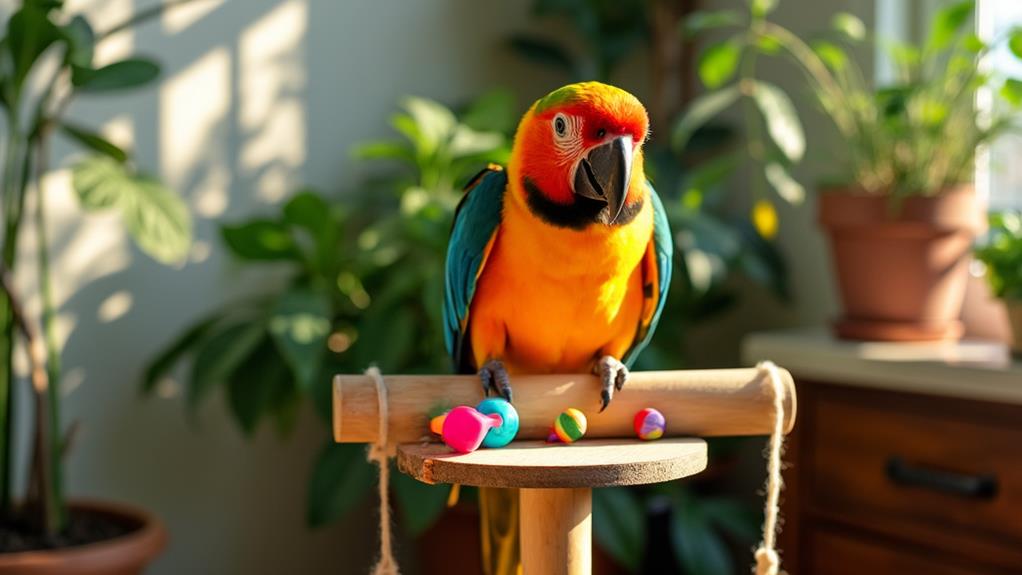
Considering a Meyer's Parrot as a pet involves several factors: they are known for their quiet and gentle demeanor, making them ideal for peaceful companionship. You'll need to commit to their potential 25-40 year lifespan and guarantee proper socialization. A cage with enrichment items in a quiet area is crucial, as is a balanced diet of pellets, seeds, and fresh produce. Regular veterinary care and daily interaction are significant to maintain health and happiness. If you're ready for the daily commitment of time and resources, these charming parrots can be a rewarding addition to your life, and more awaits on this expedition.
Key Takeaways
- Meyer's Parrots are quiet and gentle, ideal for peaceful companionship.
- They require a long-term commitment due to a lifespan of 25 to 40 years.
- Balanced diet and regular veterinary care are crucial for their health.
- Daily interaction and mental stimulation prevent boredom-related behaviors.
- Initial and ongoing costs include cage setup, food, and veterinary expenses.
Meyers Parrot Characteristics
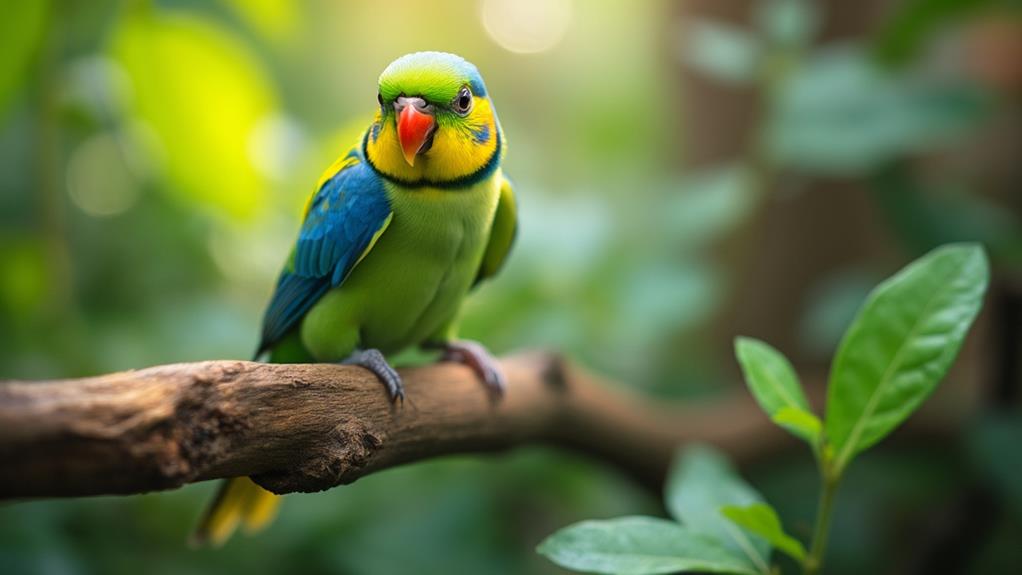
Have you ever wondered what makes Meyer's Parrots such appealing pets? Well, their charming appearance and delightful personality are just the beginning. Meyers Parrots, with their striking blue-green belly, yellow head, and grey plumage around the face, are visually enchanting. They're small, measuring 9 to 13 inches and weighing around 120 grams, making them suitable for a range of living spaces, including apartments.
Known for their quiet and gentle nature, Meyers Parrots are perfect companions if you're seeking a peaceful pet. They can learn a few words and mimic tunes, adding a touch of entertainment to your home. However, keep in mind that owning one is a long-term commitment, as these intelligent birds can live between 25 to 40 years.
When bringing a new bird like a Meyers Parrot into your life, care tips are vital. These parrots are intelligent and curious, often displaying humorous behavior. To guarantee they bond well with all family members, socialization is key. Without it, they might develop a preference for one person. Appreciate their fascinating characteristics and provide a nurturing environment to enjoy a rewarding and lasting companionship with your Meyers Parrot.
Home and Cage Requirements
When setting up a home for your Meyer's Parrot, it's important to guarantee their cage meets specific requirements for safety and comfort. Start by confirming the cage size is at least 24x24x24 inches with bar spacing between ¾ to 5/8 inches. This size offers the space needed for your parrot to move comfortably while preventing escapes or injuries. Equip the cage with perches, toys, and enrichment items to keep your Meyers Parrot physically active and mentally stimulated.
Choose a quiet area in your home for the cage placement to minimize stress and provide a sense of security. While Meyers Parrots thrive in a social setting, it's imperative to balance social interaction with a safe retreat. Position the cage where family interaction is possible but also allows the parrot some alone time when needed.
Address potential health concerns by committing to a regular cleaning schedule for the cage. A clean environment is significant to prevent health issues and guarantee your parrot's well-being. By meeting these home and cage requirements, you'll create a safe, stimulating, and comfortable environment that supports your Meyer's Parrot's comprehensive health and happiness.
Diet and Nutrition
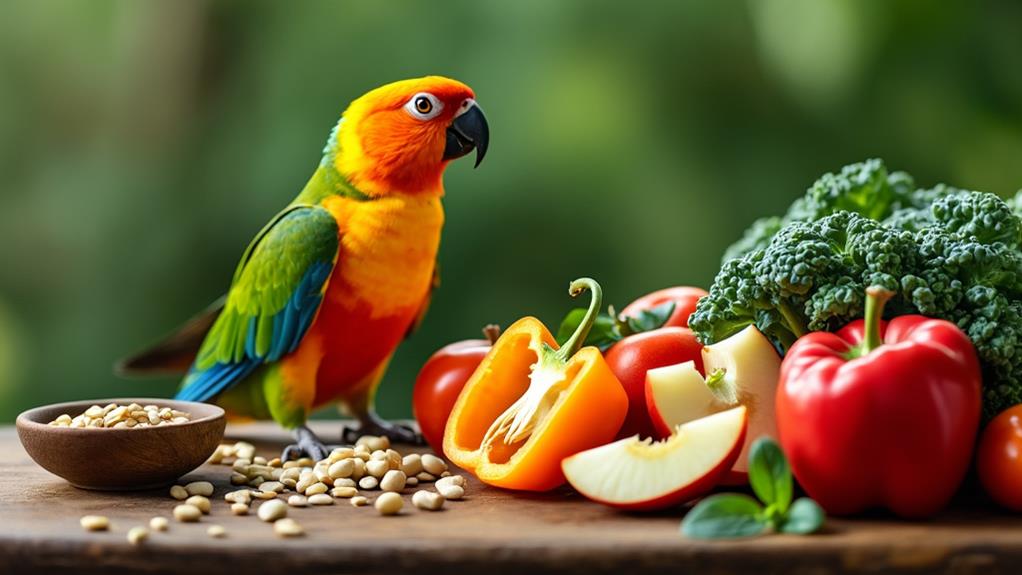
To guarantee your Meyer's Parrot maintains ideal health and energy, it's vital to provide a well-balanced diet that includes seeds, pellets, and a variety of fresh fruits and vegetables. This combination supports their general nutrition, helping them thrive. Fresh fruits like pomegranates and grapes are safe and beneficial, offering necessary vitamins and hydration. Alongside fruits, provide fresh vegetables daily to improve their diet and promote longevity.
Pellets should form the foundation of your parrot's diet, as they're formulated to meet most of their nutritional needs. However, supplementing with fresh produce is significant to guarantee a thorough intake of nutrients. Establishing a regular feeding schedule can help manage their energy levels and promote behavioral stability.
Don't forget the significance of chewable items like rawhide and soft wood. These not only keep your parrot entertained but also provide mental stimulation, which is a vital aspect of their nutrition-related well-being. Always confirm clean, fresh water is available, and keep a close eye on their diet to prevent obesity and nutritional deficiencies. By monitoring their intake, you can guarantee your Meyer's Parrot maintains a healthy and balanced lifestyle.
Socialization and Training
For your Meyer's Parrot, early socialization is vital to prevent nipping and guarantee they're well-adjusted companions. These parrots thrive on consistent interaction, which not only fosters trust but also reduces their fear of unfamiliar people. Without proper socialization, they might become a "one person bird," growing overly attached to a single caregiver. This could lead to challenges if others in the household want to interact with them.
To avoid this, involve multiple family members in your parrot's care early on. Regular interaction is key, as it helps the bird feel comfortable with everyone and diminishes its chances of becoming overly dependent on just one person.
Incorporating engaging training techniques, like clicker training, can greatly improve your parrot's learning abilities and behavioral response. Such training not only promotes a positive bond between you and your bird but also keeps their mind stimulated.
Don't forget to provide a variety of toys and mental challenges to prevent boredom-related behaviors. Consistent training and socialization guarantee your Meyer's Parrot remains emotionally healthy and happy, making it a delightful companion for the whole family.
Health and Veterinary Care
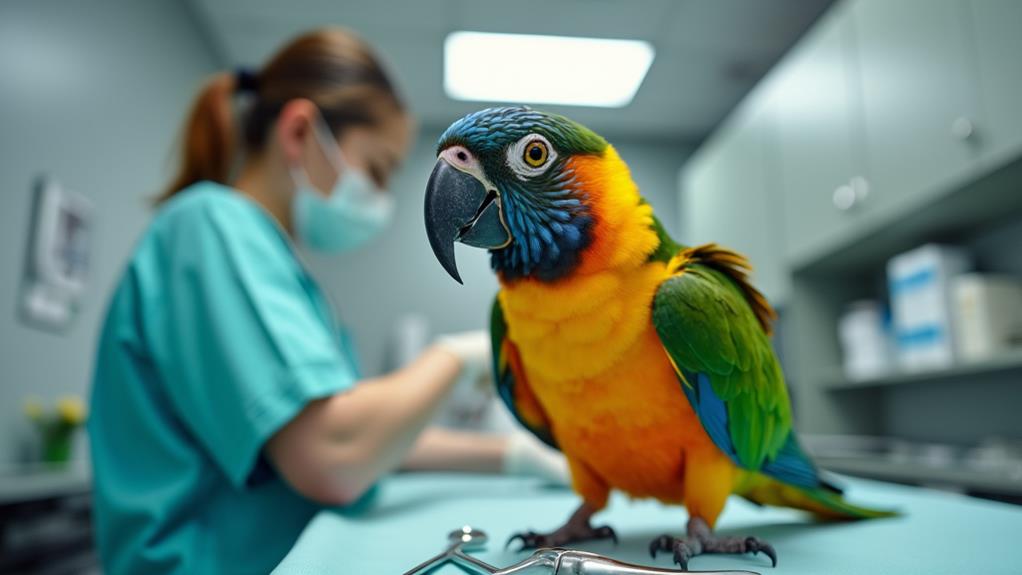
In caring for a Meyer's Parrot, regular veterinary check-ups are important to monitor their health and catch potential issues like Aspergillosis and Bornavirus early. These health concerns can pose serious risks if not identified and treated promptly. Securing your parrot's well-being involves more than just routine visits to the vet. You need to maintain a clean living environment, as this is fundamental for preventing respiratory infections and other related problems. Regularly cleaning the cage and guaranteeing proper ventilation can go a long way in safeguarding your feathered friend's health.
Moreover, understanding and addressing their nutritional needs is key. A balanced diet of pellets, seeds, fruits, and vegetables is significant to their complete health and longevity. If you notice signs of illness, like changes in behavior, weight loss, or regurgitation, don't wait to consult with a veterinarian. Quick intervention can make a substantial difference in your parrot's recovery and well-being.
Being aware of these common health conditions and taking preventive measures will help your Meyer's Parrot live a long and healthy life, potentially reaching a lifespan of 25 to 40 years. Your proactive approach guarantees your pet thrives, bringing joy to your home.
Ideal Owner Traits
Owning a Meyer's Parrot requires a specific set of traits that make an ideal pet owner. If you're considering bringing a Meyers parrot into your home, having some experience with birds is beneficial. Understanding training techniques helps in managing their behavior effectively. These parrots need lifelong care, given their impressive lifespan of 25 to 40 years. You'll need to commit to ongoing interaction and companionship, ensuring they remain happy and healthy throughout their life.
Ideal owners must be prepared to dedicate 2-3 hours daily for playtime outside the cage. This time is essential for providing mental stimulation and preventing boredom, which can lead to behavioral issues. Being knowledgeable about avian behavior also helps, as Meyers parrots may display jealousy if not properly socialized.
Appreciation for a quieter living environment is another trait of ideal owners. Meyers parrots are generally quiet, making them suitable for apartment living. Their reserved nature can be a perfect match for someone who values peace at home. If these traits resonate with you, a Meyers parrot could be a wonderful companion, bringing joy and companionship for many years to come.
Cost and Resources
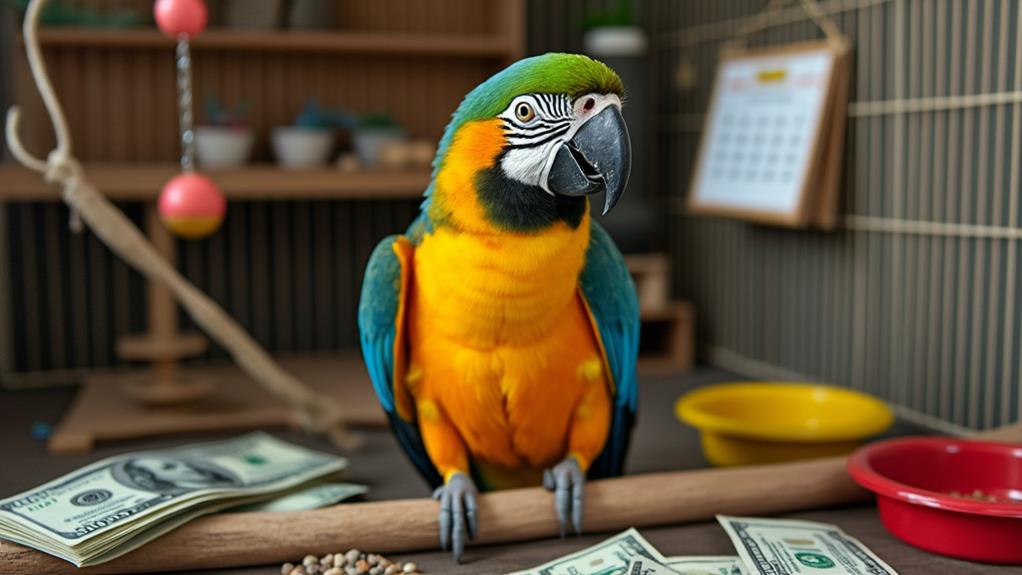
When contemplating bringing a Meyer's Parrot into your home, it's important to understand the associated costs and resources required. The initial cost of purchasing a Meyer's Parrot can range from $200 to $600, depending on factors like color and breeding popularity. However, the financial commitment doesn't end there. You'll need to budget for ongoing expenses to guarantee your parrot's well-being.
- Dietary Needs: A balanced diet of seeds, pellets, fresh fruits, and vegetables is significant. These dietary needs are ongoing expenses you'll need to plan for regularly.
- Cage and Environment: A suitable cage with minimum dimensions of 24x24x24 inches and secure bar spacing of ¾ - 5/8 inches is necessary for your parrot's comfort and safety. Cage maintenance is another ongoing expense to take into account.
- Veterinary Check-Ups: Regular veterinary check-ups are crucial for preventing health issues like Aspergillosis and Bornavirus. These visits will add to your total cost but are important for your parrot's health.
- Educational Resources: Access to educational resources and community forums can offer invaluable support, helping you manage your parrot's specific needs effectively.
Understanding these costs and resources guarantees you're prepared for the rewarding experience of owning a Meyer's Parrot.