Will a Canary Make a Great Pet Bird? What You Need to Know
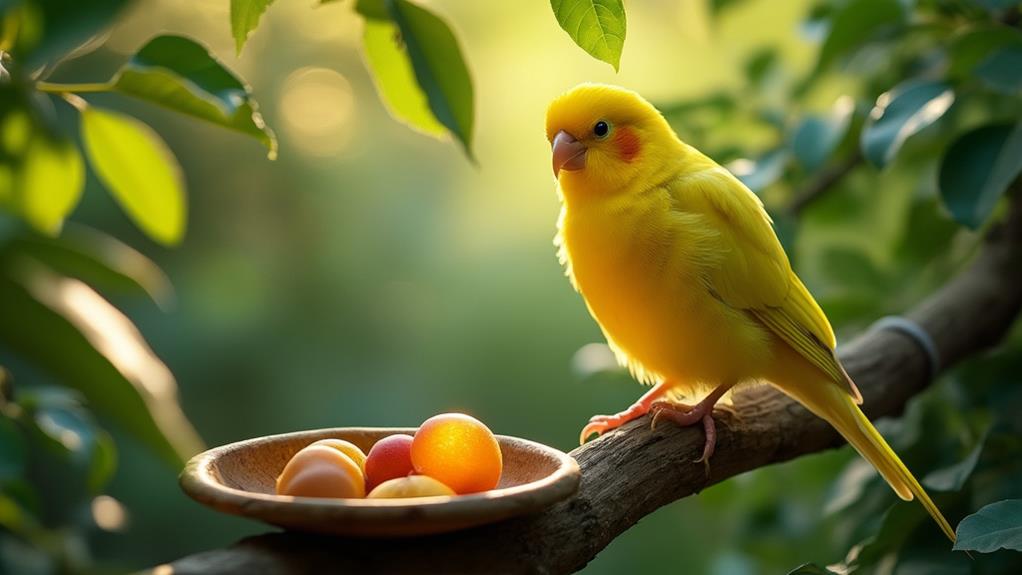
A canary can indeed make a great pet bird, especially if you prefer low-maintenance pets. They thrive when kept alone, filling your house with their delightful melodies. Canaries are ideal for smaller homes due to their petite size, but require a spacious cage with a proper diet to stay healthy. They're mostly solitary, preferring to observe rather than engage, which might not suit owners seeking interactive pets. Regular cage cleaning and understanding their behavior are essential. If you're intrigued by their unique needs and behaviors, there's much more to uncover about these charming avian companions.
Key Takeaways
- Canaries are low-maintenance pets, ideal for small spaces, with beautiful singing that adds ambiance.
- They thrive in solitary environments and can become stressed or aggressive when housed with other birds.
- A balanced diet of high-quality pellets and fresh produce is essential for their health.
- Regular cleaning and mental stimulation are necessary to prevent boredom and maintain hygiene.
- Canaries are not highly interactive but enjoy observing their owners and listening to gentle music.
Understanding Canary Behavior
Regarding understanding canary behavior, it's vital to recognize that these birds are naturally solitary creatures. Canaries thrive when housed alone; placing them together often leads to territorial disputes and unnecessary stress. As a potential owner, you should know that their solitary nature means they don't crave companionship or frequent interaction. In fact, too much handling can cause them stress, making them ideal low-maintenance pets for those who prefer minimal interaction.
Male canaries are famous for their beautiful singing, especially during breeding seasons. However, if they're housed with females, you might notice a decrease in their singing. This is because their singing is often a display of territorial or mating behavior, which diminishes when the need to impress isn't present. Observing their body language is key to understanding their contentment or distress. Subtle signs can indicate how your canary feels, helping you guarantee they remain comfortable and happy.
While canaries can learn to recognize their owners, don't expect them to become finger-tamed. This rarity in their behavior underscores their preference for limited interaction, and understanding this can significantly improve your experience as a canary owner.
Essential Care Requirements
When taking care of a canary, you must guarantee their habitat is spacious enough, with a minimum size of 18 inches long, 14 inches wide, and 18 inches high. Canaries need adequate space to move freely and stay healthy. Confirm the bar spacing is no larger than ¼ inch to prevent escapes. A well-maintained habitat contributes notably to their general health and well-being.
Your canary's diet is vital; it should primarily consist of high-quality pellets, making up 60-70% of their intake. Supplement this with seeds, vegetables, and fruits. Don't forget to provide fresh water daily to keep them hydrated and happy. Regular maintenance includes daily spot-cleaning of the habitat and washing food and water bowls to uphold hygiene.
Grooming involves nail trimming and feather care. While most canaries don't need beak trimming, keeping an eye on their grooming needs is important. Annual veterinary check-ups play a significant role in monitoring your canary's health. These visits help catch potential issues early, and it's helpful to document their diet and habitat conditions for consultations. By covering these vital care requirements, you guarantee your canary thrives in a healthy, clean environment.
Pros of Owning Canaries
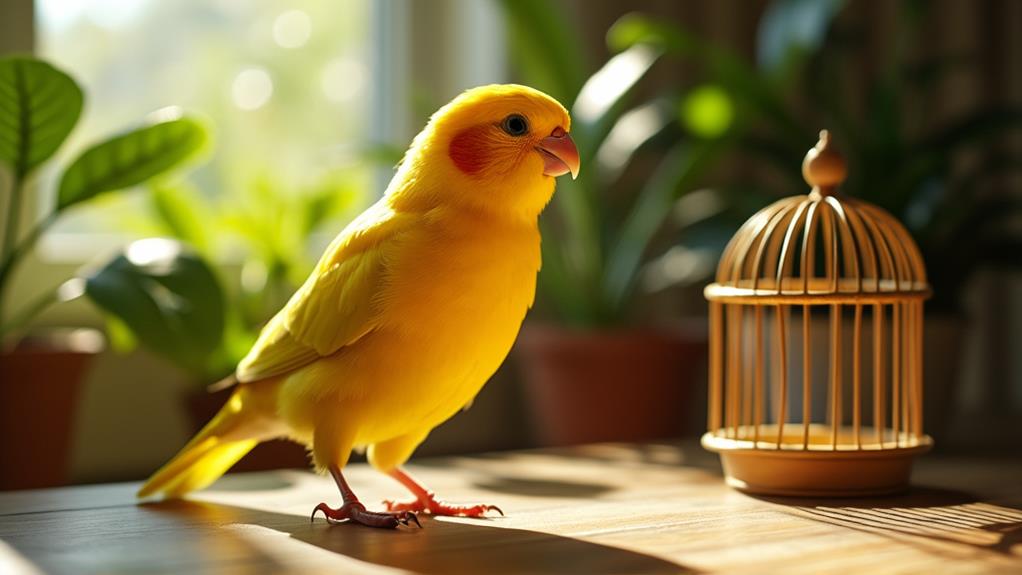
Owning a canary has several appealing advantages that make them a popular choice for pet enthusiasts. Canaries are generally low-maintenance pets, which means they require less attention and interaction than more demanding species like parrots. This makes them ideal for individuals or families with busy lifestyles. Their beautiful singing is another major draw. The melodious tunes canaries produce add a delightful ambiance to your home, serving as a sign of a happy and healthy bird.
The variety in feather mutations and colors is another reason canaries appeal to many. With over 200 breeds available, you can select a canary that matches your aesthetic preferences, from lively yellows to striking reds and everything in between. Their small size, averaging only 3 to 4 inches, makes them suitable for smaller living spaces and easier to handle.
Canaries are known for being gentle pets. Unlike many other birds, they typically do not bite and are less aggressive, making them family-friendly and suitable for individuals seeking a peaceful companion. All in all, if you're looking for a charming, low-maintenance bird that brings joy and beauty into your home, canaries could be the perfect choice.
Cons of Owning Canaries
Despite their many charms, canaries come with several drawbacks you should consider before bringing one home. One significant issue is their potential to cause noise complaints. Canaries are known for their beautiful singing, but this can become quite loud and disruptive, especially if you live in close quarters with neighbors. Furthermore, they are messy pets. You'll find yourself dealing with a constant supply of seed hulls and droppings, requiring daily cleaning to keep their environment sanitary.
Their territorial nature means canaries need solitary housing. Placing them with other birds can lead to aggression and stress, which makes them less suitable for a multi-bird household. While they are considered a low-maintenance pet due to their limited social behavior, this also means they may not provide the interactive bond some pet owners crave. Canaries don't require companionship, but they still need regular interaction and stimulation. Without it, they can become bored and might develop behavioral issues.
Ultimately, while canaries have their unique appeal, they're not ideal for everyone. It's essential to weigh these cons against their pros to determine if a canary aligns with your lifestyle and expectations.
Space and Cage Needs
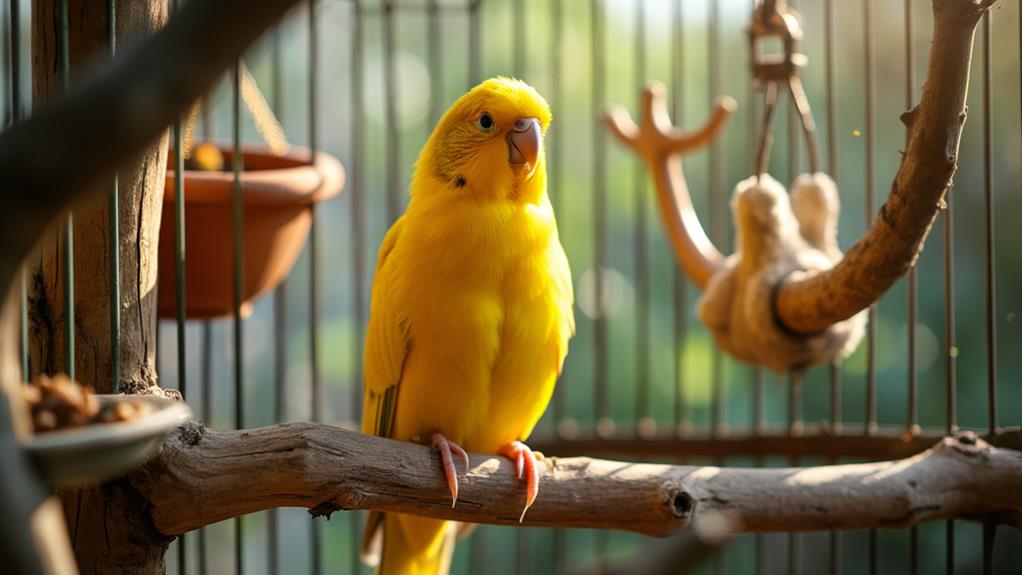
Why is it vital to contemplate space and cage needs when keeping a canary? Providing the right environment guarantees their comfort, safety, and general well-being. Canaries require a minimum cage size of 18 inches long, 14 inches wide, and 18 inches high. This cage size satisfies their space needs, allowing them to move freely and comfortably. However, larger cages are always better as they offer more flight space, which is key for their physical health.
When selecting a cage, prioritize rectangular cages with proper bar spacing of ¼ inch or smaller. This prevents escapes and keeps your canary safe within its habitat. Avoid round cages and homemade options made from wood or galvanized wire, as these can compromise your bird's safety and comfort.
Place the cage in a well-lit area, away from drafts, to create a comfortable environment. Maintaining a consistent temperature between 65°F and 80°F is significant for their health. Meeting these conditions will help your canary thrive in its new home. By considering these factors, you'll provide a habitat that meets all the vital needs of your canary, guaranteeing a happy and healthy pet bird.
Dietary Considerations
A balanced diet is vital for keeping your canary healthy and energetic. You'll want to provide a diet consisting of 60-70% high-quality pellets like Lafeber or Higgins. These pellets guarantee your canary gets the necessary nutrition for peak health. Adding fresh fruits and vegetables to their meals is also significant. Beta-carotene-rich foods, in particular, help improve feather color, especially in red-factor canaries.
Ascertain fresh, clean water is always available to maintain proper hydration, and remember to change it daily. This simple step is fundamental for your bird's health. Treats such as millet spray can be given but should make up no more than 10% of their complete diet. Overindulgence in treats can lead to obesity, so it's vital to monitor their intake carefully.
Be cautious of toxic foods that can harm your canary. Avoid giving them chocolate, caffeine, and any high-fat or high-sugar items. These foods can severely affect their health, so it's best to keep them out of reach. By following these dietary considerations, you'll help your canary thrive and maintain a lively, healthy life.
Socialization and Interaction
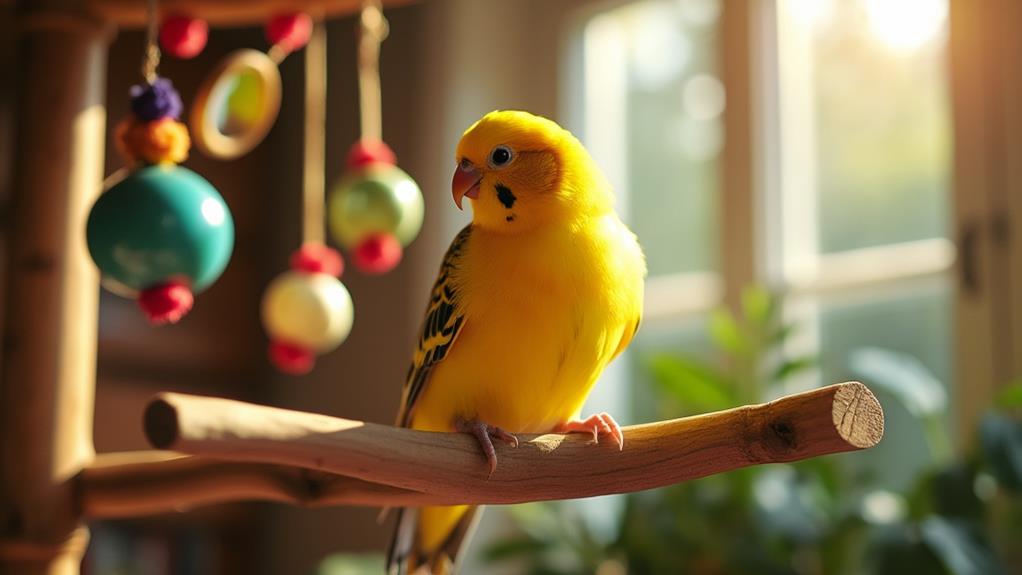
Canaries, with their solitary nature, are often happiest when kept alone, as this reduces stress and prevents territorial disputes. Unlike some other pet birds, canaries don't crave companionship and generally prefer limited interaction. This makes them perfect for those seeking a low-maintenance pet. While your canary can enjoy some socialization, it's essential to understand that frequent handling might cause stress-related issues. They aren't typically finger-tamed and might not enjoy being held as much.
Instead, focus on observing their behavior, ensuring you don't miss any signs of distress. A relaxed canary will display normal behavior such as singing and eating, while a stressed one might appear lethargic or exhibit changes in behavior. Your presence nearby, along with a healthy environment, can provide the interaction they need without overwhelming them.
Since canaries are solitary, they don't require extensive socialization to thrive. You can interact with your canary by speaking softly or playing gentle music, providing a sense of companionship without physical handling. By respecting their need for solitude and monitoring their behavior, you'll be ensuring a stress-free environment for your feathered friend.
Ethical Ownership Practices
Understanding the unique needs of canaries is fundamental for ethical ownership, as they thrive best when their solitary nature is respected. Keeping them alone prevents territorial disputes and stress, ensuring their well-being. Regular interaction and mental stimulation are imperative, but remember to respect their boundaries—excessive handling can be stressful for them. Instead, engage them with toys and gentle interactions that stimulate their mind without overwhelming them.
A clean environment is crucial for your canary's health and comfort. They can create quite a mess, so daily cleaning and maintenance of their space is necessary. This not only keeps them healthy but also provides a safe and pleasant home. Your canary's dietary needs are another significant aspect of ethical ownership. Provide high-quality pellets, along with fresh fruits and vegetables, while avoiding harmful foods like chocolate and caffeine.
Embrace the potential for a lifelong commitment, as canaries can live up to 10 years or more with proper care. This means ensuring they receive the attention and care they deserve throughout their lives. By considering these aspects, you'll be well-equipped to provide an ethical and nurturing environment for your canary.
Potential Challenges
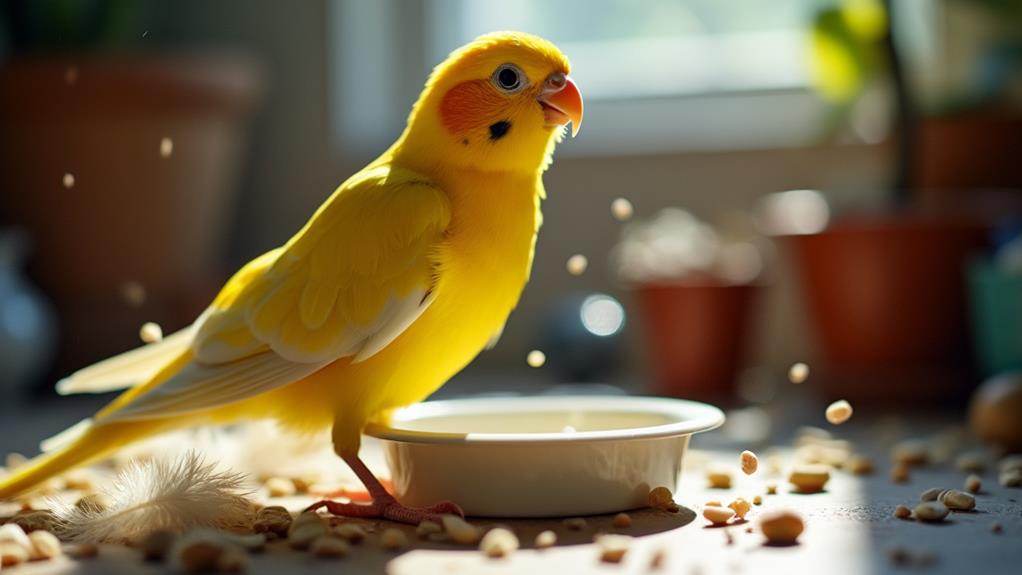
While ethical ownership practices lay the groundwork for a happy canary, potential challenges may arise that require careful consideration. Canaries are solitary creatures, preferring to live alone. If you're looking for a pet that desires a social companion, a canary might not be the best choice. They thrive in solitude, and trying to pair them with another bird could lead to stress-related behavior issues. Furthermore, they're known for their melodious singing, which, while beautiful, can be quite noisy. This may not be ideal for all living environments, possibly leading to noise complaints from neighbors.
You'll also need to be prepared for regular maintenance. Canaries produce considerable waste, so daily cleaning is vital to maintain their hygiene and health. Their limited need for human interaction might disappoint those seeking a more interactive pet. Canaries don't thrive on social companionship and can become stressed if handled too frequently. It's important to understand their behavior and respect their boundaries to avoid causing them discomfort.
- Solitary Nature: Prefer individual housing.
- Noise Levels: Can be disruptive.
- Daily Maintenance: Vital for health.
- Limited Interaction: May not meet social expectations.
Understanding these challenges will guarantee a harmonious relationship with your pet canary.
Community Support and Resources
How do you guarantee you're making the most of your canary ownership experience? Immerse yourself in the world of community support and resources available to you. Online communities are repositories of valuable resources, offering shared experiences on bird care and training. Engaging in forums like the Healthy Highway, with its 8.6K threads, connects you with health inquiries and education specific to canaries. You'll find expert advice at your fingertips, making those tricky health dilemmas a breeze to manage.
Looking to perfect your canary's diet? Investigate the Feathered Food Court, a forum area lively with 8.4K threads on diet-related topics essential for your canary's well-being. You'll uncover tips and tricks to guarantee your feathered friend enjoys a healthy and balanced diet.
Don't overlook local bird clubs. They're fantastic for fostering connections with fellow canary enthusiasts and accessing in-person expert advice. With these clubs, you can partake in knowledge exchange that enriches your bird care practices. For new canary owners, participating in community discussions like those in Welcome Lane—boasting over 158.1K messages—provides invaluable support and guidance for a rewarding canary ownership experience.