Why Fresh Water Is Essential for Horses and Livestock Health
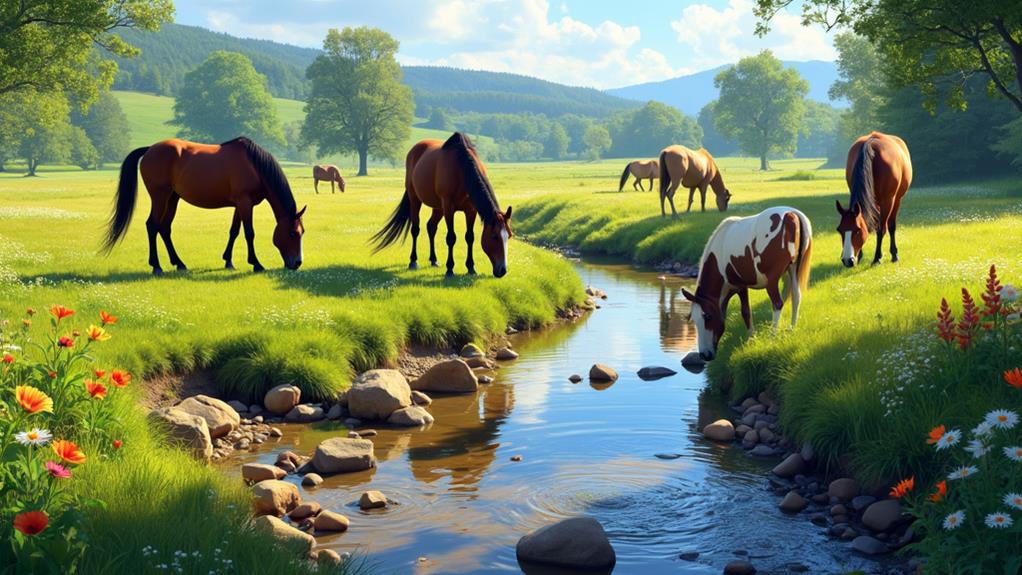
You must guarantee horses and livestock have constant access to fresh water because it's essential for their health and vitality. Fresh water aids in digestion, regulates body temperature, and supports milk production in broodmares. Inadequate water intake can lead to dehydration, causing issues like colic and kidney damage. Be aware of increased water needs during hot weather or for lactating animals. Watch for signs of dehydration such as dry gums or sunken eyes. Regularly provide clean water, check for contamination, and use strategies like automatic waterers to encourage drinking. Investigate the ways you can optimize livestock hydration efficiently.
Key Takeaways
- Fresh water is crucial for digestion and overall well-being in horses and livestock.
- Adequate hydration prevents serious health issues like colic and kidney damage.
- Clean water supports optimal performance, weight gain, and feed efficiency.
- Contaminated water can decrease consumption and lead to reproductive health problems.
- Proper water quality, including pH levels, is vital for maintaining livestock health.
Water Needs for Horses
Understanding the water needs of horses is fundamental for maintaining their health and well-being. You might be surprised to learn that horses require an average of 8-10 gallons of fresh water daily. The significance of Water can't be overstated, as it plays a pivotal role in their general health. Factors like body weight, activity level, and environmental conditions can increase this need to 15 gallons. Without sufficient access to water, dehydration can set in quickly—within just 48 hours—leading to severe issues such as colic and kidney damage.
Broodmares, in particular, have heightened water needs due to the extra water loss from milk production. They require about 50%-75% more water than the average horse. It's imperative to guarantee they have constant access to water to support both their health and that of their foals. The moisture content in a horse's diet also impacts their water needs. Fresh pasture grass, rich in moisture, can reduce the amount of horses' water intake needed compared to drier feeds. With up to 60% of daily water intake being lost through manure, maintaining access to water is vital for keeping your horse hydrated and healthy.
Signs of Overhydration
While ensuring horses have enough water is essential, it's just as significant to recognize the signs of overhydration. Horses can show signs like excessive urination, which might hint at an imbalance in water intake. Keep an eye out for weight loss or a loss of appetite accompanying these signs, as they could indicate something's off. Conditions such as Cushing's Disease and kidney failure can increase water consumption, leading to overhydration. It's important to monitor their drinking habits and access to water, especially if they seem to drink more due to stress, boredom, or confinement.
Recognizing symptoms like lethargy, poor performance, and electrolyte imbalances is key. These signs can stem from excessive water intake and should not be overlooked. If you notice these symptoms, consulting a veterinarian is essential. They can assess if overhydration is the issue and provide guidance to restore your horse's health. Remember, overhydration isn't just about drinking too much; it's about understanding the underlying causes and addressing them promptly. Keeping a close watch on your horse's water consumption and access helps prevent the serious health implications that overhydration can pose. Prioritize their well-being by staying informed and attentive.
Seasonal Water Consumption
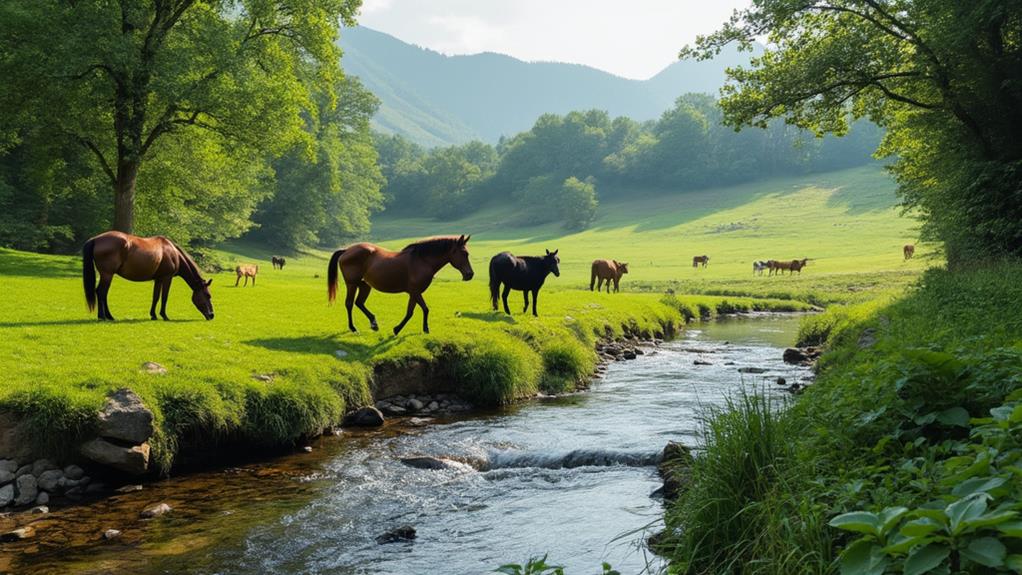
Seasonal shifts can dramatically influence water consumption in horses and livestock. During warmer months, their water needs increase due to higher sweat loss and metabolic demands. Horses, for instance, may require up to 15 gallons of clean water daily in hot weather. In contrast, the winter months bring their own challenges, as horses' diets often consist of drier forage. This can lead to dehydration if you're not attentive about maintaining their water intake.
To guarantee your animals stay hydrated year-round, consider these strategies:
- Automatic waterers: These devices can help maintain comfortable water temperatures, encouraging your animals to drink consistently.
- Monitor intake: Regularly check water consumption to guarantee it meets increased needs during hot weather or exercise.
- Fresh and clean supply: Always provide access to fresh and clean water. This is vital for preventing potential health issues.
- Temperature checks: Adjust water temperature based on seasonal changes to promote adequate intake, especially during colder months.
Risks of Dehydration
Maintaining adequate hydration is fundamental for the health and performance of horses and livestock, especially as their water needs fluctuate with the seasons. Dehydration can set in quickly, leading to serious risks such as colic and kidney damage. Horses, in particular, can develop severe dehydration symptoms within just two days without access to clean water, making it critical to guarantee they can always drink water of good quality.
Signs of dehydration include dry gums, sunken eyes, and delayed skin elasticity. Monitoring these signs helps you catch dehydration early, preventing further complications. Lethargy and poor performance in horses might also indicate insufficient water intake, underscoring the significance of regular hydration checks.
Broodmares are at even greater risk due to extra water loss from lactation. They need 50%-75% more water than usual to maintain their health and prevent dehydration-related issues. Confirming that your horses and livestock have access to clean water of adequate quality is crucial for their well-being. Dehydration can affect their health and productivity, so it's significant to stay vigilant and proactive in managing their hydration needs. Always prioritize clean water to keep dehydration at bay.
Encouraging Water Intake
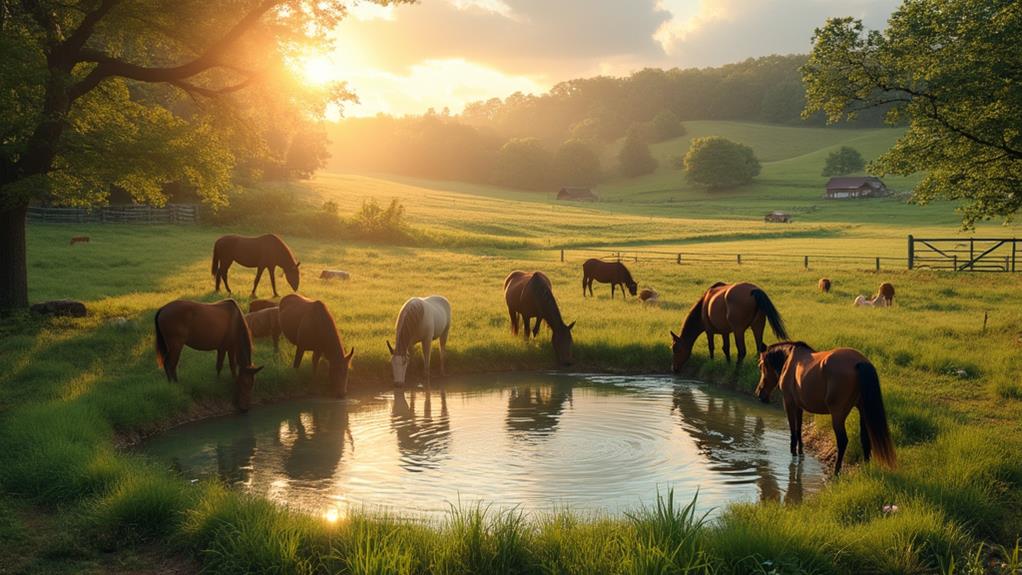
Encouraging horses and livestock to drink enough water is vital for their health and well-being. You can improve water consumption by guaranteeing they have consistent access to clean and fresh water. Horses, with their acute sense of smell and taste, might drink more if you flavor their water or use familiar sources, particularly during travel or stressful situations. Implementing automatic waterers can be a game-changer, as they provide a steady supply of fresh water, making it easier for your animals to drink whenever they need.
Here are a few strategies for encouraging water intake:
- Use salt blocks or supplements: These can increase thirst, prompting your horses to drink more and stay hydrated.
- Monitor water temperature: Providing water at a comfortable temperature can make it more appealing for horses, especially in extreme weather conditions.
- Regularly check water quality: Confirm that your horses always have access to clean water to avoid any reluctance in drinking due to poor quality.
- Keep an eye on intake levels: Monitoring your horse's water consumption is critical. If you notice a drop, consider employing different strategies to encourage them to drink more.
Being proactive in encouraging water intake protects your livestock's health.
Livestock Water Requirements
A bucket of water may seem simple, but it's critical for the well-being of your livestock. Water is an significant nutrient, and every animal on your farm has specific needs. Horses, for instance, require about 8-10 gallons of water per day. This amount can vary based on their activity level, environmental conditions, and diet. Fresh pasture grass, with its 80% moisture content, can help meet some of these hydration needs, but horses consuming dry feed might need more from other sources.
For cattle, the requirements differ. Beef cattle typically need 10-12 gallons of water per day. However, if you have lactating dairy cattle, their water needs jump considerably to 30-50 gallons due to milk production demands. Broodmares also have increased needs, requiring 50%-75% more water while lactating.
Environmental factors like temperature and humidity can further affect these needs, making it imperative to adjust water availability during extreme weather. Reliable livestock waterers can guarantee your animals have constant access to fresh water. By understanding and meeting these water requirements, you're supporting the health and productivity of your livestock effectively. Remember, adequate hydration is fundamental for their general well-being.
Maintaining Water Quality
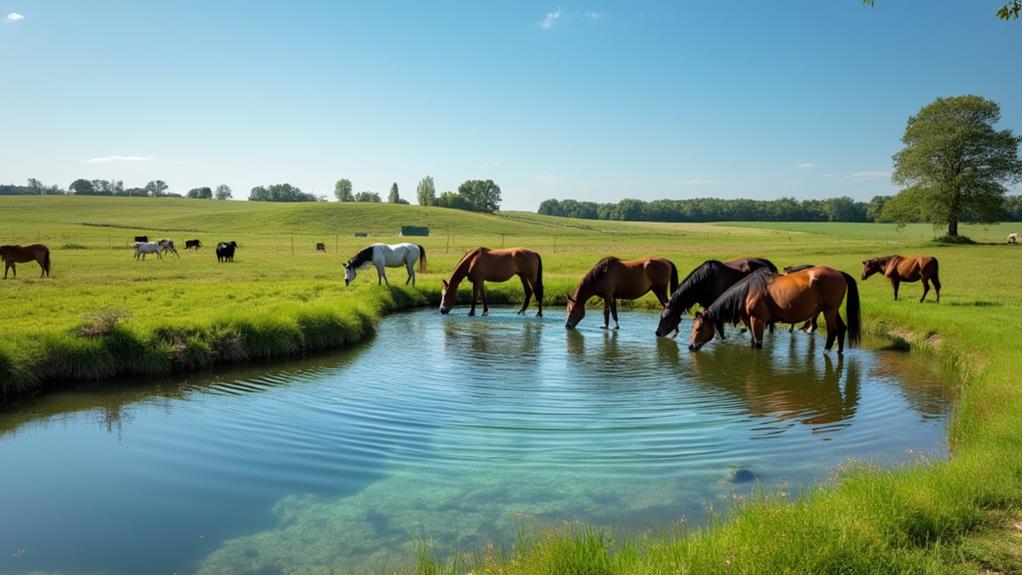
Just as understanding water requirements is vital, guaranteeing the quality of that water is likewise significant for your livestock's health. Fresh, clean water plays an important role in hydration, digestion, and general well-being. Contaminated water can lead to decreased consumption, posing severe health risks. Your horses and livestock need a consistent amount of water to maintain peak health, and the importance of maintaining water quality cannot be overstated.
Here's how you can guarantee your livestock have access to quality water:
- Monitor water pH levels: Keep them between 6.5 and 8.5. Extremes can lead to toxicity and health issues.
- Use automatic watering systems: These provide a steady stream of fresh water, reducing bacteria and algae risks.
- Test for pathogens and pollutants regularly: Routine testing helps guarantee water safety and prevents health problems.
- Regular cleaning and maintenance: Clean water sources minimize health complications and improve weight gain and feed efficiency.