
Why Do Cats Like Abandoned Places? Exploring Their Curious Behavior
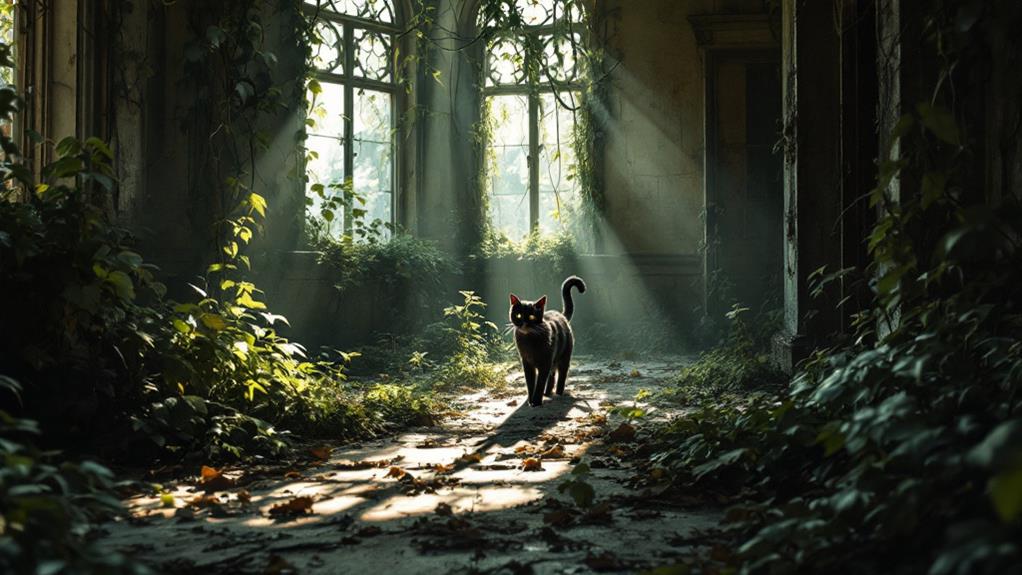
Cats love abandoned places because these environments satisfy their natural instincts and curiosity. They enjoy the safety of enclosed spaces, which mimic the dens of their wild ancestors. Raised hiding spots give them a good vantage point and improve their sense of security. Cats' exploratory nature drives them to inspect new surroundings filled with intriguing scents and textures. These spots offer opportunities for sensory stimulation and solitary behaviors, reducing stress and promoting well-being. Moreover, territorial instincts compel them to scent-mark and claim sections of the area. There's much more to uncover about their fascinating behavior in such spaces.
Instinctual Hiding Habits
While cats are often seen as independent creatures, their instinctual hiding habits reveal a deeper survival strategy. These habits stem from their dual evolutionary roles as both predators and prey. To guarantee their safety, cats seek out hiding places that offer a safe zone from potential threats. Abandoned places, with their variety of enclosed spaces, appeal to a cat's instinctual behavior because they mimic the dens used by their wild ancestors. These locations help them feel secure and reduce stress levels.
Cats are naturally curious and love to investigate their environment, making abandoned places perfect for them to examine. These areas are filled with numerous nooks and crannies, satisfying a cat's exploratory needs. However, it's not just about the quantity of hiding spots; it's also about quality. Cats often prefer raised hiding spots as they give them a vantage point to observe their surroundings while remaining hidden, providing an added layer of security.
Moreover, the presence of potential prey in these environments, such as rodents, further piques a cat's curiosity. This combination of secure hiding places, raised observation points, and the chance to encounter prey makes abandoned areas irresistibly attractive to cats.
Exploration and Curiosity
Over time, the inherent curiosity of cats has driven them to examine new environments, and abandoned places provide an ideal setting for such adventures. Cats are naturally compelled to investigate these areas as part of their instinctual behavior. They're on the lookout for potential hunting grounds or hiding spots amidst the remnants of human activity. The thrill of exploration in these deserted locales is amplified by the presence of unfamiliar scents and objects, which stimulates their senses and fulfills their need for mental stimulation.
As you observe a cat maneuvering through an abandoned place, you'll notice how they scrutinize every nook and cranny. These environments often provide secluded areas where they can hide, aligning with their instinctual need for security. The potential uncovering of food sources or small prey further fuels their natural hunting instincts, making these investigations not just a curious pursuit but also a practical one.
Moreover, cats are driven by territorial instincts to claim spaces as their own. Scent-marking becomes a part of their examination, allowing them to establish a sense of ownership. For cats, abandoned places aren't just empty spaces; they're a playground of opportunity and revelation.
Perceived Safety and Security
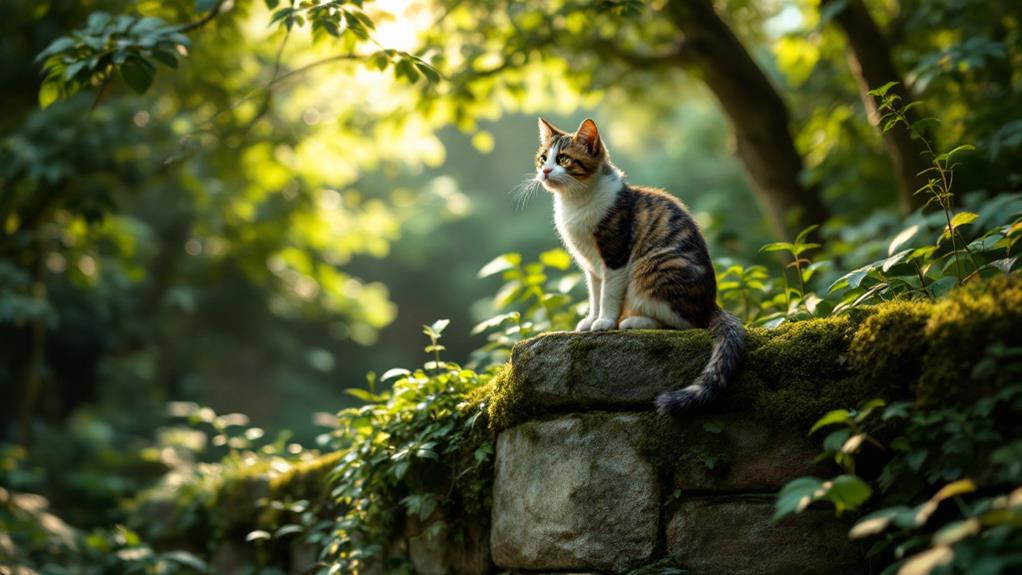
Cats' investigation of abandoned places isn't just about curiosity; they also find a profound sense of safety and security in these environments. You might notice that cats instinctively gravitate towards enclosed spaces, much like their wild ancestors did. Abandoned places mimic the dens these ancestors used, providing a perceived safety that makes cats feel secure. The presence of debris and hidden corners allows them to observe their surroundings while staying concealed from potential threats.
When your cat hides in abandoned places, it reduces stress and anxiety. These isolated areas offer a refuge from disturbances, where they can retreat and recharge. Cats are drawn to warm, insulated spots, and abandoned places often provide such sheltered areas, retaining body heat and enhancing their comfort.
Territorial behavior plays a significant role too. Cats love to investigate and claim new spaces, and abandoned places are no exception. They use scent marking to establish ownership, giving them a sense of control over their environment. This act of marking territory is vital for their well-being, as it helps them navigate their surroundings with confidence, adding to their comprehensive sense of security.
Sensory Stimulation and Enrichment
In investigating abandoned places, cats encounter a wealth of sensory stimulation that captivates their natural curiosity. These curious creatures are drawn to the unique sensory experiences these environments offer. The variety of scents, textures, and sounds in such places engages their keen senses, encouraging them to investigate and examine further. This engagement not only satisfies their instinctual need for exploration but also improves their cognitive development as they navigate through unfamiliar terrain.
Abandoned places often house potential prey like insects or small rodents, allowing cats to practice their hunting behaviors. This opportunity to stalk and pounce is vital for them, as it taps into their natural instincts and keeps their skills sharp. Furthermore, these environments provide numerous hiding spots, fulfilling a cat's instinctual need for safety and security. Hidden nooks and crannies offer a sense of shelter, allowing them to feel secure while they indulge in their investigations.
Moreover, the solitude found in these locations provides a peaceful setting where cats can de-stress. Without the bustle of busy environments, they can engage in natural behaviors, such as prowling, with minimal disturbance. This combination of sensory stimulation and enrichment makes abandoned places an irresistible playground for cats.
Influence of Territory and Ownership
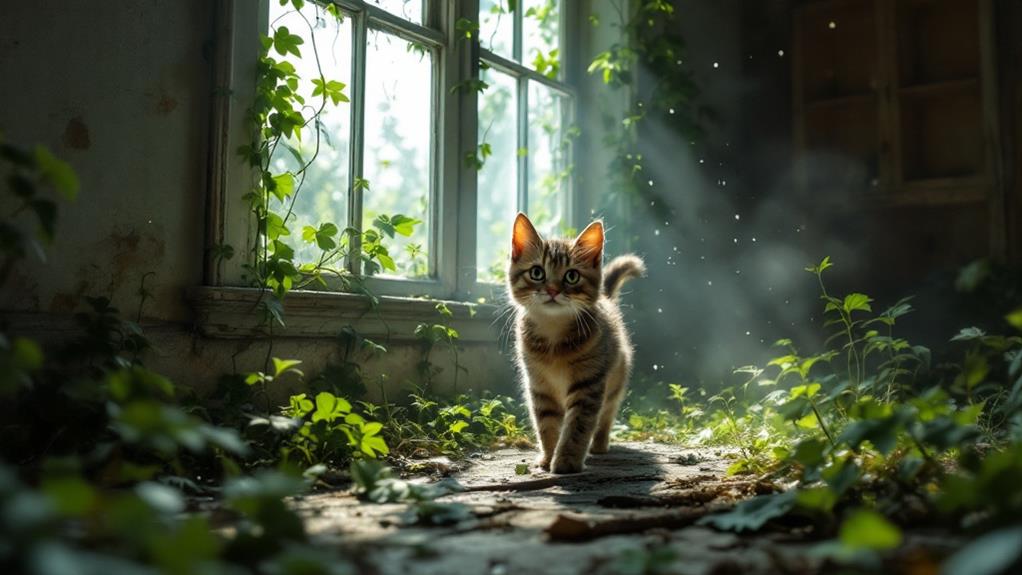
While investigating abandoned places, cats not only engage their senses but also assert their territorial instincts. These areas offer a perfect opportunity for cats to investigate and claim territory, driven by their innate need to establish control over a space. When a cat encounters an abandoned area, it often engages in scent marking by rubbing its body against different surfaces. This behavior reinforces ownership, making it clear to any other critters that this place is claimed.
The absence of human activity in these locations creates a perceived safety, allowing cats to roam freely without worrying about territorial disputes. Abandoned structures also offer numerous hiding spots, which provide the enclosed spaces cats naturally seek. These hideaways improve a cat's sense of security and control over its environment.
Moreover, the resources available in such places, like potential prey, make these environments even more attractive. This abundance of prey fuels a cat's curious behavior, encouraging further investigation and reinforcing its territorial instinct. As you observe a cat in these settings, you'll notice it accepts every nook and cranny, ensuring it knows the lay of the land and has marked its new domain.