Training Your Puppy to Go on Walks: Step-by-Step Guide
Start leash training your puppy between 8-12 weeks to build good walking habits and a strong bond. Use a proper harness and a 4-6 foot durable leash. Begin indoors; let your puppy drag the leash to get comfortable and reward them with treats and praise. Practice basic cues in distraction-free settings and gradually move outdoors once they're confident. Keep sessions short, monitor for stress, and manage distractions with sound cues and treats. Address challenges like pulling by using consistent reinforcement techniques. Investigate varied walking routes to improve experiences and build excitement. Uncover the full approach that guarantees successful walks.
Importance of Early Training
Starting leash training early is vital for your puppy's development. By beginning this process between 8-12 weeks, you set the stage for good walking habits and prevent unwanted behaviors from taking root. Early training isn't just about controlling your puppy; it's an opportunity for socialization. Exposing your puppy to different environments and stimuli helps them adapt mentally and emotionally, making future encounters less stressful.
Leash training from a young period is significant for teaching your puppy boundaries and how to respond appropriately to distractions. This early introduction reduces anxiety and curbs aggressive behaviors during walks. As your puppy learns basic commands, they develop positive leash manners, which leads to safe walks and a more enjoyable experience for both you and your furry friend.
Consistent early training helps prevent negative behaviors like pulling or lunging. By establishing these good habits from the start, you're making future walks easier to manage. Plus, a well-behaved puppy on a leash strengthens the bond between you and your pet, creating a trusting relationship. Remember, the time and effort you invest now pay off in safer, happier walks together.
Essential Leash Equipment
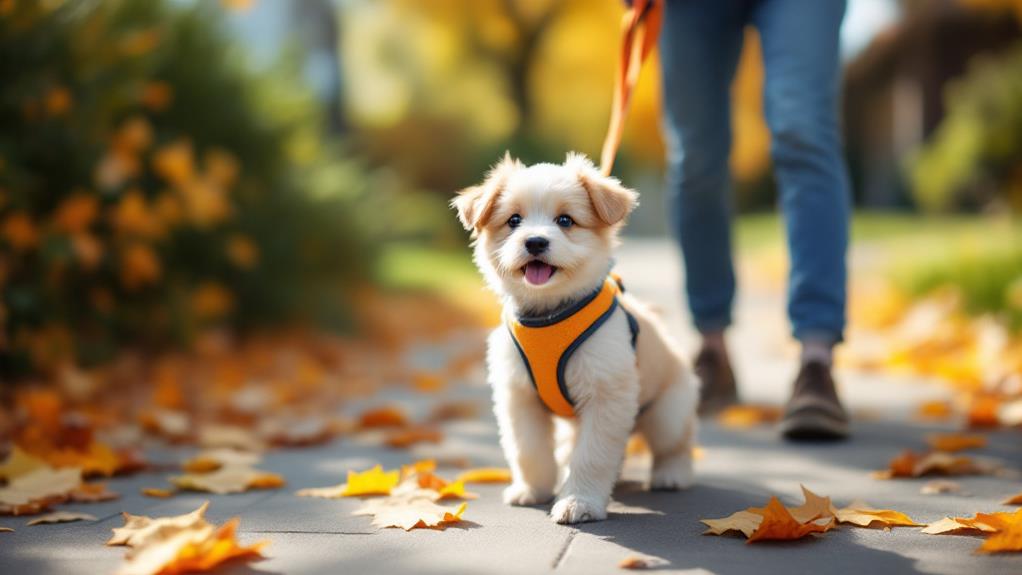
How can you guarantee your puppy's safety and comfort during walks? Choosing the right harness and leash is essential. A snug-fitting harness that fastens on the back offers the comfort and safety your puppy needs, reducing the risk of escape. It's significant to measure the puppy's girth accurately to confirm the harness fits perfectly. An ill-fitting harness can cause discomfort and hinder training efforts.
Opt for a 4 or 6-foot leash made from lightweight, durable materials. This length allows for better control and encourages a loose-leash walking style, which helps in preventing pulling behaviors. Avoid retractable leashes as they often encourage unwanted pulling. For added safety during evening walks, look for harnesses or leashes with reflective materials to increase visibility.
Before heading outdoors, allow your puppy to wear the harness and drag the leash indoors. This helps them acclimatize to the equipment gradually, making the shift to outdoor walks smoother. By using the right equipment, you're setting your puppy up for a successful walking experience, confirming both comfort and safety throughout the training process.
Introducing the Leash
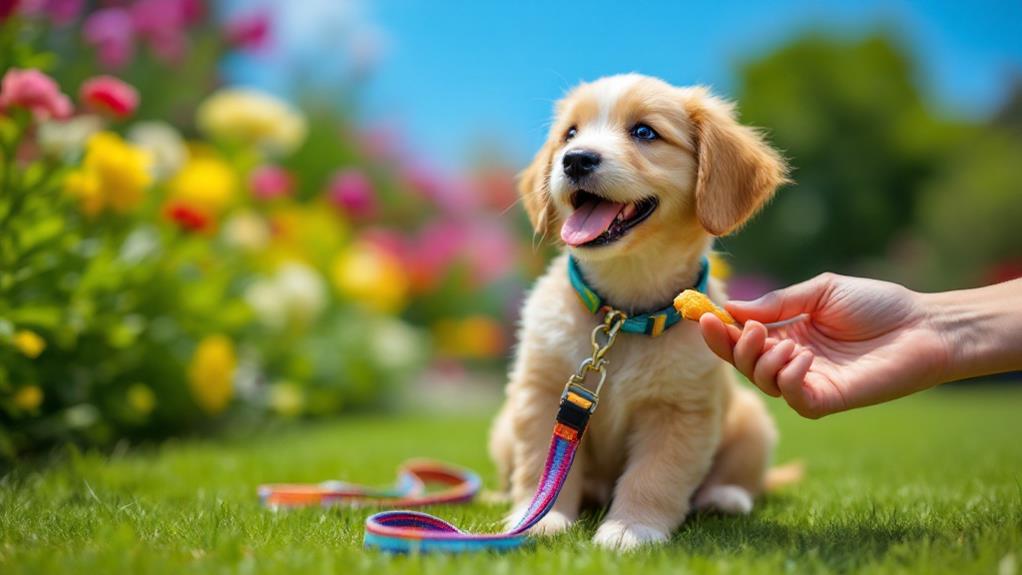
To introduce the leash to your puppy, begin in a calm indoor environment where distractions are minimal. Start by making sure your puppy is wearing a lightweight, well-fitted collar or harness. This step is vital, especially for smaller breeds, to prevent discomfort and guarantee their safety. At your puppy home, let them drag the leash around for short intervals, allowing them to acclimate to its presence gradually. This reduces any initial fear or resistance they may have.
Utilize positive reinforcement during this process. Pair the experience with treats and praise, creating a positive association with the leash. When your puppy shows signs of accepting the leash, reward them generously. This encouragement helps them understand that wearing the leash is a positive experience.
As your puppy becomes more comfortable, gradually increase the duration of these sessions. Begin with short intervals and steadily build up the time they spend with the leash. This gradual approach is essential to avoiding overwhelming your puppy. By patiently introducing the leash in this manner, you're setting the stage for successful outdoor walks in the future, making sure your puppy is both confident and comfortable.
Teaching Basic Cues
When teaching your puppy basic cues, laying a strong foundation is vital for effective communication and training. Start by introducing a sound cue, like a clicker or a specific word, to signal the arrival of food. This helps your dog associate the sound with positive reinforcement. Begin training in distraction-free environments to keep your puppy's attention focused on learning cues like "sit," "stay," and "come." These are fundamental for controlling your dog during a walk, especially when using a leash.
Use immediate rewards, such as treats or praise, once your puppy responds correctly. This immediate reinforcement helps them understand and remember the desired behavior. Consistency is key; repeat these cues and rewards throughout your training sessions. Over time, this repetition builds reliability and reinforces your dog's learning.
As your puppy becomes more reliable in distraction-free settings, gradually introduce distractions to training sessions. This step helps them learn to respond to cues even when faced with more challenging environments, such as during a walk. By building these skills, you'll guarantee your dog is well-prepared for the diverse situations they'll encounter on walks, making the experience enjoyable for both of you.
Indoor Walking Practice
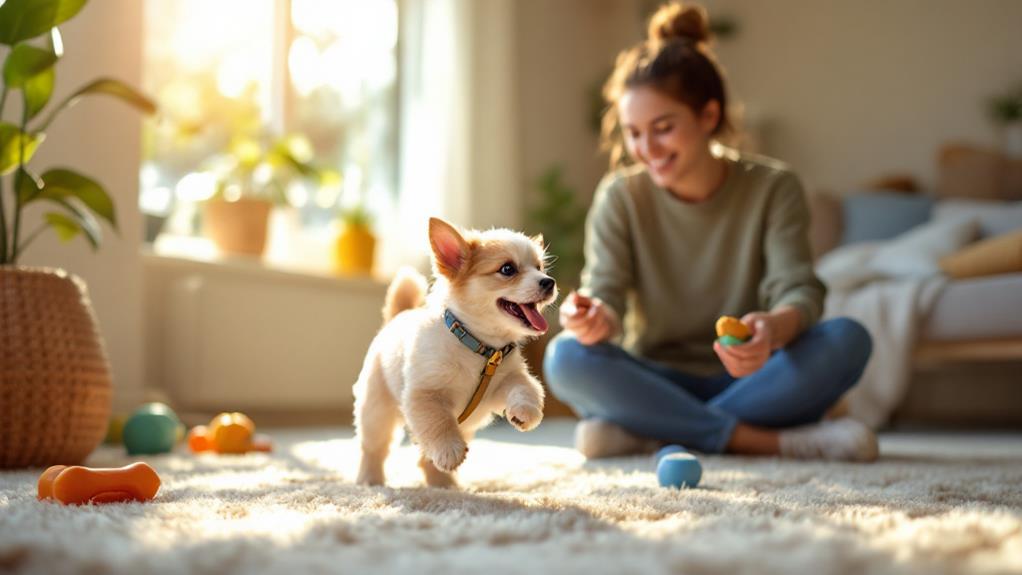
Getting your puppy comfortable with a leash and harness indoors is a great initial step in training them for walks. Start by letting your puppy wear the leash and harness while they navigate their home. This indoor practice builds their comfort and confidence with these new items. Keep the sessions short, around 5-10 minutes, to keep your puppy engaged without overwhelming them.
Encourage your puppy to follow you by using treats or toys as motivation. Reward them whenever they stay close and walk beside you. This helps establish the idea that sticking by your side is a positive experience. Incorporate basic commands like "come" and "heel" during these sessions to lay down the groundwork for obedience. Be sure to offer rewards to reinforce their positive behavior.
As your puppy becomes more comfortable, gradually increase the complexity of your indoor walking routes. Introduce distractions such as toys or family members to simulate real-world environments. This way, your puppy learns to maintain focus even when distracted. By building these skills indoors, you're setting a solid foundation for future outdoor adventures. Remember, patience and consistency are key to successful training.
Transitioning to Outdoors
With indoor practice under your belt, it's time to take your puppy's training outside. Begin outdoor training by selecting familiar, low-distraction areas. These locations help your puppy feel secure and comfortable as they acclimate to the new environment. Keeping the initial outdoor sessions short, around 5-10 minutes, prevents overwhelming your puppy. Gradually increase the duration as they become more accustomed to the surroundings.
When distractions come up, use sound cues or treats to redirect your puppy's attention back to you. This not only reinforces their focus but also strengthens your bond. Pay close attention to your puppy's body language during walks. Signs of stress or anxiety might indicate that it's time to reduce distractions or shorten the session to keep them at ease.
Always end outdoor training on a positive note. Use treats or a favorite playtime activity to make the experience enjoyable. This approach fosters enthusiasm for future walks and helps reinforce good behaviors. By gradually adapting your puppy to outdoor walks in this structured and supportive manner, you'll set the foundation for a lifetime of enjoyable and well-behaved strolls together.
Managing Outdoor Distractions
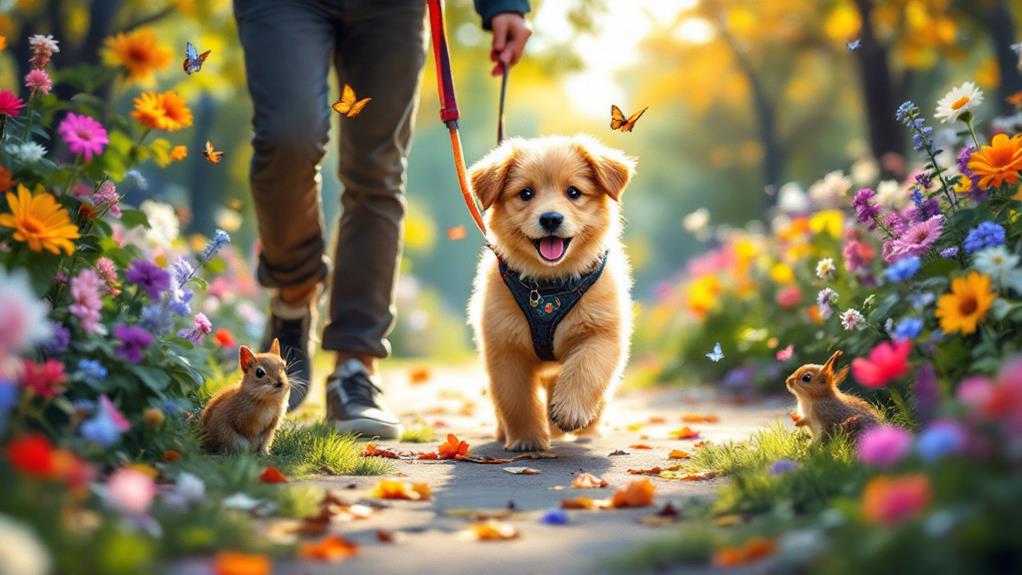
Taking your puppy for walks can be an exciting adventure, but managing outdoor distractions is key to a successful experience. Start in a quiet area to help your puppy become accustomed to walking on a leash without overwhelming distractions. Gradually introduce them to busier environments as they grow more comfortable. Keep an eye on their body language; signs like pulling on the leash or looking away indicate they're distracted. When this happens, use sound cues or treats to redirect their attention back to you.
Initially, keep walks short—about 5 to 10 minutes—to align with their short attention span and help them focus. If your puppy becomes overly fixated on a distraction, stop walking. Wait for them to return to a calm state before resuming. This teaches them that maintaining focus on you allows the walk to continue. Consistently rewarding positive behaviors, like loose-leash walking or ignoring distractions, reinforces good habits and builds their confidence.
During puppy encounters or other distractions, monitor focus and redirect their attention when necessary. Emphasizing these steps guarantees a more enjoyable and productive walking experience for both you and your puppy.
Common Walking Challenges
While managing outdoor distractions sets the stage for a smooth walking experience, you'll likely encounter common challenges that require patience and strategy. Young puppies often exhibit leash pulling, driven by their natural curiosity. To address this, stop walking when the leash is taut, encouraging a loose leash by waiting for it to slacken before proceeding. Here's a quick guide to tackle these common challenges:
- Leash Pulling: Puppies pull due to curiosity. Stop walking when the leash tightens until it slackens, teaching them to maintain a loose leash.
- Barking at Other Dogs: This can indicate excitement or anxiety. Confirm your puppy gets enough exercise before walks to reduce barking. Practice walking calmly by gradually exposing them to different environments.
- Reactivity: If your puppy becomes reactive towards other dogs or people, maintain distance and use high-value treats to redirect their attention back to you.
- Puppy's Attention: Keeping your puppy's attention can be challenging. Consistently practice walking routines, as consistency helps set clear expectations, making walks more enjoyable for both you and your dog.
Reinforcement and Rewards
To effectively train your puppy during walks, you'll want to focus on reinforcement and rewards to encourage good behavior. Start by utilizing high-value treats that your puppy finds irresistible. These treats will motivate them to exhibit desired behaviors during training sessions. Implement positive reinforcement immediately after your puppy displays the behavior you want, guaranteeing you provide the reward within 1-2 seconds. This timing creates a clear association between the behavior and the reward.
Consistency is key in training. Use the same cues and rewards throughout your sessions to solidify your puppy's understanding. Initially, offer treats 8 out of 10 times for performing the desired behavior and use verbal praise during the remaining instances. Gradually shift to more verbal praise and affection as rewards, allowing your puppy to rely less on treats over time.
End each training session on a positive note, rewarding your puppy with a treat or praise to reinforce their enthusiasm to participate in future training. By maintaining this approach, you'll not only build a strong bond with your puppy but also guarantee they're well-motivated and responsive on walks.
Enhancing Walking Experiences
A positive mindset is crucial when improving your puppy's walking experiences. Start each walk by allowing time for toilet breaks and investigation. This sets a fun and enjoyable tone, encouraging your puppy to walk calmly. Teaching your puppy to welcome new environments involves taking small steps—begin with quiet areas before gradually introducing busier settings. This approach helps reduce anxiety and builds confidence.
Here's how you can improve your puppy's walking experiences:
- Vary Routes: Introduce varied routes and locations to expose your puppy to different stimuli. This not only increases socialization but also keeps walks exciting and engaging.
- Use Motivators: Bring high-value treats or toys on walks. These act as motivators, reinforcing desired behaviors and helping your puppy stay focused on you, even amidst distractions.
- Encourage Investigation: Allow your puppy some freedom to explore their surroundings. Pay attention to their cues, ensuring they're comfortable and curious rather than anxious.
- End Positively: Always end the walk on a positive note with praise and rewards. This fosters enthusiasm and excitement for future walks, making each outing a joyful experience for both of you.