Tips for Traveling With Your Cat: Stress-Free Adventures
To guarantee a stress-free adventure with your cat, start by familiarizing them with their carrier weeks before your trip, using treats and toys. Choose a well-ventilated, spacious carrier that's comfortable and IATA-approved if flying. Pack vital supplies, including familiar items, food, water dishes, and a travel litter box. During car trips, secure the carrier in the back seat with a seatbelt and plan regular breaks. For flights, check airline policies and keep your cat in the carrier. Prepare for international travel well in advance with the necessary documentation. There's more to know for a successful expedition with your feline friend.
Preparing Your Cat for Travel
Getting your cat ready for travel involves a bit of preparation to guarantee a smooth trip. Start by introducing the cat carrier weeks in advance. Place it in a familiar area and encourage your cat to investigate it using treats and toys. This helps create a comfortable space and builds positive associations. To travel with your cat stress-free, use familiar scents inside the carrier. Adding a blanket or toy from home can provide comfort, making the environment more inviting.
Schedule a pre-travel vet visit to confirm your cat's health is ideal. This is also the perfect time to obtain any necessary health certificates or vaccination records. Keeping these documents handy is crucial for seamless travel, especially if you're crossing state or international borders.
Clicker training can be another effective tool to help your cat associate the carrier with positive experiences. Familiarize your feline with travel supplies like food and a portable litter box. This reduces anxiety and helps your cat feel more secure during the trip. By taking these steps, you're guaranteeing both you and your cat have a comfortable and stress-free traveling experience.
Choosing the Right Carrier
Once your cat is comfortable with the idea of travel, the next step is to select the perfect carrier. Choosing the right cat carrier is vital for a stress-free trip. For air travel, an IATA-approved carrier is fundamental to guarantee compliance with airline regulations. Opt for a soft-sided carrier, which offers greater comfort and flexibility, especially when used in the cabin. This type of carrier easily fits under seats while providing a cozy environment for your furry friend.
Make certain the carrier is well-ventilated to keep your cat cool and comfortable throughout the journey. Adequate ventilation is key to preventing your cat from feeling trapped or anxious. The carrier should also be spacious enough for your cat to sit, stand, and turn around comfortably, providing them with a sense of security and room to move.
Safety is paramount, so verify the carrier has a secure latch and a sturdy bottom to prevent any accidental escapes. Carriers with supplementary pockets are a plus, as they allow you to store necessities like food, water, and documents, simplifying your travel experience. Familiarize your cat with the carrier ahead of time to make the travel process smoother.
Essential Travel Supplies
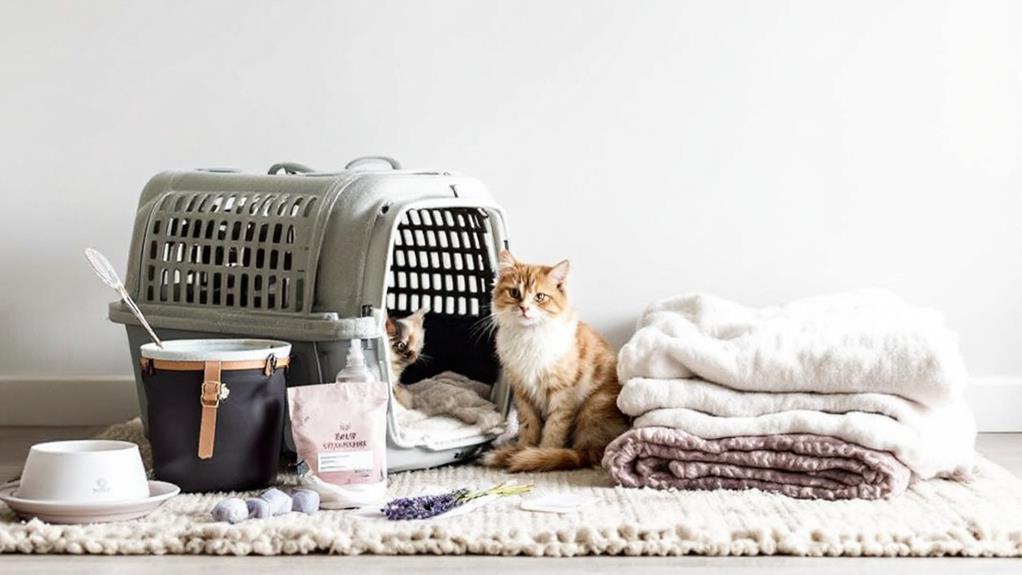
When traveling with your cat, having the right supplies can make all the difference for a smooth trip. Start with a secure, comfortable cat carrier that's IATA-approved, especially if you're flying. It should be well-ventilated and allow your cat to sit, stand, and turn with ease. To reduce anxiety, include familiar items like their favorite blanket or toys inside the carrier. These familiar scents and textures can create a comforting sense of ownership.
Don't forget portable food and water dishes to keep your cat hydrated and fed according to their usual routine. A travel litter box is crucial too, ensuring that your cat's needs are met conveniently while on the go. Having these items on hand will help maintain their comfort and routine, minimizing stress during your trip.
Prepare a primary aid kit tailored for your cat. This should include bandages, antiseptics, and any medications they might need during your trip. To further establish a calming environment, consider using feline pheromone products like Feliway. These can help ease travel stress, making the carrier a more pleasant space. With these vital supplies, you'll be ready for a successful and stress-free expedition with your feline friend.
Car Travel Best Practices
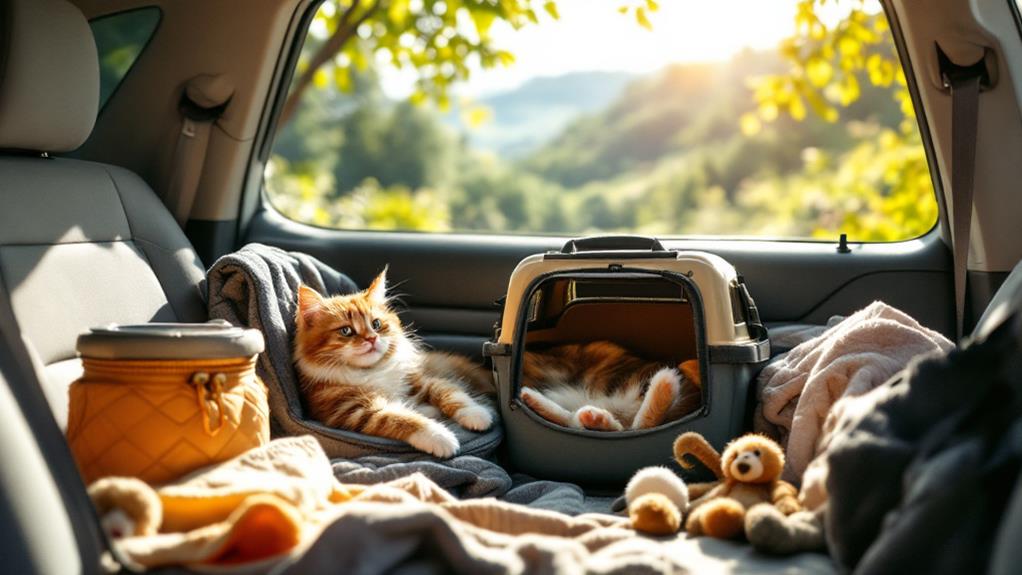
Many cat owners find that road trips with their feline companions can be enjoyable with the right preparation. When traveling with your pet, it's essential to prioritize their health and safety. Always keep your cat secured in a sturdy, well-ventilated cat carrier. This not only guarantees their safety but also prevents distractions while you're driving. Place the carrier in the back seat and secure it with a seatbelt to minimize movement during sudden stops or turns.
Avoid letting your cat stick its head out of the window, as this can lead to serious injuries. Remember, cats are curious creatures, but they need protection from potential dangers on the road.
- Peace of mind: Knowing your cat is secure and safe.
- Comfort: Maintaining a comfortable temperature keeps your cat relaxed.
- Freedom: Regular breaks let them stretch and use the litter box.
- Bonding: Sharing travel adventures strengthens your connection.
Plan for regular breaks every couple of hours. These stops will address your cat's needs, letting them stretch, hydrate, and use the litter box if they're leash-trained. Also, make sure the car's temperature is comfortable, avoiding extremes, to keep your cat relaxed throughout the trip.
Flying With Your Cat
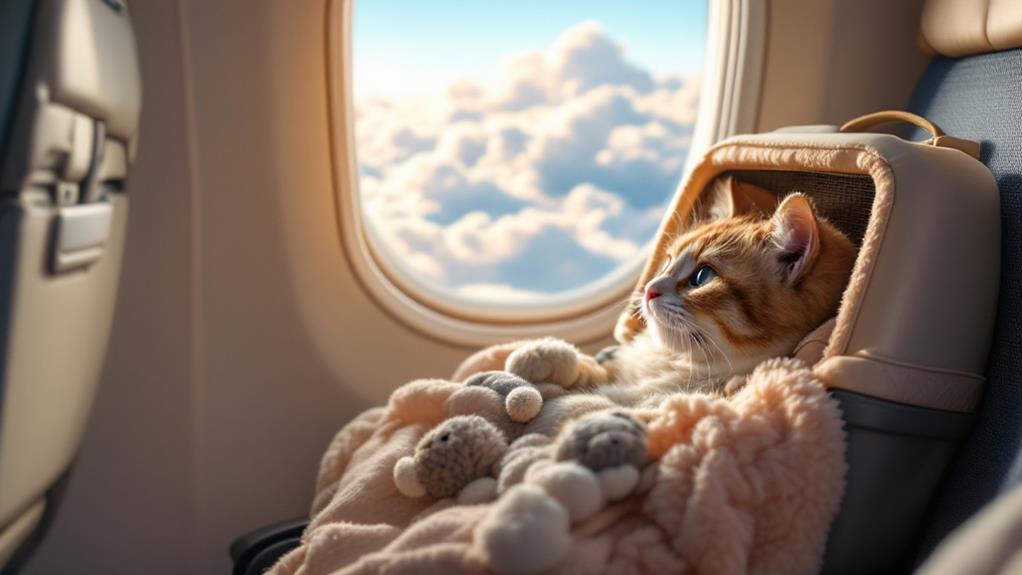
After mastering car travel with your feline friend, you might consider taking to the skies. Flying with your cat can be a smooth process if you're well-prepared. Start by checking your chosen airline's pet travel policies. Each airline has unique requirements, including carrier size and health documentation, so confirming these details is essential. Opt for a soft-sided, IATA-approved carrier. These carriers are generally more comfortable for your cat and meet most airlines' in-cabin requirements.
Before traveling, schedule a vet visit. While an international health certificate isn't needed for domestic flights, it's a good opportunity to guarantee your cat's health is ideal for travel. During the flight, keep your cat in the carrier at all times. This keeps them safe and minimizes stress. Informing flight attendants about your pet's presence adds an extra layer of safety.
To make the trip more comfortable, avoid tranquilizers unless your vet prescribes them. Instead, make the carrier a familiar and cozy space by including a favorite blanket or toy. With these tips, you and your cat can enjoy a stress-free flying experience, ready for new adventures together.
International Travel Requirements
Beginning international travel with your cat involves careful preparation. You'll want to start planning at least six months ahead to guarantee a smooth expedition. An international health certificate, issued by a USDA-accredited veterinarian, is vital for confirming your cat's health status and vaccinations. Without this certificate, your pet won't be allowed to travel. Each country has specific requirements for pet entry, which may include further vaccinations or tests, making it imperative to verify regulations well in advance.
Alongside the health certificate, it's significant to update your cat's microchip information. Many countries mandate microchipping for identification, and non-compliance can lead to travel delays or even denied entry. Moreover, domestic flights might also require a health certificate. Always check the specific airline and destination's pet travel regulations to avoid surprises.
Remember, the preparation phase can be overwhelming but seeing your feline friend adapt to new adventures is incredibly rewarding. Here are a few things you might feel:
- � Excitement as you envision your cat exploring new places
- � Anxiety about meeting all the specific requirements
- � Joy in sharing your travels with your furry companion
- � Worry over potential challenges during travel
Accommodations and Pet Policies

When traveling with your cat, understanding accommodation options and pet policies is vital for a stress-free experience. Many accommodations have specific pet policies, often charging extra fees or requiring deposits. Before booking, confirm the pet-friendly status and check for any size or breed restrictions. This proactive approach helps you avoid unpleasant surprises during your stay.
Vacation rentals and Airbnbs can often be more accommodating than traditional hotels. Some offer amenities like fenced yards or pet beds, enhancing your cat's comfort and making it easier for you to settle in. Always read the fine print on pet policies and reach out to hosts if you have specific questions.
In addition to choosing the right place to stay, consider the surrounding area. Research local pet-friendly parks or spaces where your cat can safely investigate. This not only provides your furry friend with a little adventure but also helps them adjust to new environments.
Post-Travel Adjustment
Settling back home after a trip with your cat involves creating a calm and familiar environment to ease their adjustment. Start by setting up a quiet space with their favorite blankets and toys. This comforting area will help them adjust to being back home, reducing any stress they might feel. It's vital to monitor your cat's behavior closely during this post-travel adjustment period. Look out for signs of stress or illness, as some cats may develop anxiety or health issues after traveling.
Re-establishing your cat's routine is fundamental. Maintain consistent feeding times, litter habits, and play sessions. Familiar routines help create a sense of normalcy and security for your feline friend. To further ease their adjustment, provide enrichment through engaging toys and activities. This not only mitigates anxiety but also encourages your cat to investigate their environment comfortably.
Don't forget to schedule a veterinary check-up within a few days of your return. This guarantees your cat remains in good health and allows you to address any travel-related concerns promptly. Taking these steps makes the post-travel adjustment smoother for both you and your cat.
- Comfort in Familiarity: Watch your cat regain their sense of home.
- Routine Reassurance: See them relax with predictable habits.
- Enrichment Joy: Feel their excitement with new toys.
- Peace of Mind: Know they're healthy with a vet visit.
Health and Safety Tips
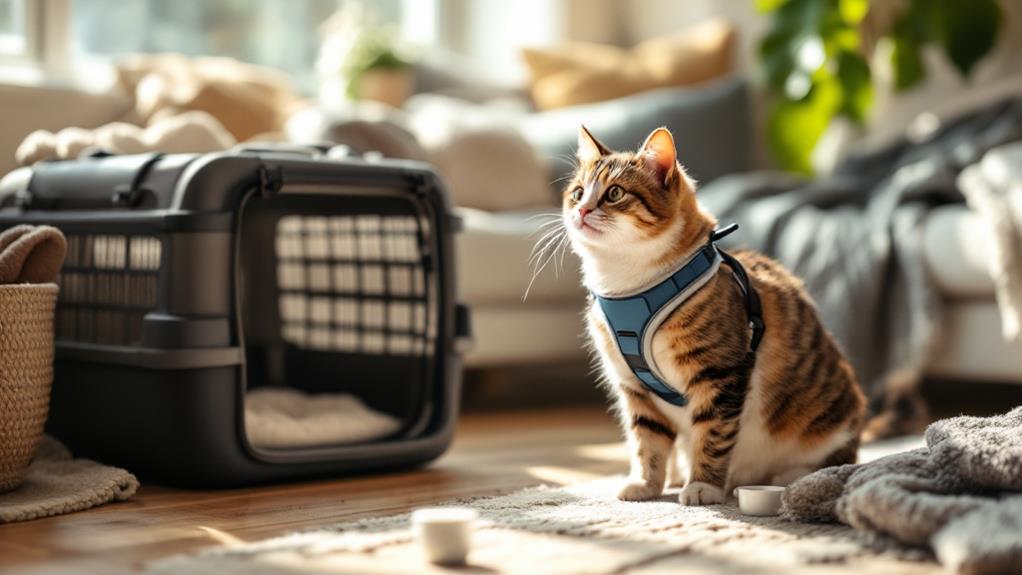
Guaranteeing your cat's health and safety during travel requires careful planning and attention to detail. Begin by scheduling a pre-travel veterinary check-up to confirm your cat is in good health. Obtain the necessary health certificates and vaccination records, especially for international trips. A secure, IATA-approved pet carrier is vital. It should be well-ventilated and spacious enough for your cat to sit, stand, and turn comfortably. Introduce your cat to the carrier weeks in advance to reduce stress.
Before traveling, verify your cat's collar fits well and can't get caught in the carrier. Consider microchipping for added security in case your cat gets lost. During the trip, continuously monitor your cat for any signs of stress. Maintain a clean, comfortable carrier environment by adding familiar items like a blanket or toy to soothe anxiety.
Always carry a primary aid kit with crucial supplies. Familiarize yourself with basic first aid procedures and be prepared to act swiftly if your cat exhibits signs of distress or an emergency. If necessary, seek professional help immediately after administering first aid. With these steps, you can guarantee a safer, less stressful trip for both you and your feline friend.