Tips for Traveling With Pets: How to Keep Them Safe and Comfortable
Traveling with pets requires planning to guarantee their safety and comfort. Start with a vet visit to update vaccinations and discuss any medications for anxiety or motion sickness. Confirm microchips and tags have current info. Pack fundamentals like a travel kit with food, water, and familiar items, such as toys or blankets. Choose carriers that are secure yet comfortable. If flying, direct flights minimize stress; for road trips, plan stops every 2-3 hours. Maintain a light feeding schedule and check pet-friendly accommodations in advance. By following these tips, you'll be well-prepared for a smoother expedition with your furry friend. There's more to contemplate for an ideal travel experience.
Pre-Travel Health Check
Before starting your expedition, it's crucial to have a pre-travel health check for your pet. As a responsible pet parent, you should schedule a vet check-up at least 7-10 days before traveling with a pet. This guarantees that your furry friend's pet health is in top condition. During this visit, confirm that your pet's vaccinations are up-to-date and obtain a health certificate if your destination or airline requires it. This critical veterinary medical document is part of your travel documents arsenal.
Make certain your pet is microchipped, and update their identification tags with your current contact information. It's a smart idea to include a temporary travel tag with your cell phone number and destination details, guaranteeing that you're reachable if needed.
Discuss any potential medications for motion sickness or travel anxiety with your vet. Test these medications before your trip to monitor for any adverse reactions, guaranteeing a smoother trip. Furthermore, keep a record of your pet's health history and vaccination records, as these might be necessary, especially for international travel. Lastly, check that your pet is free of fleas, ticks, and heartworms to maintain their health during the expedition.
Essential Travel Gear
When traveling with your pet, assembling an essential travel gear kit is a must to guarantee a comfortable and stress-free trip. Begin by packing a thorough pet travel kit that includes necessities like food, water bowls, a leash, waste bags, and any necessary medications. Don't forget health history documentation and a pet first-aid kit to be prepared for unexpected situations.
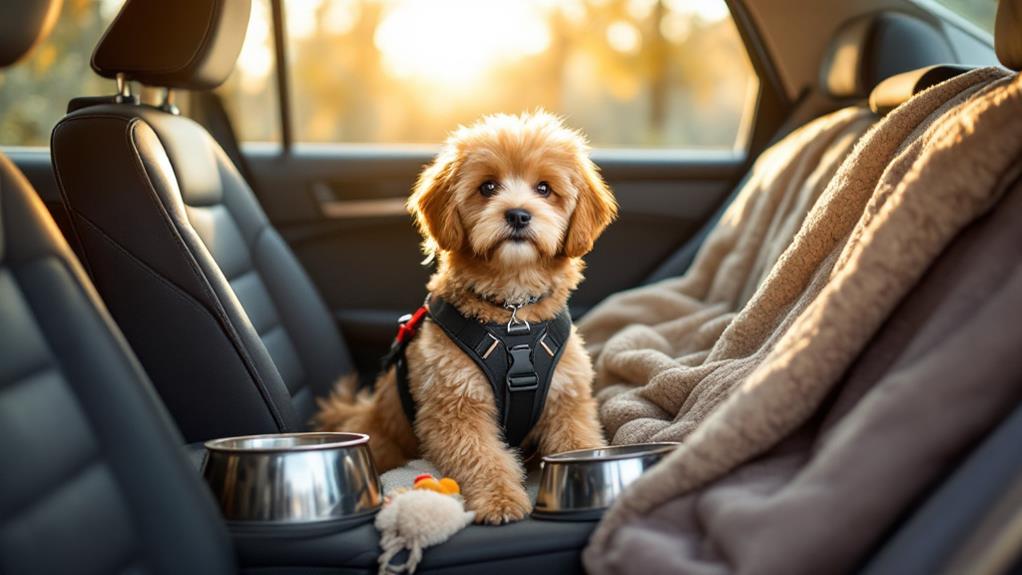
Having a secure carrier or travel crate is significant. For car trips, a pet seatbelt or secured carrier guarantees your pet's safety and prevents distractions. If you're traveling by air, choose a secure, USDA-approved travel crate that allows your pet to stand, turn around, and lie down comfortably.
Comfort items, such as familiar toys or blankets, are significant to reduce anxiety and make your pet feel secure during the trip. Furthermore, always have updated identification, including microchip information and tags with current contact details, to facilitate quick reunions if you get separated.
Air Travel Tips
For a smooth flying experience with your pet, it's crucial to prepare thoroughly. Start by obtaining a health certificate from your veterinarian within 7-10 days before your flight, as many airlines require this for pet transportation. This step guarantees your pet's ready for air travel and aids in pet safety.
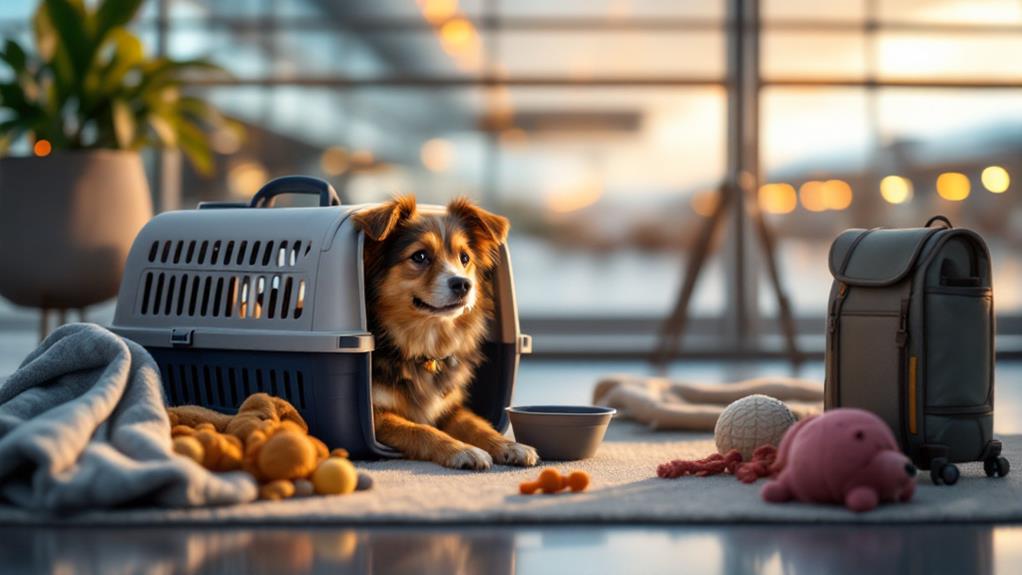
Next, invest in a USDA-approved travel crate. Ascertain your pet can stand, turn around, and lie down comfortably inside. Properly label the crate with an ID tag and emergency contact information for additional security. Familiarize your pet with the crate well before travel to assist stress reduction. Let them investigate and spend time inside to improve pet comfort during the flight.
Choose direct flights whenever possible to minimize the time your pet spends in the cargo hold, reducing stress and travel hassles. Furthermore, schedule flights during moderate temperatures, ideally between 45 to 85 degrees Fahrenheit. This precaution helps avoid the risks associated with extreme temperature exposure in cargo areas.
Your thorough travel preparation will improve both your and your pet's flying experience, guaranteeing they arrive safely and comfortably at your destination.
Road Trip Safety
While flying offers quick travel, many pet owners opt for road trips to experience the adventure together. To guarantee a smooth trip for both you and your pet, focus on keeping your pet safe and comfortable in the car. Here's how:
- Secure Your Pet: Use a secured crate or carrier. This prevents distractions and keeps your pet safe during travel. Dogs should ideally be restrained in the back seat to avoid airbag injuries.
- Acclimate Pets: Gradually introduce longer car trips by starting with short trips. This helps your pet adjust to the travel routine and reduces anxiety.
- Plan Regular Stops: Schedule breaks every 2-3 hours. These stops allow your pet to stretch, hydrate with small amounts of water, and relieve themselves, maintaining their comfort level.
- Pre-Travel Preparation: Avoid feeding your pet 3-4 hours before you hit the road to minimize motion sickness. Pack a travel kit with familiar items like toys or blankets for added comfort.
Remember to carry a health certificate if required for your travels. These steps guarantee your pet's well-being and make your road trip a memorable experience for both of you.
Train and Ship Guidelines

Traveling with your pet by train or ship can be a delightful experience if you know the guidelines and prepare accordingly. Initially, check the specific pet policies of train or ship companies. Some allow pets in designated areas, while others have restrictions based on size or breed. Always keep your pets in secure carriers during transit, as many services mandate this for safety. It is crucial to have a current health certificate for your pets, as some carriers may require it.
To ease travel anxiety, bring familiar items like blankets or toys. These can provide comfort and make your pet feel more at home during the trip. If you're traveling by train, plan for regular breaks at station stops. Use this time to let your pet stretch, hydrate, and relieve themselves. While some trains may lack designated pet areas, these stops provide a perfect opportunity for your pet to get some fresh air and exercise.
Comfort During Travel
As you prepare for an expedition with your pet, guaranteeing their comfort during travel is just as crucial as understanding the rules of transportation. Planning ahead can greatly reduce your pet's anxiety and make the trip more enjoyable for both of you. Here's a quick guide to keep in mind:
- Comfort and Security: Bring along your pet's favorite toys or blankets. The familiar scent can provide a comforting sense of security, reducing anxiety during travel.
- Feeding and Breaks: Maintain a consistent feeding schedule to avoid digestive upset. Feed light meals 3-4 hours before travel to minimize motion sickness. Regular breaks every 2-3 hours are fundamental for exercise and bathroom needs, keeping your pet comfortable.
- Temperature and Ventilation: Confirm your vehicle has proper ventilation and maintains a comfortable temperature. Avoid leaving pets unattended in parked vehicles to prevent heatstroke or hypothermia.
- Calming Aids: Consider using anxiety-reducing products or natural remedies. Consult your veterinarian to find the best calming aids for your pet during travel.
Careful planning and attention to detail can make all the difference in your pet's travel experience, guaranteeing they stay comfortable and secure throughout the trip.
Handling Emergencies
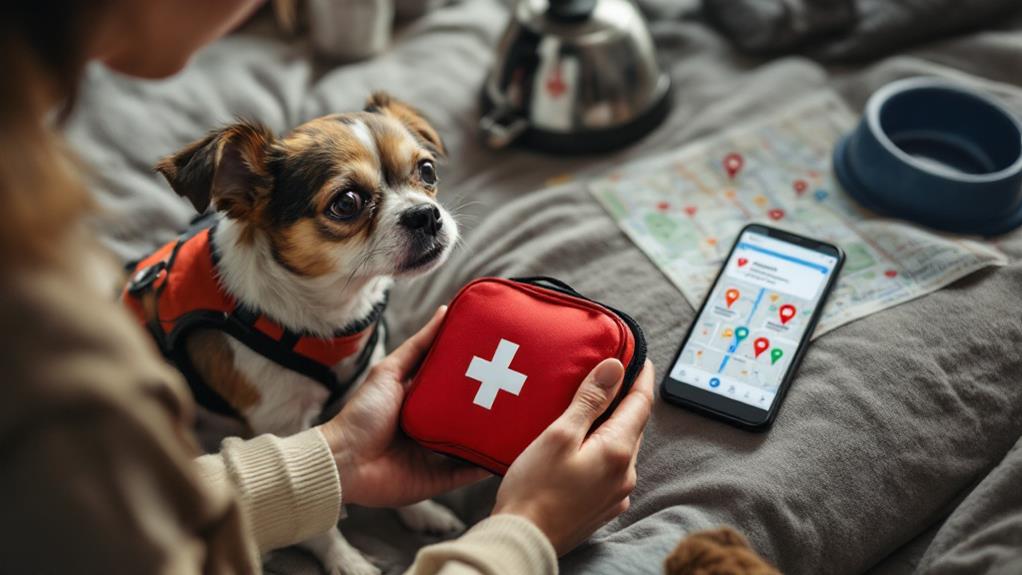
Emergencies can happen unexpectedly, and being prepared can make all the difference when traveling with your pet. Start by assembling a pet emergency kit tailored to your travel destination. Include necessary medications, a primary aid kit, and contact information for local veterinary clinics. Keeping up-to-date identification tags and a current photograph of your pet is essential in case they get lost. These small steps can greatly aid in a quick recovery.
Before you hit the road, familiarize yourself with veterinary clinics along your route and at your destination. This knowledge is invaluable if unexpected health issues arise. Monitor your pet closely for signs of stress or discomfort, such as excessive panting or lethargy. Be ready to adjust your plans to guarantee their comfort and safety.
Develop a thorough disaster plan, especially if traveling to areas prone to natural disasters. This plan should include evacuation routes and procedures for your pet. It assures you act swiftly and effectively when needed. By taking these proactive steps, you'll be better equipped to handle emergencies, keeping your pet safe and comfortable throughout your travels. Remember, preparation is key to a stress-free travel experience with your beloved companion.
Choosing Accommodations
Finding the right place to stay is vital when traveling with your pet. You'll want to prioritize pet-friendly accommodations that explicitly welcome pets. Start by checking for any breed or size restrictions, as policies may vary. To guarantee a comfortable stay, follow these steps:
- Research pet-friendly options: Look for hotels or rentals that allow pets and offer pet-specific amenities like designated pet areas, pet beds, and food bowls.
- Consider nearby activities: Choose locations with easy access to pet-friendly activities, such as parks or beaches, to make the most of your travel experience.
- Book in advance: Secure your accommodation early and inform them about your pet to prevent last-minute issues. Be aware of any extra fees that might apply for bringing your furry friend.
- Understand policies: Review cancellation policies that relate to pets. Some accommodations have strict guidelines that could impact your travel plans if issues arise.
Post-Travel Care

Upon returning from your trip, it's crucial to focus on your pet's well-being to guarantee a smooth transition back to normalcy. Start by monitoring pets closely for any signs of stress or illness, such as changes in behavior, appetite, or energy levels. Address any concerns promptly to secure their health and well-being. Re-establish routines quickly, including feeding schedules, walks, and playtime, which help your pet adjust to their familiar environment.
Schedule a veterinary check-up within a week of returning home, especially if your pet shows any discomfort or has traveled long distances. This secures their ongoing health and well-being. Providing extra attention and affection can reassure your pet, reducing any anxiety they may feel after the trip. Comfort items like favorite toys or blankets can also help them feel secure.
Don't forget to clean and disinfect all travel gear, including carriers and bedding, to maintain proper hygiene. This prevents introducing foreign pathogens into your home, safeguarding your pet's health. By diligently monitoring your pet and addressing their needs, you'll help them settle back in comfortably and secure their continued happiness.