Tips for Taking Your Dog Swimming: Safety and Fun in the Water
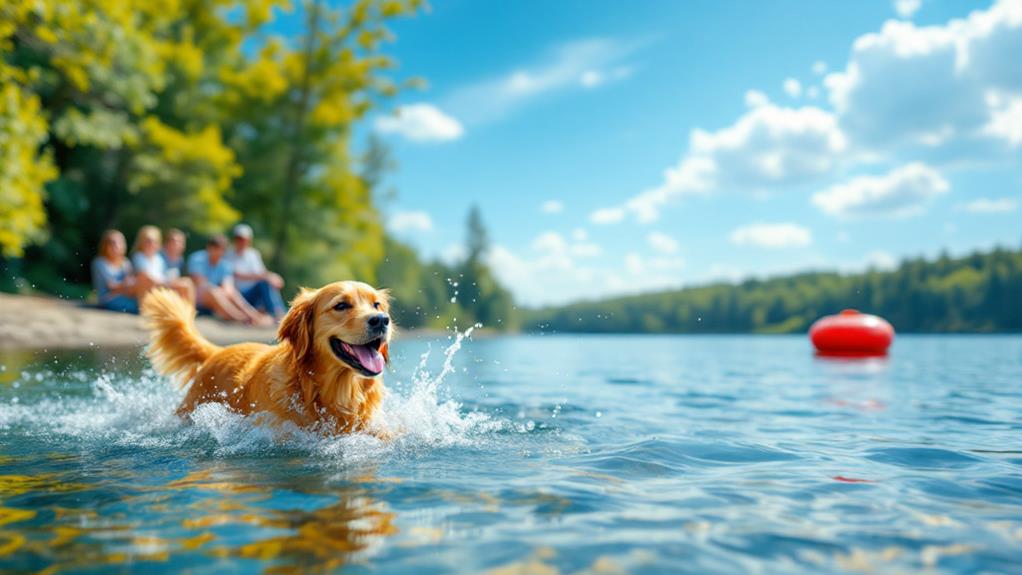
Taking your dog swimming can be safe and enjoyable with a few key tips. Start by introducing them slowly to shallow water, using treats and toys for positive reinforcement. Always supervise them closely, as many dogs drown annually due to lack of attention. Invest in a well-fitted life jacket with bright colors for visibility, and make certain it has strong handles for easy retrieval. After swimming, rinse them to remove chemicals and dry their ears to prevent infections. Watch for signs of fatigue, like excessive panting, and give frequent breaks. There are supplementary tips that can improve your dog's swimming experience.
Dog Water Safety Basics
Guaranteeing your dog's safety while swimming is vital, starting with supervision as nearly 5,000 dogs drown in pools annually due to lack of oversight. Always supervise your dog when they're in or near the water. Monitoring your dog closely is the best way to prevent accidents and guarantee a fun experience. Start by introducing them to water gradually. Let them investigate shallow areas to build confidence and swimming skills without feeling overwhelmed.
A life jacket is an important part of your dog's swimming gear, especially if they're not strong swimmers. It helps keep your dog afloat and makes them more visible in the water. Verify it's a snug fit, allowing them to move comfortably. Besides, be aware of the water conditions. Check for rip currents and verify the water temperature is safe for your dog to avoid any potential risks.
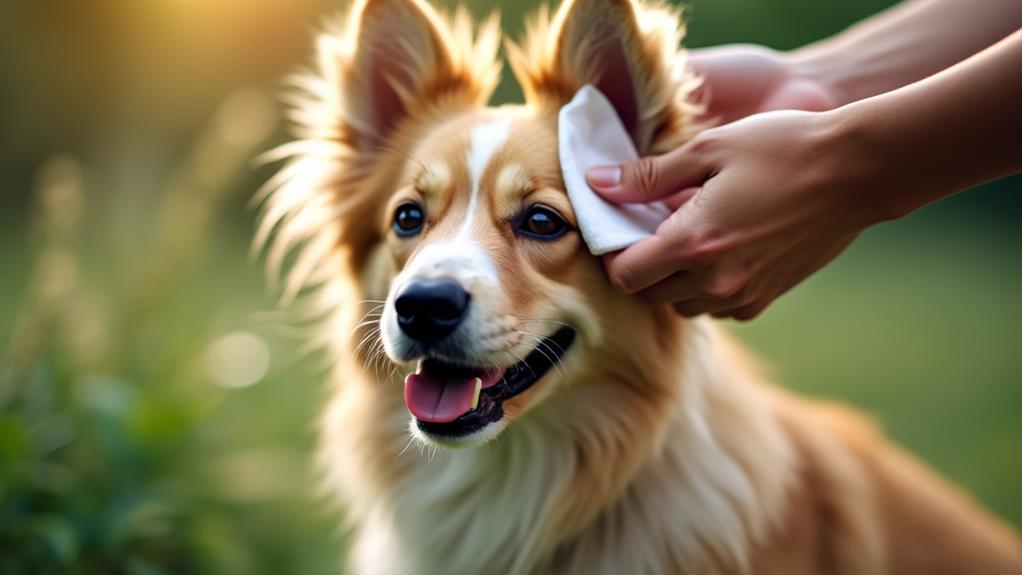
After swimming, rinse your dog with fresh water to wash away any harmful chemicals or irritants. Thoroughly dry their ears to prevent infections. These water safety tips will help you create a safe environment for your dog, letting them enjoy their time in the water while keeping them protected.
Choosing the Right Life Jacket
Selecting the perfect life jacket for your dog is vital to their safety and your peace of mind. Start by confirming the dog life jacket fits snugly around the neck, ribcage, and back. A properly fitted jacket minimizes the risk of it slipping off during significant moments in the water. Opt for brightly colored life jackets to improve your dog's visibility. This makes it easier to monitor them from a distance during water activities, making sure you can quickly spot them if needed.
Look for life jackets with sturdy handles on the back. These handles are important for easy retrieval of your dog from the water in case of an emergency. Moreover, consider the weight and buoyancy of the jacket. It should be lightweight yet provide sufficient flotation to match your dog's size and breed. This balance guarantees they remain afloat without feeling weighed down.
Gradual Water Introduction
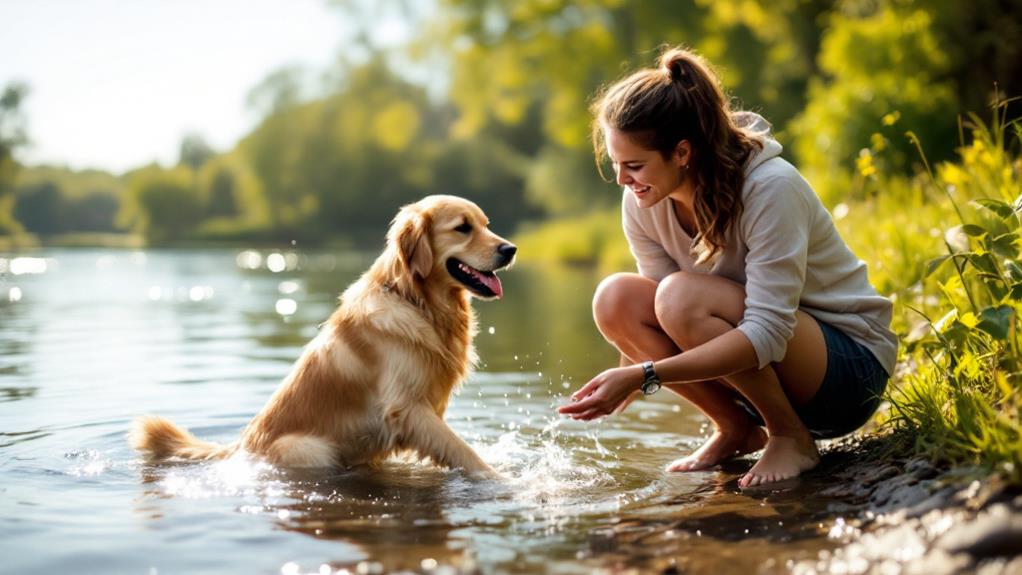
Introducing your dog to water can be an adventure of patience and trust. Start the gradual water introduction by selecting a kiddie pool or a shallow area. This environment guarantees safety and comfort, reducing any intimidation your dog might feel. It's vital to create a positive association with water. High-value treats and favorite toys can encourage your dog to investigate the water at their own pace.
- Allow your dog to approach the water voluntarily, steering clear of any force that might lead to fear or trauma.
- Be present in the water, providing support and reassurance. This helps build their confidence as you gently assist them in floating.
- Gradually increase the water depth as your dog grows more comfortable, ensuring they can always touch the bottom initially.
- Focus on making each step enjoyable, reinforcing their bravery with praise and rewards.
Throughout this process, observe your dog's reactions. They should feel encouraged and supported, not pressured. By fostering a positive association with water, coupled with your presence and encouragement, your dog will develop the confidence to enjoy swimming. Remember, every small step is a big leap toward a happy swimmer!
Supervision and Monitoring
While your dog is enjoying the water, your watchful eye is their best safety measure. Constant supervision is essential, as an estimated 5,000 dogs drown in pools annually due to lack of monitoring. Even if your dog is an experienced swimmer, close oversight is necessary. Water conditions can change quickly, posing unexpected risks. Always keep an eye on your dog, watching for signs of fatigue or distress. These can escalate into emergencies, putting your dog's life at risk.
Using a leash during initial swimming sessions can be a helpful safety precaution. It allows you to control your dog's movements and prevent them from straying too far, especially in unfamiliar environments. Certain dog breeds, like Bulldogs and Pugs, are more susceptible to drowning. They require even more attentive monitoring due to their physical characteristics.
Pool Safety Measures
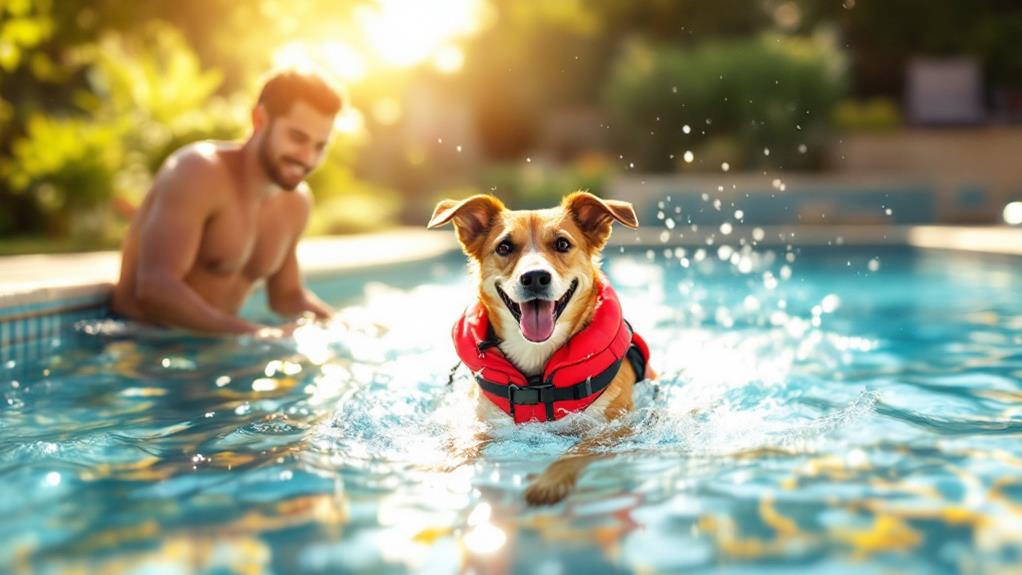
Keeping a watchful eye on your dog is just one part of guaranteeing their safety around water. Proper pool safety measures can considerably reduce the risk of drownings. Start by installing a sturdy fence around your pool. This prevents unsupervised access, protecting your furry friend from accidental falls. Remember, over 5,000 dogs drown in pools annually, often due to lack of supervision.
Next, make certain your dog knows how to safely enter and exit the pool. Panic can set in if they can't find their way out, so teaching them to use slip-free steps or ramps is essential. This is especially significant for certain breeds that might struggle with climbing.
Always supervise your dog while they swim. Even experienced swimmers can tire unexpectedly. It's critical to keep an eye on them to prevent accidents. After swimming, rinse your dog thoroughly to remove chlorine and other chemicals. Chlorine can cause skin irritation and other health issues.
Here are some quick tips for a safer swimming experience:
- Install a sturdy fence to restrict access.
- Teach safe entry and exit techniques.
- Use slip-free steps or ramps for easy exits.
- Supervise all swimming activities to prevent accidents.
Beach and Lake Precautions
Your dog's beach day can be a delightful adventure, but it's essential to take precautions to guarantee their safety. Before letting them plunge into the water, check for harmful algal blooms. These can pose serious health risks, so make certain your dog steers clear of any suspicious areas. Keep an eye on water conditions, and monitor for strong currents or riptides, as these can quickly become dangerous for both you and your furry friend.
Always bring fresh water to the beach. Drinking ocean or lake water isn't safe for dogs, as it can lead to dehydration or illness from bacteria and salt. Make certain your dog stays hydrated with clean water from home. Supervise them closely, as natural water bodies can present unpredictable hazards.
Keep your dog away from washed-up marine life, such as fish or jellyfish. These can cause injuries or even allergic reactions. By monitoring their surroundings and being aware of potential threats, you'll help guarantee a safe and fun day at the beach. With these precautions, you can keep your dog happy and healthy while enjoying the wonders of the beach and lake.
Recognizing Swimming Fatigue
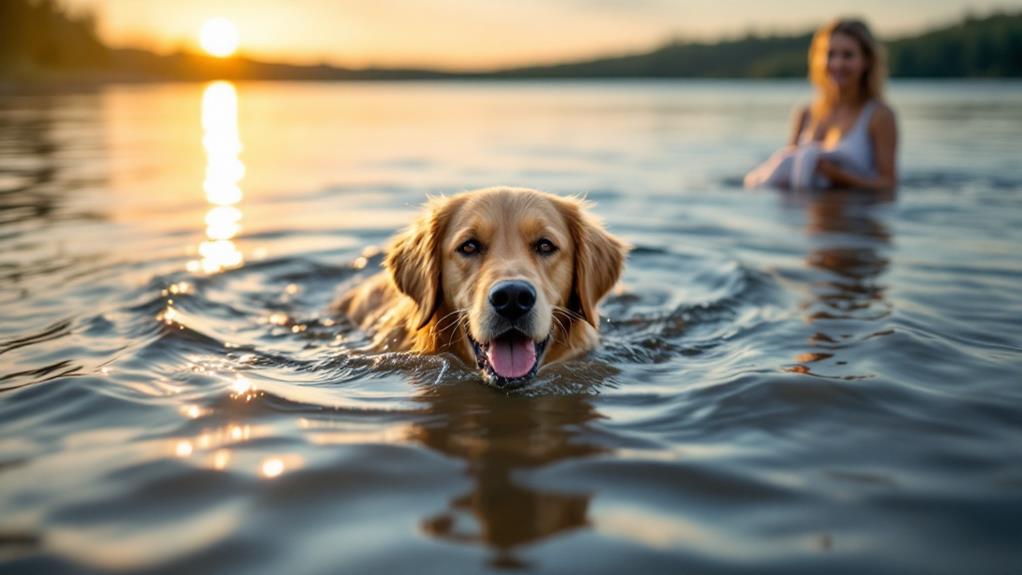
Awareness is key regarding recognizing swimming fatigue in your dog. When you're at the water, it's essential to monitor your dog's energy levels. Swimming is a physically demanding activity, and even the most energetic pups can become tired. Keep an eye out for signs of fatigue, such as excessive panting, decreased enthusiasm, or difficulty staying afloat. These indicators tell you it's time to take breaks.
Always supervise your dog closely, especially if they're older or have health issues. Such dogs may tire more quickly, increasing their need for regular breaks to guarantee safety. Remember, swimming in warm weather can also accelerate fatigue.
Here are some tips to recognize and prevent swimming fatigue:
- Watch for excessive panting: This is a clear sign your dog needs a rest.
- Notice changes in enthusiasm: If your dog suddenly seems uninterested, they're likely tired.
- Look for difficulty staying afloat: Struggling in the water is a strong fatigue indicator.
- Provide frequent breaks for older dogs: They require extra care during physical activities.
Post-Swim Care Tips
After a fun swimming session, it's important to give your dog proper post-swim care to keep them healthy and comfortable. Start by rinsing your dog with fresh water. This will help remove any salt, chlorine, or chemicals that could irritate their skin or coat. Once rinsed, make certain to provide fresh drinking water. This prevents them from drinking potentially contaminated water from the lake or pool, which can be harmful.
Next, thoroughly dry your dog, paying special attention to their ears. This step is significant to avoid moisture buildup that could lead to infections. Keep an eye on your dog for any signs of skin irritation or unusual behavior, as these could indicate an adverse reaction to the water or environment. If you notice anything out of the ordinary, consult your vet.
During swimming activities, it's crucial to schedule regular breaks in the shade. This helps prevent exhaustion and overheating, especially on hot days. Taking these breaks guarantees your dog stays energetic and avoids getting too tired. By following these post-swim care tips, you help maintain your dog's health and make certain their swimming adventures are enjoyable and safe.
Essential Swimming Accessories
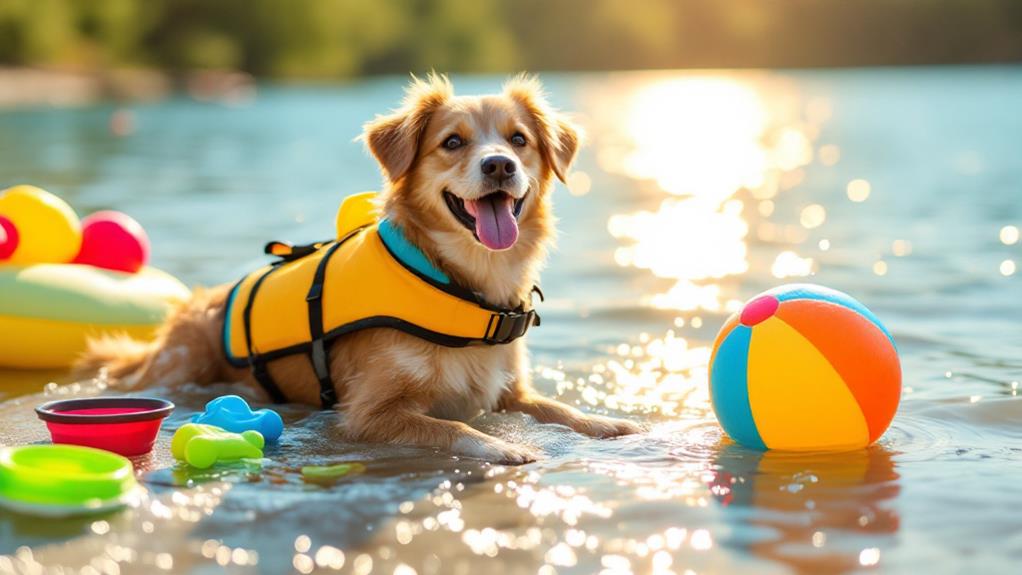
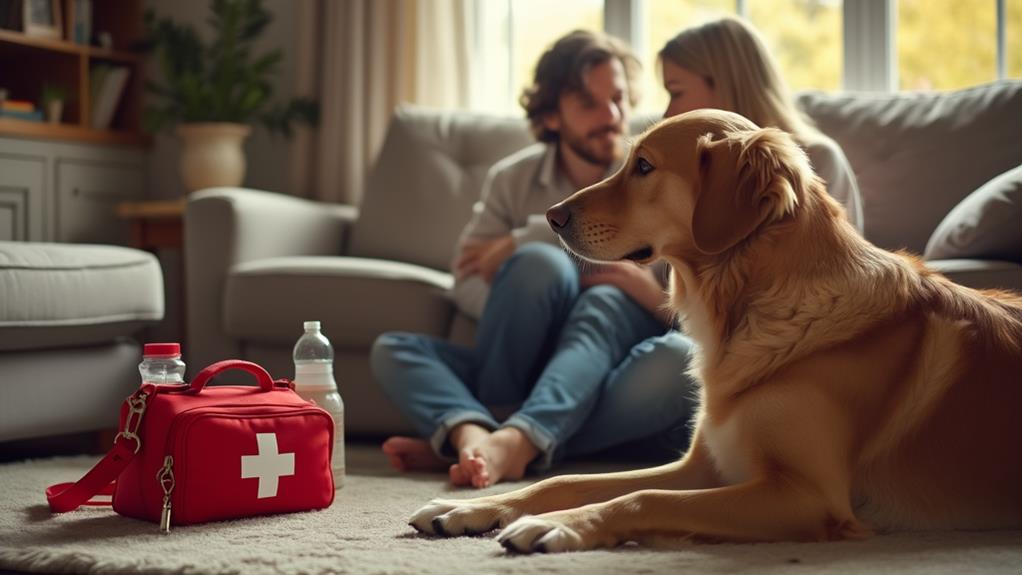
Swimming with your dog is often a delightful experience, but it's important to have the right accessories to guarantee safety and comfort. Investing in a properly fitted dog life jacket is significant, especially for breeds that might struggle with swimming. A life jacket provides buoyancy and improves visibility in the water, making it easier to keep an eye on your furry friend. Look for life vests with convenient handles for quick retrieval, which can be a lifesaver in emergencies. Furthermore, D-rings on the jacket allow you to attach a leash, providing secure control during swimming activities.
Keeping your dog hydrated is critical, especially during active play in the water. Portable water bowls and bottles are must-have accessories. Don't forget to rinse your dog with clean water after swimming to wash away any skin irritants that might linger after a dip.
Here's a quick checklist for important swimming accessories:
- Properly fitted dog life vests with handles and D-rings
- Portable water bowls and bottles for hydration
- Rinsing with clean water post-swim
- Awareness of potential skin irritants in the water
Equipped with these accessories, you'll guarantee a safe and enjoyable swimming adventure for your dog.