Tips for Keeping Your Cat Well-Groomed: A Complete Guide
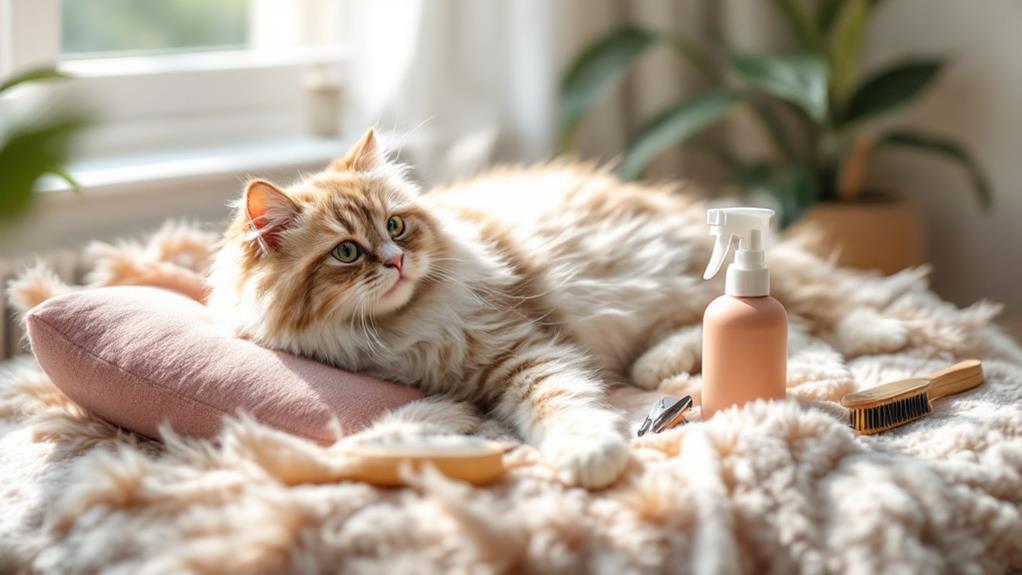
Keep your cat looking and feeling great with these grooming tips. Brush your long-haired feline daily and your short-haired one weekly to remove loose fur and prevent mats. Use slicker brushes and wide-toothed combs for best results. Trim nails every 10-14 days using cat-specific clippers to avoid overgrowth. Keep your kitty's ears and eyes clean using gentle solutions to prevent infections. Baths should be occasional with cat-specific shampoo in lukewarm water. Regularly check for any signs of irritation or health issues to address them early. By doing so, you'll maintain their well-being in just a few simple steps. Uncover more ahead.
Importance of Regular Grooming
Regular grooming is crucial for maintaining your cat's general health and well-being. When you engage in regular grooming, it helps maintain a clean and healthy coat by efficiently removing dirt, debris, and excess oils. This process is key to preventing skin issues and reducing allergens, ensuring your cat stays comfortable and healthy. By minimizing shedding, grooming also helps reduce hairballs, as brushing prevents loose fur from being ingested during your cat's self-grooming.
Frequent grooming sessions are invaluable for the early detection of health issues. You'll be able to spot lumps, skin irritations, parasites, and even dental problems early, which can greatly improve your cat's overall health outcomes. Regular brushing not only increases blood circulation but also boosts the natural shine and elasticity of your cat's coat. This contributes to both their aesthetic appeal and comfort, making them look and feel their best.
Moreover, grooming strengthens the bond between you and your cat. The process promotes trust and provides an opportunity for positive interaction and affection. As you groom your cat, you're building a relationship rooted in care and understanding, enriching the lives of both you and your feline friend.
Essential Grooming Tools
Maintaining your cat's health and strengthening your bond requires the right grooming tools. For long-haired cats, Slicker Brushes are a must-have. They feature fine wire bristles that effectively remove loose fur and detangle without harming the coat. Pair these with Wide-Toothed Combs to prevent mats by smoothing out any stubborn knots, especially in thick coat types.
Nail Clippers are another crucial item. Choose between guillotine or scissor styles, which are specifically designed for cats to prevent overgrown nails. Regular trimming keeps your cat comfortable and reduces the risk of nail-related injuries. For ear hygiene, invest in Ear Cleaning Solutions formulated for cats. These solutions help maintain ear health and prevent infections. Use them with cotton balls or gauze for a safe cleaning process.
Cat Toothbrushes, along with specialized toothpaste, are critical for your cat's dental hygiene. Regular brushing prevents dental issues and promotes overall well-being. These grooming tools are designed for feline use, ensuring comfort and effectiveness. Regardless of you're handling grooming at home or visiting a professional grooming service, having these tools on hand is vital for keeping your cat well-groomed and healthy.
Bathing and Brushing Techniques
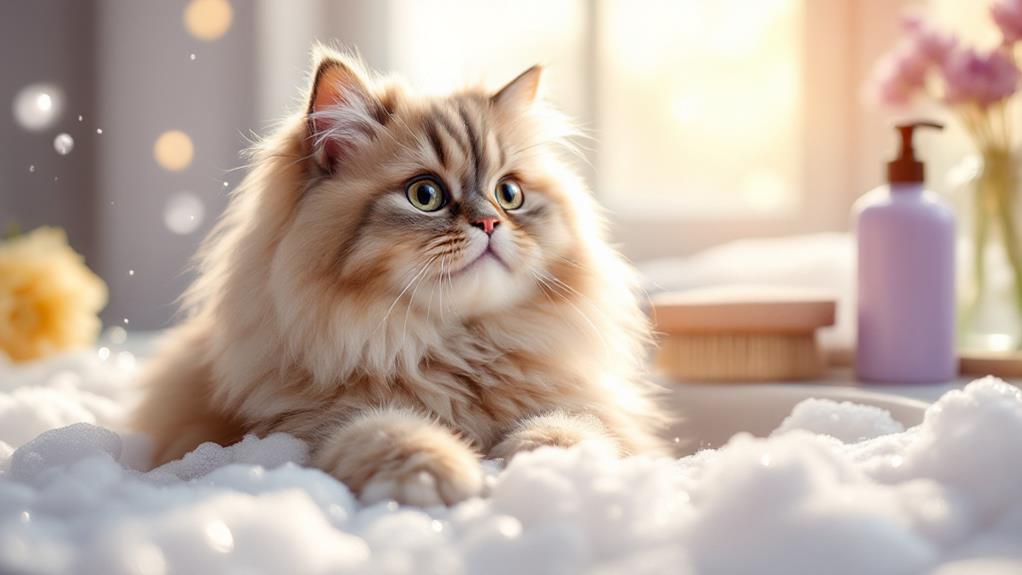
In relation to keeping your cat clean and healthy, both bathing and brushing play vital roles. Brushing is particularly significant for long-haired cats, requiring daily attention to prevent matting and maintain a healthy coat. For short-haired cats, a weekly brushing session helps reduce shedding and keeps their fur in top condition. Before you start bathing, always brush your cat to remove loose hair and any mats.
When preparing for a bath, gather all necessary supplies: a cat shampoo, towels, and a non-slip mat to guarantee your cat's comfort and safety. Adjust the water temperature to lukewarm, as it's gentle on their skin and less likely to cause discomfort. It's significant to avoid wetting their face, ears, and eyes to keep them calm during the process.
Always use a shampoo formulated specifically for cats, as human shampoos can lead to skin irritation. After applying shampoo, rinse thoroughly to make sure no residue remains, which could irritate their skin. Incorporate these bathing and brushing techniques into your regular grooming routine to keep your cat healthy and happy. By following these steps, you'll guarantee your feline friend remains comfortable and well-groomed.
Nail and Paw Care
How often should you pay attention to your cat's nail and paw care? Aim for regular nail trimming every 10-14 days. This routine is vital to prevent overgrown nails, which can cause walking difficulties and potential injuries. When trimming, use nail clippers specifically designed for cats, like guillotine or scissor-style clippers, to guarantee safety. Only trim the white tip of the nail to avoid the sensitive quick, which can cause bleeding and pain if accidentally cut.
Choose a quiet environment for nail trimming to keep your cat calm and stress-free. Gradually introduce paw handling by rewarding your cat with treats, creating a positive association with the process. This approach makes future grooming sessions easier and more pleasant for both of you. Regularly inspect your cat's paws for signs of irritation, cuts, or foreign objects, as these can lead to infections if left untreated.
Eye and Ear Maintenance
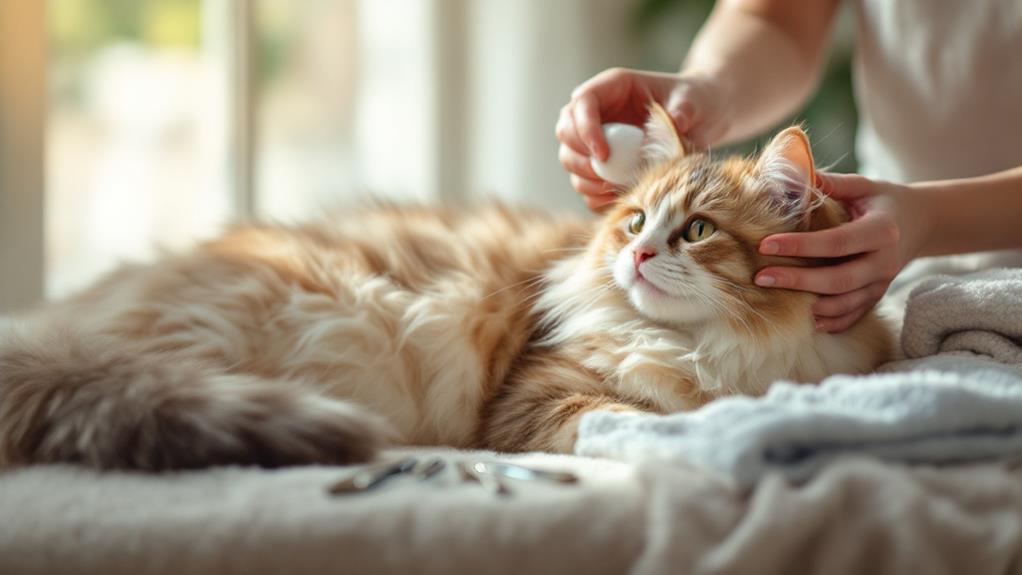
Caring for your cat's complete well-being doesn't stop at their paws; their eyes and ears require attention too. Start by regularly checking your cat's ears at least once a week for wax buildup, debris, and any signs of infection. Their inner ear should be a healthy pale pink and free from discharge. To clean your cat's ears, use a feline-safe ear cleaning solution or mineral oil on a cotton ball to wipe away any remaining wax and debris. Gently massage the base of the ear for ideal ear hygiene. Remember, avoid using cotton swabs inside the ear canal, as they can inadvertently push debris further in.
For eye maintenance, conduct simple home exams in well-lit areas. Check for clarity and color, and use a damp cotton ball to clean any discharge, confirming you use a fresh one for each eye. Monitor for signs like excessive tearing, squinting, or crusty discharge. These could indicate conditions like conjunctivitis, necessitating veterinary attention. Maintaining regular eye and ear care guarantees your cat's comfort and health, helping you catch potential issues early before they require more serious intervention. Your attentive care can make all the difference in your cat's well-being.
Monitoring Skin and Health
Regularly monitoring your cat's skin is vital to their general health. Keep an eye out for signs of irritation, such as excessive scratching, hair loss, or scabs, which may signal underlying health issues. Cats, especially young and elderly ones, are more prone to skin problems, so it's important to observe their grooming habits closely. Environmental factors like stress and overcrowding can worsen these issues, so maintaining a calm environment benefits your cat's skin health.
Incorporate hypoallergenic grooming products into your routine to prevent skin reactions. Regular brushing not only keeps their coat tidy but also removes dirt and allergens that could affect skin health. If you notice persistent scratching, unexpected lumps, or unusual growths, don't hesitate to consult a veterinary professional. Early detection and treatment are key to preventing more serious health concerns.