Tips for Grooming a Puppy: A Beginner’s Guide
Grooming your puppy involves using the right tools, like a slicker brush for long-haired breeds or a rubber-bristled brush for short-haired ones. Establish a grooming schedule, aiming for every 4-6 weeks, but remember to brush at least once a week. Nail trimming every 3-4 weeks prevents injuries, while positive reinforcement makes the experience enjoyable. Use dog-specific shampoos for regular baths, ensuring you rinse thoroughly. Manage shedding with the correct tools and diet, and maintain your puppy's engagement with short, fun sessions. Keep treats and praise handy to create a pleasant grooming routine. There's much more to investigate in achieving grooming success.
Choosing the Right Tools
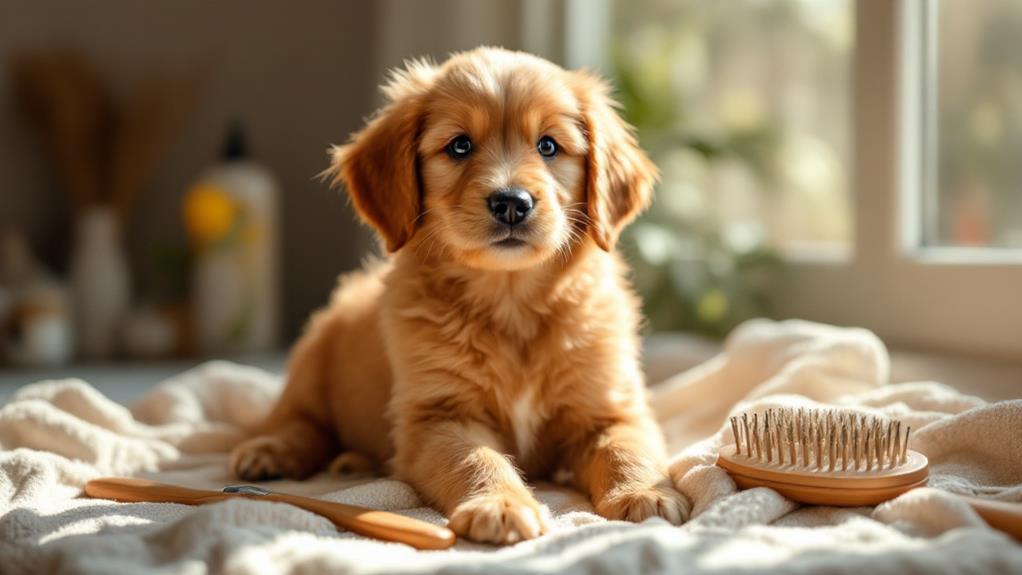
In relation to grooming your puppy, selecting the appropriate tools is vital for maintaining their health and comfort. You'll want to start by identifying your puppy's coat type, as this will guide your choice of grooming tools. For long-haired breeds, a slicker brush works wonders in keeping their coat free of tangles and mats. Meanwhile, short-haired breeds benefit from a rubber-bristled brush, which helps remove loose fur and distribute natural oils.
Don't forget the significance of having a variety of grooming tools on hand. A comb is great for detangling stubborn knots, while scissors are useful for trimming delicate areas around the face and paws. For seasonal shedding, a de-shedding tool can make a big difference in managing the excess fur.
Bathing your puppy requires a gentle approach. Opt for a dog-specific shampoo that's pH-balanced and formulated for puppies. This guarantees their sensitive skin remains unharmed and their coat stays shiny and healthy. It's vital to choose products designed specifically for dogs, as human shampoos can irritate their skin. By investing in the right grooming tools and products, you're setting the stage for a healthy and happy grooming routine.
Nail Trimming Basics
While grooming tools are necessary, don't overlook the significance of regular nail trimming for your puppy. Keeping your puppy's nails well-trimmed is important, typically every 3-4 weeks, to prevent discomfort and potential health issues caused by overgrown nails. Start by selecting the right tool, such as a dog-specific nail clipper or a Dremel grinder. Being familiar with the proper technique is critical to avoid cutting the quick, which can lead to bleeding and pain for your puppy.
When trimming, especially for puppies with dark nails, proceed cautiously. Gradually shorten the nail until you can see the quick, as it's often harder to spot where it ends on darker nails. Introduce your puppy to the nail trimming process gradually, using treats and praise to create a positive association and reduce anxiety. This helps in making the experience less stressful for both you and your puppy.
Always keep cornstarch or styptic powder nearby to manage any accidental bleeding if the quick is inadvertently cut. With patience and the right approach, you'll make certain your puppy's nail trimming sessions are smooth and stress-free, keeping their paws healthy and comfortable.
Bathing Your Puppy
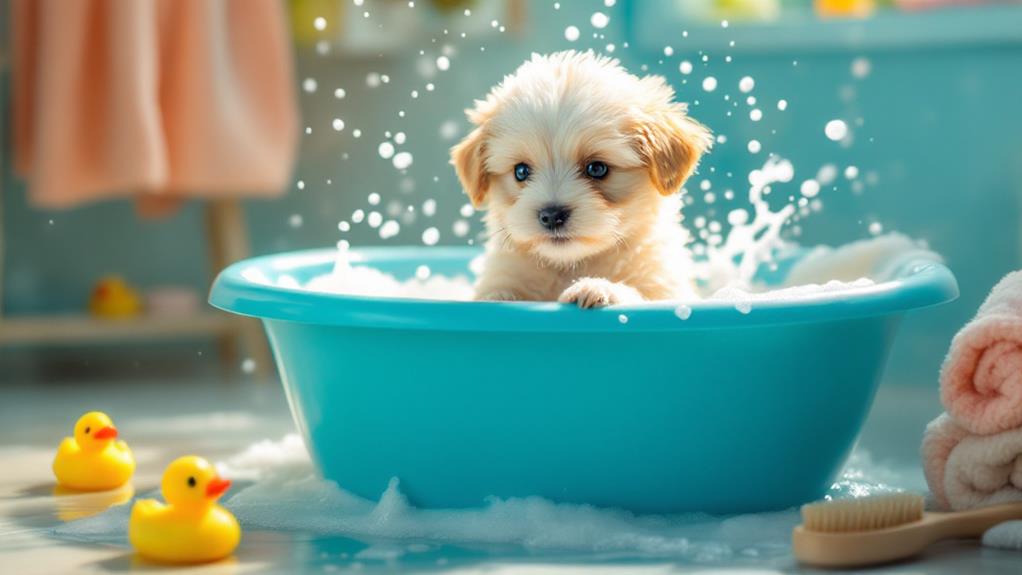
For a clean and healthy puppy, regular baths are essential. Regarding bathing your puppy, preparation is key. Start by brushing your puppy's coat thoroughly to remove any tangles or mats, as these can worsen with water and shampoo. Use lukewarm water to make the experience comfortable. Invest in dog-specific shampoos, ideally oatmeal-based, to gently condition your puppy's sensitive skin and maintain its health.
Introduce your puppy to the bathing process gradually. Use treats and praise to establish a positive association with bath time. This approach will help your puppy feel at ease and enjoy the experience. While washing, make certain to rinse your puppy thoroughly. Leftover shampoo residue can irritate their skin, so it's imperative to confirm all product is washed away.
Once the bath is complete, towel dry your puppy gently. This not only helps remove excess moisture but also provides a comforting sensation. You might also consider using a pet-specific dryer set on low to prevent overheating and guarantee a gentle drying process. With these steps, you're making sure your puppy stays clean, comfortable, and happy.
Brushing Techniques
Getting your puppy used to regular brushing early on is essential for a stress-free grooming routine. Start with a soft-bristled brush, which is gentle on their sensitive skin, ensuring comfort during their grooming sessions. When you brush, always move in the direction of hair growth. This method prevents pulling and discomfort, especially around sensitive areas like the face, ears, and paws.
For puppies with longer or thicker coats, you might encounter tangles. In such cases, a wide-toothed comb can be a valuable tool to gently detangle without causing pain. Remember, the key to successful brushing techniques is to be gentle and patient.
Positive reinforcement plays a significant role in making brushing a pleasant experience. Have some treats and offer plenty of praise handy to reward your puppy during and after the session. This helps them associate brushing with positive outcomes, encouraging cooperation over time. Brushing doesn't have to be a chore. With the right tools and approach, it can become a bonding activity between you and your puppy. Stick to these techniques, and you'll set the groundwork for a happy, well-groomed companion.
Handling Shedding
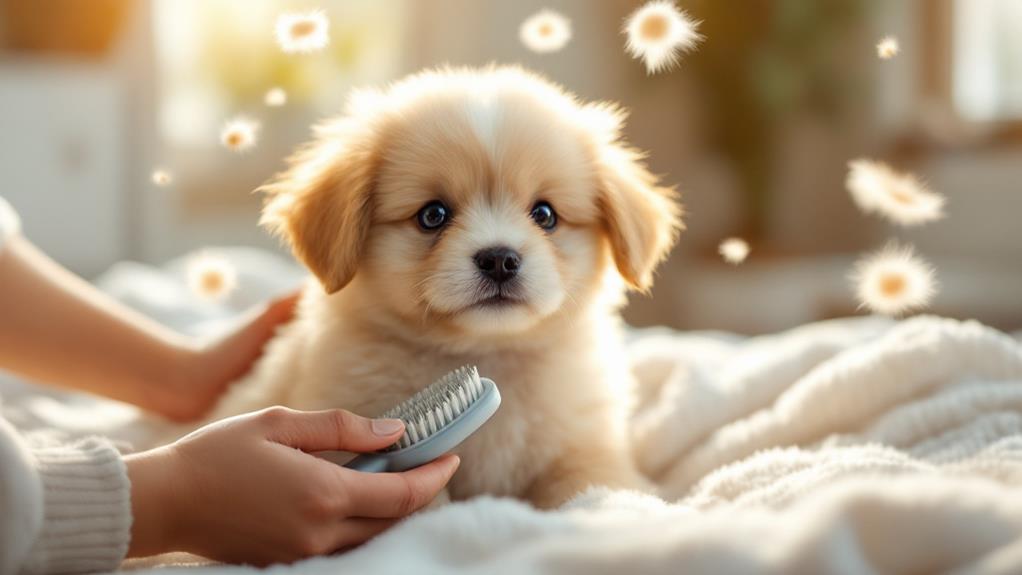
Shedding is a natural process that you'll frequently encounter as a puppy owner, and understanding how to manage it is crucial for maintaining a clean home and a healthy pet. Regular grooming is your primary line of defense. By using a de-shedding tool or a rubber-bristled brush, you can effectively reduce shedding by up to 90% if used consistently. Tailor your grooming routine to your dog's coat type to guarantee the best outcomes. Seasonal changes can increase shedding, so be prepared to adjust your grooming frequency during these times.
To manage shedding effectively, consider these tips:
- Diet: A balanced diet rich in omega fatty acids can improve coat health and reduce excessive shedding.
- Tools: Invest in a quality de-shedding tool specific to your dog's coat type.
- Routine: Implement a consistent brushing routine to maintain your puppy's skin and coat health.
- Professional Help: Sometimes, enlisting dog grooming services can provide additional support, especially if shedding becomes overwhelming.
Managing Fur and Mats
While managing shedding is a key aspect of puppy care, keeping your pet's fur free of mats is just as vital for their comfort and health. Regular grooming prevents painful tangles and keeps your puppy's coat looking its best. Start by incorporating brushing into your routine. For long-haired breeds, aim for daily brushing, while short-haired pups can get by with weekly sessions.
Choose the right tools to make the process efficient. A rubber-bristled brush or slicker brush works wonders in detangling and smoothing the coat. These brushes help distribute natural oils, giving your puppy's fur a healthy sheen. Introduce brushing gradually, so your puppy gets used to the sensation. Using treats can help create a positive association with grooming.
When encountering matted fur, be gentle. Use your fingers or a wide-tooth comb to work through tangles before switching to a slicker brush. Avoid pulling too hard to prevent discomfort. If the mats are severe, a mat rake or scissors may be necessary. Carefully cut out the mats, but take care not to nick the skin underneath. With patience and the right approach, you'll keep your puppy's fur in top shape.
Creating a Positive Experience
To make grooming an enjoyable experience for both you and your puppy, start with a calm demeanor and a positive attitude. Your energy sets the tone, helping your puppy feel relaxed and secure. As you begin grooming your dog, keep in mind that turning it into a positive experience is vital for encouraging good behavior.
Incorporate treats and praise throughout the grooming routine. This reinforcement not only rewards good behavior but also creates a positive association with grooming. Gradually introducing grooming tools is also important. Allow your puppy to sniff and examine them before use. This gentle introduction helps reduce fear or anxiety, making the process smoother.
To keep your puppy engaged, make certain grooming sessions are short and fun. Puppies have limited attention spans, so maintaining their interest prevents them from feeling overwhelmed.
Here are some tips to guarantee your puppy stays comfortable and stress-free:
- Use gentle handling techniques to avoid discomfort.
- Take breaks as needed to give your puppy a chance to relax.
- Keep a consistent, soothing tone in your voice.
- Monitor your puppy's body language for signs of stress.
With these strategies, you'll create a positive grooming experience that sets your puppy up for success.
Maintaining a Grooming Schedule
Establishing a regular grooming schedule is essential for keeping your puppy healthy and comfortable. Depending on your puppy's breed and coat type, you should aim for grooming every 4-6 weeks. This regular grooming helps maintain a healthy puppy coat and prevents matting. It's significant to incorporate several grooming tasks into this schedule to guarantee your puppy's overall well-being.
Start by trimming your puppy's nails every 3-4 weeks. Overgrown nails can cause discomfort and even lead to injury, so keeping them short is necessary. Furthermore, brushing your puppy's coat at least once a week will help remove loose hair and debris. Regular brushing also promotes healthy skin and a shiny coat by distributing natural oils.
Don't forget about ear care—monitor and clean your puppy's ears every 2-4 weeks. This can prevent infections and remove any wax or debris buildup. Also, dental health is crucial, so establish a routine of brushing your puppy's teeth up to twice daily. Starting this habit early will help your puppy acclimate and prevent plaque buildup. By following this thorough grooming schedule, you'll keep your puppy happy and healthy.