Tips for Adopting a Puppy: Essential Advice for New Dog Owners
Adopting a puppy is exciting and requires thoughtful preparation. Start puppy-proofing by removing hazards and setting up a safe, cozy area with a comfy bed and toys. Establish a routine with predictable feeding, exercise, and training sessions to bring structure to your puppy's life. Introduce them to resident pets in neutral spaces with positive reinforcement to ease tensions. Accept crate training with patience; make their crate a haven using treats and praise. Engage their mind with varied toys and socialization, and don't forget potty training necessities. With dedication, you'll soon uncover more about building a happy home for your puppy.
Prepare Your Home
Bringing a new puppy into your home is an exciting adventure that requires careful preparation to guarantee their safety and comfort. As a novice dog owner, you'll want to make certain your home is ready for your new furry friend. Start by puppy-proofing your space to prevent health problems. Remove hazards like toxic plants and electrical cords, and clear away small objects that could be swallowed. Secure trash cans and food storage areas to keep harmful substances out of reach, and store cleaning supplies safely away.
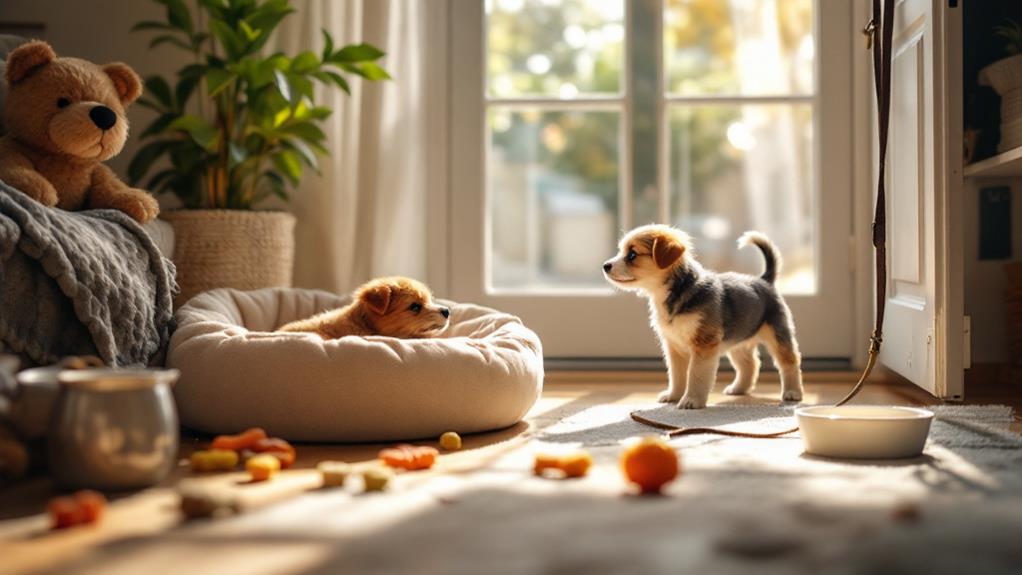
Next, designate a specific area for your puppy. This will help them feel secure and establish their own territory. Equip this space with a comfortable bed, toys, and cozy blankets. Providing potty pads here can assist with house training while your puppy adjusts to their new surroundings.
To keep your puppy safe, use baby gates to limit access to certain rooms. Make sure your yard is securely fenced, checking for any gaps or holes a curious puppy might exploit. By taking these steps, you'll create a welcoming and safe environment that meets your puppy's needs and makes the shift smoother for both of you.
Establish a Routine
Creating a daily routine for your puppy is essential to their complete well-being and helps them adjust smoothly to their new environment. By establishing a routine, you provide consistent care that meets their physical and mental needs. Start with a regular feeding schedule to promote better digestion and reduce anxiety. Knowing when to expect meals offers your puppy a sense of predictability, making their adjustment period to the new home smoother.
Incorporate regular walking and playtime into your routine. These activities are critical for physical exercise and mental stimulation, supporting your puppy's comprehensive health and development. Assign caretaking responsibilities among household members to create a structured environment. This guarantees your puppy receives attention and care consistently, building trust and security.
Include training sessions in your daily structure to encourage learning and socialization opportunities. These sessions help your puppy understand acceptable behaviors and strengthen the bond between you. A consistent routine fosters predictability and comfort, allowing your puppy to feel secure in their surroundings. By creating a well-rounded daily routine, you help your puppy thrive in their new home, setting them up for a happy and healthy life.
Introduce to Resident Pets
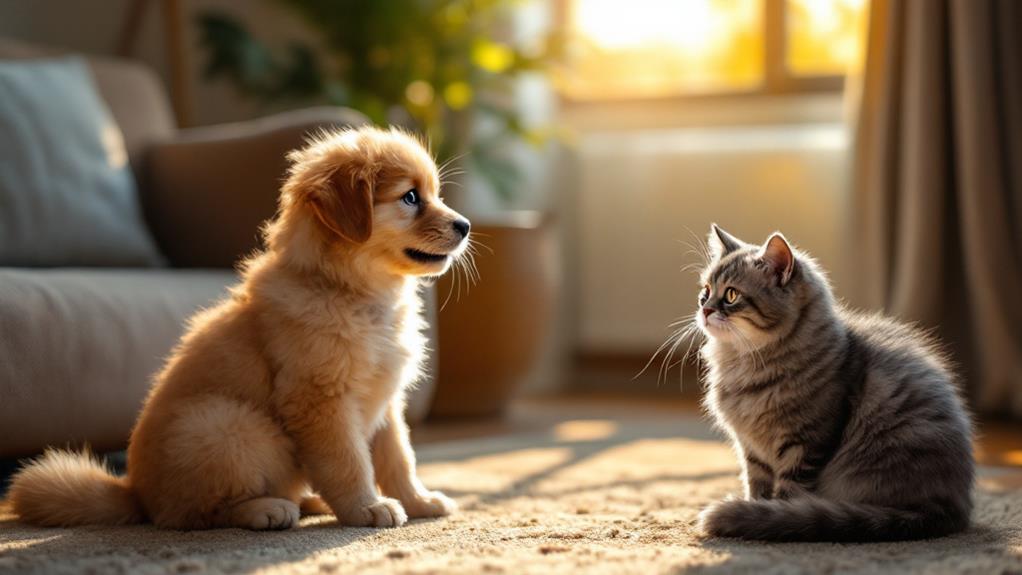
Introducing a new puppy to your resident pets can be a rewarding experience, but it requires careful planning to assure harmony in your home. Start the process by introducing them in a neutral territory to minimize territorial behavior and tension. This approach helps both the new dog and your resident pets feel more at ease. Here's a step-by-step guide to assure smooth interactions:
- Use Positive Reinforcement: Reward calm and friendly behavior with treats or praise. This strategy encourages both the new puppy and resident pets to associate each other with positive experiences.
- Monitor Body Language: Keep a close eye on their body language during introductions. Look for signs of stress or discomfort, such as growling or raised hackles, and be ready to separate them if necessary.
- Allow Breaks: Give both the puppy and resident pets time to adjust by allowing breaks between interactions. This prevents them from feeling overwhelmed and helps them gradually get used to each other's presence.
- Establish a Routine: Create a routine that includes both the new dog and your resident pets. A consistent schedule fosters a sense of normalcy and security, helping all animals involved adjust more easily.
Start Crate Training
In regard to crate training your new puppy, starting the process early can set the foundation for a happy and well-adjusted pet. Begin by creating a positive association with the crate. Use treats, toys, and praise to encourage your puppy to enter willingly. This approach helps your new pet see the crate as a safe and comfortable space.
Ensure the crate is the right size—big enough for your puppy to stand, turn around, and lie down comfortably, but not so large that they can use a corner as a bathroom. Gradually increase the time your puppy spends in the crate. Start with short intervals and extend them as your puppy becomes more comfortable. Always use the crate for short periods while you're home to help your puppy adjust.
Supervision is key when your puppy is outside the crate. Keep a close eye to prevent accidents and reinforce good behavior. Remember to take your puppy for regular potty breaks, ensuring they don't associate the crate with confinement after accidents. Avoid using the crate as a punishment to maintain a positive and welcoming environment for your puppy.
Focus on Enrichment
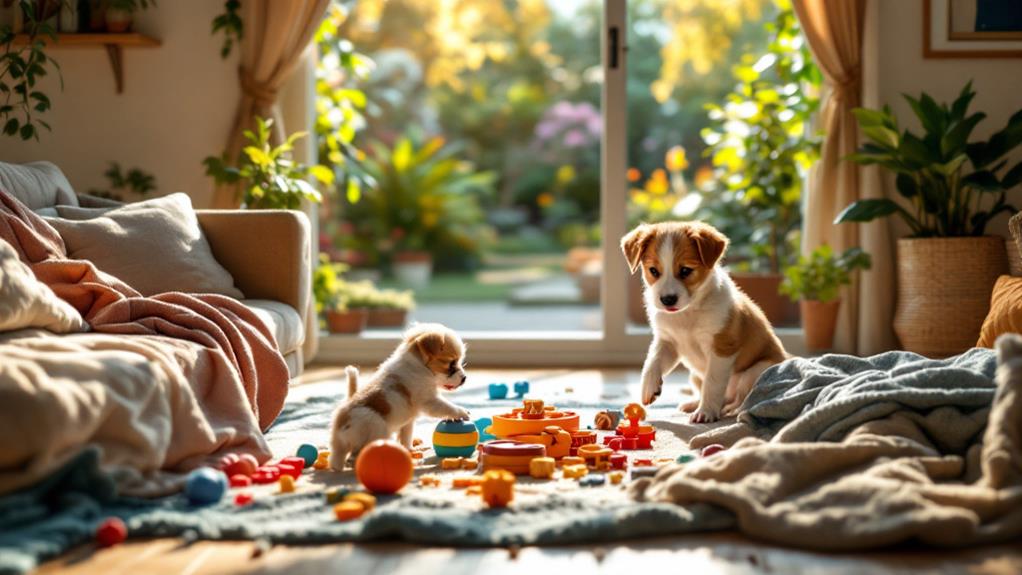
Enrichment is essential for your puppy's growth and happiness, providing the mental and physical stimulation they need to thrive. As a new dog owner, focusing on environmental enrichment will help guarantee your pet develops into a well-rounded and confident dog. Here's how you can incorporate enrichment into your puppy's daily routine:
- Dog Toys: Offer a range of durable toys, like puzzle or chew toys, to prevent boredom and destructive behavior. These toys encourage healthy play habits, keeping your puppy engaged and mentally stimulated.
- Interactive Play: Engage in regular play sessions with your puppy. Not only does this strengthen your bond, but it also improves your pet's social skills and raises their confidence. Games like fetch or tug-of-war are excellent choices.
- Training Games: Incorporate training games and obedience exercises into your daily routine. This approach stimulates your puppy's mind, reinforces positive behaviors, and makes learning fun and rewarding.
- Socialization: Expose your puppy to different environments, people, and other animals. This is vital for developing a well-adjusted adult dog. Gradual socialization helps your puppy become more comfortable and confident in distinct situations.
Find a Dog Trainer
Why is finding the right dog trainer vital for your puppy's development? The right trainer can help shape your new dog's behavior and guarantee they grow into a well-adjusted companion. Dog trainers who specialize in positive reinforcement techniques are fundamental, as these methods improve animal welfare and strengthen the bond between you and your puppy. Start by researching local trainers. Check their credentials, experience, and reviews to confirm they align with your training philosophy and goals.
Observing a training class before enrolling can be incredibly insightful. Watch how the trainer interacts with both dogs and their owners to assess their style. It's important that the trainer's approach matches your puppy's needs. Evaluate trainers offering a range of training options, like group classes, private sessions, or online resources, to find the best fit.
When interviewing potential trainers, discuss their approach to common behavioral issues. Ask how they plan to support you in reinforcing training at home for lasting results. A good trainer will offer guidance that extends beyond the classroom, guaranteeing your puppy's successful development into a well-behaved adult dog. Choosing wisely sets the foundation for a happy future together.
Potty Training Tips
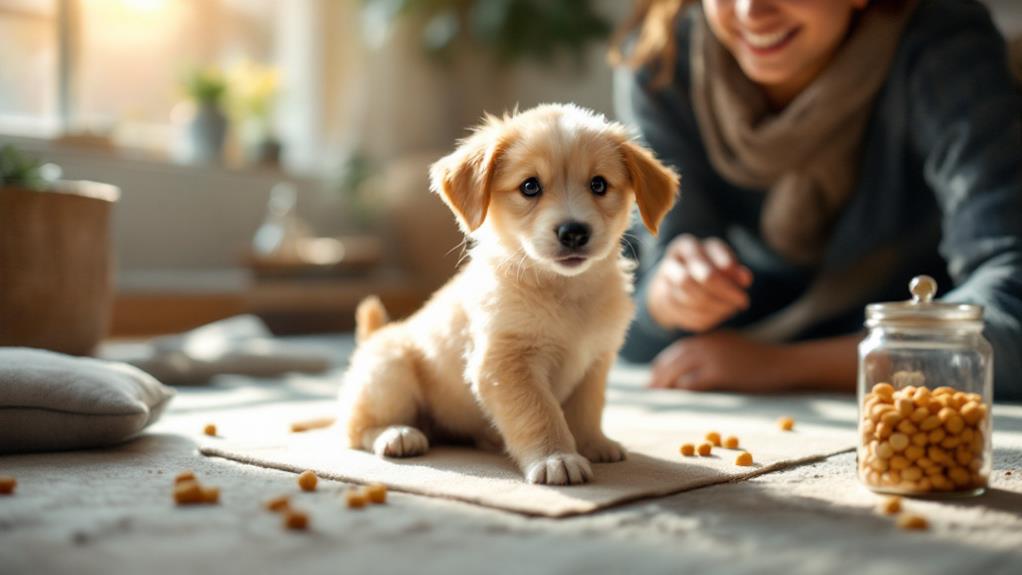
After finding the right dog trainer to set the stage for your puppy's development, it's time to focus on potty training, a fundamental aspect of your puppy's early learning. Establishing a routine is vital for new pups, as it supports their good health and helps them understand their dog needs. In the initial few days, you'll need to be extra attentive to prevent accidents and promote positive behavior.
Here are some key potty training tips:
- Use Consistent Commands: Say "go potty" during training sessions to create clarity and establish a routine. This helps your puppy associate the words with the action.
- Supervise Closely Indoors: Keep a close eye on your puppy to prevent accidents. Take them outside frequently, especially after meals, playtime, and naps.
- Reward Positive Behavior: Praise or give treats immediately after your puppy eliminates outdoors. This reinforces good habits and creates a positive association.
- Handle Accidents Calmly: Interrupt any indoor accidents gently without punishment. Calmly take your puppy outside to the designated potty area to encourage proper habits.
Transition Diet Gradually
Changing your puppy to a new diet gradually is fundamental to guarantee their digestive system adjusts smoothly. When you introduce new food, aim to shift over 1-2 weeks. Start by mixing 25% of the new food with 75% of the current food for the initial few days. Gradually increase the portion of the new food by 25% every few days until the shift is complete. This method minimizes digestive upset, promoting good health for your puppy.
Monitor your puppy closely for any signs of gastrointestinal distress, such as vomiting or diarrhea. If you notice any issues, consult a veterinarian immediately. They can provide guidance tailored to your puppy's specific needs. Remember, choosing high-quality food is significant. It should meet your puppy's nutritional requirements based on their breed, size, and development stage to support healthy growth and development.
Besides the new diet, always provide fresh water to guarantee proper hydration. Hydration plays a fundamental role in maintaining your puppy's digestive health during the shift. A well-hydrated puppy is a healthy puppy, and this careful approach guarantees a smooth diet change for your furry friend.
Prioritize Exercise and Play
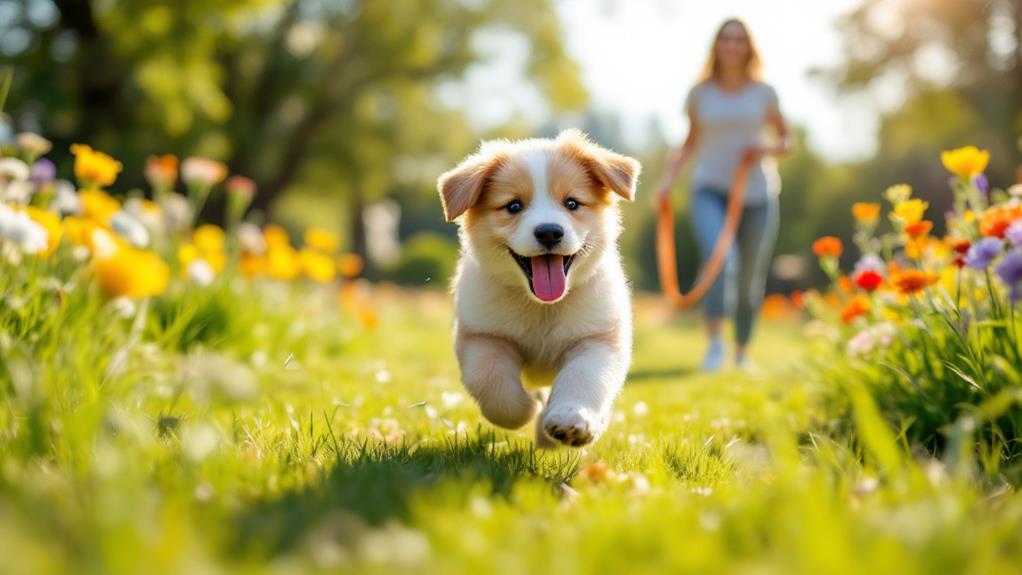
Amid the joys of having a new puppy, prioritizing exercise and play emerges as a crucial aspect of their care routine. Puppies need regular physical activity to support healthy growth and development. Aim for at least 30 to 60 minutes of exercise daily. This keeps their energy levels in check and prevents potential behavioral issues. Playtime isn't just for fun; it's an opportunity for mental engagement and bonding with your furry friend.
Consider these activities to enrich your puppy's routine:
- Fetch: This classic game taps into your puppy's instincts and offers great physical activity. It also encourages focus and discipline.
- Tug-of-war: A fun way to build strength and engage in a playful competition, enhancing your bond with your puppy.
- Agility training: Introduce simple agility exercises to stimulate mental engagement and promote physical health.
- Socialization classes: These classes often include structured play sessions, essential for improving your puppy's social skills and reducing anxiety.
Always monitor your puppy's energy levels during play. Adjust activities based on their breed, stage of life, and health status to avoid fatigue or injury. With the right balance, exercise and play become rewarding for both you and your puppy.