The Pros and Cons of Keeping Spiders as Pets: Is It Right for You?
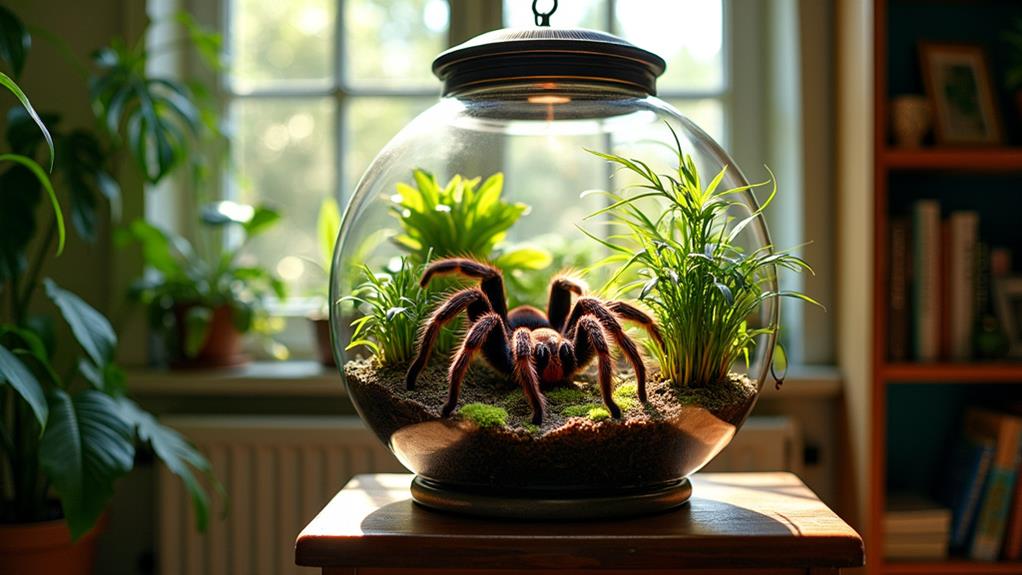
Keeping spiders as pets offers unique rewards and challenges. They require minimal space and are easy on the budget, making them perfect for small living spaces. With over 900 species available, you can choose one that matches your preference, but make certain you research their specific needs. Spiders aren't cuddly companions, and their care can get tricky with humidity and temperature considerations. Lifespans vary widely, so you're in for a long commitment. Secure enclosures are crucial, as some can escape easily. Their venom is mostly mild but requires cautious handling. To uncover more about this unique pet choice, keep exploring.
Key Takeaways
- Tarantulas require minimal space and have affordable maintenance costs, making them suitable for small living environments.
- Keeping spiders offers educational value and insight into arachnid behaviors, ideal for those interested in biology.
- Some spider species have long lifespans, offering long-term companionship but requiring commitment similar to traditional pets.
- Limited interaction and specific care needs may challenge beginners and those seeking affectionate pets.
- Secure enclosures are necessary to prevent escape, and handling can provoke defensive behaviors.
Space and Habitat Needs
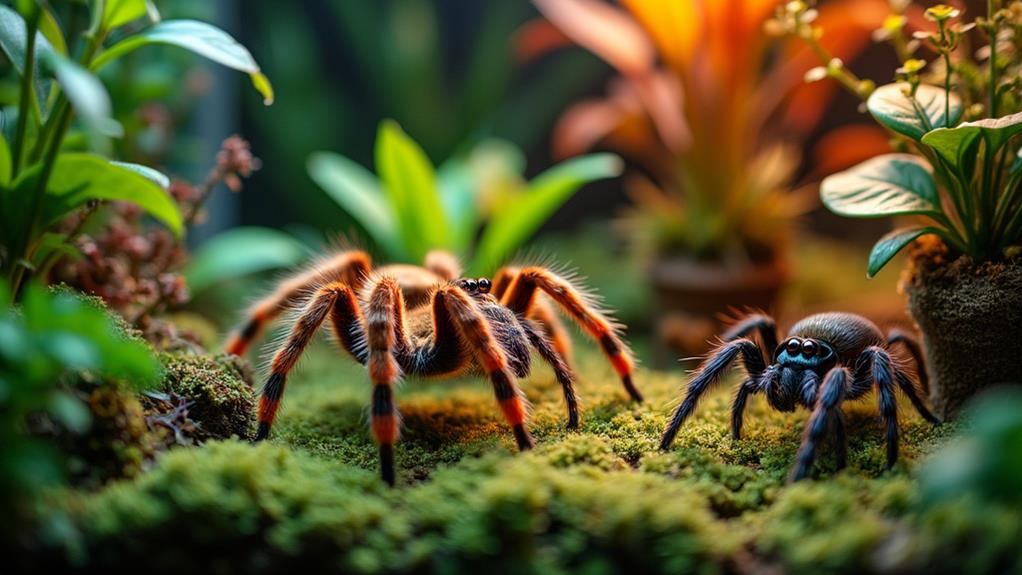
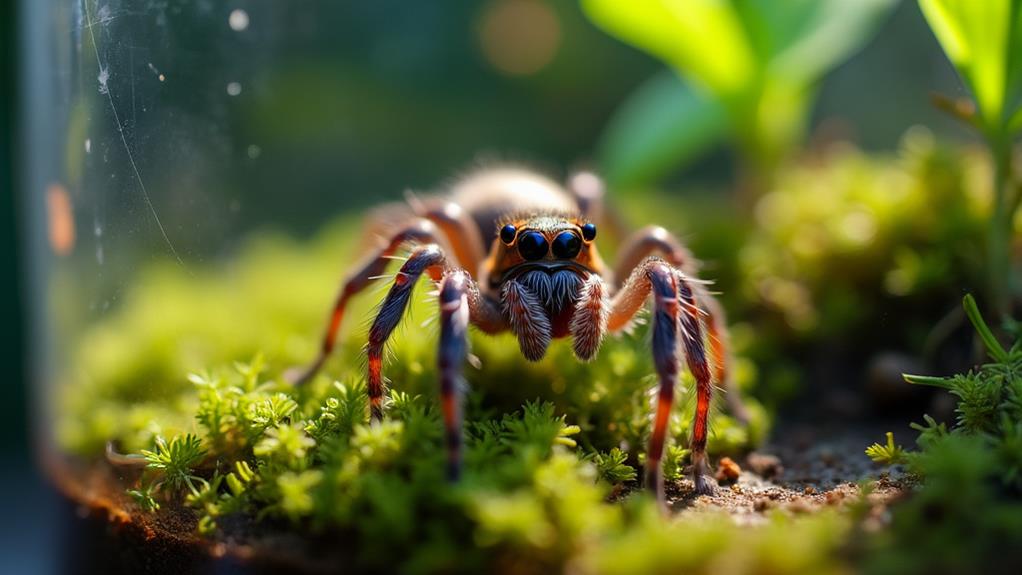
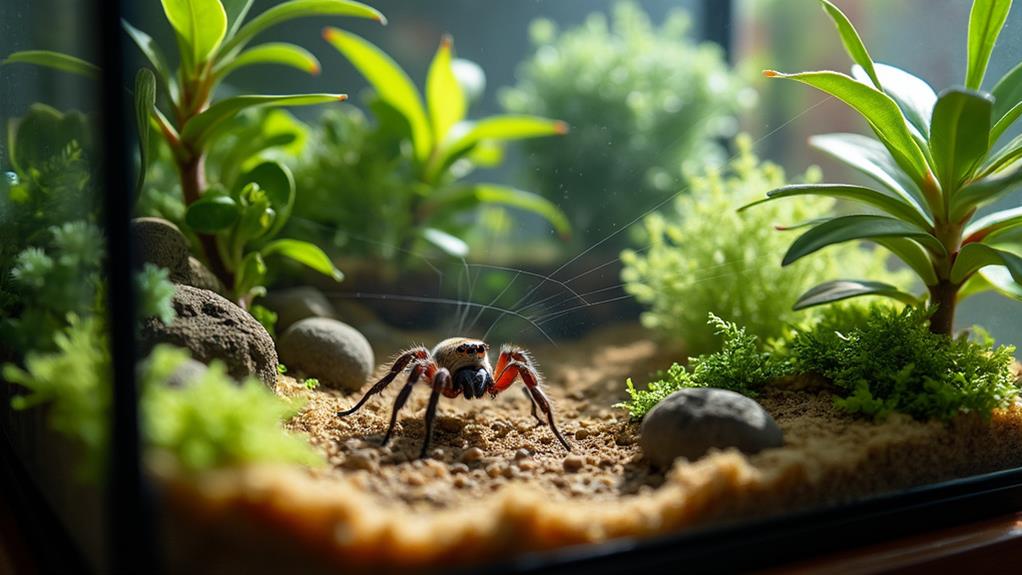
Creating an ideal space and habitat for your pet tarantula is vital to its well-being. When keeping tarantulas, understanding their space and habitat needs is fundamental. They thrive in enclosures ranging from 5 to 10 gallons, which is perfect for small living environments like apartments or classrooms. This compact size means you can easily find a spot for them without needing extensive space. Despite their small housing requirements, you should focus on creating a stimulating environment that caters to their species-specific needs.
Tarantulas are low-maintenance pets, especially when their habitat is set up correctly. A well-designed enclosure includes different substrates and hides, mimicking their natural conditions which allow them to express natural behaviors. This not only contributes to their health and happiness but also makes them fascinating to observe. Your tarantula's full-grown leg span of 5-6 inches means they don't need a large enclosure, but it should be equipped with necessities like fresh water and maintained humidity levels to guarantee their comfort.
Incorporating these elements into your tarantula's habitat will greatly improve their well-being and make keeping tarantulas a rewarding experience for you.
Species Diversity and Care
In regard to keeping tarantulas as pets, understanding species diversity and care is vital. With over 900 species of tarantulas, you have plenty of options, each offering unique characteristics in size, color, and habitat preferences. This variety means you can select a species that suits your interest and home environment. Some, like the Chilean rose and Mexican Redleg, are perfect for beginners due to their docile nature and low venom potency. They make great introductory pets for those new to tarantula keeping.
Tarantulas thrive in different environments, from dry deserts to moist forests, and each species has its own humidity and temperature needs. Properly managing these conditions is key to their well-being. Despite this, tarantulas are known for being low maintenance. Basic care involves providing fresh water, feeding them crickets or other insects, and occasionally cleaning their enclosure. This simplicity makes them one of the easiest pets to care for.
However, it's important to understand the specific dietary and environmental needs of your chosen species. By doing so, you guarantee successful tarantula keeping, allowing your pet to flourish and enjoy a long, healthy life, potentially spanning over two decades.
Longevity and Ownership
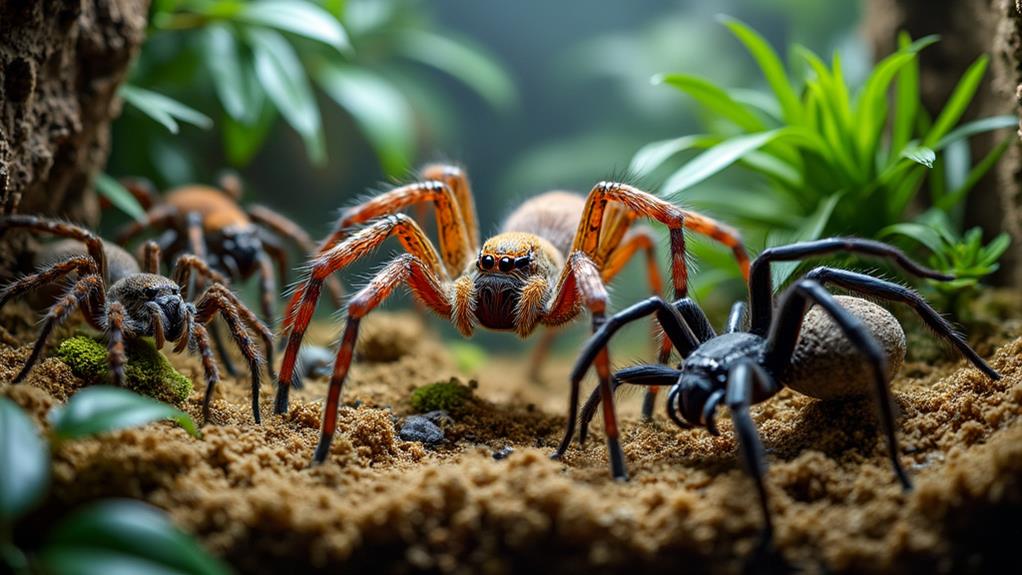
Owning a tarantula means you're committing to a pet with an impressive lifespan. Female tarantulas can live from 10 to over 30 years, so you're in it for the long haul if you choose one of these pet spiders. This longevity demands careful planning and consideration of your future living arrangements and ability to care for them over such an extended period. Male tarantulas, however, have a shorter lifespan, usually around 5 to 10 years. If you're looking for a less lengthy commitment, a male might be a better fit.
Understanding the longevity of tarantulas is vital for any prospective owner. It affects everything from your day-to-day care routine to your long-term commitment. Some species, especially those recommended for beginners, grow slowly, meaning you'll need to be patient and prepared to care for them before they reach full maturity.
Considering the long lifespan of tarantulas, it's important to think about how they'll fit into your life now and in the future. Can you provide a stable environment for decades to come? If so, these fascinating creatures might be the right pet spiders for you.
Fascination and Education
Investigating the world of tarantulas opens up a unique opportunity for learning and appreciation. By keeping tarantulas as pets, you immerse yourself in an educational expedition that offers hands-on insight into arachnid behavior and biology. You get to watch fascinating behaviors like feeding and molting up close, which can captivate your curiosity and deepen your understanding of these creatures. With over 900 species of tarantulas, each with its own characteristics, habitats, and care needs, there's a wealth of information to examine. This varied range allows you to research and uncover what makes each species unique.
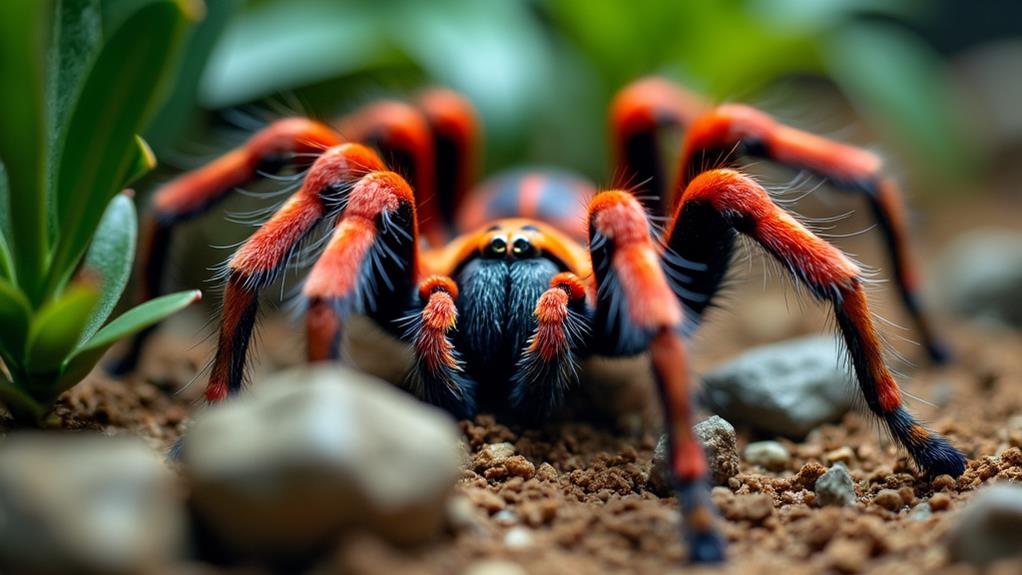
As you care for these intriguing pets, you might find yourself engaging with a lively community of enthusiasts. Forums and social media groups become invaluable resources for learning and sharing knowledge about tarantula behavior and care. Here, you can discuss and learn about different aspects, such as the intriguing use of uricating hairs for defense.
Additionally, keeping tarantulas can help you confront and transform any lingering phobias. By understanding these remarkable animals, fear often turns into fascination. Embracing tarantulas as pets doesn't just enrich your education; it also encourages a broader appreciation for their role in the natural world.
Misconceptions and Dynamics
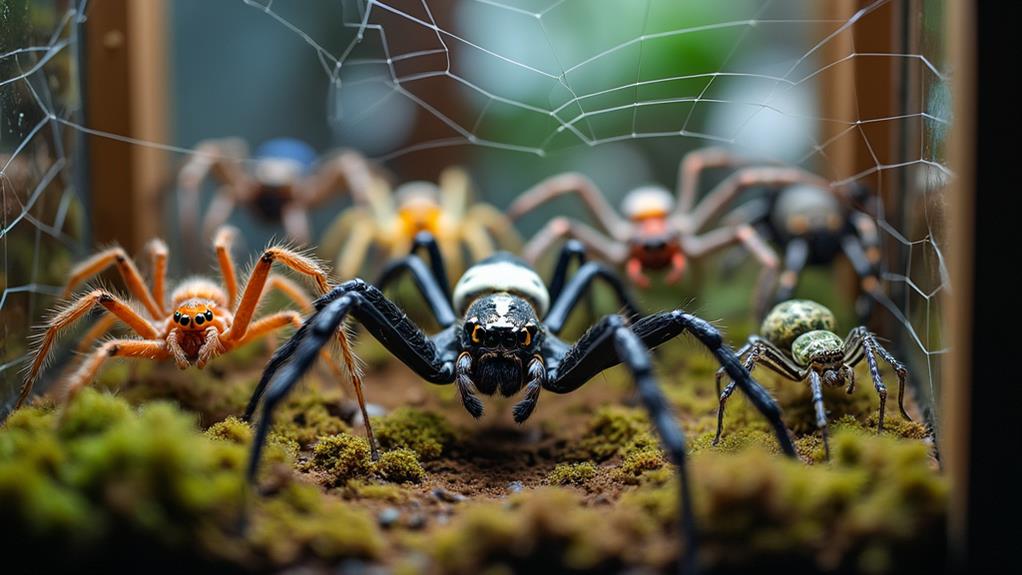
A multitude of misconceptions surrounds tarantulas, often painting them as perilous creatures. Thanks to exaggerated media portrayals, many believe they're dangerous. In reality, most have mild venom and are quite docile. Understanding the pros and cons of keeping them as pets helps dispel these myths. Remember, tarantulas are not pets in the traditional sense. They don't show affection or seek companionship. Instead, they're solitary, preferring minimal interaction.
Tarantulas can live comfortably in small enclosures, making them low-maintenance. However, they require careful handling. Rapid movements might trigger escape attempts or defensive behavior, posing challenges for beginner keepers. Despite this, the hobby can become addictive. Many start with one spider and soon find their collection growing, which can lead to overcrowded enclosures.
On the plus side, having tarantulas can help you confront arachnophobia. Watching them closely lets you transform fear into fascination. This educational aspect is a valuable pro, but it requires patience and respect for the tarantula's nature. So, if you're considering keeping tarantulas, weigh the pros and cons and ascertain you're ready for a pet that doesn't fit the conventional mold.
Advantages of Pet Spiders
Regarding keeping pet spiders, particularly tarantulas, there are several advantages worth considering. To begin with, they require minimal space. A 5-10 gallon aquarium provides ample living area, making tarantulas perfect for small apartments or rooms where space is at a premium. You won't need to worry about dedicating a large section of your home to them.
Another significant advantage is the low cost associated with maintaining a tarantula. With feeding costs averaging just $0.60 per month for crickets, they're among the most affordable pets to keep. This low maintenance expense makes them an attractive option if you're budget-conscious but still want a unique pet.
Tarantulas also offer considerable educational value. Observing their unique behaviors and characteristics can deepen your understanding of arachnid biology and ecology. They provide an up-close look at the fascinating world of these creatures, which can be both enlightening and awe-inspiring.
Furthermore, tarantulas are quiet, making them ideal for shared living spaces or noise-sensitive environments. They won't disturb you or your neighbors with any unwanted sounds. Plus, their long lifespan—ranging from 10 to over 30 years—means they can be a long-term companion for dedicated owners.
Disadvantages of Pet Spiders
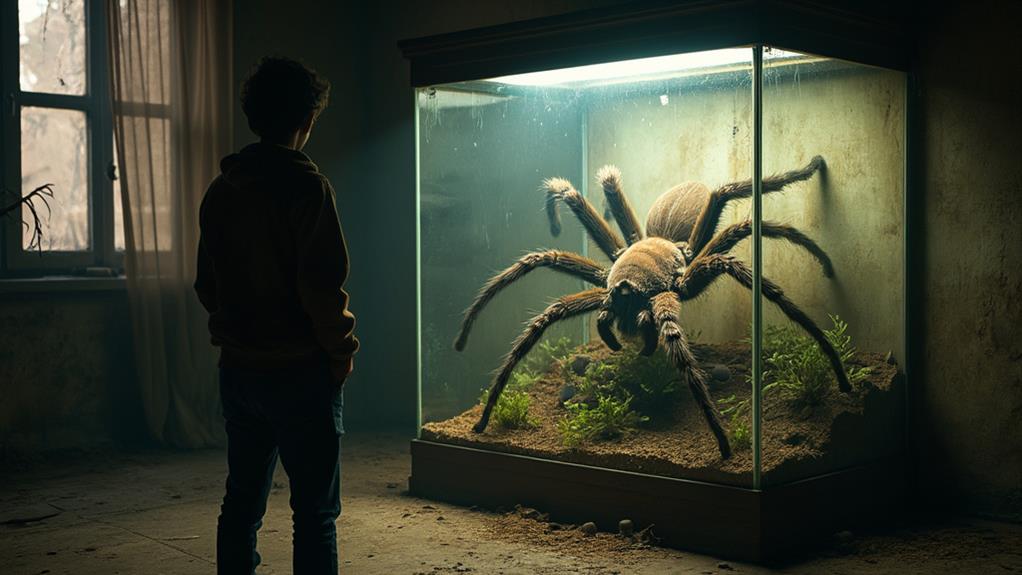
While there are many appealing aspects of keeping tarantulas as pets, it is crucial to also consider their drawbacks. One of the main concerns is that these spiders are venomous animals. Although their venom is typically not lethal to humans, it can cause allergic reactions or discomfort in sensitive individuals. This means you'll need to handle them with care and be aware of potential risks.
Tarantulas are also infamous escape artists. They require secure enclosures to prevent escapes, which can be challenging, especially for inexperienced owners. If your spider gets loose, finding it can be stressful and potentially dangerous.
Additionally, most spider species have relatively short lifespans. Tarantulas generally live between 5 to 10 years, which requires a commitment but also planning for their eventual loss.
Handling tarantulas can be risky. They're delicate creatures, and a fall can be fatal. Furthermore, stress from handling may provoke defensive behaviors, like releasing urticating hairs, which can irritate your skin and eyes.
Lastly, widespread fears and misconceptions about spiders can deter potential owners. These fears might affect your social relationships if friends or family are uncomfortable with your choice of pet.
Choosing the Right Spider
Although keeping a spider as a pet might seem intimidating at the outset, selecting the right species can make all the difference in your experience. For those new to keeping spiders, consider beginner-friendly species like the Chilean rose, Mexican Redleg, or Costa Rican Zebra. These species are known for their docile temperaments and low venom potency, making them ideal candidates for your initial arachnid companion. Unlike more traditional domesticated animals, spiders have specific habitat requirements, so it's essential to research their needs thoroughly.
Assess the environmental conditions each species requires. Some spiders thrive in higher humidity levels or specific temperature ranges, so confirm you can provide the right habitat. Also, be mindful of their lifespan; while some spiders live only a few years, certain tarantulas can live up to 20 or 30 years. This requires a long-term commitment much like other pets.
Additionally, verify local laws about spider ownership, as restrictions may apply depending on your location. Ultimately, evaluate your comfort level with the possibility of escape or defensive behavior. Choosing the right pet spider involves careful consideration, but with the right preparation, it can be a rewarding experience.