The Most Popular Birds to Keep as Pets: A Bird Owner’s Guide
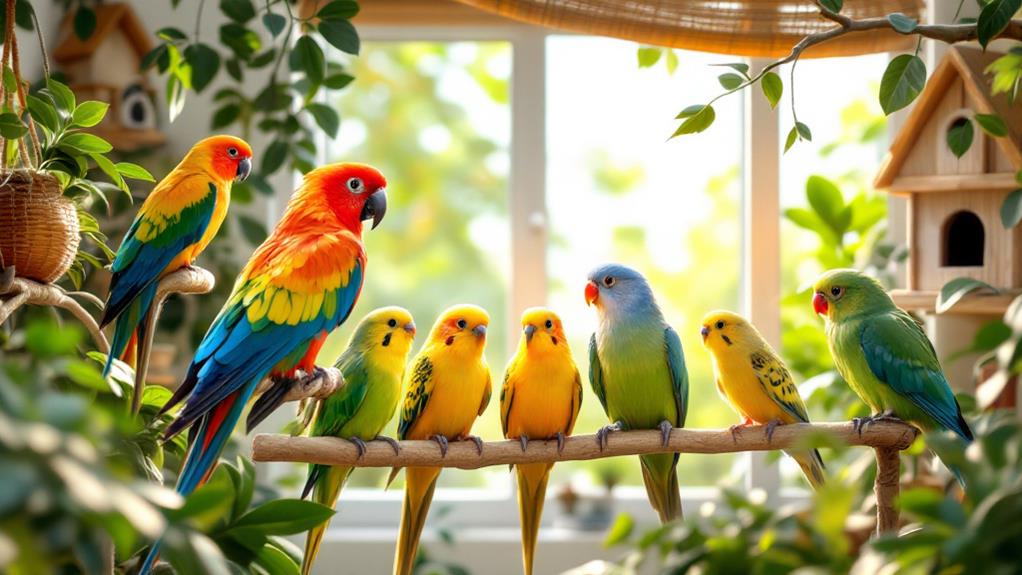
When you're considering a feathered friend, popular choices like budgerigars, cockatiels, lovebirds, canaries, and green-cheeked conures are great options. Budgerigars and cockatiels love social interaction and enjoy mimicking speech or whistling. Lovebirds are small and playful, while canaries charm with their melodic singing. Green-cheeked conures promise a long-term, affectionate bond. Each species has unique care requirements, including diet, socialization, and exercise needs. Regular veterinary checks and a stimulating environment are fundamental. If you're ready to investigate detailed care strategies and choose the right bird for your lifestyle, this guide offers a wealth of valuable insights.
Top Pet Bird Choices
Feathers of bright hues and melodic tunes fill the air when you choose the top pet birds. Among these popular choices, Budgerigars, or Budgies, stand out with their lively colors and friendly demeanor. They're not just eye-catching but also intelligent, often learning tricks and mimicking speech. With a lifespan of 7-15 years, they make excellent companions.
Cockatiels are another affectionate choice, loved for their sociable nature and distinctive crested feathers. Known for their whistling abilities, these birds typically live for 15-20 years, providing long-term companionship. If you're drawn to smaller, colorful birds, Lovebirds might be perfect. These playful creatures thrive on companionship, boasting a lifespan of 10-15 years.
Canaries, celebrated for their beautiful singing voices, offer a different charm. Their delicate appearance and melodic tunes can fill your home with joy, living up to 9-10 years, sometimes even 15. Finally, Green-Cheeked Conures are social and playful, known for their affectionate nature. With a lifespan reaching up to 30 years, they promise decades of lively companionship. Choosing the right pet bird involves considering these factors to find one that fits your lifestyle and companionship needs.
Care and Maintenance
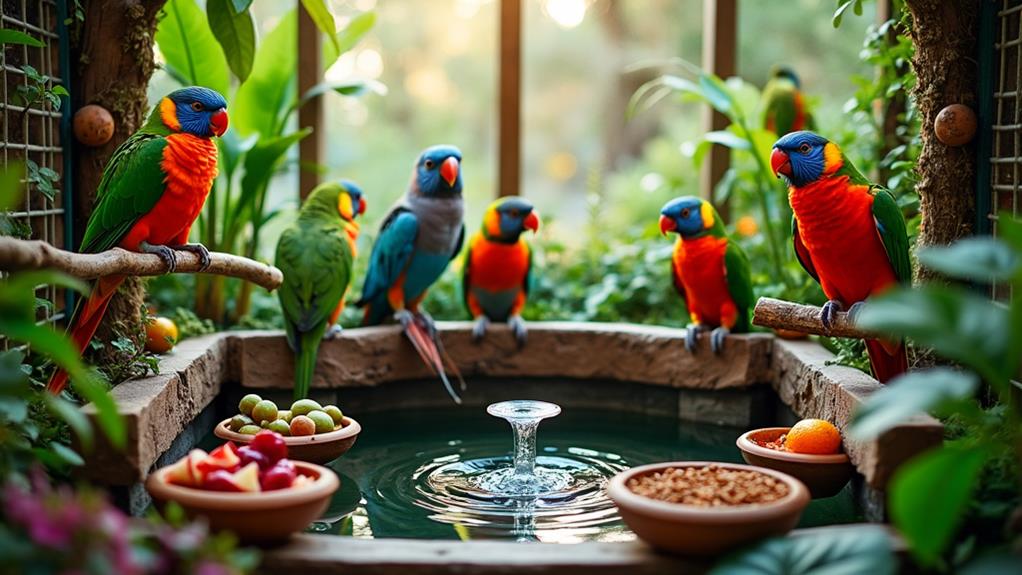
Caring for your pet bird involves more than just providing food and water. You need to guarantee a healthy diet that includes seeds, fresh fruits, vegetables, and pellets while steering clear of toxic foods like avocado and chocolate. Providing a space to call their own is fundamental, which means having a larger cage that offers comfort and room for movement. Remember to engage in regular cleaning of the cage every day to maintain hygiene and prevent health issues.
Pet birds need daily out-of-cage time for socialization and exercise, which are crucial for their well-being. Make certain you understand your bird's specific social needs; some species thrive on interaction and companionship, while others might enjoy solitude. Preventive care is imperative, so routine veterinary check-ups and vaccinations are necessary to keep your bird healthy and extend its lifespan.
Lastly, safe toys can help prevent boredom, guaranteeing your feathered friend is properly cared for. Each bird species has unique needs, so being attentive to these details is key. With the right care, your pet bird can lead a happy and fulfilling life alongside you.
Training Tips
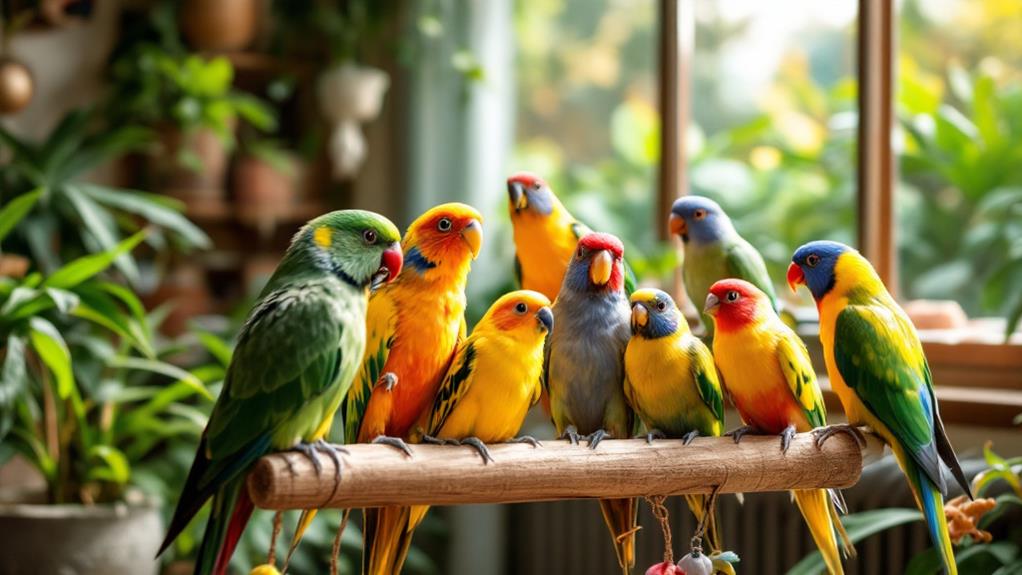
Training your pet bird can be a rewarding experience, both for you and your feathered companion. By using positive reinforcement techniques, like offering treats and praise, you encourage desired behaviors and strengthen the bond with your pet bird. Begin with simple commands such as "step up" and "step down" to lay the groundwork for more advanced communication. These basic commands help engage your bird and provide a solid foundation for future training.
Incorporate short training sessions that last about 5-10 minutes daily. This keeps your bird engaged without overwhelming them, and consistency is key in maintaining their interest. Patience and consistency are crucial as you work through training. If you encounter problem behaviors like biting or excessive screaming, address them with calm redirection to positive activities, reinforcing good habits over time.
Socialize your bird gradually by introducing them to new environments, people, and other birds. This helps reduce stress and increases their adaptability, making them more comfortable in different situations. Remember, training is not just about teaching commands; it's also about bonding with your pet bird. With these training tips, you'll nurture a happier, more well-adjusted feathered friend.
Health Considerations
While bonding with your bird through training is fulfilling, keeping your pet healthy is likewise significant. Regular veterinary check-ups are important for catching potential health issues early. Avian veterinarians specialize in bird care, providing fundamental preventive guidelines. Common problems include feather plucking, often due to stress, and respiratory issues, which need immediate attention. These can be serious, so don't hesitate to seek help if your bird shows symptoms like labored breathing or lethargy.
Obesity is another concern, manageable with a balanced diet and regular exercise. Monitoring your bird's diet is part of long-term health management, which is crucial given the varying lifespans of species like cockatiels and African Grey parrots. Egg binding is a key condition in female birds, requiring prompt veterinary intervention. Keep an eye on breeding behaviors to catch this issue early.
Psittacosis, a bacterial infection, can affect your bird, causing symptoms like lethargy and respiratory distress. Timely veterinary treatment is necessary for recovery. By staying vigilant and proactive, you guarantee that your bird remains healthy and happy, enjoying a long life with you. Regular check-ups and a balanced lifestyle make all the difference.
Enrichment Ideas
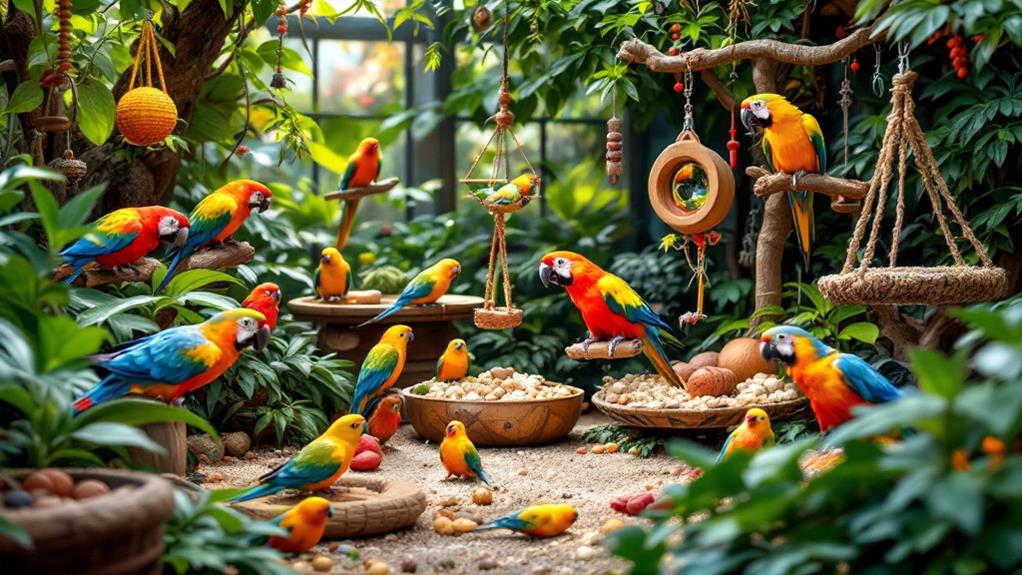
To keep your bird engaged and happy, it's crucial to provide a variety of enrichment activities that cater to their natural instincts. Start by offering an assortment of toys, including chewable wood, ropes, and foraging puzzles. These items can provide both mental stimulation and physical exercise, reducing the risk of boredom. Remember to rotate toys regularly, as birds can lose interest if their environment doesn't change.
Foraging is a great way to stimulate your bird's mind. Hide their favorite treats in toys or simple puzzles, encouraging them to search and work for their food. This not only satisfies their natural foraging instincts but also keeps them mentally sharp.
Incorporate climbing structures and safe perches in your bird's living space. These elements promote physical activity and offer another layer of mental stimulation. They'll love exploring and climbing, which is fantastic for their general health.
Additionally, engage in daily training sessions. Teaching your bird tricks or commands not only enriches their environment but also strengthens the bonding experience with you. Training provides both mental stimulation and a sense of achievement for your feathered friend. By incorporating these activities, you'll guarantee a happier, healthier bird.
Socialization Needs
For birds, socialization needs are as vital as food and shelter. As social creatures, they thrive on companionship and social interaction. Amazon Parrots, for instance, flourish when they can bond with their human companions. They're perfect for individuals or families who have ample time to engage with them. Cockatiels and parakeets are also known for their friendly and affectionate nature. They require moderate social interaction to remain happy and healthy, making regular handling and playtime fundamental.
Regular handling isn't just about keeping your bird tame; it prevents behavioral issues and guarantees mental well-being. Lovebirds, for instance, can become territorial if not properly trained and socialized, underscoring the significance of consistent interaction. Without adequate bonding and mental stimulation, birds like Parrotlets may become bored and exhibit destructive behaviors. This highlights the necessity for regular engagement to keep them content.
Training is also a key element in fulfilling socialization needs. It provides birds with mental stimulation while reinforcing bonds with their human companions. By making time for regular interaction, you guarantee your bird remains a well-adjusted, happy member of your household.
Choosing the Right Bird
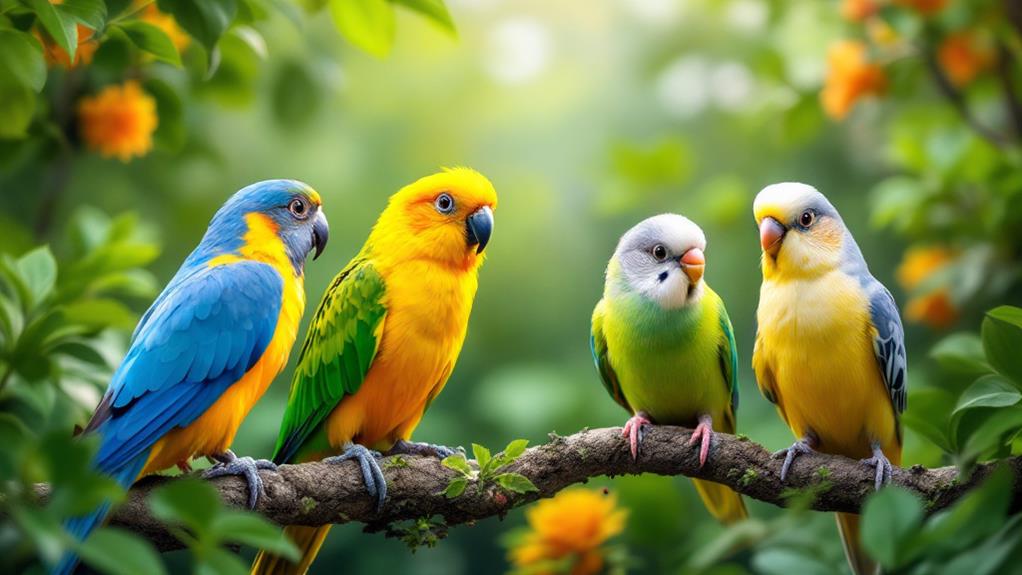
Choosing the right bird as a pet involves several vital considerations to guarantee a harmonious match with your lifestyle. Start by evaluating the species' lifespan. Parakeets and canaries may join your family for about 10 years, while a commitment to cockatiels or lovebirds could extend over 20 years. Assess your willingness and ability to maintain this long-term relationship.
Consider the bird's social needs and your capacity for interaction. Species like Amazon parrots demand ample time and attention, thriving on daily bonding. If your schedule allows for less engagement, smaller species with moderate social needs might be a better fit.
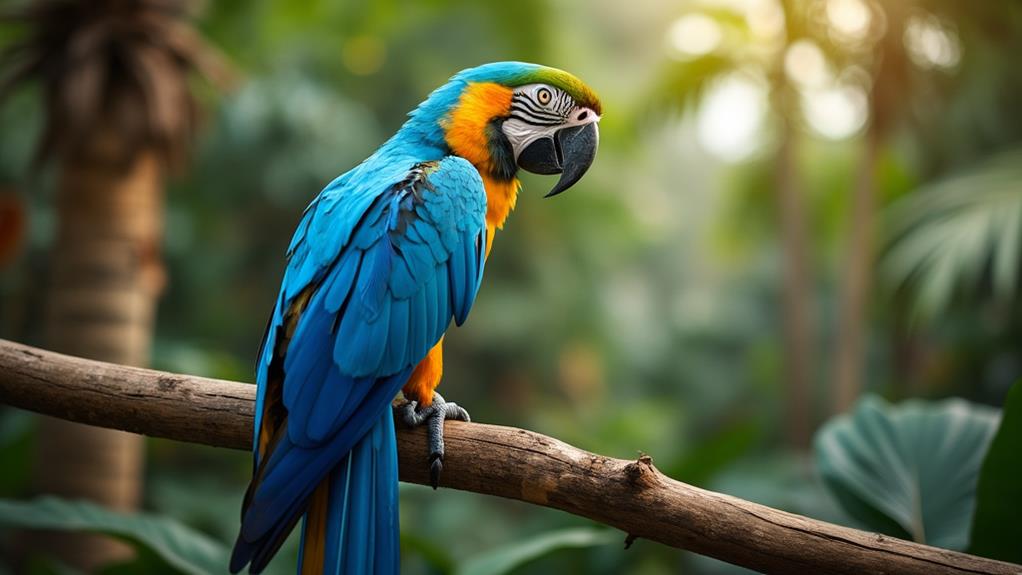
Account for the bird's size and noise level. Larger birds like macaws require more space and can be quite vocal, impacting your living environment. Make certain your home is bird-proofed and have a suitable cage size to accommodate their needs.
Significant Considerations:
- Lifespan & Commitment: Confirm you're ready for the long haul.
- Social Needs & Interaction: Match the bird's needs with your available time.
- Species-Specific Needs: Evaluate size, noise level, and necessary enrichment.