The Largest Dog Breeds: Gentle Giants of the Canine World
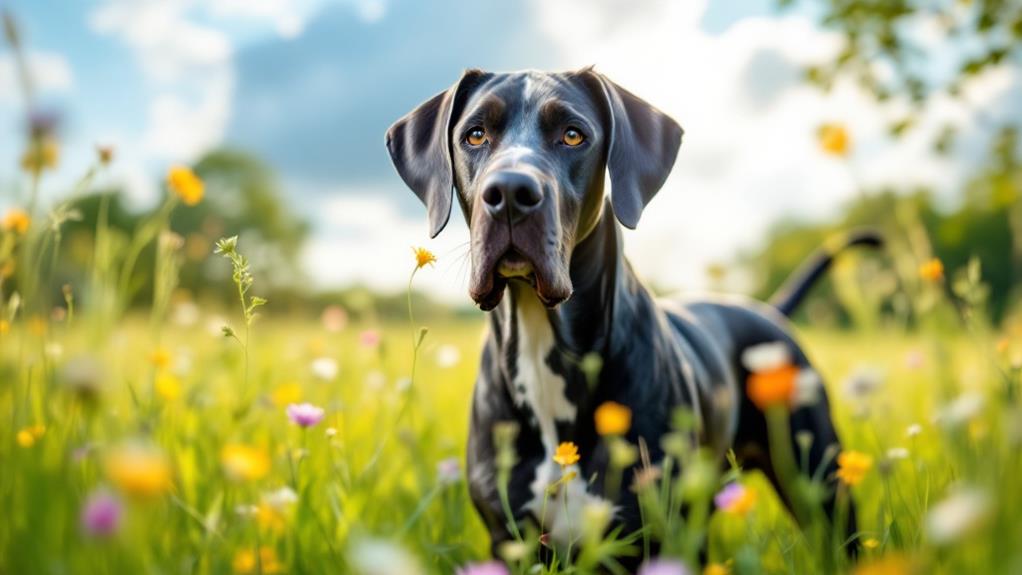
You'll find that some of the largest dog breeds in the world, often called "gentle giants," offer a perfect balance of size and kindness. Dogs like Great Danes, Saint Bernards, and Irish Wolfhounds stand tall, yet their calm and affectionate nature makes them ideal family companions. They usually have protective instincts, which means they're great at keeping families safe. While their grooming needs are often manageable, you'll want to provide regular exercise to keep them healthy. If you're curious to uncover which breed fits your lifestyle and their unique qualities, there's plenty more to investigate on this topic.
Notable Giant Dog Breeds
In regard to notable giant dog breeds, you can't overlook the impressive stature and unique characteristics of these gentle giants. Among the most iconic is the Great Dane, proudly standing as the tallest dog breed. They reach heights up to 34 inches and weigh between 110 to 175 pounds. Despite their intimidating size, Great Danes are affectionately known as "gentle giants" due to their friendly demeanor.
Then, there are the Saint Bernards, weighing in at 110 to 200 pounds and standing 26 to 30 inches tall. With a rich history as rescue dogs in snowy conditions, their gentle nature makes them cherished companions. Irish Wolfhounds, also among the tallest, stand 30 to 34 inches and weigh 90 to 150 pounds. Their calm and affectionate temperament earns them a special place among giant breeds.
You can't forget the English Mastiff, known for being large and powerful. Though not mentioned in the facts, they are another classic example of a gentle giant. While this brief overview highlights some of these magnificent breeds, each one possesses unique characteristics that make them truly special among the giant breeds.
Unique Traits of Gentle Giants
Boasting an impressive combination of size and temperament, gentle giants like the Great Dane and Newfoundland capture hearts with their calm demeanor and affectionate nature. These "big teddy bears" are a joy to have around, especially if you're seeking a loving and reliable family companion. Despite their towering stature, they exude a gentle presence, offering comfort and warmth to those around them.
Many giant breeds, including the Saint Bernard and Irish Wolfhound, possess a strong protective instinct. This makes them excellent companions for families, as they naturally look out for their loved ones. Their size alone can deter potential threats, but their loyalty and dedication to their humans truly set them apart.
One of the standout traits of these breeds is their low grooming needs. Most have short coats, making them more manageable for families who might not have the time for extensive grooming routines. The Newfoundland, in particular, demonstrates its exceptional abilities through its renowned swimming skills, having a history as a water rescue dog. These gentle giants not only offer companionship but also showcase impressive working capabilities, earning them a special place in many hearts.
Care and Maintenance Essentials
Taking care of large dog breeds involves keeping a few key necessities in mind to secure their health and happiness. Regular exercise is fundamental. Daily walks and playtime help prevent obesity and maintain general health. Since large breeds are powerful dogs, training should begin early with consistent, positive reinforcement to manage their size and strength. Without proper guidance, these gentle giants might exhibit boisterous behavior.
Each breed has unique grooming needs. For instance, Newfoundlands and Leonbergers require regular brushing to manage their thick coats and reduce shedding. This keeps their fur healthy and minimizes hair around your home.
Early socialization is crucial. Exposing your dog to different people and animals helps develop well-mannered behaviors. This prevents potential issues and guarantees they feel comfortable in diverse environments.
Veterinary care is another key aspect. Large breeds often face health challenges like hip dysplasia and heart problems. Regular check-ups are important for early detection and management of these issues. Always monitor your dog's health and consult your vet for breed-specific concerns. By prioritizing these aspects, you're setting your large dog up for a healthy and fulfilling life.
Training Strategies for Large Breeds
Training large dog breeds effectively requires a strategic approach that balances firmness with kindness. These gentle giants need consistent training methods, emphasizing positive reinforcement to manage their size and strength. Since large breeds can exhibit boisterous behavior without proper guidance, it's vital to reward good behavior and quickly correct unwanted actions. Positive reinforcement builds trust, encouraging them to repeat desirable behaviors.
Early socialization plays an important role in preventing behavioral issues. Introduce your dog to different environments, people, and other animals early on, helping them grow into well-adjusted and confident companions. This process guarantees they're comfortable around others, reducing the risk of fear-based aggression.
Keep training sessions short and engaging to maintain their attention. Large breeds might struggle with patience during lengthy lessons, so frequent, concise training helps them absorb commands effectively. Establish clear boundaries and commands from the start. Firm yet gentle leadership is necessary to make sure they understand their role in the household, promoting harmony and respect.
Incorporate regular exercise and mental stimulation into their routine. This helps channel their energy positively, enhancing their training and general behavior. A well-exercised, mentally stimulated dog is more likely to follow commands and exhibit good behavior.
Health Concerns and Management
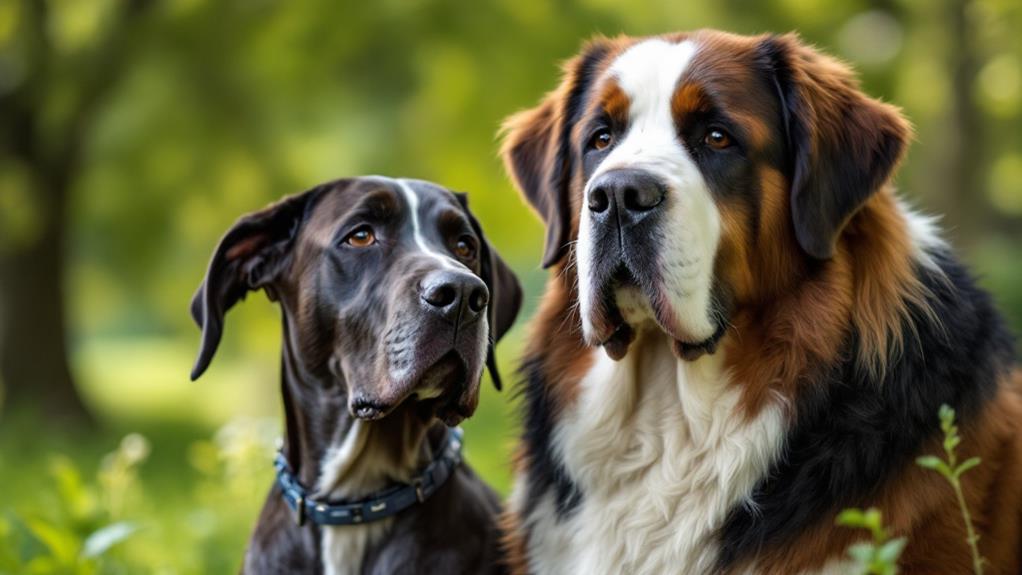
While effective training sets the foundation for a well-behaved large breed dog, managing their health is just as vital. Giant dog breeds face unique health issues like hip dysplasia, bloat, and certain heart conditions. These problems can greatly impact their quality of life, so regular veterinary check-ups are fundamental. Early detection and proactive management can make a big difference in their well-being.
Obesity is a common concern in giant breeds, exacerbating existing health issues and straining their joints. To combat this, guarantee your dog gets regular exercise. However, avoid overexertion by opting for moderate activities that suit their size and energy levels. Tailoring their nutritional needs is just as significant. Choose high-quality dog food formulated to support joint health and manage weight effectively.
Joint health becomes increasingly significant as these dogs grow older. Consider joint supplements to maintain mobility and comfort. Being informed about breed-specific health risks allows you to provide better care and improve their lifespan, which typically ranges from 6 to 12 years. By focusing on these key areas, you can help guarantee your giant breed enjoys a long, healthy, and fulfilling life.
Choosing the Right Breed
How do you know which large dog breed is right for you? The initial step is understanding the temperament and energy levels of the dogs you're considering. Breeds like the Great Dane and Newfoundland are known for their gentle nature and lower exercise needs, making them great companions if you're looking for a calm presence. However, if you're leaning towards a more active breed like the Alaskan Malamute, be prepared for higher energy demands.
Evaluate the space available in your home. Large breeds such as the Irish Wolfhound need ample room to move comfortably, so they may not thrive in smaller living environments. Grooming needs also vary; for example, Saint Bernards and Leonbergers require regular grooming due to their thick coats, while Great Danes have lower grooming requirements.
Training is vital, especially if you're less experienced. Breeds like the Neapolitan Mastiff can benefit from experienced ownership to manage their protective instincts and guarantee proper socialization. Ultimately, consider health risks. Large dogs are prone to issues like hip dysplasia and bloat, so regular veterinary check-ups are important. By considering these factors, you can find the perfect gentle giant to join your family.
Living With a Gentle Giant
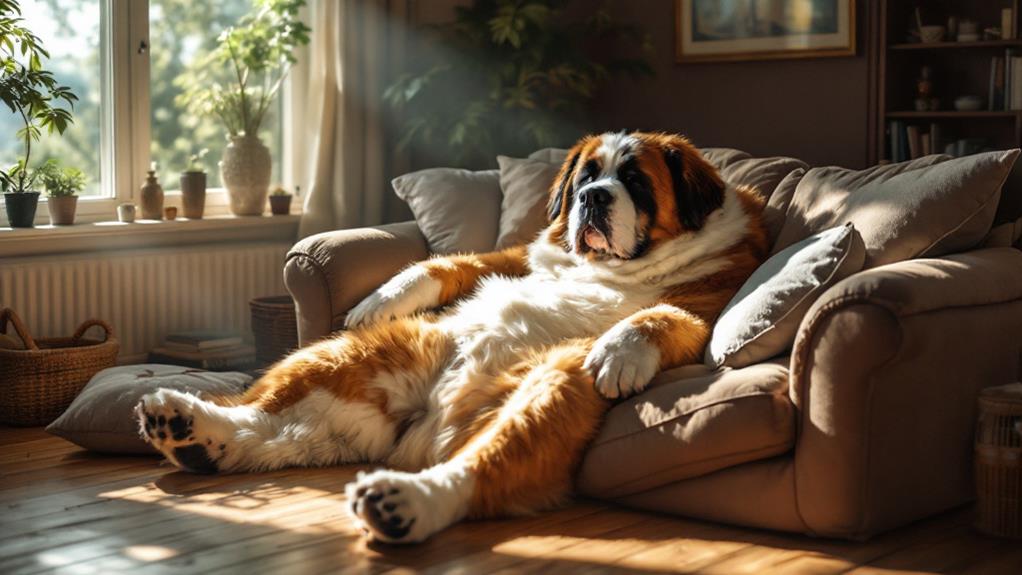
Living with a gentle giant can be a rewarding experience, but it does come with its unique set of challenges and joys. These massive companions like the Mastiff, Great Dane, and Saint Bernard can adapt well to family life, often forming strong bonds with children due to their affectionate nature. Their calm demeanor makes them ideal pets for those seeking a loving and gentle presence in their home.
However, owning a gentle giant means you need ample living space to accommodate their size. Regular exercise is vital to keep them healthy and prevent obesity, so plan for daily walks and playtime. Grooming needs vary, especially for breeds with thick coats like the Newfoundland, requiring consistent brushing to manage shedding.
To guarantee your gentle giant grows into a well-mannered companion, early socialization and positive reinforcement are important. Training helps minimize potential behavioral issues, making them more enjoyable family members. Here's a quick guide to living with gentle giants:
- Space and Exercise: Provide plenty of room and engage in regular exercise.
- Grooming: Maintain their coat with regular brushing.
- Training: Use early socialization and positive reinforcement to shape their behavior.
Embrace these aspects, and you'll find immense joy living with these gentle giants.