
The Importance of Microchipping Dogs and Cats: Why You Should Consider It

Microchipping your dogs and cats is essential because it greatly increases their chances of being reunited with you if they get lost. A microchip, about the size of a grain of rice, contains a unique ID number linked to your contact information in a secure database. This tiny device isn't GPS, but shelters and vets can scan it to find your pet's way back to you. The process is quick, simple, and causes minimal discomfort to your pet. But remember, keeping your details updated is key to its effectiveness. Uncover how microchipping can transform lost pet stories into happy reunions.
Understanding Microchipping
Microchipping your pet is a straightforward way to guarantee their safety and return if they ever get lost. It involves implanting a small electronic microchip, roughly the size of a grain of rice, under your pet's skin, usually between the shoulder blades. This tiny device serves as a permanent form of identification, ensuring that if your pet is found, they can be returned to you quickly. Each microchip contains a unique identification number. When shelters or veterinary clinics scan the microchip, it links to a database containing your pet's information and your contact details.
The procedure is quick, simple, and causes minimal discomfort, often completed during a routine veterinary visit. It's significant to keep in mind that while the microchip itself is a vital step, registering it with your contact information is fundamental. Shockingly, only about 58% of microchipped animals in shelters have their owner's contact information registered. By keeping your details updated, you increase the chances of being reunited with your pet if they ever go missing. Studies have shown that microchipped dogs are 2.5 times more likely, and cats 21.4 times more likely, to be returned to their owners.
How Microchips Work
Understanding how microchips work is fundamental for any pet owner considering this form of identification. A microchip is implanted under your pet's skin, usually between the shoulder blades. This tiny electronic device, about the size of a grain of rice, contains a unique identification number linked to a database. This number is vital because it allows veterinarians and shelters to quickly access your contact information if your pet gets lost.
When a lost pet is found, they are scanned with a universal scanner. This scanner sends a radio signal to the microchip, which then transmits the encoded identification number back to the scanner. It's significant to keep in mind that microchips don't have GPS technology, so they can't track your pet's location. Instead, they're a reliable way to guarantee your pet can be identified and returned to you.
For microchips to work effectively, you need to register them and update your information regularly. Confirming your contact details in the database are current is vital for your pet's safe return. Regular scanning helps verify the microchip is functioning properly and your pet's identification number can be easily accessed when needed.
Benefits of Microchipping
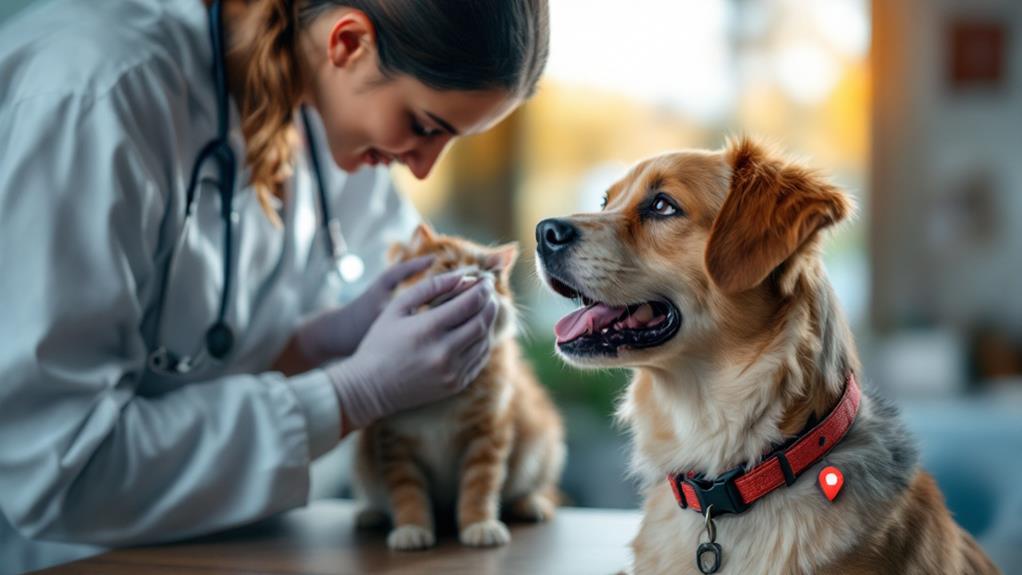
Reassurance comes with knowing that microchipping your pet greatly improves their chances of finding their way back to you if they ever get lost. Microchipped dogs are 2.5 times more likely to be reunited with their owners compared to those without chips. For cats, the benefits of microchipping are even more pronounced. They have a staggering 21.4 times higher return rate from shelters than their non-chipped counterparts. This highlights how vital microchips are in ensuring lost pets find their way home.
The permanent nature of microchips means they stay with your pet even if collars or ID tags go missing. This offers a reliable method of identification that significantly boosts the chances of recovery. Studies show that microchipping increases the likelihood of pets being returned to their guardians by over 238% for dogs and an astounding 2,000% for cats.
Moreover, microchips serve as a voice for your pets. Shelters and veterinarians can quickly access your contact information, facilitating swift reunions. Fundamentally, microchipping is an invaluable tool for pet safety, ensuring that your beloved companions have the best chance of returning to you if they ever wander off.
Registration and Maintenance
While microchips offer a reliable means of reuniting with lost pets, their effectiveness hinges on proper registration and maintenance. It's essential to guarantee that your pet's microchip is registered with a microchip registry, as only 58% of microchipped animals in shelters have registered contact information. This oversight can greatly hinder recovery efforts. Here's a practical approach to guarantee your pet's microchip is working for you:
- Register the Microchip: As soon as your pet receives a microchip, make certain it's registered. This step is important for the microchip to serve its purpose. Without registration, even the most advanced microchip is just a piece of inert technology.
- Update Contact Information: Anytime your contact details change, promptly update the information in the microchip registry. Outdated data can drastically reduce your chances of reuniting with your pet.
- Annual Scanning: Regularly scan the microchip to confirm detection and functionality. This proactive measure helps identify potential issues before your pet goes missing.
Additionally, use tools like the American Animal Hospital Association's universal lookup to verify and update your registration details efficiently. By maintaining up-to-date information, you enhance the chances of a happy reunion should your pet ever get lost.
Safety and Health Considerations

Microchipping your pet is a safe, minimally invasive procedure that involves a quick injection of a chip no larger than a grain of rice. This process causes minimal discomfort and provides your pet with permanent identification. Microchipped animals have a considerable higher chance of being returned to you if they ever get lost. Studies show that microchipped dogs have a return rate of 52%, compared to just 22% for those without microchips.
Adverse reactions, such as chip migration or infection, are rare, making this a reliable identification method. However, for the system to work efficiently, you need to maintain up-to-date contact information with the microchip database. Over 40% of microchipped animals in shelters have chips that don't work efficiently because of outdated information. Regularly scanning your pet's microchip guarantees that it's functioning correctly, as technology in shelters and clinics is continually improving.
Real-Life Success Stories
Countless real-life success stories highlight the incredible impact microchipping can have on reuniting pets with their owners. Imagine losing your beloved pet, only to have them returned safely after traveling thousands of miles. Take Spice the cat, for example, who was found and returned to her owner after being 2,300 miles away, all thanks to her microchip. This story illustrates the immense potential microchipping has for recovering lost pets, even over long distances.
Consider the following compelling statistics:
- Microchipped dogs have a 52% return rate from shelters, in stark contrast to the 22% return rate for non-microchipped dogs.
- Cats with microchips are 20 times more likely to be returned to their owners than those without chips.
- Hundreds of pets have been successfully reunited with their guardians due to microchips, underscoring their crucial role in lost pet recovery efforts.
Shelters frequently share success stories of pets being microchipped and returned to their owners, reinforcing the importance of this simple yet powerful tool. As you consider microchipping, remember these inspiring tales and the peace of mind it can bring, knowing your pet stands a better chance of coming home.