The Importance of Getting Your Cat Neutered: Health and Behavioral Benefits

Neutering your cat is vital for their health and behavior. It can extend their lifespan by up to 62% compared to unaltered cats. By eliminating the risk of testicular and ovarian cancers, you'll guarantee a healthier life for your pet. Behaviorally, neutered cats are calmer and less aggressive, reducing the urge to roam or spray urine. These changes make them more affectionate and easier companions. Furthermore, neutering helps fight pet overpopulation while saving you from costly vet bills. Considering these benefits, it's clear there's much more to uncover about this fundamental aspect of cat care.
Extended Lifespan Benefits
Neutering your cat can greatly extend its lifespan, offering numerous health benefits that contribute to a longer, healthier life. For neutered male cats, the numbers are impressive: they live about 62% longer than their unaltered peers. This increase in life expectancy is largely due to a reduction in health risks. Neutering reduces the chance of developing serious issues like testicular tumors and prostate disease, which are common in unaltered males.
Similarly, spaying female cats before their initial heat cycle can considerably impact their longevity by lowering health risks. While the primary focus here isn't cancer reduction, it's clear that spaying plays an essential role in extending their lifespan by mitigating other health complications and behavioral problems.
Moreover, altered cats, both male and female, tend to roam less, leading to fewer accidents and injuries. This reduction in roaming behaviors not only decreases the chance of encountering dangers like car accidents but also means fewer fights with other animals, which can lead to infections and other health issues. By choosing to neuter or spay your cat, you're actively contributing to their extended lifespan and general well-being.
Cancer Risk Reduction
When you choose to neuter your cat, you're taking a proactive step in reducing their risk of cancer. Neutered cats enjoy significant cancer risk reduction, enhancing their overall health and longevity. For male cats, neutering completely eliminates the risk of testicular cancer. This simple procedure also substantially lowers the chances of developing prostate-related diseases, offering a healthier life free from these potential threats.
For female cats, the benefits of being spayed extend beyond immediate reproductive health. Spaying before the initial heat cycle remarkably lowers the risk of mammary tumors by up to 91%. Additionally, this procedure removes the risk of ovarian cancer entirely. Here's a concise breakdown of the advantages:
- Testicular Cancer Elimination: Neutering male cats completely prevents testicular cancer.
- Mammary Tumor Reduction: Spaying female cats early can reduce the risk of mammary tumors by up to 91%.
- Ovarian Cancer Prevention: Spaying eradicates the risk of ovarian cancer in female cats.
Prevention of Reproductive Diseases

Opting to neuter your cat isn't just about controlling the pet population; it plays a vital role in preventing reproductive diseases. When you decide to have your male cat neutered, you eliminate the risk of testicular cancer and markedly reduce the chances of prostate disease. This proactive step promotes general health and contributes to a longer, healthier life for your pet. Neutering helps avoid hormone-related health issues, which can lead to a variety of complications if left unchecked.
For female cats, spaying before their initial heat cycle is imperative. It drastically decreases the risk of developing ovarian and uterine cancers, which are prevalent in intact females. Furthermore, spaying your female cat markedly reduces the incidence of serious uterine infections like pyometra. These infections can be life-threatening and often require costly emergency treatment, something every cat owner would prefer to avoid.
Choosing spaying or neutering not only benefits your cat's health but also contributes to reducing the number of unwanted animals. Studies show spayed female cats live 39% longer than their unspayed counterparts, further emphasizing the significance of sterilization. By preventing reproductive diseases, you guarantee your cat enjoys a longer, healthier life.
Behavioral Improvements in Cats
Enhancing your cat's behavior is one of the significant benefits of neutering. Once neutered, males often exhibit a notable decrease in aggressive tendencies. This means fewer fights and territorial disputes, which studies show can be reduced by as much as 85%. You'll likely notice that your feline friend becomes calmer and more affectionate, transforming into a better pet for your household.
Neutering also curtails the undesirable behavior of roaming. About 90% of neutered males lose the urge to seek mates, resulting in less wandering and a lower risk of accidents or injuries. This change not only keeps your cat safer but also eases your worry about their whereabouts.
Additionally, neutering helps with urine marking, a common issue among intact males. With about 85% of marking problems resolved post-neutering, you'll enjoy a cleaner home environment and improved satisfaction as a cat owner. Here are the key behavioral benefits:
- Reduced Aggression: Neutered males are less likely to engage in fights.
- Decreased Roaming: They exhibit reduced urges to roam, enhancing safety.
- Improved Cleanliness: Less urine marking leads to a tidier home.
These improvements in cat behavior foster a stronger bond between you and your pet.
Financial Advantages of Neutering

While the initial cost of neutering might seem like an extra expense, it actually leads to substantial financial benefits over time. Neutered pets are less likely to develop reproductive cancers and conditions like pyometra, which can be financially burdensome. Treating these serious health issues can cost five to ten times more than the initial spay or neuter surgery. By opting for this preventive measure, you're safeguarding your wallet against long-term medical expenses.
Furthermore, spaying or neutering your cat helps you avoid costs associated with unexpected litters. The expenses for veterinary care, food, and supplies for supplementary kittens can quickly accumulate, creating a financial burden. By choosing to neuter, you not only prevent these costs but also contribute to reducing the financial strain on local animal control and shelter services. These services often face high costs for capturing and euthanizing stray animals, a burden that can be alleviated by responsible pet ownership.
Moreover, neutered pets are less prone to engage in risky behaviors that might lead to injuries or fights, resulting in lower veterinary bills. Many shelters and clinics offer low-cost programs, making the procedure affordable and accessible, especially for low-income pet owners.
Impact on Pet Overpopulation
Addressing the financial benefits of neutering naturally leads to another significant advantage: mitigating pet overpopulation. The overpopulation crisis is dire, with millions of animals entering U.S. shelters annually. Unaltered pets, especially cats, contribute substantially to this issue. By spaying and neutering, you directly impact the reduction of stray populations, as unaltered cats can reproduce multiple times a year, causing an exponential increase in numbers. Consider these points:
- Shelter Impact: Approximately 3.4 million cats enter shelters each year, and many face euthanasia due to the lack of available homes. By ensuring your cat is neutered, you help reduce this overwhelming influx.
- Breeding Control: Neutered pets don't contribute to uncontrolled breeding, making it an essential step in addressing pet overpopulation. This action lessens the number of unwanted litters and ultimately decreases the population of homeless animals.
- Community Benefits: Communities experience fewer stray animals and decreased public health risks when pet overpopulation is managed. The benefits of spaying extend beyond individual pet health to improve general community well-being.
Your commitment to neutering not only helps your pet but also plays a significant role in solving the broader issue of pet overpopulation.
Community Health Benefits

Spaying and neutering cats offer significant community health benefits by reducing the number of stray animals, which in turn lowers public health risks like rabies and other diseases. By getting your cat spayed or neutered, you're playing a vital role in promoting community welfare. Fewer stray animals mean a decrease in the spread of diseases that can affect both humans and pets. Public health is greatly improved when the risk of disease transmission from stray animals is minimized, making neighborhoods safer and more pleasant places to live.
Communities spend millions annually on managing stray animals through capture and euthanasia. As a responsible pet owner, when you spay or neuter your cat, you're helping to alleviate these financial burdens on local resources. Furthermore, reducing the stray population leads to improved community cleanliness. Fewer unaltered cats mean fewer nuisances like noise, waste, and property damage—contributing to a more harmonious living environment.
Ultimately, spaying and neutering help create safer neighborhoods by reducing incidents related to stray animal behaviors. Responsible pet ownership through these actions not only benefits your pet but also fosters a healthier, more cohesive community for everyone involved.
Post-Procedure Care Tips
Looking after your cat post-neutering is vital to guarantee a smooth recovery. Your primary role is to monitor their behavior and the incision site closely. Here's what you should focus on:
- Monitor for Complications: Watch for signs of excessive swelling or bleeding at the incision site. These can signal complications that might require a vet's attention. It's important to catch these early to prevent infections or further health issues.
- Prevent Licking and Infection: Cats often try to lick their wounds, risking infection. Consider using an Elizabethan collar to keep them from accessing the incision site. This simple tool can make a significant difference in ensuring the healing process isn't compromised.
- Create a Safe Environment: Keep your cat indoors for at least 10-14 days post-surgery. This reduces the risk of engaging in strenuous activities or jumping, which might strain the healing incisions. Provide a quiet, cozy space with access to fresh water where they can rest and recover comfortably.
Following your vet's instructions on pain management and any prescribed medications will aid in your cat's healing process, ensuring their comfort and well-being during this vital post-surgery phase.
Optimal Neutering Timing
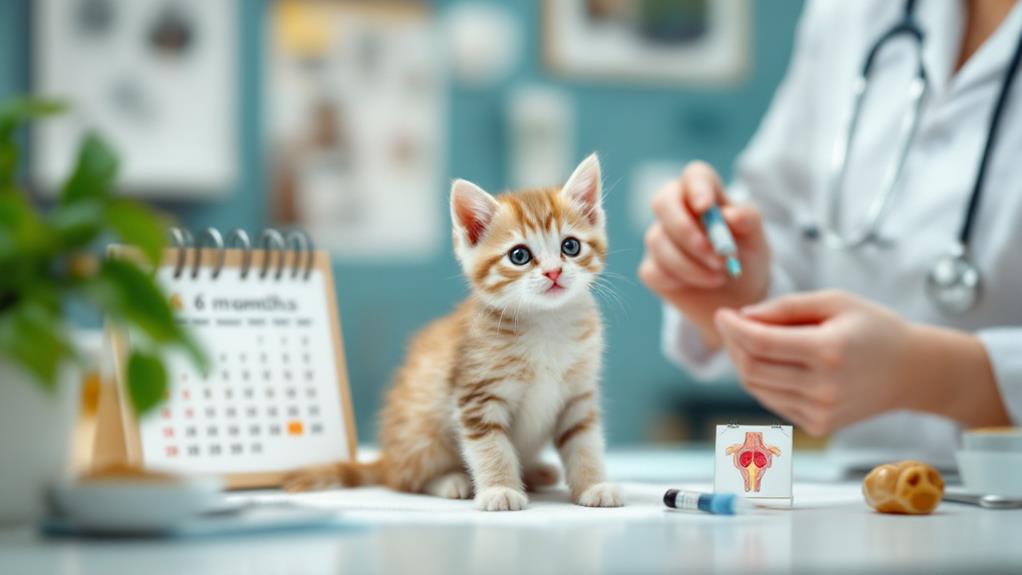
Timing is vital regarding neutering male cats. Choosing the best time for this procedure can make a world of difference for your feline friend. Typically, the prime moment to neuter a male cat is around 4 to 6 months old. At this point, you'll prevent the onset of undesirable sexual behaviors and reduce the risk of roaming. By neutering before sexual maturity, you greatly lower the chances of your cat developing aggressive behaviors, which are common in intact males prone to fighting and marking their territory.
Early neutering not only helps curb these behaviors but also reduces the likelihood of health issues associated with roaming, such as accidents and injuries. Delaying the procedure can increase the risk of reinforcing unwanted behaviors like excessive vocalization and territorial marking, making them more challenging to address as your cat matures.
Moreover, studies show that neutering at a younger time contributes to a more stable temperament. This stable temperament improves the bond between you and your cat, leading to a more harmonious household. By choosing the right moment for neutering, you're setting the stage for a healthier, happier relationship with your cat.