The History and Evolution of Domestic Cats: From Wild to Feline Friends
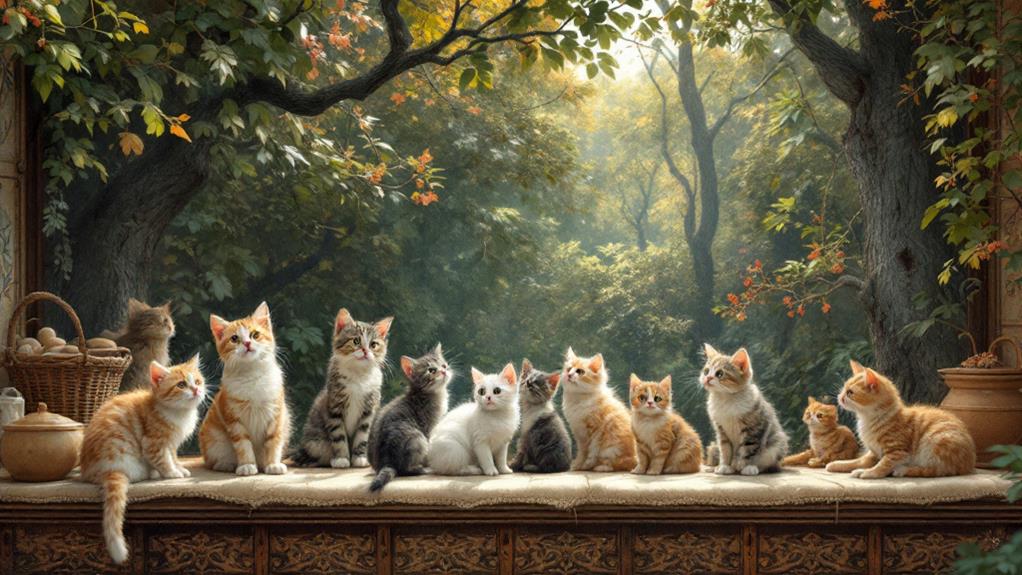
You might be surprised to learn how domestic cats' expedition began over 12,000 years ago with African wildcats. They adapted to human settlements, drawn by rodents near stored grains. As agriculture boomed, so did cats' roles, spreading globally with humans. Over the past few decades, urban living moved them indoors, facilitated by innovations like kitty litter. Cats have also enjoyed better diets thanks to canned food and benefit from spaying and neutering introduced in the 1930s. Their cultural impact is immense, from Egyptian deities to modern-day pets. Uncover how these small predators became cherished members of human households.
Origins of Domestic Cats
The domestic cat's fascinating history traces back to its ancestor, the African wildcat, which began adapting to human settlements in the Near East around 12,000 years ago. As agricultural communities grew, these wildcats found a new niche by preying on rodents attracted to stored grains. This mutual relationship benefited both humans and cats, as fewer rodents meant better food security for people, and a steady food supply for cats.
Archaeological evidence, such as the 9,500-year-old cat burial in Cyprus, shows that humans valued their feline companions long before the formal domestication event. This coexistence marked the beginning of a unique bond, supported by genetic studies indicating all domestic cats share a common ancestry from a single domestication event involving the African wildcat, Felis silvestris lybica. The genetic variation among breeds remains minimal, highlighting this common heritage.
Cats spread across the globe as they accompanied humans on trade routes, establishing themselves in diverse regions, including Europe and Asia, around 2,000 years ago. This expansion illustrates how domestic cats, thanks to their adaptable nature, became an integral part of human life worldwide.
Transition to Indoor Living
Urbanization and lifestyle changes have redefined the way domestic cats live, marking a significant shift to indoor environments over the past 60-70 years. As cities grew and lifestyles evolved, the relationship between humans and cats adapted to these new surroundings. Domestic cats evolved to becoming indoor-only pets, aligning with a modern lifestyle that values convenience and companionship.
This change was supported by innovations like refrigeration and kitty litter, making it easier to care for cats indoors. Spaying and neutering, which became more accessible in the 1930s, played an important role in managing cat populations, further encouraging the shift to indoor living. As a result, indoor-only cats have become a common part of urban life, living healthier lives with fewer risks from outdoor hazards.
However, even as indoor pets, domestic cats still retain natural instincts from their wild ancestors, such as hunting and territorial behaviors. To guarantee they lead healthy lives, it's vital to provide regular exercise and mental stimulation. Understanding these needs allows you to build a strong, fulfilling relationship with your feline friend while adapting to the demands of modern urban living.
Evolution of Cat Nutrition
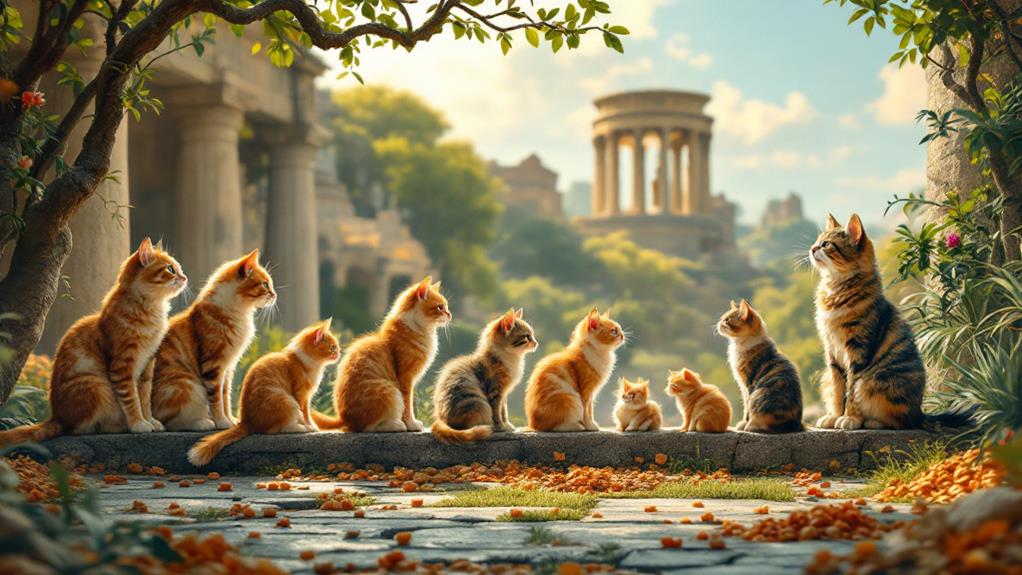
Many factors have shaped the evolution of cat nutrition, reflecting their origins as obligate carnivores. Thousands of years ago, the relationship between humans and cats began when Ancient Egyptians noticed cats hunting rodents, sparking a mutually beneficial partnership. Despite this bond, early humans struggled to meet the dietary requirements of their feline companions, as fresh meat was a costly and limited food source.
Before the 20th century, feeding indoor cats proved challenging. Without refrigeration, fresh meat wasn't always accessible, and indoor cats often received less nutritious alternatives. This changed with the introduction of canned cat food, which transformed cat nutrition by offering a convenient, balanced diet that aligned with their need for high-protein meals. Unlike dogs, which have adapted to a more varied diet, cats retain their ancestral hunting instincts and require meat-based nutrition to thrive.
It's essential to keep in mind that overindulgence can lead to obesity in cats. Monitor their portion sizes and encourage regular play to maintain their health. As you continue to care for your feline friends, understanding their unique dietary needs helps guarantee they live healthy, active lives.
Role of Spaying and Neutering
As you care for your cat's nutrition, it's also vital to contemplate their extensive well-being, which includes spaying and neutering. These procedures have played an important role in managing cat populations since the 1930s, markedly reducing unwanted litters. By spaying and neutering your cat, you contribute to the control of feral cat numbers and support community cat management initiatives like TNR (trap-neuter-return). These programs not only stabilize feral populations but also improve their quality of life.
Spaying and neutering offer numerous health benefits, such as preventing uterine infections and certain cancers in females, and eliminating the risk of testicular cancer in males. This promotes general feline health and longevity. Additionally, neutered males are less prone to territorial behaviors and aggression, making them calmer and more sociable companions.
On a wider scale, spaying and neutering greatly impact animal welfare by reducing the number of cats entering shelters. This decrease helps reduce euthanasia rates and eases the burden on animal welfare organizations. By considering these procedures, you're actively participating in enhancing your cat's life and supporting the well-being of the larger feline community.
Cultural Impact of Cats
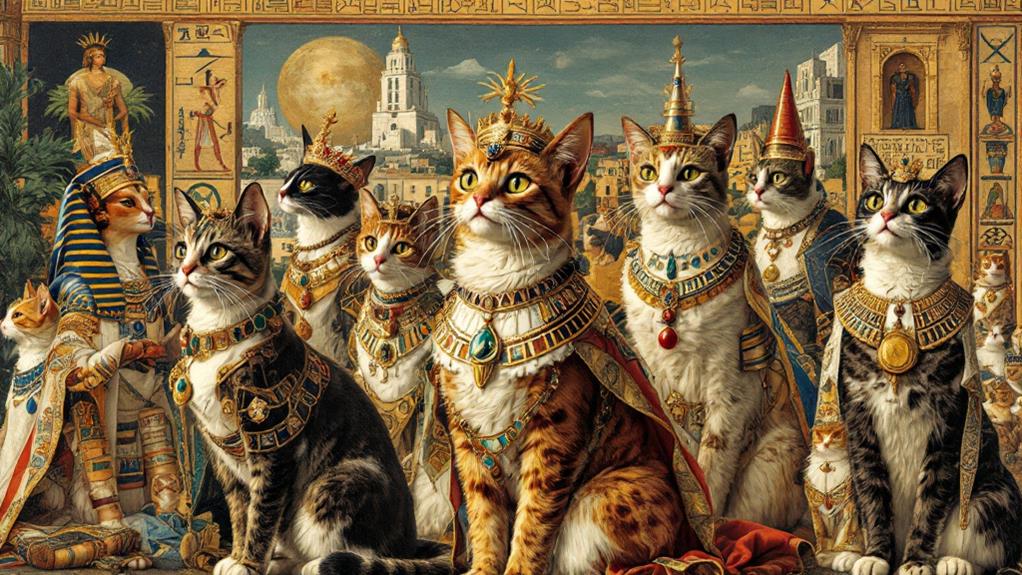
Few animals have woven themselves into the tapestry of human culture as intricately as cats. In ancient Egypt, cats were revered as sacred animals, linked to the goddess Bastet and symbolizing fertility and domesticity. This cultural significance led to their mummification and burial with families over 2,900 years ago. Cats and humans shared a profound connection that extended beyond Egypt. In India and China, feline deities were worshipped, though Europe saw a shift in perception during the 14th century with negative associations.
Today, cats are celebrated globally as one of the most popular pets, with over 600 million living alongside humans. In the United States alone, one-third of households own at least one cat. This enduring companionship began with their role in pest control, particularly on ships during the Roman Empire, where they protected grain vessels from rodents.
Cats have also left an indelible mark on art, literature, and folklore. From ancient sculptures and paintings to modern media, their influence is undeniable. This rich history illustrates the profound cultural impact cats have had, shaping human societies and inspiring countless artistic expressions.
Differences From Wildcats
While cats have left a significant cultural imprint, their evolution from wild ancestors highlights intriguing differences. Over the years, domestic cats have diverged considerably from wildcats in several aspects. Domestic cats, or Felis catus, are generally smaller and exhibit reduced survival instincts, evident in their smaller brain size relative to body size. This shift reflects their long-standing relationship with people, which has lessened their need for the acute survival skills their wild counterparts possess.
Gene mutations play a key role in this evolution. Unlike wildcats, domestic cats tend to be calmer and more approachable due to these genetic changes. Aggression, once an essential trait for survival in the wild, has been softened, allowing domestic cats to thrive in human environments. This behavioral evolution supports their social behaviors, enabling them to live harmoniously with humans and even respond to training through positive reinforcement.
Furthermore, domestic cats have developed a variety of coat colors and patterns, a departure from the wildcats' camouflage-dependent survival adaptations. Despite these changes, they retain some ancestral instincts, like drinking from faucets, illustrating their evolutionary progression. These differences underscore the unique path domestic cats have taken over the years.