
The Dog Breeding Process: Understanding the Science Behind It

You're about to investigate the intricate dog breeding process, where selecting the right pairs guarantees healthier offspring by balancing genetic diversity and desirable traits. Pedigree analysis reveals lineage insights, helping to prevent disorders. Thorough health and temperament checks are essential, identifying breed-specific issues. Understanding genetics fosters breed viability, while different mating techniques improve outcomes. Carefully manage pregnancy and whelping to support the puppies' development. Post-birth, monitor puppies' environment and diet closely. Proper registration documents maintain breed standards and integrity. With continuous education, breeders can stay informed on advances and best practices. This glimpse leads to deeper canine lineage strategies.
Selecting Breeding Pairs
When selecting breeding pairs, you'll need to examine each dog's pedigree to spot any genetic issues and desirable traits for future generations. This careful scrutiny is a cornerstone of selective breeding practices, guaranteeing that you prioritize both health and temperament. By understanding breed-specific genetic problems, like hip dysplasia in Labradors or deafness in Dalmatians, you can make informed decisions that improve the well-being of future puppies.
Balancing genetic diversity with desired traits is vital; close breeding might increase certain favorable characteristics but also heightens the risk of genetic disorders. As a result, it is important to maintain a diverse gene pool to prevent such issues. Genomic selection tools can be particularly useful in this process. By directly targeting specific genes, these tools offer a more accurate prediction of offspring traits than merely relying on phenotypic evaluations or pedigree data alone.
Engage with breed-specific resources and communities to refine your understanding of best practices. These networks are invaluable for insights into achieving your breeding goals while maintaining a healthy lineage. By doing so, you guarantee your breeding decisions align with the highest standards of health and performance for future generations.
Pedigree and Genetic Analysis
Pedigree and genetic analysis are vital tools in the dog breeding process, providing a roadmap to understand the lineage and genetic health of potential breeding pairs. By examining the pedigrees of the dogs, you can identify genetic strengths and weaknesses, guaranteeing they align with your breeding goals. This process helps you make informed decisions about which dogs to pair, maximizing the chances of producing healthy puppies with desirable traits.
When analyzing pedigrees, pay attention to the frequency of ancestor appearances. This can signal the risk of inbreeding, which often leads to genetic disorders and reduced genetic diversity. Inbreeding increases the likelihood of homozygous gene pairs, perpetuating breed-specific health issues. On the other hand, diverse pedigrees promote heterozygous gene pairs, enhancing genetic diversity and variation within the breed.
Understanding the inheritance patterns of genetic problems common to a breed is fundamental. This knowledge enables you to select mating pairs based on genetic compatibility rather than just physical appearance. By doing so, you improve the overall wellness of the breed and guarantee more consistent litters. Ultimately, leveraging pedigree and genetic analysis allows you to breed dogs that not only look good but are healthier and more resilient.
Health and Temperament Checks
Why are health and temperament checks important in the dog breeding process? These checks guarantee that both parent dogs are in top condition, directly impacting the well-being of their puppies. Begin with thorough health checks, including veterinary examinations and genetic screenings, to spot any inherited disorders. For instance, Labrador retrievers often face hip dysplasia, while Dalmatians might be prone to deafness. Identifying these issues early helps you make informed decisions about breeding.
Vaccinations are another fundamental part of health checks, making sure both parents are protected against diseases before breeding. Temperament assessments are similarly important, as they allow you to evaluate behavioral traits such as friendliness and trainability. These traits are key to raising well-adjusted puppies that suit family environments.
Inbreeding poses significant health risks, so maintaining genetic diversity within your breeding stock is fundamental. By carefully selecting mates, you can mitigate these risks while promoting desirable traits. Monitoring the health and temperament of your breeding pair not only benefits the puppies but also supports long-term breed health. By prioritizing these checks, you're guaranteeing the best possible outcomes for both the parents and their future litters.
Understanding Genetic Diversity
In the domain of dog breeding, understanding genetic diversity is fundamental for maintaining the health and viability of breeds. Selective breeding practices often focus on specific traits, leading to closed populations with limited genetic mixing. This can heighten the risk of genetic disorders and breed-specific health problems. By recognizing the significance of genetic diversity, you can work towards healthier breed populations. Domestic dogs boast higher genetic diversity than their wild ancestors, thanks to relaxed natural selection and human-directed breeding.
Consider these key points:
- Genetic Structure: Purebred dogs have concentrated gene pools, making it vital to manage their genetic makeup to avoid health issues.
- Mitochondrial DNA Studies: These studies offer insights into evolutionary history and genetic relationships among breeds, helping you understand their origins.
- Closed Populations: Lack of genetic diversity in closed breeding populations can lead to heightened susceptibility to certain disorders.
- Trait Selection: Selective breeding for specific traits can inadvertently increase the risk of breed-specific health problems.
Breeding Techniques and Strategies
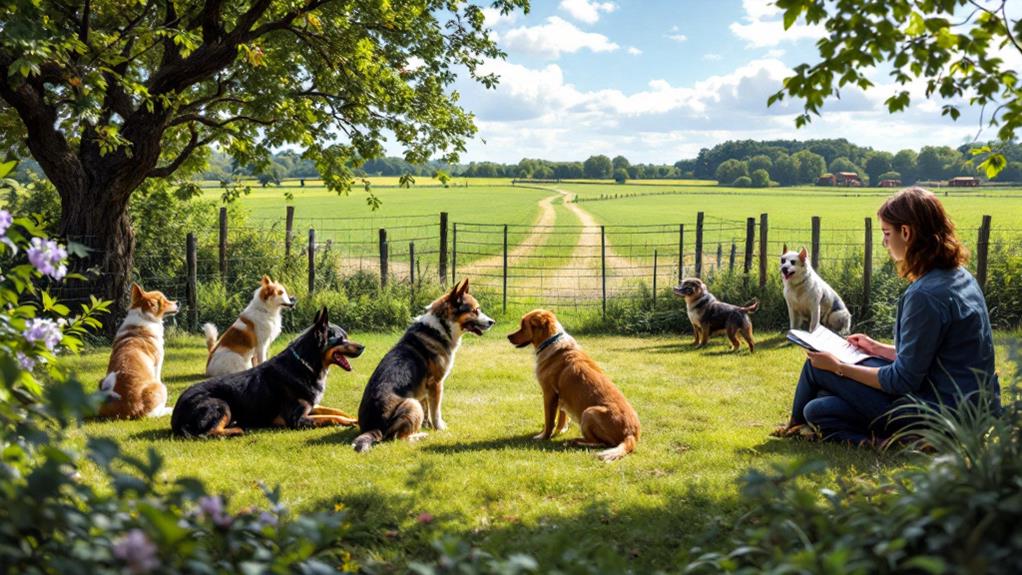
Exploring different breeding techniques and strategies is fundamental for any responsible dog breeder aiming to produce healthy and well-tempered dogs. When you immerse yourself in the world of breeding, understanding both natural mating and artificial insemination is key. Natural mating typically occurs best between the 10th and 14th day of proestrus. However, artificial insemination opens doors to using fresh, extended, or even frozen semen when natural mating isn't feasible. This flexibility can be a game-changer for dog breeders.
Genetic knowledge plays a significant role in the selection process. By evaluating the inheritance patterns of breed-specific genetic issues, you can select mating pairs that improve the health and temperament of future litters. Close breeding helps retain desirable traits, while outcrossing introduces new genetic material, enhancing quality and health.
The use of genomic selection tools further refines this process. These tools help you make informed decisions by analyzing specific genes related to traits, improving predictability, and reducing the risk of latent disorders. Ultimately, effective breeding strategies require a long-term vision that balances consistency in traits with introducing genetic diversity, ensuring the health of future generations.
Managing Pregnancy and Whelping
Effectively managing pregnancy and whelping is a crucial responsibility for any dog breeder. You need to understand that canine gestation lasts about 63 days. During this period, you'll notice signs like increased appetite, weight gain, and behavioral changes in the dog. It's essential to confirm the pregnancy with a vet or through an ultrasound to rule out false pregnancies that can mimic these signs. As the whelping date approaches, prepare a comfortable whelping box. It should be warm, dry, quiet, and away from other dogs. Make sure it has low sides so the mother can easily access it.
- Confirm pregnancy with a vet to avoid false alarms.
- Create a comfortable whelping box away from disturbances.
- Monitor the puppies' environment to maintain the right temperature.
- Increase the mother's food intake after whelping for her recovery.
After whelping, puppies need a warm environment, ideally 85-90°F initially, gradually reducing to 75°F by week four. You'll also need to increase the mother's food intake considerably for three weeks post-whelping. This supports her nursing and recovery as caring for a litter is demanding. Effectively managing these aspects guarantees a smooth dog breeding process and healthy puppies.
Puppy Care Essentials

Caring for newborn puppies requires attention to several key aspects that guarantee their healthy development. Initially, keep the puppies in a warm environment, maintaining a temperature of 85-90°F during their initial five days, and gradually reduce it to 75°F by week four. This helps secure their health and comfort. One critical step is verifying puppies ingest colostrum from their mother within the initial 24 hours post-birth. Colostrum is rich in vital antibodies that bolster their immunity, providing a strong start in life.
While the puppies are nursing, closely monitor the mother for signs of canine mastitis, such as redness or pain in her mammary glands. This condition can affect her ability to nurse effectively and impact the well-being of the puppies. To support her increased nutritional demands while nursing, increase the mother's food intake considerably for the initial three weeks post-whelping.
Weaning the puppies typically begins between 2-4 weeks of maturity. Start with a mixture of puppy formula or gruel, gradually introducing solid food. This approach guarantees a smooth changeover and prevents digestive issues. Proper nutrition and care during this phase lay the foundation for healthy, thriving puppies.
Registering and Documentation
When it relates to the responsible breeding of dogs, registering your litter is a crucial step that guarantees the integrity and transparency of your breeding program. By registering with organizations like the American Kennel Club (AKC), you create a historical record of your breeding dogs, which offers many benefits. This registration process isn't just about paperwork; it's about maintaining breed standards and assuring genetic diversity.
To register your litter, you'll need to submit a registration application at the time of sale. It can be done online or through a paper application, reflecting your commitment to responsible breeding practices. For litters produced through artificial insemination, DNA certification is vital to confirm the integrity of the breeding lineage. This process helps in tracking health issues and maintaining genetic diversity within your breed.
Providing new owners with vaccination records and health guarantees at the time of registration fosters trust and transparency. Here are key elements to keep in mind:
- Registration with AKC creates a historical record.
- DNA certification confirms lineage integrity.
- Genetic diversity is tracked through responsible breeding.
- Health guarantees build trust with new owners.
These steps highlight the importance of documenting your breeding efforts responsibly.
Ongoing Breeder Education

Engaging in ongoing education is vital for dog breeders who want to stay informed and improve their practices. By staying updated on advancements in genetics, you can greatly improve the health and quality of your future litters. You should regularly read breed-specific literature like the "Complete Dog Book" and "AKC Dog Care and Training" to deepen your understanding of breeding standards and genetic considerations.
Attending dog events and interacting with experienced breeders is also invaluable. Networking provides the opportunity to exchange insights and best practices, helping you build a supportive community of breeders dedicated to excellence. Moreover, resources from organizations like the Institute of Canine Biology (ICB) offer programs such as the COI BootCamp. These can help you grasp and implement genomic selection, which is vital for making informed breeding decisions.
To stay ahead of emerging health issues and genetic disorders, involve yourself in research articles and consult with veterinarians regularly. This continuous learning approach guarantees you can adapt your practices to address specific health challenges within breeds. By prioritizing ongoing education, you'll be better equipped to uphold high breeding standards and contribute positively to the canine community.