
The Cane Corso Italiano: Discover Italy’s Beloved Dog Breed

You'll find the Cane Corso Italiano is a magnificent breed, celebrated for its guardianship heritage and impressive physical traits. Originating from Roman war dogs, they're known for their strong build, broad chest, and loyal nature. With a balanced temperament, they make excellent watchdogs, but they require consistent training and early socialization. Regular exercise and grooming are crucial to keep them healthy and happy. Be prepared for potential health issues like hip dysplasia and bloat, ensuring they receive proper veterinary care. Their protective instincts may not suit all households, but with commitment, you'll gain a devoted companion. Uncover more about this fascinating breed.
Origin and Historical Background
The Cane Corso, with its roots deep in Italian history, descends from Roman war dogs known as canis pugnaces. These formidable ancestors were bred for roles like hunting and guarding, showcasing their strength and loyalty. The breed's name, derived from the Italian "cane" meaning dog and the Latin "cohors" for guardian, reflects their protective nature. As you investigate the origins of the Cane Corso, you'll see how this connection to Roman war dogs has shaped the breed today.
In the past, Cane Corsos were indispensable working dogs on Italian farms. They excelled at protecting livestock and assisting in hunting tasks, such as chasing wild boar. Unfortunately, their numbers dwindled due to the mechanization of farming and the devastation of two World Wars. However, a group of dedicated breeders revived the breed in the 1970s, ensuring their survival and continuation.
The Cane Corso made its way to the United States in 1988, quickly capturing the hearts of dog enthusiasts. Their expedition culminated in gaining recognition from the American Kennel Club (AKC) in 2010. Today, the breed's versatility and loyalty make it a cherished companion around the world.
Physical Traits and Standards
When you initially lay eyes on a Cane Corso, you'll notice its impressive stature and commanding presence. This breed stands tall, with males reaching between 25 to 27.5 inches and females measuring 23.5 to 26 inches. Their robust and muscular build is evident, as males weigh between 110 to 140 pounds and females between 100 to 120 pounds. The Cane Corso's broad chest, wide skull, and distinct wrinkly forehead contribute considerably to its powerful appearance, setting it apart as a formidable yet graceful dog.
One standout physical trait of the Cane Corso is its short, thick double coat, which offers protection and resilience. This coat comes in a variety of colors, including classic shades like black, brindle, and fawn. While they shed throughout the year, you'll notice an increase in shedding during spring. According to breed standards by organizations like the AKC and FCI, maintaining the Cane Corso's traditional appearance is crucial. These standards emphasize not just physical attributes but also the noble and stable demeanor that defines this Italian breed.
Temperament and Behavior
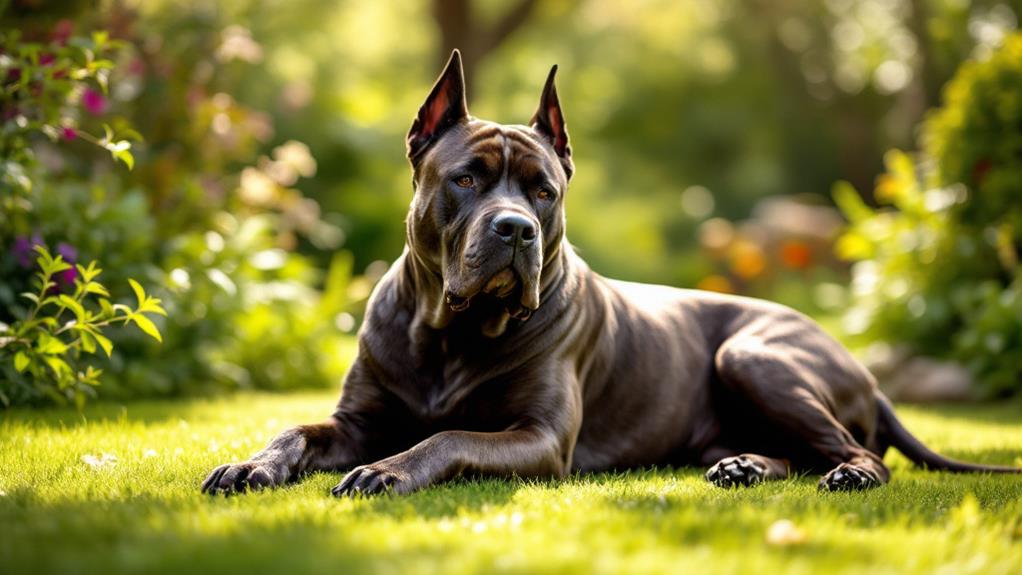
Many Cane Corsos impress with their balanced temperament, seamlessly blending protective instincts with deep familial attachment. You'll find these dogs exhibit a unique mix of aggression and sociability. They're incredibly loyal to their families, and it's not uncommon to see them being loving and affectionate. However, they're cautious around unfamiliar dogs and people, making them excellent watchdogs. This protective nature doesn't mean they can't be social; with appropriate training, they learn to differentiate between friend and foe, ensuring a harmonious environment.
Training plays a significant role in shaping their behavior. Cane Corsos are highly trainable, yet their dominant nature requires consistent and firm guidance. Early and ongoing socialization is important to manage any potential aggression and foster their sociability. You'll need to invest time in teaching them the boundaries and commands, which will make them obedient and well-mannered companions.
Their temperament also reflects their need for daily exercise and mental stimulation. Without it, they can develop boredom-induced behavioral issues. Keep in mind that breeding practices can influence their temperament. Modern show lines might show softer characteristics compared to traditional working lines, so it's important to understand the specific traits of your Cane Corso.
Care and Maintenance
While caring for a Cane Corso, you'll need to guarantee they get plenty of physical activity to keep them happy and healthy. This breed thrives on exercise, so plan for mile-long runs twice daily. Without enough activity, they can become bored and engage in destructive behavior. A securely fenced yard offers a safe space for them to roam and play, making it ideal for this active companion.
Grooming your Cane Corso is relatively straightforward. Weekly brushing helps manage their shedding, which tends to increase in the spring. Bathing is occasional, but regular nail trims are necessary to prevent overgrowth and discomfort. Keeping up with grooming will assure your Cane Corso looks and feels their best.
Meal-feeding on a regular schedule is fundamental to minimize the risk of health issues like bloat, a common concern in Cane Corsos. Providing companionship is similarly significant, as they thrive with active owners who can dedicate time and attention to their needs. Regular veterinary check-ups are crucial for monitoring potential health issues such as hip dysplasia and gastric dilatation-volvulus. By adhering to these care and maintenance tips, you'll help your Cane Corso lead a fulfilling life.
Health Concerns

Among the health concerns for Cane Corsos, hip dysplasia stands out as a prevalent issue. This inherited condition can lead to significant pain and arthritis if not detected early. Regular veterinary check-ups are imperative for early detection and managing any discomfort your Cane Corso might experience. Monitoring their hip and joint health can prevent long-term issues and keep them active.
Gastric dilatation-volvulus, also known as bloat, is another serious concern for Cane Corsos. This life-threatening condition requires immediate emergency surgery and emphasizes the need for proper meal-feeding schedules. Avoiding large meals and ensuring your dog doesn't exercise right after eating can reduce the risk of bloat. Being aware of the symptoms and acting quickly can be lifesaving.
Eyelid abnormalities, such as entropion or ectropion, frequently affect Cane Corsos, requiring veterinary evaluation and possibly treatment. Regular health evaluations by your vet can catch these issues early. Furthermore, epilepsy is on the rise in the breed, making it necessary to stay vigilant and consult with your veterinarian about any unusual behavior. Responsible breeding practices, including thorough health evaluations, are fundamental to minimize hereditary health problems and preserve this magnificent breed's lineage.
Adoption and Ownership
Owning a Cane Corso often requires a special kind of commitment and experience due to their dominant nature and need for proper training. As a potential adopter, you must be prepared to invest time and effort into their socialization and training. This dog breed thrives with experienced owners who understand the importance of establishing themselves as the pack leader from day one.
Before considering adoption, assess your living environment. Cane Corsos flourish in large homes with securely fenced yards where they can expend their high energy levels. Without proper space, their size and energy can become overwhelming. If you have small children or multiple pets, think twice, as their protective instincts might not mesh well in such settings.
Adopting a Cane Corso from rescue groups or shelters, like Big Dogs Huge Paws Inc and Cane Corso Coalition, not only provides a loving home to these dogs but also guarantees responsible ownership. Remember, this dog breed has significant exercise needs, so be ready for daily mile-long runs to prevent boredom and potential destructive behavior. With the right training and environment, a Cane Corso can be a loyal and rewarding companion.