The Best Canine Protectors: Dog Breeds for Personal Safety
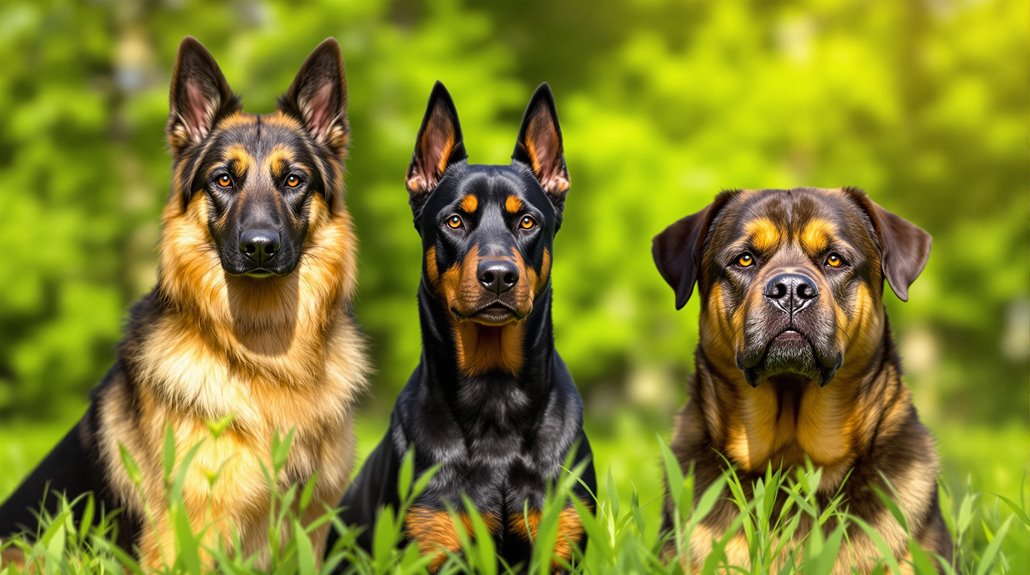
When choosing a dog breed for personal safety, consider trusted protectors like the Belgian Malinois and German Shepherd for their agility and intelligence. The loyal Cane Corso and powerful Rottweiler offer strong family bonds and natural instincts. Doberman Pinschers bring agility and a protective nature, making them excellent watchdogs. These breeds possess key traits like courage and trainability, thanks to genetic predispositions and responsible breeding. Training and socialization at an early age boost a dog's effectiveness in protective roles.
Evaluate your family lifestyle and legal regulations before selecting the ideal protector. Discovering the perfect fit involves much more.
Key Takeaways
- Belgian Malinois are agile, intelligent, and often utilized in police roles for their strong protective instincts.
- German Shepherds are versatile, loyal, and excellent family protectors adaptable to various environments.
- Cane Corsos are large, confident, and fiercely protective, showing deep affection towards their owners.
- Rottweilers have a powerful build and loyal disposition, making them effective deterrents with strong family bonds.
- Doberman Pinschers are agile with a protective nature, forming deep connections with families as excellent watchdogs.
Top Breeds for Protection
When you're looking for a dog breed to enhance your personal safety, certain breeds stand out for their protective qualities. The Belgian Malinois is one of those great protection dogs known for its agility and intelligence. Often seen working alongside police and military personnel, this breed's strong protective instincts make it fiercely loyal and highly trainable.
German Shepherds are another excellent choice, recognized for their versatility and loyalty. These dogs are not only intelligent but also great family protectors, making them a popular choice in law enforcement. Their ability to adapt to different environments and tasks makes them invaluable as guardians.
Cane Corsos are large and confident dogs that exude a calm demeanor while being fiercely protective of their families. Their affectionate nature towards their owners only adds to their appeal as formidable guardians.
Rottweilers possess a powerful build and a loyal disposition. They serve as effective deterrents, combining strength with a strong bond to their family. Similarly, Doberman Pinschers are known for their agility and protective nature. These dogs form deep connections with their families, making them excellent watchdogs due to their strong guarding instincts. Positive reinforcement improves training outcomes, enhancing the effectiveness of these protective breeds.
Key Traits of Guard Dogs
Having explored top breeds for protection, let's focus on the key traits that make a guard dog truly effective. At the heart of any protective dog is a strong set of instincts. These instincts enable them to be constantly alert, detecting any unusual sounds or movements that might signal a threat. This alertness is essential for providing the protection your family needs.
Loyalty is another crucial trait. A loyal guard dog will go above and beyond to keep you and your loved ones safe. Their unwavering bond with their family drives them to instinctively shield you from intruders and other potential dangers. Alongside loyalty, courage stands out as a defining characteristic. A courageous guard dog won't shy away from confronting threats, showing bravery in situations where others might falter.
Trainability is equally important. A well-trained dog can follow commands and respond effectively to various situations. This ensures that your protective dog acts appropriately, enhancing its ability to guard your home and loved ones. Together, these traits—instincts, loyalty, courage, and trainability—create the foundation of an effective guard dog, equipping them to offer unparalleled protection for you and your family. Many breeds, like the Doberman Pinscher, are known for their protective instincts and historical purpose as guardians.
Importance of Proper Training
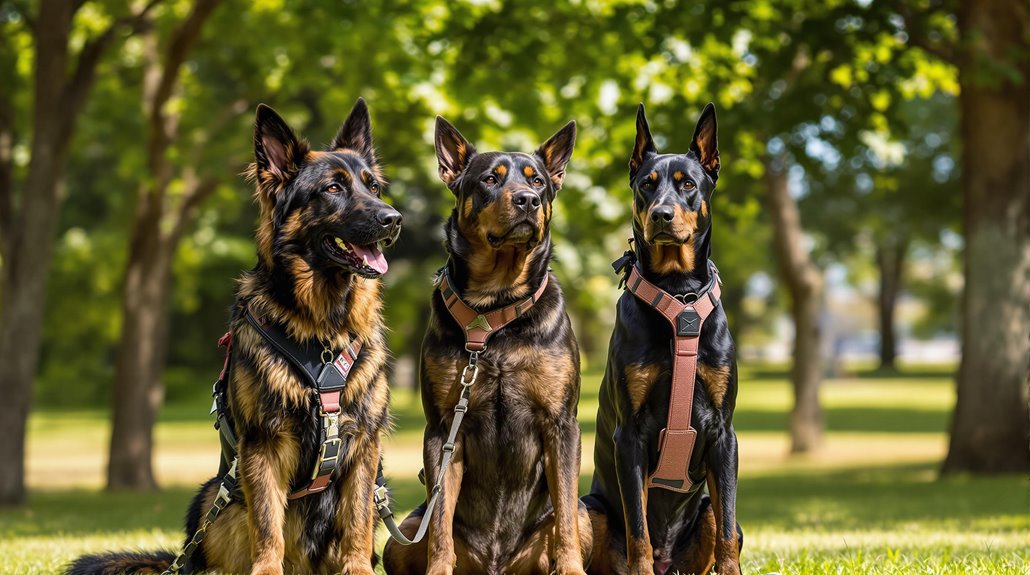
Effective training is the cornerstone of transforming a good dog into a reliable protector. Proper training enhances a dog's obedience and control, ensuring they follow commands in various situations. It's vital for teaching protection skills, enabling your dog to assess threats and respond appropriately. By focusing on these skills, you're not just training a pet, but shaping a dependable companion who can protect you and your family.
Consistency in training is key to building reliability and effectiveness over time. Without regular reinforcement, even the most well-trained dog can lose its edge. That's where ongoing training comes in—it keeps your dog sharp and adaptable to new environments and scenarios. As your dog learns and grows, so too must their training.
Experienced trainers play a crucial role in this process. They conduct assessments to tailor training to your dog's unique capabilities, maximizing their potential as protection animals. By working with professionals, you ensure that your dog receives the best possible preparation for their role as a protector. Remember, a well-trained dog is not only a guardian but also a trusted partner ready to defend when it matters most.
Short sessions (about 5 minutes) help maintain focus without overwhelming the dog, ensuring effective learning and retention of training.
Socialization Essentials
Socialization is a crucial step in raising a protection dog that can confidently navigate various environments. Early socialization, ideally between 3 to 14 weeks, sets the foundation for your dog's adaptability and confidence. During this critical window, expose your dog to diverse people, animals, and situations. This experience helps them learn to differentiate between safe individuals and potential threats, reducing fear and aggression.
To ensure balanced behavior, consider controlled socialization settings like puppy classes or supervised playdates. These environments allow your dog to interact positively and cultivate the skills needed to avoid future behavioral issues. Remember, early socialization is just the beginning. Ongoing socialization is vital throughout your dog's life to maintain their adaptability and responsiveness to new environments.
Consistent exposure to various sounds, sights, and experiences can significantly improve your protection dog's effectiveness. This ongoing process prepares them to respond appropriately in real-world scenarios, enhancing their role as a protector. By investing in comprehensive socialization, you're setting the stage for a well-rounded protection dog that can confidently handle whatever life throws their way, ensuring they remain a reliable companion and guardian for years to come. Additionally, breeds with exceptional scenting abilities, like the Treeing Walker Coonhound, benefit greatly from early socialization to refine their natural skills and ensure they can differentiate between everyday stimuli and potential threats.
Genetic Factors in Protection
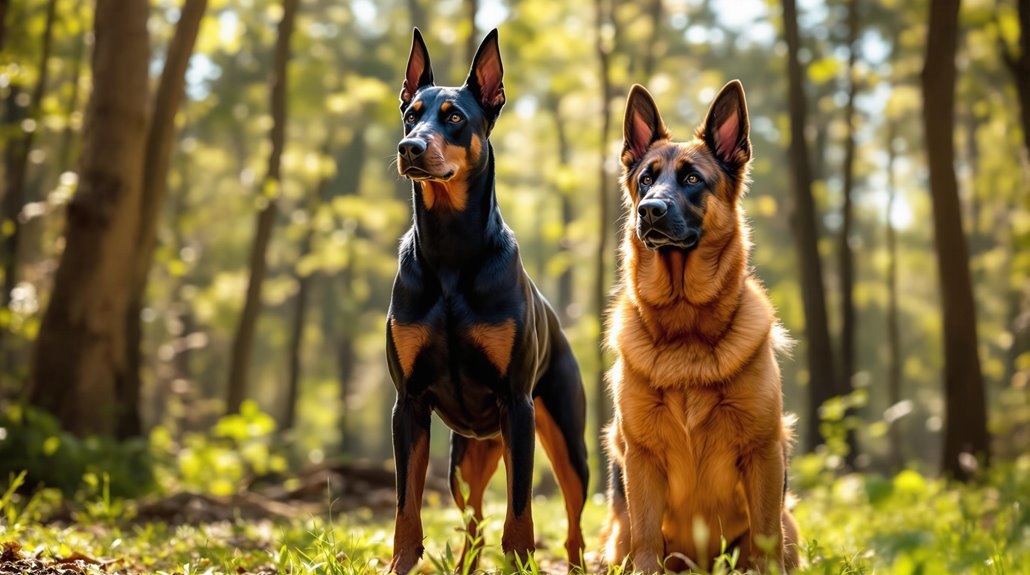
Genetic predisposition plays a pivotal role in a dog's ability to protect, with certain breeds naturally exhibiting stronger protective instincts due to their lineage. When you're considering a dog for personal safety, understanding these genetic factors is crucial. Breeds like the Belgian Malinois and German Shepherd often display these innate traits. Their protective instincts and temperament make them excellent candidates for guarding roles.
Breeding practices that prioritize both temperament and working ability are essential. These practices ensure dogs inherit optimal guarding traits. Selecting breeding pairs based on traits like fearlessness and alertness enhances the chances of producing effective protection dogs. This means you'll find dogs ready to respond with loyalty and vigilance.
Moreover, trainability is a significant factor. A dog with a strong genetic predisposition for protection will often learn commands faster, making them more reliable protectors. For example, breeds with high working & obedience intelligence can quickly adapt to roles that require rapid learning and execution of commands. Health screenings in breeding programs are vital as well. They prevent hereditary issues that could impact a dog's physical capability for protection tasks. By choosing a dog from a well-screened lineage, you're ensuring they have the physical strength and endurance needed for their role. This holistic approach to breeding enhances the genetic potential of protection dogs.
Family and Legal Considerations
When you're thinking about bringing a protection dog into your home, don't overlook family and legal considerations. First, think about your family's lifestyle, including the size of your home and the energy levels of the breed you're considering. Some protection breeds have high energy levels, so ensure they fit well with your family's activity level and living space for effective family protection.
Next, dive into the legal considerations. Check local laws that might regulate specific breeds. Some places have breed-specific legislation that could impact your choice. It's important to know these restrictions to avoid any legal headaches. You might also need liability insurance, as owning certain protection breeds can come with financial risks. This insurance could cover potential incidents involving your dog.
Understanding self-defense laws is crucial, too. Knowing when and how your dog can be legally used for protection is vital. Understanding breed traits is vital for responsible ownership, as certain breeds may exhibit higher aggression levels. Finally, don't forget about ongoing training and socialization. This helps manage their protection instincts and minimizes aggressive behavior, ensuring they comply with local laws. Regular training also strengthens the bond between you and your dog, making them a reliable protector for your family.