Siberian Cat: Meet the National Cat of Russia
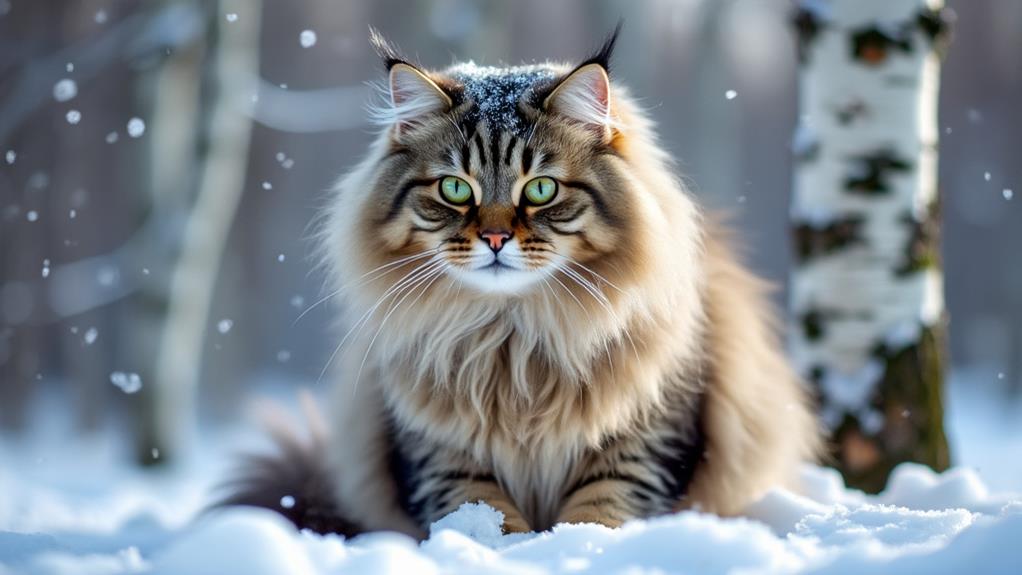
Meet the Siberian cat, the cherished national feline of Russia, with origins dating back over a thousand years. You'll be captivated by its robust build, triple-layered coat, and exquisite markings, perfectly adapted to Siberia's harsh climate. Its affectionate and loyal nature makes it an ideal companion, effortlessly forming bonds with families and other pets. With the highest genetic variation among breeds, Siberians are generally healthy but do require regular screenings for heart conditions. Their charming personality and cultural significance have cemented their place as a favorite both in Russia and worldwide. There's much more to uncover about this fascinating breed.
Key Takeaways
- Siberian cats are Russia's national cat, with origins dating back to at least 1000 AD.
- They have a robust build and a dense, triple-layered coat adapted for Siberian climates.
- Known for their affectionate, loyal nature, they form strong bonds with owners and adapt well to families.
- Siberian cats have the highest genetic variation among breeds, contributing to their robust health.
- Recognized by TICA in 1992 and the CFA in 2000, Siberians are cherished globally.
Historical Background
When delving into the historical background of Siberian cats, you'll find that their origins trace back to at least 1000 AD, marking them as one of the oldest cat breeds. As a landrace breed, Siberians adapted to the harsh climates of the Siberian forests. Initially, they were domesticated primarily for their exceptional hunting skills, which were invaluable for controlling rodent populations. This practical role contributed to their status as the national cat of Russia, highlighting their integral place in Russian history.
The initial mention of Siberian cats outside Russia was in 1864, described as red Tobolsk cats in "Brehms Tierleben." These cats began to capture global attention following the dissolution of the Soviet Union. A significant moment came in 1987 when a breeding program was initiated in Berlin, utilizing Siberians from St. Petersburg to reintroduce and stabilize the breed internationally. Their expedition continued when they were officially imported to the U.S. in 1990, where they gained recognition from major registries like TICA and CFA by the early 2000s. Today, Siberians are celebrated not only for their historical significance but also as a beloved breed worldwide.
Unique Physical Traits
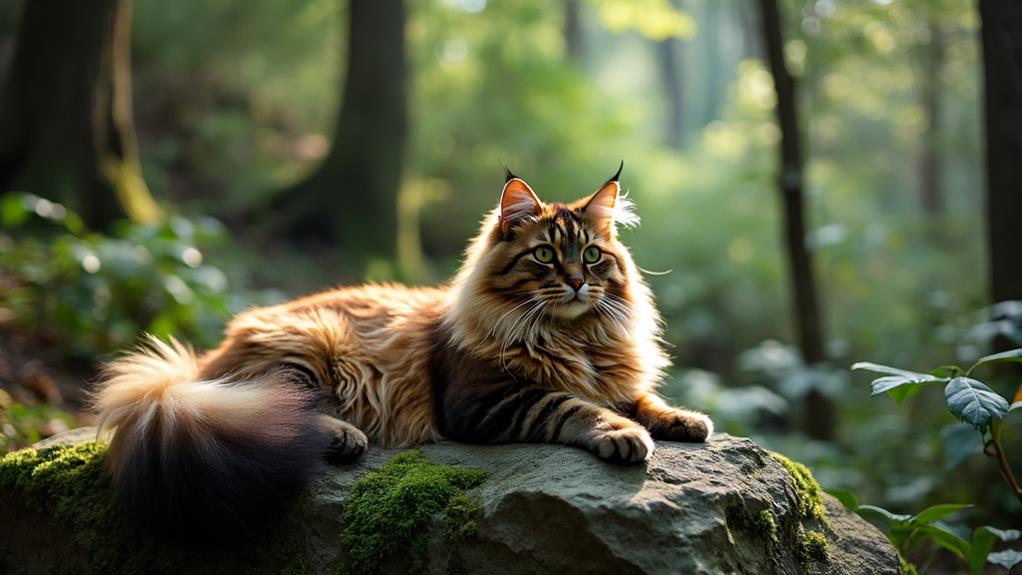
Renowned for their striking appearance, Siberian cats boast a robust and muscular build, with males typically weighing between 15-20 pounds and females averaging 8-12 pounds. As medium to large-sized felines, their well-developed physiques make them stand out in the feline world. You'll notice their broad modified wedge head, which adds to their majestic look. Their large round eyes are expressive and enchanting, drawing you in with their warmth and intelligence.
Consider these unique traits of Siberian cats:
- Dense Coat: A triple-layered coat protects them from harsh climates, with seasonal thickness changes. In winter, their coat becomes denser, while in summer, it shifts to a shorter version.
- Ear Tufts and Lynx Tipping: Their ears are well-furnished, often displaying ear tufts and lynx tipping, giving them a wild, untamed allure.
- Colors and Patterns: They come in a variety of colors and patterns, such as tabby, solid, tortoiseshell, and bicolor, with strong, clear markings preferred.
- Grooming Needs: Regular grooming is crucial to maintain their coat, preventing matting and tangles, especially during seasonal shifts.
With these traits, Siberian cats truly embody the spirit of the Russian wilderness.
Temperament and Behavior
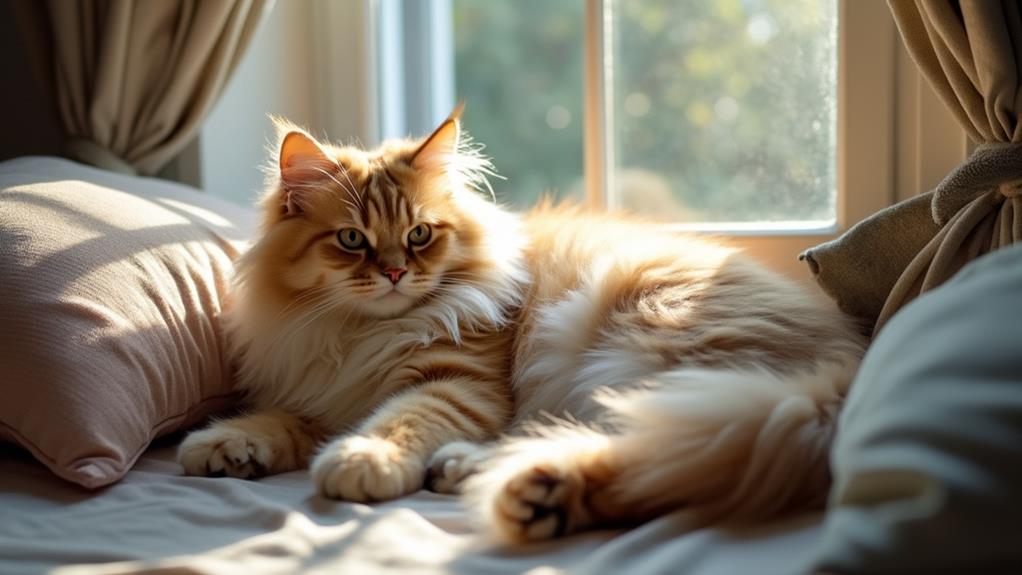
Siberian cats captivate with their affectionate and loyal nature, quickly forming strong bonds with their owners. You'll find that their playful demeanor and gentle personality make them perfect companions for family environments. These cats are not only good with children but also get along well with other pets, making them a flexible addition to any household.
Their intelligence shines through in their curious and inquisitive nature. Siberian cats often engage in problem-solving activities and can even be trained to perform tricks, providing an element of fun and interaction to your daily routine. You might notice their "dog-like" behavior, as they love to follow you around the house, always keen for playtime and companionship.
The calm temperament of Siberian cats allows them to adapt seamlessly to active family environments. Regardless of whether your home is lively with activity or enjoys quieter moments, they fit right in without missing a beat. Their adaptable nature means they can thrive in diverse settings, making them ideal for families of all kinds. With their unique blend of traits, Siberian cats offer a beautiful balance of affection, intelligence, and playfulness that enriches any home.
Health and Genetics
Beyond their charming temperament and behavior, the health and genetics of Siberian cats play a significant role in their appeal as pets. These majestic felines boast the highest genetic variation among cat breeds, contributing to their robust health and reducing the risks of certain genetic conditions. However, it's vital to be aware of specific health issues they may face:
- Hypertrophic Cardiomyopathy (HCM): Siberian cats are prone to HCM, a heart condition that requires regular veterinary screenings to detect early and manage effectively.
- Polycystic Kidney Disease (PKD): While genetic testing can identify this hereditary disease, responsible breeding practices are fundamental to prevent it from spreading within the gene pool.
- Fel d 1 Protein: Studies show that Siberians produce lower levels of this allergen, making them potentially suitable for allergy sufferers looking for a feline companion.
- Locomotor and Reproductive Conditions: Despite their generally robust health, Siberian cats have a higher incidence of these conditions, underscoring the need for careful breeding.
Popularity and Recognition
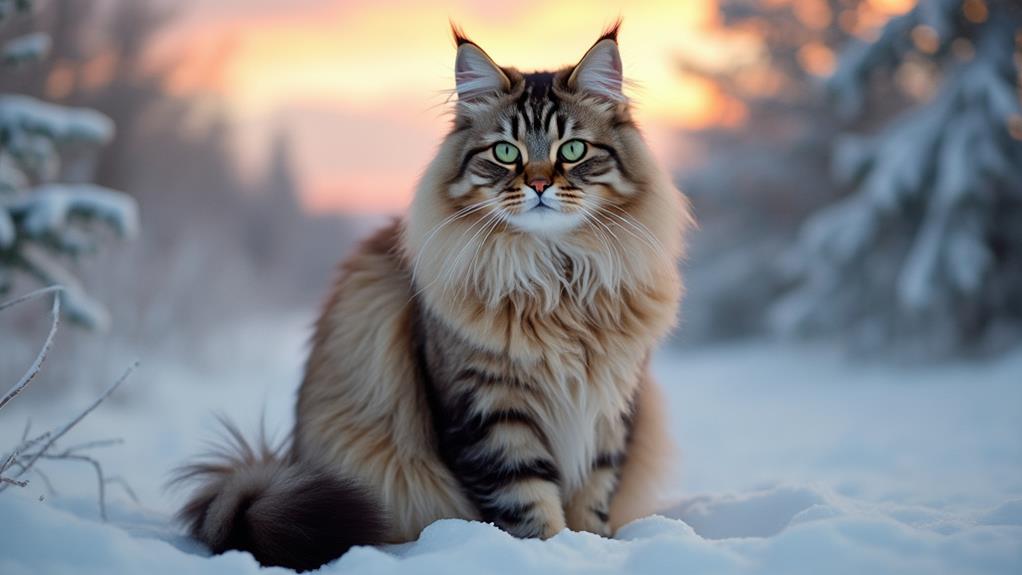
With their enchanting charm and unique characteristics, Siberian cats have witnessed a remarkable rise in popularity, especially throughout the 2020s. Ranking as the 9th most registered breed in 2022, these majestic felines have captured the hearts of cat enthusiasts worldwide. Their path to prominence started when the initial registered Siberians arrived in the U.S. in 1990, quickly becoming a cherished breed among feline aficionados.
The breed's recognition and championship status reflect its soaring popularity. Officially recognized by TICA in the New Breed program in 1992, Siberian cats achieved championship status by 1996, marking a significant milestone in their acceptance within the cat fancy. Recognition from the CFA followed in 2000, with championship status granted in 2007, solidifying their standing in competitive cat shows.
Beyond the show circuit, Siberian cats hold a special place as Russia's national gem. Their historical significance and unique characteristics are celebrated in Russian folklore, highlighting their cultural importance. This rich heritage, combined with their growing popularity, guarantees Siberian cats continue to be recognized and adored, not just for their beauty, but for their deep-rooted connection to history and culture.