Self-Care Tips for Equestrians: How to Stay Healthy and Balanced
To stay healthy and balanced as an equestrian, focus on both physical and mental self-care. Prioritize mindfulness practices to tackle performance anxiety and stress. A balanced diet, consistent exercise, and quality sleep are vital for physical well-being. Develop a robust support network within the equestrian community to reduce isolation and promote shared coping strategies. Practice effective time management to juggle personal and equestrian responsibilities without burnout. Set realistic goals, celebrate achievements, and regularly assess your mental health needs. Adopt these tips to improve both your riding skills and overall life satisfaction. There's more to investigate on each of these fronts.
Key Takeaways
- Engage in mindfulness practices to reduce performance anxiety and improve focus.
- Build a supportive community to foster belonging and alleviate isolation.
- Set realistic goals to manage expectations and enhance motivation.
- Maintain a balanced diet, regular exercise, and quality sleep for optimal physical health.
- Use scheduling tools to master time management and balance life responsibilities.
Understanding Equestrian Stressors
As an equestrian, you're no stranger to the unique stressors that come with the territory. The mix of performance anxiety and competition pressure can take a toll on your mental health, impacting your comprehensive wellness. It's easy to overlook self-care when you're juggling the physical demands of horse management and the emotional rollercoaster of competition. But ignoring these stressors only compounds the pressure, leading to chronic stress and fatigue.
Financial stress is another significant factor that can exacerbate anxiety. The costs associated with horse ownership and equestrian activities often create a financial burden that feels overwhelming. This financial stress can trickle down, affecting your ability to focus and perform at your best.
Time management is yet another challenge. Balancing training, competitions, and daily responsibilities requires careful planning to avoid burnout. Understanding these stressors is vital for prioritizing self-care and maintaining your health. Recognizing the emotional toll and physical demands of the sport allows you to proactively address your mental health needs.
Effective Competition Strategies
Competing successfully in equestrian sports requires more than just skill and practice; it demands strategic planning and mental fortitude. To manage performance anxiety and improve your comprehensive experience, integrating self-care into your competition strategies is crucial. Begin with thorough preparation, which includes setting realistic goals. This approach keeps expectations in check and allows you to celebrate small victories. Visualization of success can greatly increase your confidence, as regularly imagining positive outcomes helps solidify your mindset for the event.
Mindfulness practices, such as deep breathing or meditation, can improve focus and calm your nerves, especially during high-pressure situations. Establishing pre-competition rituals like a consistent warm-up routine or a checklist provides you with a sense of control, guaranteeing you feel grounded and ready to perform. These rituals help maintain your health and well-being, fostering a positive competition environment.
Here are some actionable steps to incorporate into your routine:
- Goal Setting: Define clear, achievable objectives to guide your progress and maintain motivation.
- Visualization: Spend time imagining successful outcomes to increase your confidence and mental preparedness.
- Mindfulness and Rituals: Practice deep breathing and establish pre-competition rituals to improve focus and reduce anxiety.
Implementing these strategies guarantees a balanced, healthy competition experience.
Staying Motivated
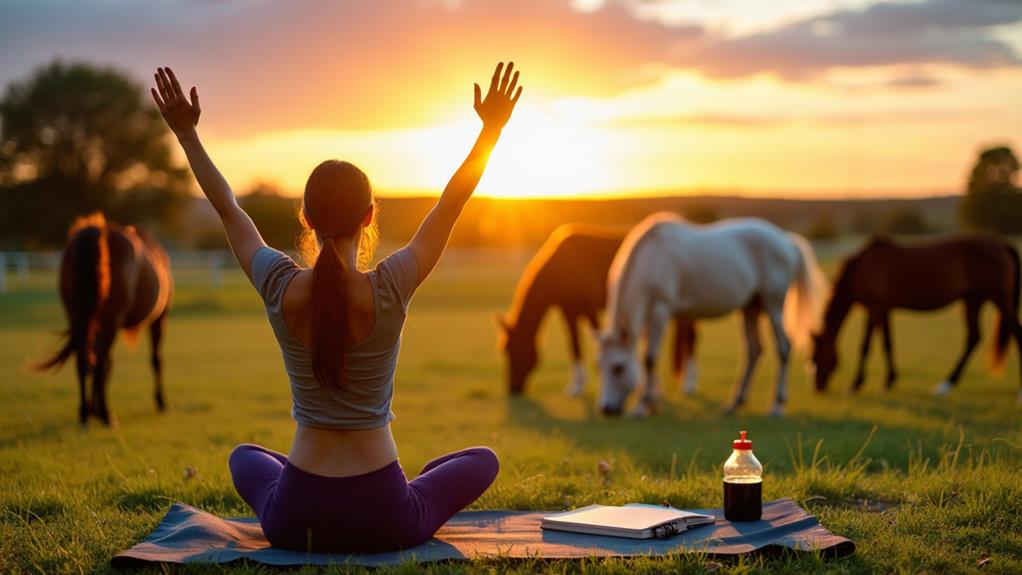
Your motivation in equestrian sports thrives on understanding why you ride. Regardless of it's personal growth, a love for horses, or the thrill of competition, knowing your core motivations enhances your enthusiasm and commitment. To keep this motivation alive, celebrate small victories. Each time you master a new skill or see improvement in your horse's performance, acknowledge these achievements. They're essential in maintaining a positive mindset and fueling your passion.
Engagement with a supportive community plays a big role in staying motivated. Surround yourself with fellow equestrians who share your experiences and goals. This network not only provides accountability but also inspires you to push through challenges. Set realistic goals to avoid overwhelm. By breaking down your ambitions into achievable steps, you create a clear roadmap for progress. Each milestone reached will enhance your motivation and confidence.
Balancing Equestrian and Life
Balancing your passion for equestrian sports with the demands of everyday life can be challenging, yet it's entirely possible with effective strategies. Start by mastering time management to juggle riding commitments and personal responsibilities efficiently. Use calendars or scheduling tools to plan your week, guaranteeing you allocate time for training, work, and leisure activities. This approach helps prevent burnout and keeps energy levels high.
Set boundaries around your equestrian activities. Clearly define days dedicated to training or competitions and protect time for personal responsibilities and self-care. This balance allows you to relax and recharge, contributing to better mental well-being. Regularly assess your commitments to guarantee you're not overextending yourself and adjust as necessary.
Engage with a supportive community. Sharing experiences with fellow equestrians can provide motivation and valuable insights. It also creates a network that understands the unique challenges of balancing equestrian life with personal obligations.
Here are three key steps to maintain a healthy balance:
- Use scheduling tools to manage your time effectively and include leisure.
- Set clear boundaries to protect personal time and prevent burnout.
- Connect with a supportive community for shared experiences and advice.
Prioritizing Mental Well-Being
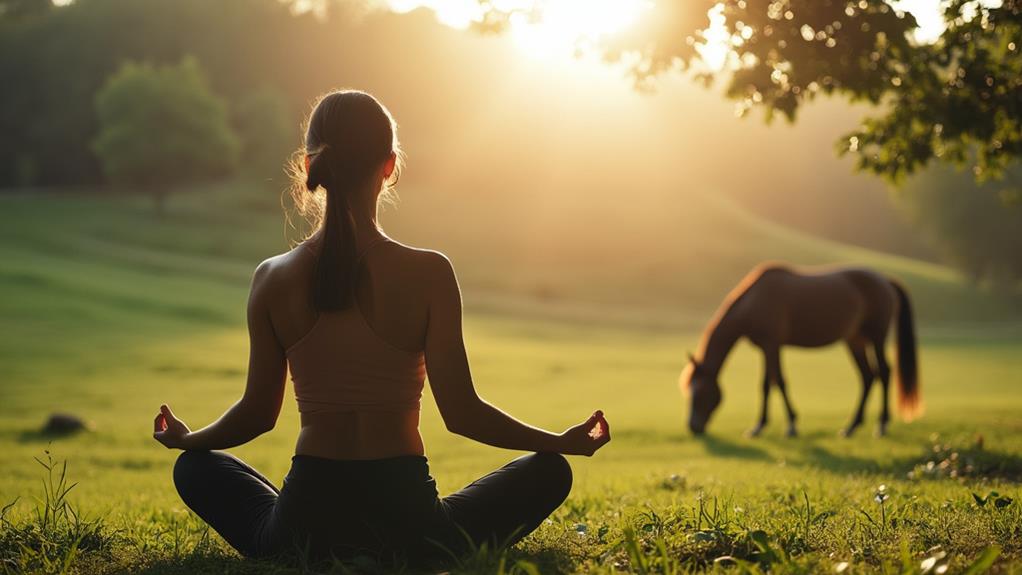
Mental well-being plays a vital role in the success and enjoyment of equestrian sports. Prioritizing it can greatly reduce performance anxiety and competition stress, leading to improved performance and a more fulfilling experience. Engaging in mindfulness practices, like meditation and deep breathing, boosts focus and calms nerves during high-pressure situations, making these activities fundamental for any equestrian.
Creating a supportive community by sharing your experiences and discussing mental health challenges can alleviate feelings of isolation. This not only fosters a healthier environment but also promotes a sense of belonging, vital for thriving in the equestrian lifestyle. Regular self-assessment of your mental health needs is essential. Recognize when it's time to seek professional help to maintain balance and prevent chronic stress or burnout.
Essential Physical Self-Care
Physical vitality is significant for equestrians, demanding attention to necessary self-care practices. To maintain your physical health, consider incorporating these fundamental steps into your routine:
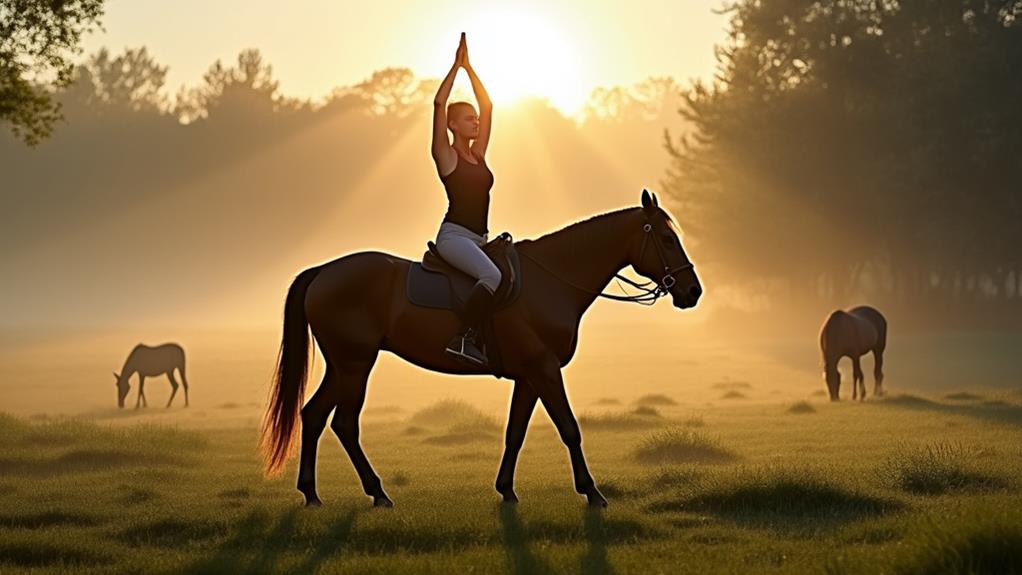
- Exercise Regularly: Engaging in activities like riding, cross-training, yoga, or Pilates not only elevates physical fitness but also reduces injury risk and improves your comprehensive riding ability. These exercises help enhance balance and flexibility, essential for effective riding.
- Balanced Diet and Hydration: Fuel your body with a balanced diet consisting of whole, organic, and plant-based foods to sustain your energy levels. Staying hydrated is similarly critical. Make it a habit to drink water consistently, especially during summer shows, to prevent dehydration, overheating, and muscle fatigue.
- Quality Sleep and Stress Management: Prioritize getting 7-9 hours of quality sleep each night to aid recovery and maintain mental clarity. Adequate rest is key to optimizing your performance. Implementing a self-care routine that includes regular breaks and listening to your body's signals can help manage stress and guarantee long-term health.
Building a Supportive Community
Creating a strong network within the equestrian community is fundamental for both personal and collective well-being. You'll find that sharing experiences and challenges with fellow equestrians can greatly reduce feelings of isolation and stress. This sense of belonging is imperative for your mental health and self-care. By opening up about mental health issues, you help destigmatize these topics, creating a supportive environment where everyone feels safe to share their struggles.
Networking with peers provides much-needed emotional support, resources, and coping strategies tailored to the unique pressures you face in equestrian sports. Engaging in community-driven self-care initiatives, like group wellness activities and workshops, improves the collective well-being. These activities promote a culture of support, helping you and your peers maintain balance in your lives.
Mentorship is another powerful tool within the community. Establishing mentorship programs allows experienced riders to guide newcomers, fostering crucial connections and shared responsibility for mental health and wellness. Through mentorship, you benefit from the wisdom of others while contributing to a nurturing environment for all members. Building this supportive community guarantees that you're not just surviving but thriving in your equestrian experience.