Samoyed: the Friendly and Gentle Working Dog With a Fluffy Coat
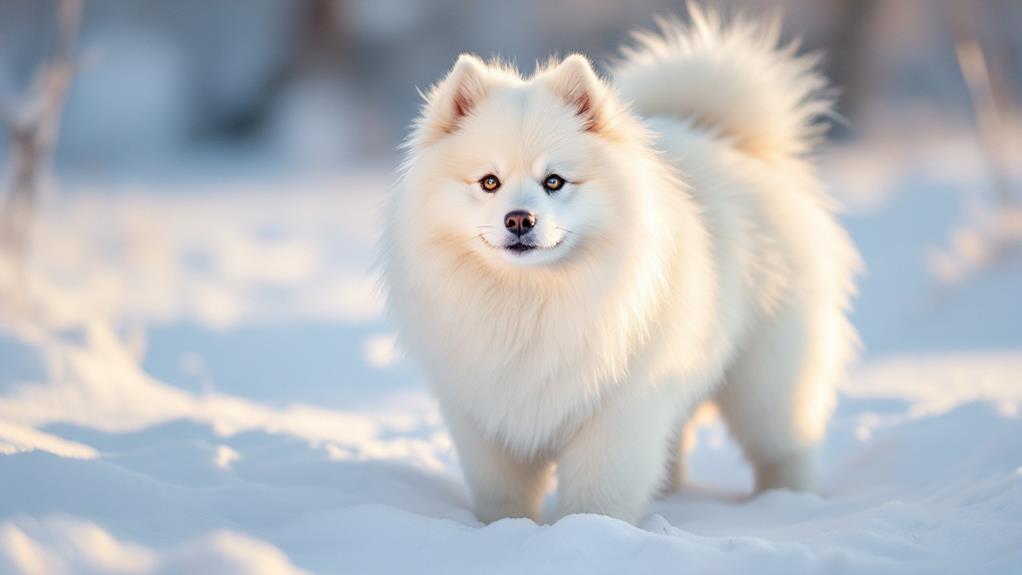
You'll adore the Samoyed—a friendly, gentle, and intelligent breed with a stunning fluffy coat. Originating from Siberia, these medium-sized dogs were initially bred for herding and sledding. They fit perfectly into family life due to their kind nature and love for social interaction. You won't want to leave them alone for long, as they thrive on companionship. Regular grooming is necessary to manage their thick double coats, and they need at least two hours of exercise daily to stay healthy and happy. With the right care, they make wonderful family pets, bringing joy and warmth to your home.
Samoyed Breed Characteristics
The Samoyed, a medium-sized breed, stands out with its striking appearance and friendly nature. These medium-sized dogs have males standing between 21-23.5 inches and females between 19-21 inches tall. Weighing in at 45-65 pounds for males and 35-50 pounds for females, Samoyeds are a perfect blend of strength and agility. Their active nature means they need regular exercise to keep them happy and healthy. You'll find that they're not just physically capable; they're intelligent too, making them quick learners and great companions.
One of the most notable features of the Samoyed is their thick, double coat. It comes in diverse shades, including white, cream, and biscuit, providing them with a fluffy, cloud-like appearance. However, be prepared for their shedding season, which happens twice a year. During this time, you'll need to brush them frequently to manage the shedding and keep their coat looking pristine.
Known for their friendly and gentle demeanor, Samoyeds are excellent with families and thrive on social interaction. With an average lifespan of 12 to 14 years, these dogs offer long-term companionship, blending beauty, brains, and a loving nature seamlessly.
History and Origins
Originating in the harsh landscapes of northwest Siberia, Samoyeds were bred by the nomadic Samoyede people to tackle rigorous tasks like hauling sledges and herding reindeer. This Samoyed Dog Breed was named after the Samoyede people, who relied on these sturdy working dogs for their strength and endurance in the harsh Arctic conditions. Their fluffy white coats weren't just for looks; they provided crucial insulation against the freezing temperatures.
As the breed's reputation for resilience and amiable nature spread, the Samoyed gained popularity beyond Siberia. In the late 19th century, these dogs caught the eye of English royalty, particularly Queen Alexandra, who fell in love with their charming disposition and unique "smile". This distinctive trait evolved to prevent drool from freezing, reflecting their incredible adaptability.
The Samoyed's shift from a working dog to a beloved pet was solidified when the American Kennel Club recognized the breed in 1906. This recognition marked a significant point in their history and origins, paving the way for the Samoyed to become a cherished family companion around the world. Their passage from the Arctic to a household favorite is a proof of their enduring appeal.
Temperament and Personality
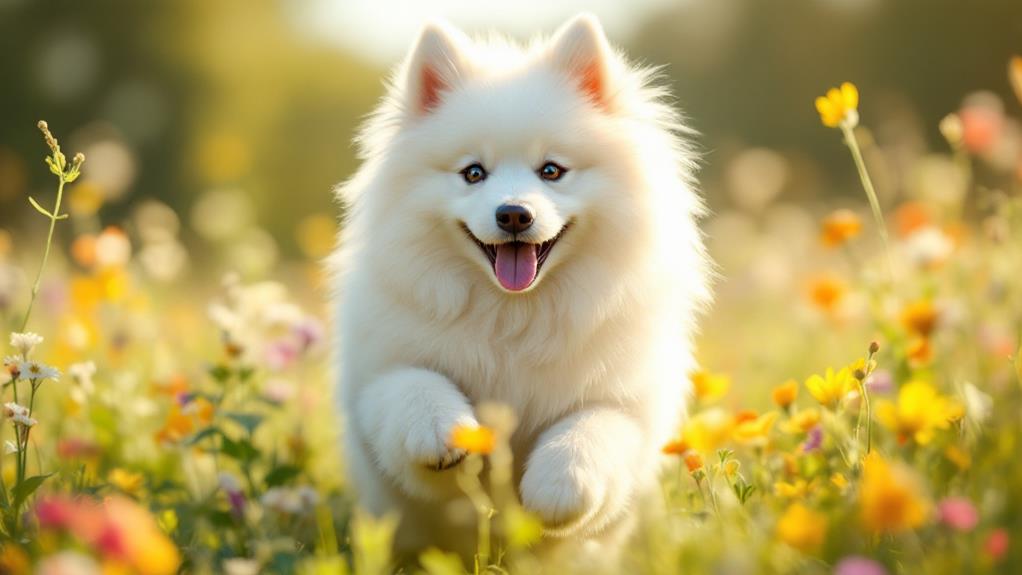
Known for its kind and gentle temperament, the Samoyed is an ideal family dog, especially when you have children or other pets. Their friendly nature makes them incredibly affectionate, often forming strong bonds with everyone in the household. You'll find that these dogs are not only loving but also highly intelligent, which contributes to their playful and sometimes mischievous demeanor. They retain a puppy-like energy well into adulthood, so they need plenty of mental and physical stimulation to stay happy and balanced.
Samoyeds are social creatures who thrive on companionship. They're happiest when surrounded by family and can become lonely or even destructive if left isolated for too long. Because of this, they require a home environment where they can be active participants in daily life. Their vocal nature is another trait to be aware of; they express their likes and dislikes through barking. Proper training techniques using positive reinforcement can help manage this tendency and encourage good behavior.
Despite their strong-willed personalities, Samoyeds respond well to consistent and loving training methods. By fostering an environment of trust and affection, you can build a rewarding relationship with this delightful breed.
Health and Lifespan
When caring for a Samoyed, you'll want to focus on their health and longevity. With an average lifespan of 12 to 14 years, proper care plays a vital role in guaranteeing they live a full, healthy life. Common health issues like hip dysplasia, cataracts, and heart disease mean regular veterinary check-ups are a must. It's important to maintain a balanced diet and guarantee regular exercise to prevent obesity, a common concern in Samoyeds.
An active lifestyle isn't just beneficial; it's required for their physical and mental well-being. Regular exercise helps keep them fit and prevents behavioral issues stemming from boredom or isolation. To address potential genetic health problems, consider genetic testing. Conditions like X-Linked Hereditary Nephropathy and X-Linked Progressive Retinal Atrophy can be identified early through testing, allowing for better management and care.
Grooming and Shedding
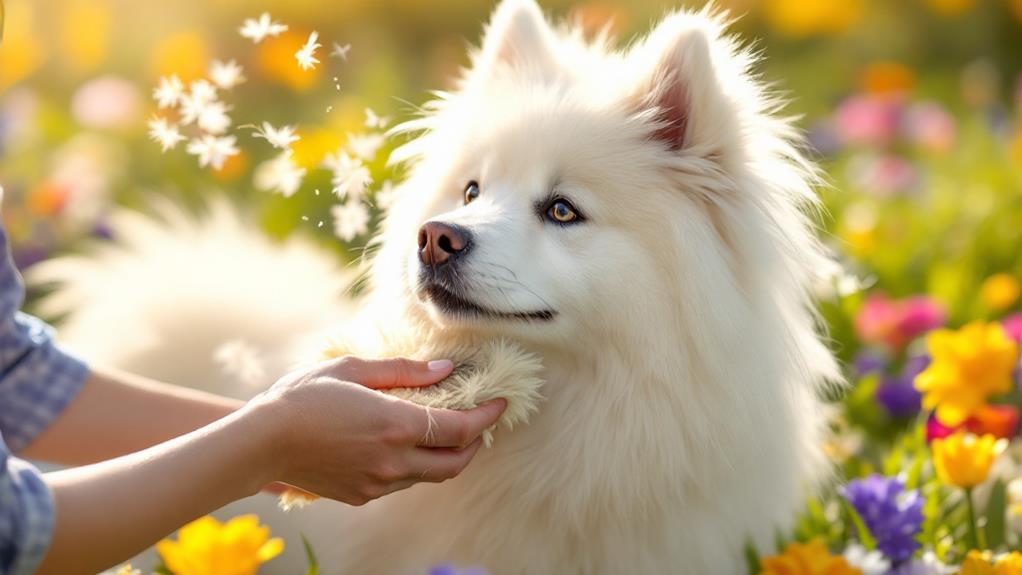
Anyone who owns a Samoyed knows that their thick double coat is both beautiful and demanding. This distinctive coat features a soft undercoat and a longer outer layer, requiring daily brushing to manage shedding and prevent matting. You should be prepared for heavy shedding twice a year, typically in spring and fall. During these times, a consistent grooming regimen is vital to reduce loose hair in your home and keep your Samoyed looking its best.
Regular grooming isn't just about managing shedding. It's also important for maintaining your Samoyed's genetic health, promoting skin health, and ensuring coat maintenance. By removing knots and tangles, you help prevent skin issues and keep their coat in prime condition. Samoyed puppies will benefit from early grooming habits, making it easier for you and your fluffy friend as they grow.
To make grooming efficient, use slicker brushes and de-shedding tools. These tools can greatly aid in managing their fluffy coat, minimizing your grooming time. Aim to brush twice a week during non-shedding seasons and daily during shedding periods. This routine will keep your Samoyed's double coat in ideal condition year-round.
Training and Socialization
While maintaining a Samoyed's coat is fundamental, ensuring they are well-trained and socialized is just as significant. Early training and socialization help your Samoyed develop well-adjusted behaviors, making interactions with other dogs and people more enjoyable. Given their intelligent and strong-willed nature, establishing clear boundaries and routines is critical. This structure not only aids in mental stimulation but also helps them understand their role within the household.
Begin by prioritizing basic commands like sit, stay, come, and leave it to improve obedience and communication. These foundational commands create a framework for more advanced training. Since Samoyeds are energetic, regular leash training is necessary to maintain calm, obedient behavior in communal areas. Leash training helps manage their playful nature, ensuring your walks are pleasant experiences for both of you.
Utilize positive reinforcement techniques during training sessions. Rewarding your Samoyed with treats, praise, or playtime effectively engages their attention and mitigates boredom. This approach fosters a strong bond between you and your dog, making training a rewarding process. Remember, consistency is key, and with patience, your Samoyed will thrive, becoming a well-behaved and cherished family member.
Exercise Needs
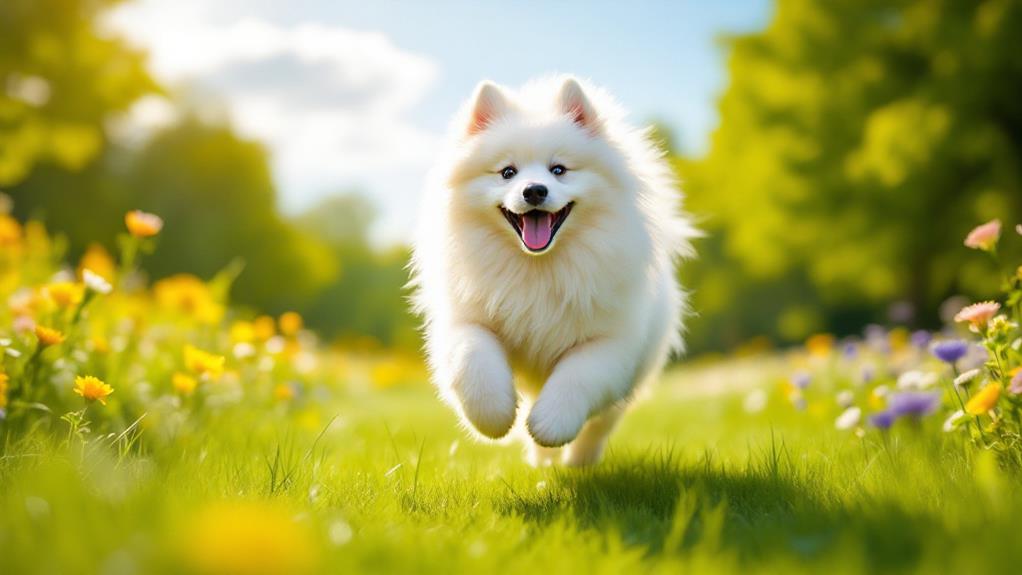
To keep your Samoyed healthy and happy, they need at least 2 hours of exercise daily, combining both physical activities like walks and playtime with mental stimulation. As active dogs, Samoyeds require a lot of outdoor activities to burn off their abundant energy. Regardless of whether you have a Samoyed puppy or an adult, ensuring they get enough exercise per day is essential. Taking them on walks or runs, playing fetch, or involving them in dog sports like agility can help meet their physical needs.
Their playful nature makes interactive games a perfect choice. Such activities not only fulfill their exercise needs but also strengthen the strong bond between you and your furry friend. Moreover, incorporating mental stimulation through puzzle toys or training sessions keeps their intelligent minds engaged, preventing boredom.
Living Conditions Adaptability
Samoyeds are surprisingly adaptable to different living conditions, including apartments, as long as they get enough exercise and mental stimulation. Despite their fluffy, medium-sized appearance, these dogs can thrive in smaller spaces. However, it's essential to counter the misconception that they suit apartment life without considerations. You'll need to guarantee they receive at least two hours of daily exercise to manage their energy levels. This includes walks and playtime to prevent boredom and destructive behavior.
Their adaptability doesn't mean they should be left alone for long periods. Samoyeds thrive on companionship and can become anxious if isolated for more than four to eight hours. They love being around people and require social interaction to stay happy. If your living situation allows, a home with outdoor space is ideal, giving them room to roam and play freely, fulfilling their need for human attachment and interaction.
Samoyeds are more comfortable in cooler climates thanks to their thick, weather-resistant double coat. However, they still require regular grooming to maintain their coat's health in any climate. With the right combination of exercise, companionship, and grooming, Samoyeds can flourish in different living conditions.