Rottweiler: The Confident and Protective Guard Dog
Choosing a Rottweiler as your guard dog means you're relying on a breed with deep-rooted confidence and natural protective instincts. These dogs trace their lineage back to ancient Roman herders, known for safeguarding cattle and valuables. With a muscular frame and a loyal heart, Rottweilers form strong bonds with their families while being wary of strangers. They're intelligent and thrive on companionship, making them excellent guardians with proper training. Regular health check-ups and a balanced diet keep them in peak form. If you're curious about harnessing their full potential, there's more to investigate about their versatile nature.
Origins and History
Rottweilers have a rich history that dates back to ancient Rome, where they were bred from herding dogs used to manage livestock. These dogs, known as Rottweiler Metzgerhund or butcher's dogs, played an vital role in driving cattle and guarding money for butchers during their travels. Their skills in herding and protection made them indispensable, especially when armies needed reliable means to feed themselves on the move before refrigeration existed.
As one of the prominent guard dog breeds, Rottweilers were originally bred not just for their strength and endurance, but also for their keen protective nature. This made them perfect guardians and working dogs. Over time, as transportation evolved by the mid-1800s, their popularity waned, but they made a strong comeback in the early 1900s as police dogs. Their versatility is impressive, shifting from herding and guarding to becoming cherished family dogs and service animals.
If you're considering a Rottweiler, it's important to find a reputable breeder who prioritizes health and temperament. This guarantees your Rottweiler will not only be a protective companion but also a loving enhancement to your family.
Temperament and Traits
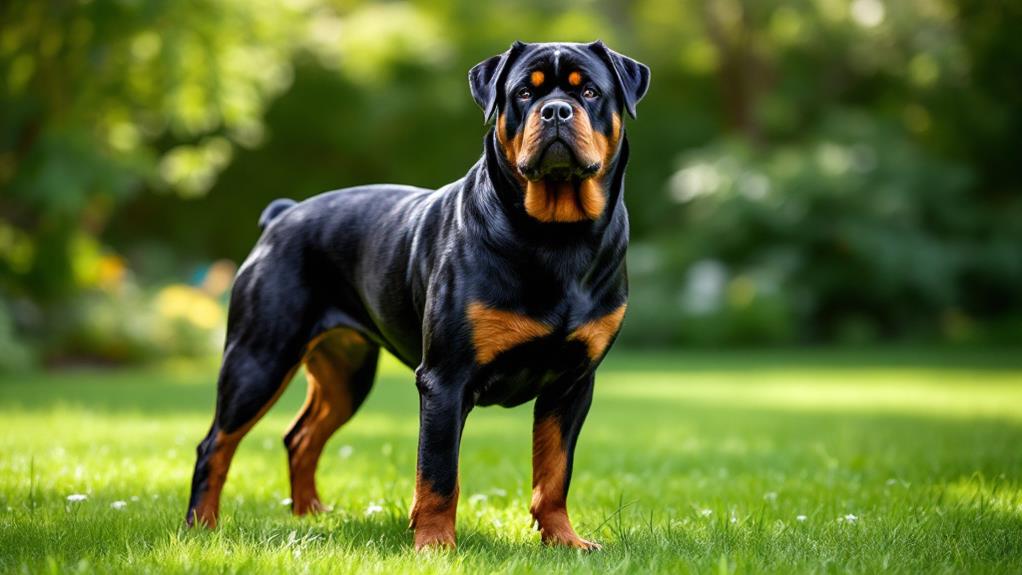
With their unwavering gaze and muscular build, these dogs exude confidence and bravery, making them exceptional guardians. The Rottweiler breed is known for its loyal and protective nature, often forming unbreakable bonds with family members. As a dog, the Rottweiler thrives on companionship, balancing a playful yet serious demeanor that endears them to their owners. Their strong guarding instincts make them naturally reserved with strangers, yet they display a gentle giant persona with their loved ones.
Training is essential when you care for a Rottweiler. Their intelligence makes them quick learners, but they require consistent guidance to channel their instincts appropriately. Early socialization is key to guarantee they can distinguish between threats and non-threats, promoting a balanced temperament as they mature. This early exposure helps them feel comfortable around different people and environments, enhancing their ability to serve as effective guard dogs.
Their physical presence is impressive, with an average weight of 80-135 pounds and a height of 22-27 inches. This intimidating stature, combined with their keen instincts, serves as a natural deterrent to potential threats, while their affectionate nature guarantees they remain a beloved part of the family.
Guarding Instincts

As you investigate the remarkable qualities of Rottweilers, their guarding instincts stand out as a defining feature of the breed. Historically, these dogs were used to protect cattle and livestock, showcasing their natural ability to guard and defend. Known as the Metzgerhund, or butcher's dog, the Rottweiler played a vital role in safeguarding money and goods for cattlemen during their travels. This history highlights why they're considered a good guard dog today.
Rottweilers possess strong protective instincts, making them excellent guards who can discern genuine threats. Their loyalty and affection towards their families complement these instincts, guaranteeing they protect without unnecessary aggression. A Rottweiler's impressive bite force of approximately 330 pounds per square inch further cements their reputation as formidable protectors, capable of deterring any potential intruders.
However, for a Rottweiler to be an effective guard dog, proper training and socialization are fundamental. These steps harness their natural guarding instincts, allowing them to function as a reliable and balanced protector. By focusing on training and socializing your Rottweiler, you'll guarantee they're equipped to guard effectively, blending their historical prowess with a modern understanding of family loyalty.
Training Strategies
When training a Rottweiler as a guard dog, it's vital to establish a routine that reinforces desired behaviors through consistent sessions. These dogs thrive on routine and clear commands, making them relatively easy to train with proper techniques. Early socialization and training are important, as it helps expose your Rottweiler to different environments and people, reducing any distrust or aggressive behavior towards strangers.
Utilize positive reinforcement methods, like treats and praise, to improve learning and encourage good behavior. Rottweilers respond exceptionally well to rewards, making positive reinforcement a significant element of good training. Keep training sessions short and engaging to prevent boredom, ensuring your Rottweiler remains focused and enjoys learning. Incorporating play into these sessions can make it easier to teach commands such as "sit," "stay," and "leave it."
Here are a few tips to take into account for training Rottweilers effectively:
- Early Socialization: Introduce your Rottweiler to new places and people early on.
- Consistency: Stick to a regular training schedule.
- Positive Reinforcement: Use treats and praise to reward good behavior.
- Engagement: Make training sessions fun and interactive.
With these strategies, you'll cultivate a well-trained Rottweiler ready to serve as a reliable guard dog.
Health Considerations

While training your Rottweiler to be an effective guard dog, you should never overlook their health needs. Rottweilers are prone to genetic health issues like hip and elbow dysplasia, which can greatly impact their mobility and quality of life. It's important to stay vigilant and address these health concerns early on. Regular veterinary check-ups are fundamental for identifying potential problems such as heart conditions, including dilated cardiomyopathy. These visits allow for early detection and management, keeping your Rottweiler in top form.
A balanced diet is another key aspect of maintaining your Rottweiler's health. Make sure their meals are rich in high-quality protein, vitamins, and minerals to support their vitality and prevent obesity-related issues. These nutritional elements are basic in supporting your dog's overall well-being.
Grooming also plays an important role in your Rottweiler's preventive care routine. Regular brushing and dental care are necessary to maintain their hygiene and prevent common skin conditions. Staying on top of grooming can also help you spot any unusual changes in their coat or skin, allowing for prompt veterinary attention. By prioritizing these health considerations, you're guaranteeing your Rottweiler remains a confident and protective guard dog.
Overcoming Misconceptions
Getting past the misconceptions about Rottweilers can make a world of difference in how these dogs are perceived. Many think of Rottweilers as aggressive attack dogs, but with proper training and socialization, they become gentle and loving companions. Their strong guarding instincts often lead to misunderstandings about their temperament. However, early socialization can mitigate territorial behaviors, promoting positive interactions.
Rottweilers are intelligent dogs capable of distinguishing between genuine threats and benign situations. This shows the importance of effective training techniques that foster appropriate responses. When trained properly, Rottweilers excel as both guard dogs and great family pets, debunking the myth that they aren't suitable for families.
Unfortunately, many municipalities impose restrictions or bans on Rottweilers due to these misconceptions, despite evidence demonstrating that responsible ownership can create well-behaved pets.
Consider the following points to better understand Rottweilers:
- Loyal Companions: Known for their loyalty, Rottweilers form strong bonds with their families.
- Playful Nature: With proper training, they display a playful and gentle demeanor.
- Effective Guards: Their guarding instincts make them effective protectors.
- Adaptable: Rottweilers adapt well to different environments when socialized early.