Popular Pet Spider Species: Discover the Best Choices for Spider Lovers
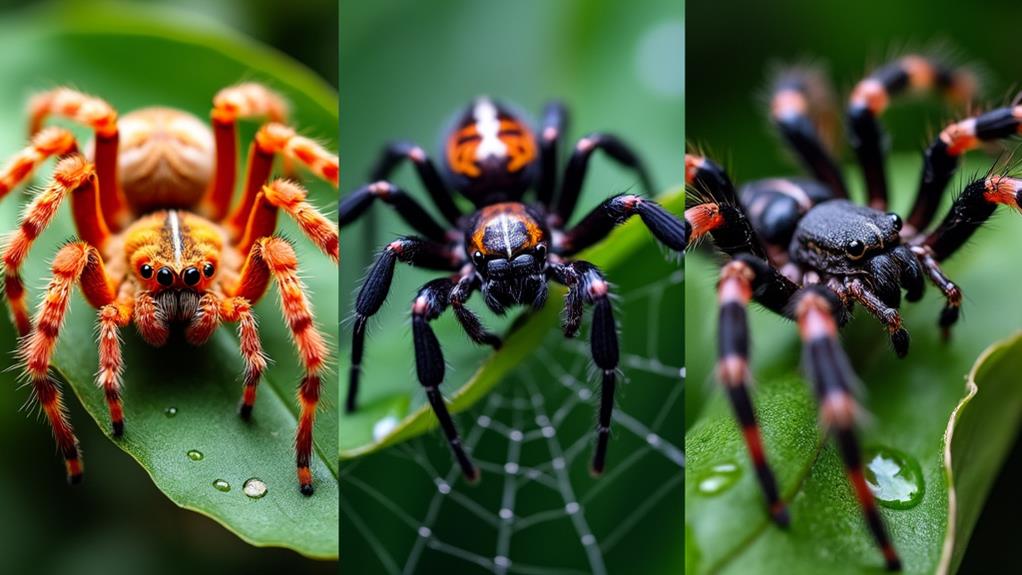
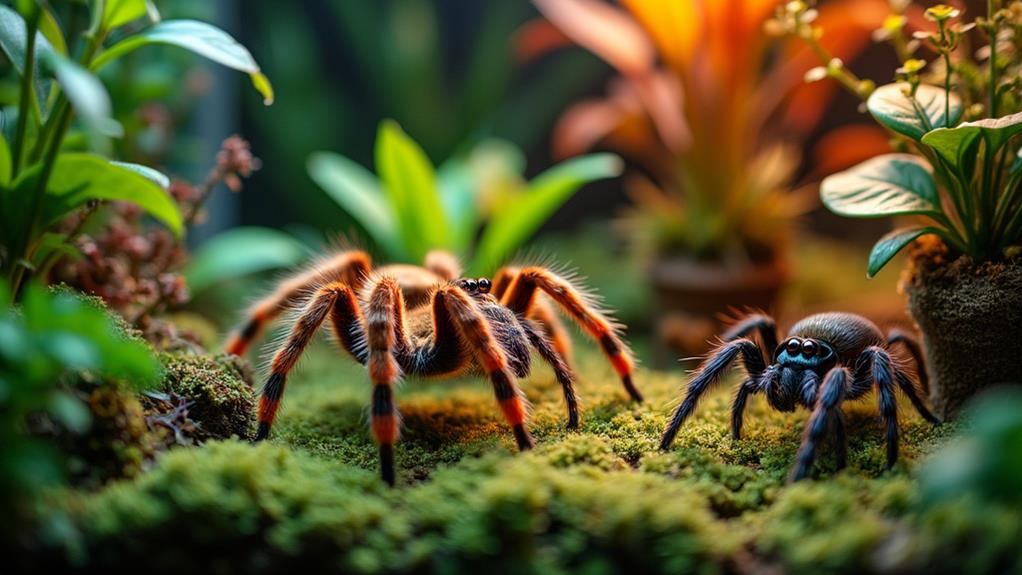
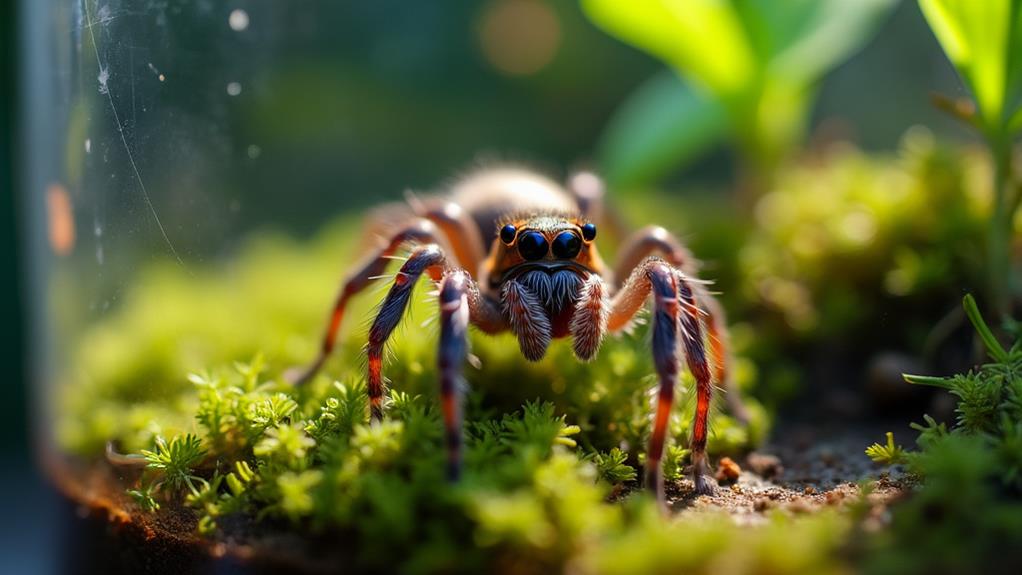
If you're looking to bring a pet spider into your life, there are many fascinating options to evaluate. The Greenbottle Blue Tarantula boasts lively colors and good web-spinning skills, while the Chilean Rose Tarantula is known for its calm demeanor. The striking Mexican Redknee and gentle Brazilian Black are favorites for their unique appearances. Pink Toe Tarantulas captivate with their colorful legs and climber antics, and the Goliath Birdeater impresses with its sheer size. Each species requires specific care regarding habitat and diet. Stick around to uncover the unique attributes that make these spiders popular among enthusiasts.
Greenbottle Blue Tarantula
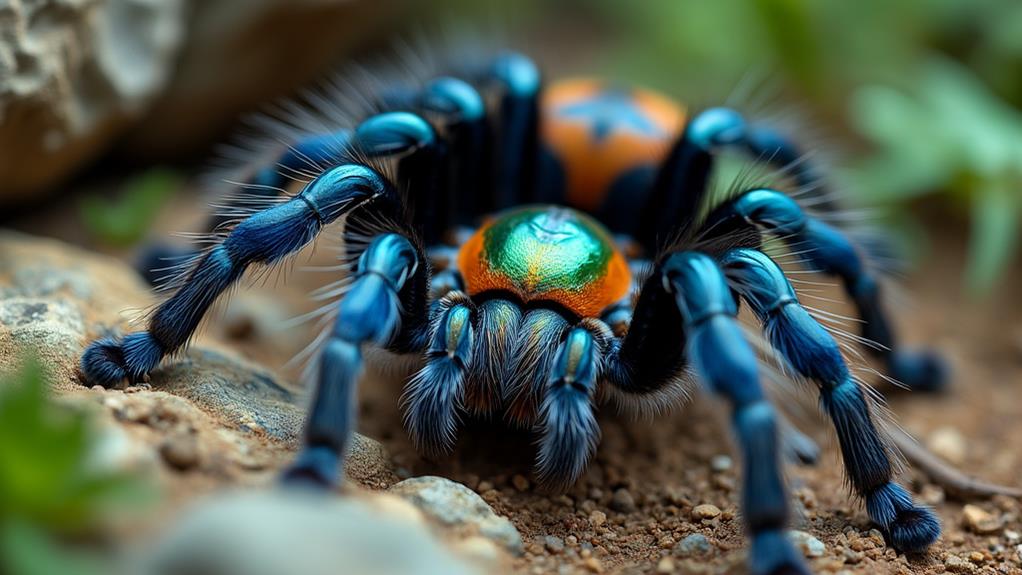
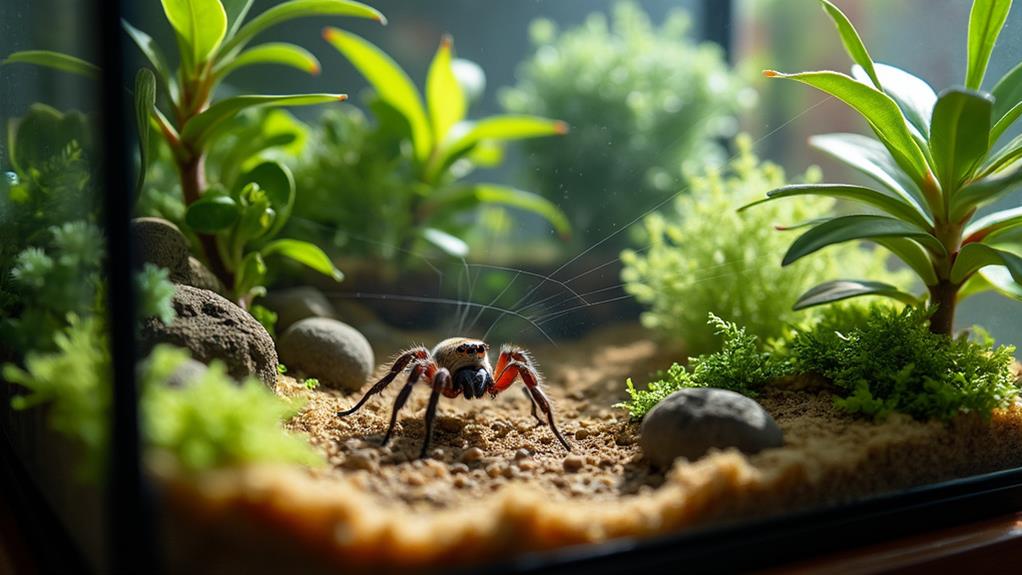
When you think of a striking and colorful tarantula, the Greenbottle Blue Tarantula might come to mind. Its lively hues of metallic blue, orange, and green make it a standout among spider enthusiasts. If you're considering one as a pet, understanding greenbottle blue care is fundamental. These tarantulas thrive in a dry environment, so maintaining low humidity is vital. Use a well-ventilated enclosure and offer a substrate like sand or coconut fiber to mimic their natural habitat. Providing a water dish guarantees they stay hydrated without raising humidity levels too much.
The greenbottle blue temperament is generally docile, but they can be skittish and quick. It's best to avoid handling them frequently, as they might get stressed or attempt to flee. Instead, observe their fascinating behaviors from a distance. These tarantulas are known to be excellent web spinners, often creating intricate silk structures around their enclosures. Feeding them is straightforward, as they have a hearty appetite for insects like crickets and roaches. With the right care and respect for their temperament, the Greenbottle Blue Tarantula can be an enthralling enhancement to your collection.
Chilean Rose Tarantula
Although it might not be as vividly colored as some of its counterparts, the Chilean Rose Tarantula is a popular choice for both novice and experienced spider enthusiasts due to its calm demeanor and easy care requirements. With its gentle nature, the Chilean Rose Tarantula is known for being one of the most docile tarantulas you can find. You'll appreciate its friendly and relaxed temperament, making it a great pet for someone who's just starting out with tarantulas.
When it comes to Chilean Rose care, you'll find it straightforward and low-maintenance. These spiders thrive in a simple setup, requiring a tank with a secure lid, substrate for burrowing, and a small water dish. They don't need high humidity levels, which simplifies things. You'll only need to mist the enclosure occasionally. Feeding is also hassle-free; they typically eat once a week, feasting on crickets or other small insects.
Understanding the Chilean Rose temperament is essential. They're usually calm but can occasionally display defensive behavior if threatened. Handling should be minimal to keep stress levels low. In general, if you're looking for a manageable and laid-back tarantula, the Chilean Rose is an excellent option.
Mexican Redknee Tarantula
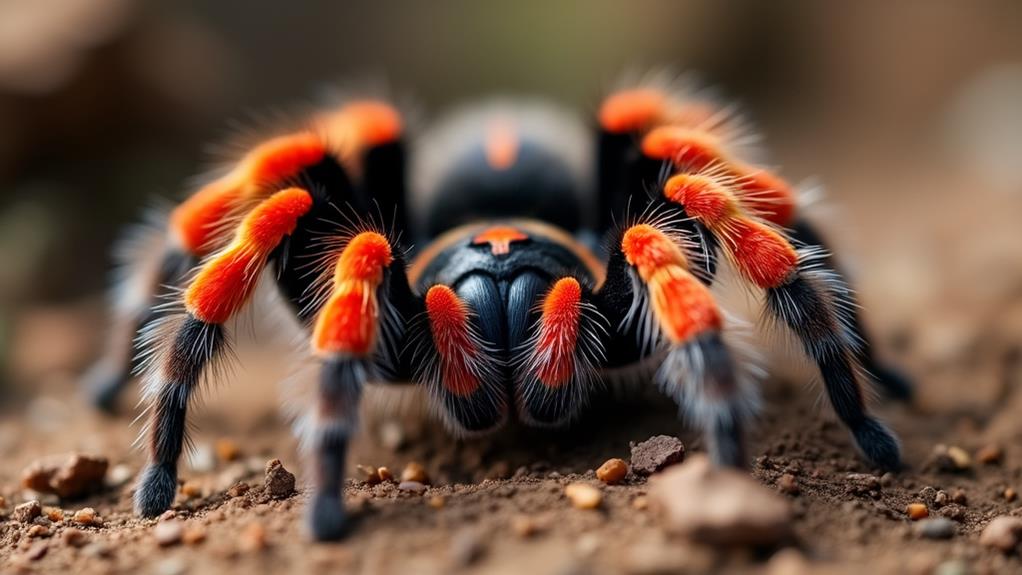
Meet the Mexican Redknee Tarantula, a strikingly beautiful arachnid that's a favorite among collectors and hobbyists alike. Its lively red and black coloring not only catches your eye but also makes it a standout supplement to any arachnid collection. If you're considering bringing one home, understanding its habitat requirements and feeding habits is essential for its well-being.
First, let's talk about habitat requirements. These tarantulas thrive in environments that mimic their natural habitat in Mexico. You'll want to set up a terrarium with a temperature range between 75-80°F and a moderate humidity level of around 60-70%. A substrate like coconut fiber or potting soil helps maintain moisture and provides a comfortable burrowing space. Confirm there's a hideout for security and a shallow water dish to keep your arachnid hydrated.
Now, onto feeding habits. The Mexican Redknee is an opportunistic feeder. It enjoys a diet of crickets, mealworms, and occasionally, small roaches. Feed it once or twice a week, making sure the prey size is appropriate—generally no larger than the tarantula's abdomen. Remember, overfeeding can lead to health issues, so moderation is key. Enjoy your adventure with this enchanting creature!
Brazilian Black Tarantula
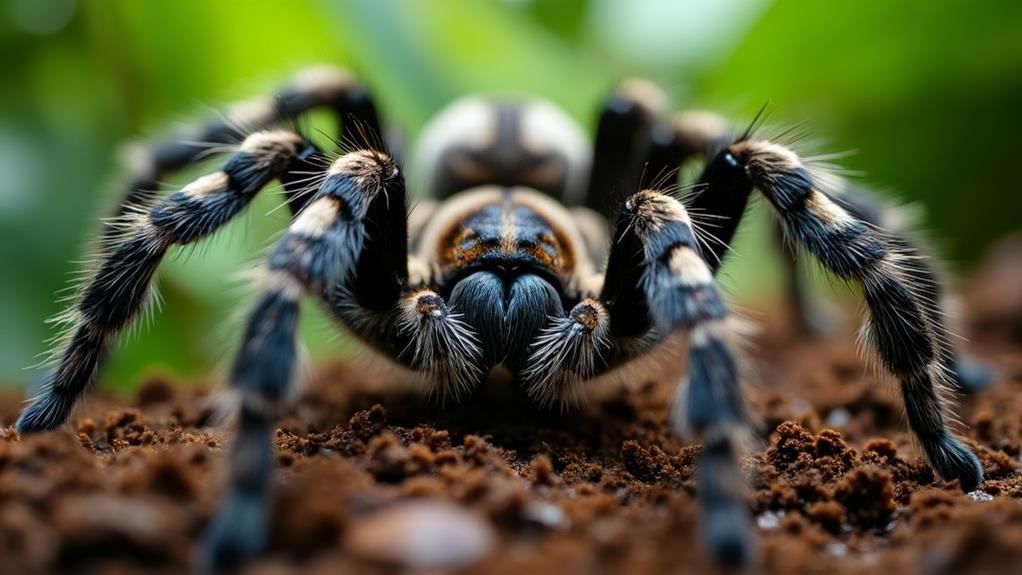
A standout in the tarantula world, the Brazilian Black Tarantula is renowned for its striking, velvety black appearance and docile nature. If you're considering adding this spider to your collection, you'll be pleased with its calm demeanor and low-maintenance lifestyle. Unlike some other tarantulas, the Brazilian Black is known for being less likely to kick hairs, making it a favorite among enthusiasts.
Before you bring one home, it's vital to understand its habitat requirements. These spiders thrive in enclosures that mimic their natural environment, which means providing a well-ventilated space with a temperature between 70-80°F and moderate humidity. A substrate mix of coconut fiber or peat moss will help maintain the necessary moisture levels. Guarantee there's a hide for your tarantula to retreat to, as they appreciate having a secure place to feel safe.
When it comes to feeding habits, the Brazilian Black is not too demanding. They typically eat a diet of crickets, roaches, and occasionally mealworms. Feed them once or twice a week, but remember to remove any uneaten prey after a day to maintain cleanliness. With the right care, your Brazilian Black Tarantula can live a long, healthy life.
Pink Toe Tarantula
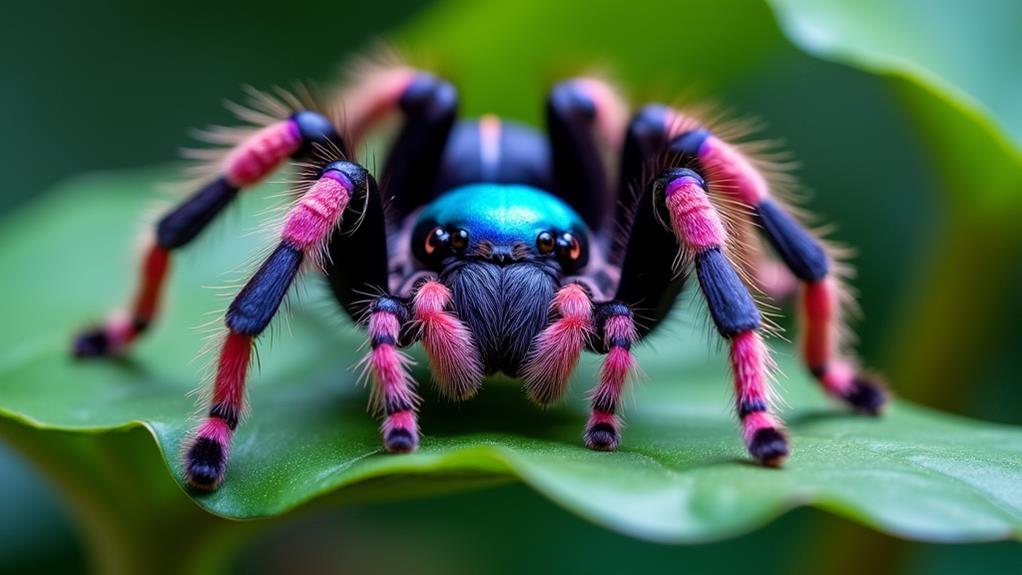
When looking for a tarantula that's both striking and easy to care for, the Pink Toe Tarantula is a fantastic choice. Known for its unique pink-tipped legs, this species captivates with its lively colors and gentle demeanor. Native to the tropical rainforests of South America, it thrives in a humid environment, making it essential to replicate its natural habitat.
To guarantee your Pink Toe Tarantula thrives, focus on its habitat requirements. A vertical enclosure mimics its arboreal nature, so a tall terrarium with ample climbing structures is ideal. Include cork bark or branches for it to investigate. Maintain humidity levels between 65-75% by misting the enclosure regularly. A temperature range of 75-82°F keeps your tarantula comfortable.
In terms of care tips, this tarantula is relatively low-maintenance. Feed it a diet of gut-loaded insects like crickets or roaches once a week. Confirm clean water is always available in a shallow dish. Be mindful of handling; while they're generally docile, they can be skittish. With proper care, your Pink Toe Tarantula can live up to 10 years, offering you a long-term, fascinating pet experience.
Goliath Birdeater Tarantula
Among the most impressive tarantulas you can own, the Goliath Birdeater Tarantula stands out due to its sheer size and striking appearance. As the largest tarantula in the world, it's truly a remarkable creature for any enthusiast. Originating from the rainforests of South America, the goliath habitat consists of humid and warm conditions, which you'll need to replicate in your home. Verify your enclosure maintains a temperature between 75-85°F with a humidity level of around 80%.
When it comes to goliath feeding, this tarantula has an appetite to match its size. Despite its name, it doesn't eat birds regularly; instead, it prefers a diet of insects like crickets, cockroaches, and the occasional small rodent or lizard. You'll want to provide a variety of prey to guarantee balanced nutrition. Feeding should occur once every 7-14 days, depending on the spider's maturity and condition.
Handling the Goliath Birdeater is generally discouraged. It's not aggressive, but its hairs can cause irritation. Instead, focus on observing its fascinating behaviors in a safe, well-maintained environment. This way, you can fully appreciate the majesty of this spectacular tarantula.