
Pet Trackers Explained: Types, Benefits, and How They Work

Using pet trackers can transform how you keep tabs on your furry friend. There are several types: GPS trackers offer real-time tracking in areas with good cellular coverage, RF trackers are perfect for indoor use, and Bluetooth trackers fit pets that stay close. Trackers provide benefits like recovering lost pets, offering real-time updates, and monitoring activity levels. However, they can face challenges like battery life and signal issues. Selecting the right tracker involves considering your environment, pet's habits, and subscription costs. Exploring these elements will improve your understanding and lead to smarter choices for pet safety.
Key Takeaways
- Pet trackers include GPS, RF, Bluetooth, mixed, and microchip GPS types, each suitable for different environments and needs.
- GPS trackers provide real-time tracking but require a cellular subscription and are less effective in remote areas.
- RF trackers work without cellular signals, offering effective indoor tracking within a 500-meter range.
- Pet trackers enhance safety with real-time updates, geo-fencing alerts, and activity monitoring features.
- Battery life and signal strength affect tracker performance, crucial for reliable pet location tracking.
Understanding Pet Tracker Types
Steering through the world of pet trackers means understanding the different types available and how they fit your needs. GPS pet trackers are a popular choice, using cellular service and SIM cards to provide real-time tracking. This tracking device is perfect if you're in an urban area with strong network coverage, guaranteeing you always have precise location information for your pet's safety.
For a more localized approach, Radio Frequency (RF) Trackers work without cellular service, making them ideal for indoor use or when your pet stays close to home. They operate within a range of up to 500 meters, offering a reliable solution for tracking nearby pets.
Bluetooth trackers, on the other hand, offer short-range tracking, typically within 100 feet via a Bluetooth connection to your smartphone. These are best for pets that stick close to you.
Mixed trackers blend the strengths of cellular and RF technologies, providing adaptable solutions that can operate without cellular service, adapting to different environments.
Lastly, microchip GPS trackers offer permanent ID but lack real-time capabilities, complementing active tracking devices. Understanding these options guarantees you select the right tracking device for your pet's safety and your peace of mind.
How GPS Trackers Operate
Regarding understanding how GPS trackers operate, they rely on a combination of GPS satellites and cellular networks to give you real-time location data. This allows you to monitor your pet's whereabouts through your smartphone. The key components of a GPS tracker include a GPS antenna, GSM antenna, SIM Card, processing board, and battery. These components work together to transmit location signals, ensuring you get precise tracking of your pet.
Real-time GPS trackers provide updates every 2-3 seconds in live mode, so you can keep a close eye on your pet. However, the accuracy of these updates can depend on signal strength and environmental factors. For instance, GPS trackers can struggle indoors or in urban areas with poor cellular coverage. This can lead to delays in transmitting location data, highlighting the importance of comprehending these limitations.
To function effectively, most GPS trackers require a SIM Card with a subscription to a cellular service. These services use mobile networks to keep you connected to your pet's location. Keep in mind that these subscriptions often come with annual fees, which can vary based on device and provider.
Benefits of Pet Trackers

Pet trackers offer a lifeline for pet owners by greatly improving the chances of recovering lost pets, a pressing concern given that about 10 million pets go missing annually in the U.S. With pet GPS trackers, you can considerably boost the likelihood of reuniting with your furry friends. These devices provide real-time location updates, allowing you to track your pet's location and movements easily. This feature is crucial for ensuring their safety, especially during outdoor adventures.
Beyond mere location tracking, many pet trackers come equipped with activity tracking features. These functions alert you to any changes in your pet's behavior or prolonged inactivity, which might signal potential health issues. By monitoring your pet's location and activity, you gain important insights into their well-being.
Another impressive feature is geo-fencing. By establishing a designated safe zone, you receive instant alerts when your pet leaves this area. This not only improves their safety but also gives you peace of mind. Utilizing user-friendly mobile apps, you can efficiently access essential information, helping you find your pet quickly and reducing the stress associated with lost pets.
Comparing Tracking Technologies
As it pertains to pet tracking technologies, understanding the differences between them is crucial for making the right choice. GPS tracking provides real-time location data by utilizing the Global Positioning System and cellular networks. It's perfect for pet owners in urban areas where signal coverage is robust, allowing you to track your pet's movements accurately. However, its reliance on cellular networks can be a limitation in remote areas.
Radio Frequency (RF) trackers offer a different approach, functioning without cellular signals and within a range of about 500 meters. They're ideal for pets that stay close to home, providing reliable tracking options without depending on network availability. Bluetooth trackers, like Apple AirTag, work well for short-range tracking, typically within 100-300 feet. However, they don't offer real-time updates, which limits their usefulness for pets that tend to wander far.
Mixed trackers combine the strengths of both GPS and RF technologies. They offer versatile tracking options, adapting to different environments and ensuring greater accuracy for pets with varied behaviors. Each tracking technology has its strengths and limitations, so consider your pet's behavior and environment when selecting the best option for your needs.
Limitations and Challenges
Steering through the limitations and challenges of pet trackers is essential for guaranteeing you select the right device for your furry friend. Understanding these hurdles helps you monitor your pet's safety effectively. Here are some common challenges:
- Accuracy Issues: GPS trackers often struggle with accuracy in areas with poor signal reception. This is especially challenging indoors or in rural locations, where tracking can become unreliable.
- Limited Range: Bluetooth trackers have a limited range, typically around 100 feet, which isn't ideal for pets that tend to roam. Non-GPS trackers, like PetFon, offer limited coverage, reaching only 0.67 miles in dense areas and up to 3.5 miles in open spaces.
- Battery Life: The battery life of GPS trackers can be a significant concern. Frequent movement can drain the battery quickly, reducing the frequency of location updates and making it less effective in tracking lost pets.
Environmental factors, such as obstructions or interference from Wi-Fi signals, also pose challenges. These can impact the reliability and accuracy of geofencing alerts, leading to delays when your pet exits a designated safe zone. Being aware of these factors guarantees a better understanding of each device's potential limitations.
Choosing the Right Tracker
Understanding the limitations and challenges of pet trackers helps you make informed decisions when choosing the right device for your pet. When selecting a GPS pet tracker, consider the technology. Cellular GPS trackers work best in urban areas with solid signal coverage, while satellite options are better for rural environments. Also, evaluate the battery life; for instance, the Whistle Go Discover offers up to 20 days of usage, which is great for extended outdoor adventures without needing constant recharging.
You'll want to verify the tracker fits comfortably on your pet collar. A device that's too bulky can hinder movement, especially for smaller animals. Features like geo-fencing alerts and activity monitoring can improve safety and offer insights into your pet's health. These features allow you to track your pet's location and monitor their well-being.
Don't forget about subscription costs. Some trackers, such as Tractive, require an annual service fee, which can impact your budget. Weigh these costs against the benefits to determine the best investment for your pet's safety. By considering these factors, you'll be better equipped to choose a tracker that suits your needs and keeps your furry friend safe.
Best Practices for Use
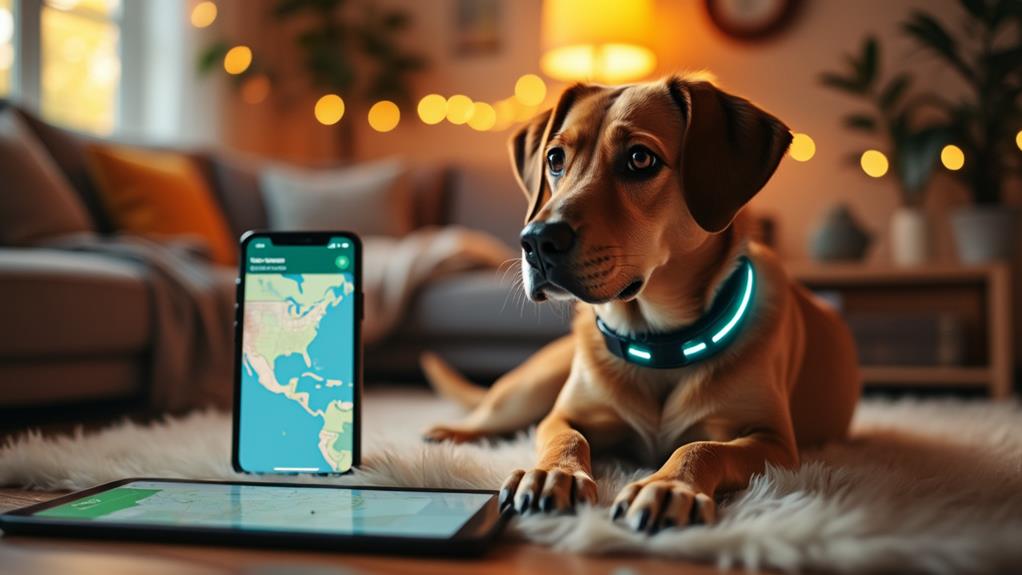
Your pet's safety relies on how effectively you use their GPS tracker. To guarantee that your GPS Dog tracking collars perform at their best, follow these best practices. They'll help keep your pet safe and give you peace of mind:
- Familiarize Yourself: Before emergencies arise, get to know your GPS tracker and its smartphone app. Practice using it in a controlled environment to confidently monitor and locate your pet when it truly matters.
- Regular Testing: Test your tracker regularly. Verify it's functioning correctly to avoid surprises when you need it most. Keep an eye on battery life and signal strength, as these are significant things that can affect reliability.
- Update Information: Regularly check and update your pet's information on the app. Accurate details guarantee precise location tracking and timely alerts, vital for your pet's safety.
Understanding the features and limitations of your tracking collars is imperative. This knowledge will help you use the device effectively in diverse situations. Practice tracking in a safe environment with a partner to build confidence. With these steps, you'll be better prepared to receive alerts and promptly locate your pet, securing their safety and your peace of mind.