Pekingese: Her Majesty, The Royal Companion Dog
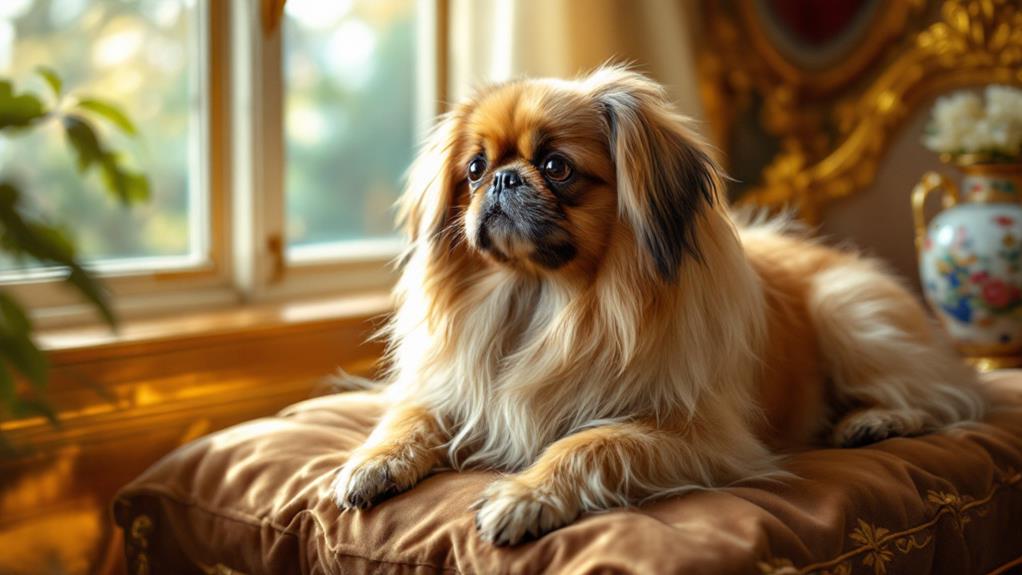
In the world of regal companions, the Pekingese stands out as a symbol of nobility and charm. With roots tracing back to the Han dynasty, these dogs were prized by Chinese emperors. Their distinctive flat faces and expressive eyes give them a majestic aura. Despite their small size, they exude a lion-like presence, celebrated in myths and cherished in royal courts. Their lush coats demand care, and their brachycephalic features require attentive grooming. These dogs aren't just pets; they're a link to imperial glamour and power. Uncover how this breed's influence extends beyond mere companionship.
Historical Significance
The Pekingese breed didn't just appear out of nowhere; it has a rich history dating back over 2,000 years to the Han dynasty, where it was exclusively owned by the Chinese imperial family. These dogs weren't merely pets but "living gems," symbols of high status and cultural significance among Chinese royalty. Their connection to the imperial court was so profound that they became associated with lion symbolism in Buddhism, embodying courage and majesty.
During the Second Opium War in 1860, British forces uncovered five Pekingese dogs in the ruins of the Yuanmingyuan, the Old Summer Palace. This moment marked the initial introduction of the breed to the Western world. Empress Dowager Cixi, who adored these dogs, might not have imagined their expedition beyond China. However, when Queen Victoria received a Pekingese named Looty, the breed evolved from Chinese exclusivity to international charm.
The Pekingese's historical significance extends beyond their physical form; they represent nostalgia for a bygone age of imperial elegance. They serve as a bridge between East and West, highlighting complex cultural exchanges while maintaining their regal demeanor. As you admire a Pekingese, you're embracing a legacy intertwined with history.
Unique Physical Traits
As you consider the Pekingese's storied past, its unique physical traits immediately capture your attention, illustrating why this breed was so cherished by royalty. The Pekingese boasts a distinctive flat face and large expressive eyes, creating a regal yet affectionate appearance. With a compact build and shorter legs, this breed exudes a sense of nobility and elegance, making it a fitting companion for emperors.
The Pekingese's unique physical traits aren't just for show; they also come with challenges. The breed's brachycephalic structure can lead to breathing difficulties and heat sensitivity, requiring special care and attention. As a Pekingese owner, you'll need to be aware of these potential health issues and take steps to mitigate them, especially in warm weather.
- The Pekingese's flat face requires careful monitoring to prevent breathing problems.
- Their shorter legs contribute to their unique rolling gait, ensuring they stay close by your side.
- The breed's large expressive eyes can be prone to injury, so regular check-ups are crucial.
Coat and Grooming
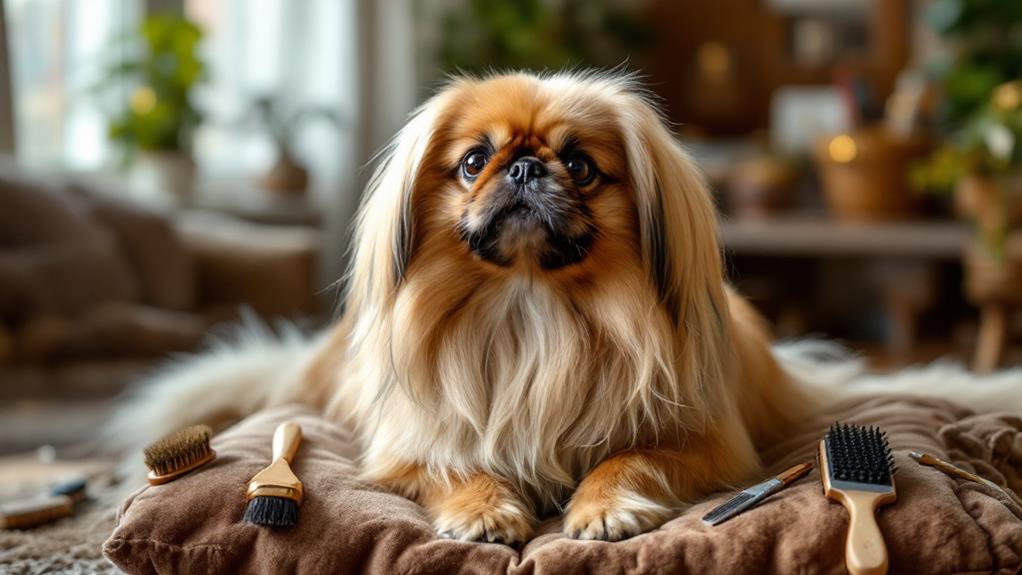
In relation to the Pekingese's coat and grooming needs, you'll find they require a bit of dedication but offer rewarding results. Their long, flowing coat is a hallmark of the breed, demanding daily brushing to prevent mats and tangles, especially given their heavy shedding. Pekingese are celebrated for their diverse color combinations, ranging from gold and red to sable, cream, black, and even blue. Each color and texture might require slight adjustments in grooming techniques, but the basics remain consistent.
Daily grooming isn't just about maintaining the coat's beauty; it's essential for the Pekingese's health. Regular cleaning of the eyes and facial creases is necessary to avoid sores, which can lead to health issues if neglected. Scheduling a more thorough grooming session every 8-12 weeks is advisable, with many owners opting for a practical puppy cut to reduce maintenance time. This not only keeps your Pekingese looking prim and proper but also minimizes daily upkeep.
Grooming your Pekingese isn't just a chore—it's a wonderful opportunity for bonding. The time spent together during these sessions strengthens your relationship, making the effort truly worthwhile.
Health and Care
Caring for a Pekingese involves understanding their unique health needs and adopting a proactive approach to guarantee their well-being. This charming breed is prone to specific health issues, especially respiratory problems and eye conditions, due to their brachycephalic structure. Regular grooming is imperative to maintain their luxurious coat health, requiring daily brushing to prevent matting. A full grooming session every 8-12 weeks is recommended, which helps in keeping their coat in top condition.
Daily cleaning of their eyes and facial creases is necessary to prevent sores and infections. These areas can easily accumulate moisture and debris, so careful attention is needed to guarantee your Pekingese remains comfortable and healthy.
Exercise needs for a Pekingese are relatively minimal, with a maximum of 30 minutes of monitored activity each day. Overexertion can lead to breathing difficulties, so gentle playtime is best. They're also susceptible to heatstroke, making it imperative to provide cooling measures during hot weather. Keep them in a cool environment and avoid outdoor activities during peak temperatures.
- Grooming: Daily brushing and regular grooming sessions.
- Daily Cleaning: Necessary for eye and facial crease hygiene.
- Monitored Activity: Limited exercise to prevent respiratory issues.
Myths and Legends
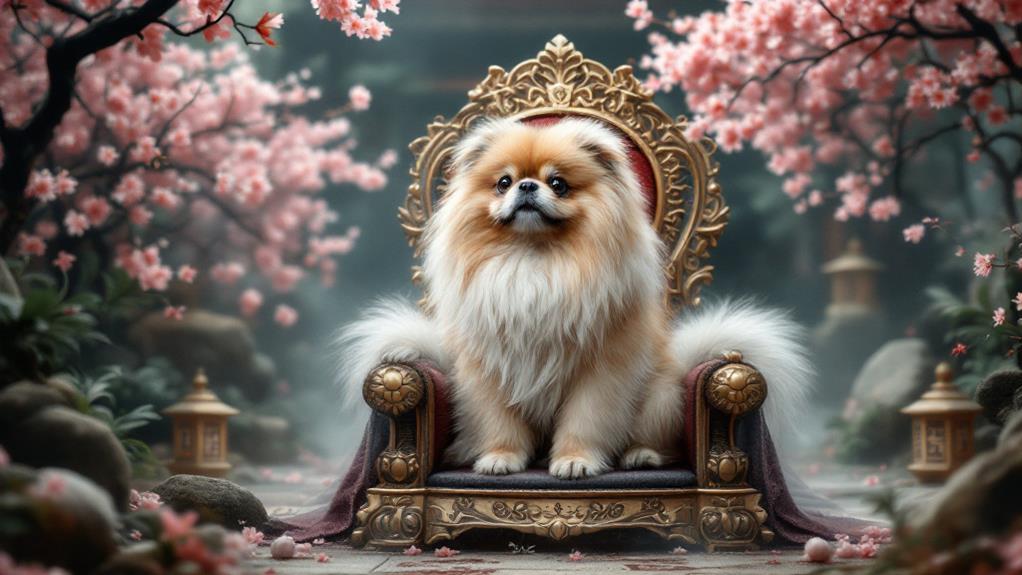
While many dog breeds have intriguing origins, the Pekingese stands out with its enchanting myths and legends. One particularly popular tale involves a lion and a marmoset monkey, where the lion transformed into a small dog out of love. This story beautifully captures the breed's unique stature and character, illustrating why the Pekingese are often perceived as "living gems" within the Chinese imperial court.
Another engaging myth, "The Butterfly Lions," tells of a lioness and a butterfly's love, resulting in the creation of the Pekingese. This emphasizes their delicate yet brave demeanor, traits that continue to define their regal image. Historical texts, including poems by Dowager Empress Tzu-Hsi, further highlight the breed's revered status in society. The Empress's writings often celebrated the Pekingese's dignity and large expressive eyes, traits highly prized by the nobility.
The cultural significance of the Pekingese is undeniable, as shown by their frequent appearances in literature and art. These stories and legends not only underscore the breed's mythical charm but also its esteemed role throughout history. The Pekingese, with its lion-like features, continues to symbolize power and loyalty, enchanting hearts worldwide.
Cultural Influence
Pekingese dogs, often seen as symbols of opulence, have left a lasting cultural imprint across the globe. Historically, these dogs were exclusive to Chinese royalty, embodying power and privilege within the Imperial Palace. Their presence in luxurious settings made them a symbol of power. When Queen Victoria and J.P. Morgan introduced them to Western society, Pekingese became synonymous with aristocracy and sophistication, reflecting their cultural significance. Their dignified demeanor and unique appearance have made them icons in both Eastern and Western narratives.
In Western media, the Pekingese has been celebrated in literature and film, adding to its illustrious reputation.
- Literature: T.S. Eliot's "The Awefull Battle of the Pekes and the Pollicles" underscores their cultural significance.
- Cinema: Films like "Crazy Rich Asians" feature Pekingese, cementing their status as glamorous pets.
- Cultural myths: Legends, like the one involving a lion and a marmoset, highlight their valued companion status.
From the Imperial Palace to modern-day stories, Pekingese dogs continue to captivate hearts. Their cultural influence, spanning from the Chinese aristocracy to Western elite circles, remains undeniable, making them enduring symbols of luxury and power.