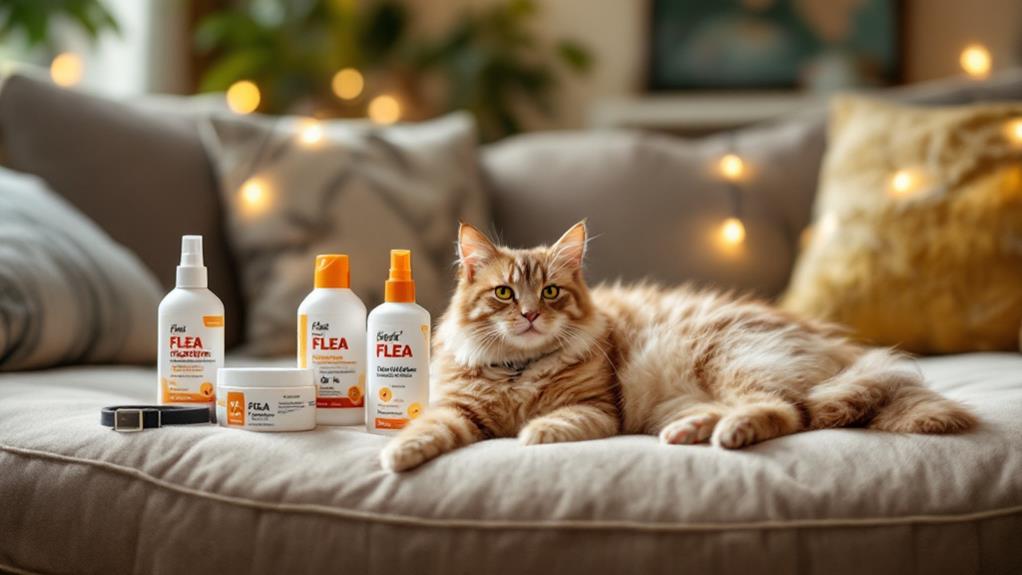
Natural Ways to Get Rid of Fleas on Cats: Safe and Effective Solutions
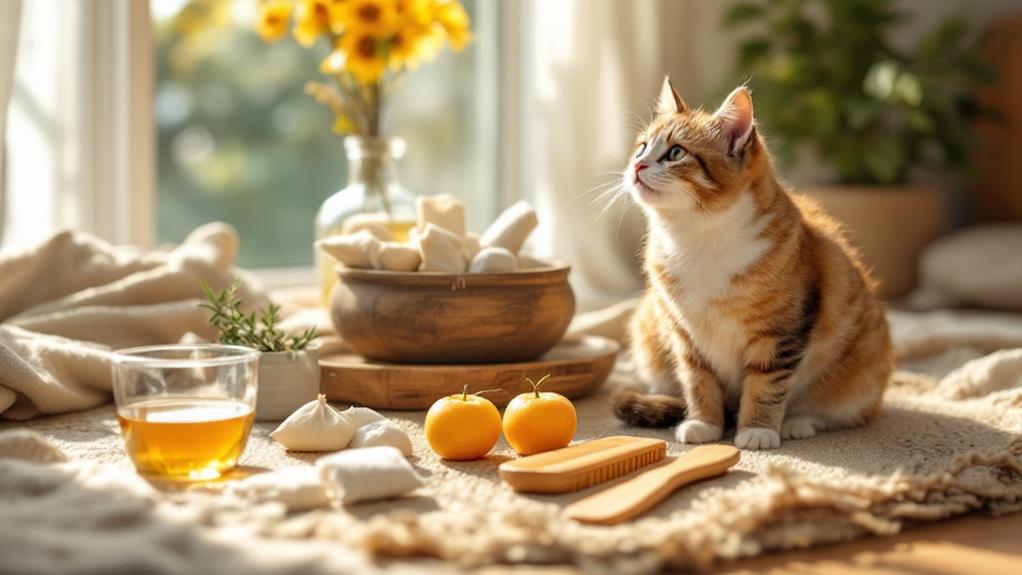
To naturally get rid of fleas on your cat, start by regularly grooming them with a flea comb. This helps spot and remove fleas early. Use a mix of apple cider vinegar and water as a safe spray to repel fleas on their fur. Regularly vacuum your home and wash your cat's bedding in hot water to disrupt the flea lifecycle. Incorporate diatomaceous earth in common flea areas for control, and plant herbs like lavender to repel them outdoors. Moreover, ensuring your cat remains indoors reduces exposure to fleas outside. Uncover how combining these methods can effectively tackle fleas.
Identifying Flea Infestations
Spotting a flea infestation on your cat can be tricky but vital for their well-being. Fleas are tiny, black or brown insects less than 1/8-inch long, often seen jumping around your cat's fur. You might notice your cat engaging in excessive scratching or grooming, which are tell-tale signs of flea infestations. To identify fleas, look for flea dirt—tiny black specks resembling pepper—nestled in the cat's fur or bedding.
Regularly using a flea comb can help you detect fleas by catching them and revealing flea dirt. Pay close attention to common flea hiding spots like the neck, armpits, groin, and around the base of the tail. These areas provide warm, protected environments that fleas love.
Parting the fur can also help you visually identify fleas and their eggs. Early detection is vital as it helps prevent severe skin irritations and allergic reactions in your cat, as well as other health risks associated with flea infestations. By staying vigilant and regularly checking your cat, you can maintain their health and comfort, keeping those pesky fleas at bay.
Preventive Measures
Preventive measures play a key role in keeping your cat flea-free and comfortable. One of the most effective steps you can take is to prevent your cat from roaming outdoors, as this greatly reduces their exposure to flea-infested environments. Regular grooming with a flea comb is fundamental. It not only keeps your cat's coat healthy but also helps you spot any early signs of a flea infestation before it becomes severe.
Establishing a consistent cleaning routine is another significant aspect. Frequent vacuuming helps eliminate flea eggs and larvae from carpets and floors, while washing pet bedding in hot water acts as a powerful home remedy to keep these pests at bay. To further protect your home, consider placing flea barriers like mats or sprays at entryways to reduce the chances of fleas being brought inside.
Monitoring pets in your household is important. Since fleas can easily jump from one pet to another, ensuring all your furry friends are flea-free is key to maintaining overall pet wellness. By implementing these natural remedies and preventive strategies, you'll keep your cat and home protected from flea invasions.
Effective Cleaning Techniques
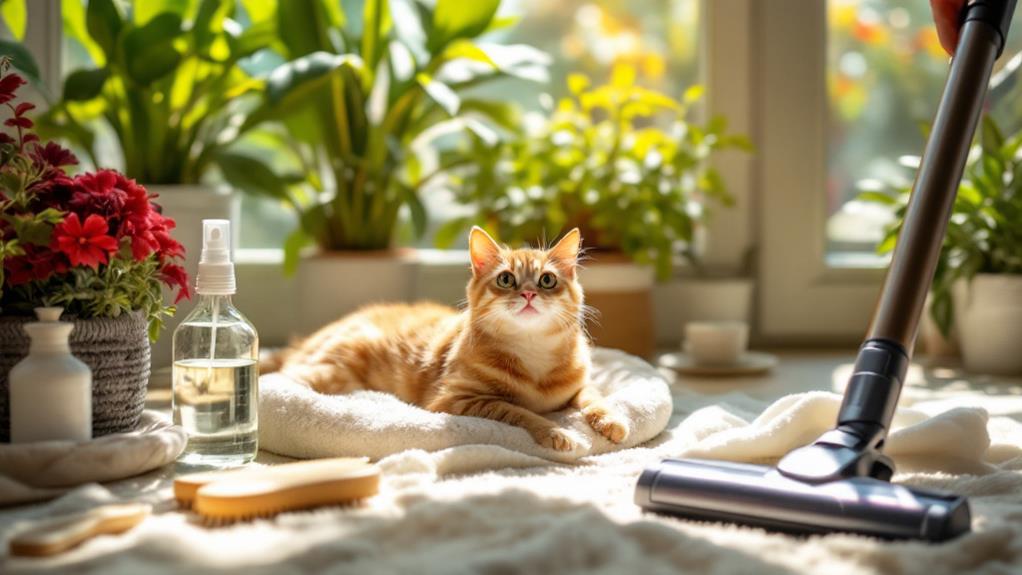
Efficiently tackling flea problems starts with diligent cleaning techniques that disrupt the pests' life cycle. To effectively implement a flea treatment, you need to establish a robust cleaning schedule. This will help eliminate flea eggs and reduce the likelihood of infestations. Here's how you can maintain a flea-free environment:
- Vacuuming: Regularly vacuum rugs and upholstery, paying special attention to corners, under furniture, and baseboards where fleas hide. Don't forget to dispose of vacuum contents outdoors to prevent re-infestation.
- Launder Cat Beds and Fabrics: Wash cat beds, toys, and any fabric items your cat uses in hot water weekly. This kills fleas and larvae, ensuring these items don't become breeding grounds.
- Cover Furniture: Use towels or blankets to cover furniture. This not only protects your upholstery but also makes it easier to wash these items regularly, helping to maintain a clean environment.
- Consistent Cleaning Schedule: Stick to a consistent cleaning schedule to disrupt the flea life cycle. This proactive approach is essential in reducing the likelihood of future flea infestations in your home.
Natural Flea Remedies
When dealing with fleas on cats, natural remedies offer a gentle yet effective approach to managing these pesky parasites. Start by trying apple cider vinegar. Mix it with water in a 2:1 ratio and lightly spray it onto your cat's fur. This solution doesn't just repel fleas; it causes them to jump right off. After using apple cider vinegar, follow up with a flea comb. This tool is invaluable in physically removing fleas and their dirt, helping to eliminate the fleas infesting your pet.
Essential oils like lavender and cedar can also be useful. They act as natural flea repellents, but remember to dilute them properly and ascertain they're safe for your cat. A safer, non-toxic option is diatomaceous earth. Sprinkle it in areas where fleas are common, and it can kill them on contact without harming your furry friend.
Don't forget the power of bathing your cat. Use a gentle natural oil shampoo to soothe their skin and repel fleas. However, be cautious not to overdo it, as over-bathing can lead to dry skin. Combining these natural remedies can be a safe and effective way to combat fleas.
Outdoor Flea Management
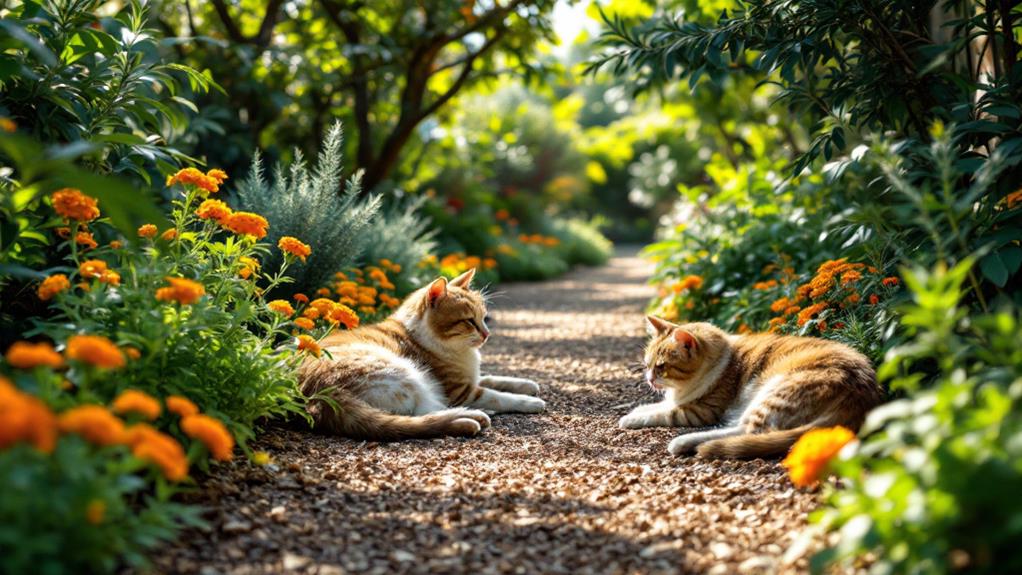
Outdoor flea management is crucial in keeping your cat flea-free. By taking proactive steps, you can make your yard less inviting to fleas and reduce the chances of them latching onto your feline friend. Here are some effective strategies:
- Maintain a Clean Yard: Regularly remove debris and leaves from your outdoor space. Fleas thrive in cluttered areas, and a tidy yard can greatly deter them from setting up habitat.
- Plant Fragrant Herbs: Incorporate plants like lavender, rosemary, and fennel in your garden. These fragrant herbs naturally repel fleas, creating a less hospitable environment for these pests.
- Use Diatomaceous Earth: Sprinkle food-grade diatomaceous earth around your yard, focusing on soil and high-traffic outdoor areas. This natural substance kills fleas by damaging their exoskeletons, without posing a threat to your pets or family.
- Trim Grass Regularly: Keep your grass and shrubs well-trimmed. Overgrown vegetation provides ideal hiding spots for fleas, so regular maintenance can prevent them from thriving.
Safe Dietary Considerations
In the fight against fleas, your cat's diet can play an essential role in bolstering their defenses. A natural approach to dietary prevention involves incorporating certain elements that support their immune system and skin health. Omega-3 fatty acids are a fantastic addition to your cat's diet. They improve skin health, making your cat less appealing to fleas, and strengthen the immune system, reducing the chances of infestations.
Garlic is sometimes suggested as a natural flea repellent, but be cautious. While it might help in moderation, too much garlic can be toxic to cats. Always consult your veterinarian before introducing garlic into their diet to verify it's safe and effective for flea prevention.
Brewer's yeast is another natural supplement recommended for cats. It can create an odor in the skin that fleas find unappealing, offering an extra layer of protection. However, like any dietary change, it's important to discuss it with a veterinarian initially. They can guide you on the appropriate amount and confirm it aligns with your cat's general dietary needs. By focusing on these natural dietary considerations, you can help your cat stay healthy and flea-free.
Behavioral Tips for Flea Control
Aside from dietary strategies, there are behavioral tips that can greatly aid in controlling fleas on your cat. Regularly grooming your cat using a flea comb is vital. This not only helps rid of fleas but also allows for early detection of any infestations. By catching fleas early, you can manage and reduce their population more effectively.
Consider keeping your cat in an indoor environment. This greatly helps prevent exposure to fleas, which are commonly found in outdoor areas. Monitoring interactions with other pets is also important. Fleas can easily hop from one animal to another, so keeping an eye on your cat's social activities can help you avoid a household-wide infestation.
Here are some key behavioral strategies:
- Routine Grooming: Use a flea comb regularly to detect and remove fleas early.
- Indoor Living: Keep your cat indoors to reduce exposure to flea-infested areas.
- Monitor Interactions: Be vigilant about your cat's contact with other animals.
- Check Common Hiding Spots: Focus on areas like the neck and armpits for flea checks.
Long-term Prevention Strategies
To effectively combat fleas on your cat in the long term, integrate several natural prevention strategies into your routine. Start by using natural oils like lavender or cedar oil as part of your home remedies. These vital oils create an unfriendly environment for fleas, helping to eliminate them both in your home and on your cat. Establish a consistent cleaning routine that involves vacuuming carpets and upholstery, washing pet bedding in hot water, and keeping your home clutter-free. This disrupts the flea life cycle and serves as a potent flea prevention method.
Additionally, keep your cat indoors as much as possible. By doing so, you reduce their exposure to fleas that lurk in outdoor environments or hitch a ride from other animals. To bolster your efforts, schedule regular veterinary check-ups. Your vet can recommend a personalized flea prevention plan that suits your cat's health needs. It's vital to monitor and treat any other pets in your household simultaneously. By ensuring all pets are flea-free, you prevent reinfestation and maintain a healthy environment for your furry friends. These strategies will effectively keep your cat from getting fleas in the long run.