Miniature Bull Terrier: The Comical and Fearless Companion Dog
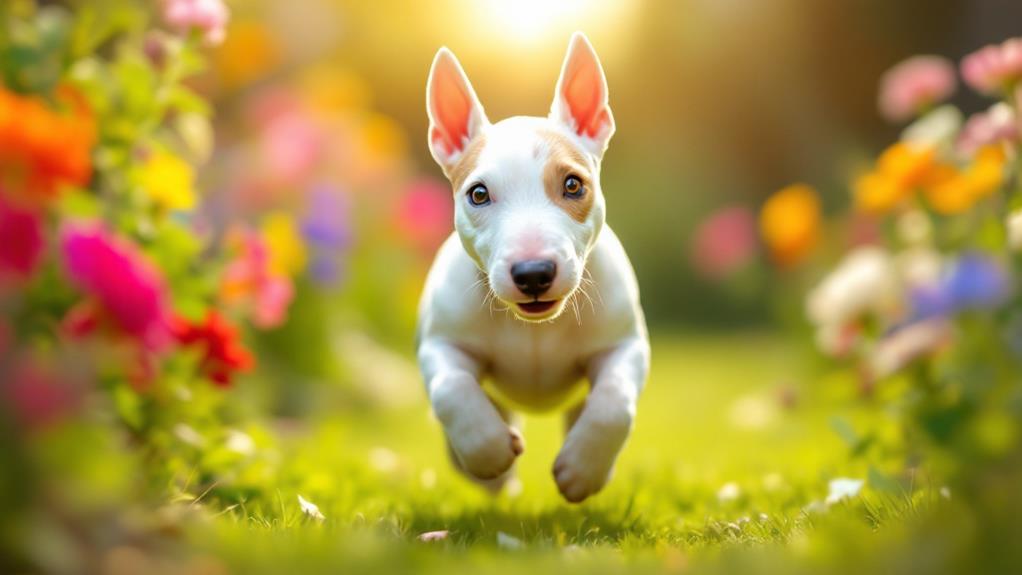
You'll love the Miniature Bull Terrier for its big personality packed into a compact frame. With their distinctive egg-shaped heads and mischievous antics, they're truly the clowns of the dog world. These fearless companions thrive on action, needing at least an hour of exercise daily to keep their high energy in check. Grooming is simple, with just weekly brushing needed to maintain their short, smooth coat. While generally healthy, regular vet check-ups are key due to some breed-specific issues. Their playful, affectionate nature makes them ideal for active households, yet there's so much more to know about this charming breed.
Unique Characteristics
When you initially encounter a Miniature Bull Terrier, their distinctive appearance immediately catches your eye. Their egg-shaped head and flat forehead are unmistakable, contributing to their unique appearance. The small, thin ears add to their charm, and their strong, muscular body structure commands attention. Standing between 10 to 14 inches tall and weighing 18 to 28 pounds, these compact dogs pack an impressive presence.
Beyond their looks, a Miniature Bull Terrier's playful demeanor and lively personality make them stand out. Often described as "clowns," they have a knack for bringing joy and laughter with their mischievous antics. Their high-spirited disposition means they're always ready for action, much like a perpetual toddler enthusiastic to play. This energy requires regular physical and mental stimulation to keep them happy and healthy.
Their short, smooth coat comes in a variety of colors, including all-white, brindle, and mixed patterns. This makes grooming a breeze, requiring only weekly brushing to maintain their sleek appearance. In general, the Miniature Bull Terrier's unique combination of looks and lively personality makes them an unforgettable companion for those who appreciate their spirited nature.
Historical Background
Although the Miniature Bull Terrier might capture your attention today with its unique looks and lively antics, its roots stretch back to 19th-century England. The breed originated in the 1830s when breeders crossed the Bulldog with the now-extinct English White Terrier, resulting in the Bull-and-Terrier. This early breed was designed to be a smaller, fearless ratter that excelled in hunting vermin. Over time, Miniature Bull Terriers evolved from their working roles to becoming cherished companion pets due to their playful nature and distinctive appearance.
The historical background of Miniature Bull Terriers highlights their tenacity and fearlessness, qualities that were vital for above-ground ratting. Their muscular build and unique egg-shaped head set them apart from other terriers, while their clownish personality made them endearing companions. They initially appeared in records in 1872, marking the beginning of their path as a distinct breed.
Despite their long history, Miniature Bull Terriers were only recognized by the American Kennel Club (AKC) in 1991. This recognition cemented their status as a distinct breed and paved the way for their rise in popularity as delightful, comical companions.
Physical Attributes
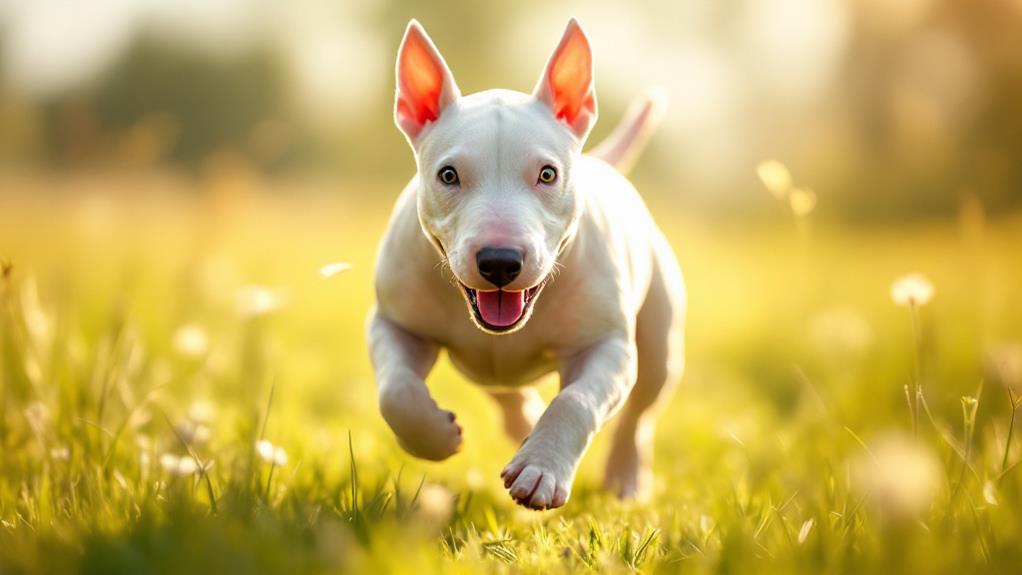
Miniature Bull Terriers captivate not only with their history but also with their distinct physical attributes. When you initially meet a Miniature Bull Terrier, you'll notice their compact yet muscular build. Standing at 10 to 14 inches tall and weighing between 18 to 28 pounds, these dogs are small but mighty. Their strong and symmetrical body structure, complete with short backs and broad, rounded chests, highlights their athletic nature, making them both agile and robust companions.
One of the most striking physical attributes of the Miniature Bull Terrier is their unique egg-shaped head. This distinctive feature includes a flat forehead and small, thin ears, which gives them an unmistakable appearance. Their eyes convey a lively and intelligent demeanor, adding to their overall charm.
The Miniature Bull Terrier's coat is short and smooth, coming in a variety of colors such as all-white, brindle, and other mixes. You'll find that weekly grooming helps manage their moderate shedding. Finally, their short, low-set tail tapers to a fine point and is typically carried horizontally, perfectly complementing their playful and spirited disposition. These physical traits make them a distinct and delightful breed.
Temperament and Behavior
With their comical antics and high energy, Miniature Bull Terriers are often compared to playful toddlers. Their temperament is a lively mix of confidence and independence, which can sometimes come across as stubbornness. This breed's feisty nature means they're always up for a bit of fun, and they love to keep you entertained with their mischievous behavior. However, to guarantee they grow into well-rounded dogs, early socialization is vital. Exposing them to diverse environments, people, and other animals helps diminish any tendencies toward fear or aggression.
Despite their spirited demeanor, Miniature Bull Terriers are incredibly affectionate and devoted companions. They thrive on being part of the family and can become quite jealous if left out of activities. To make the most of their loving nature, it's important to engage them in family fun. However, their playful energy needs proper guidance. Consistent training is key to managing their behavior and channeling their energy positively. Without it, their independent nature might lead to undesired actions. By providing structured and consistent training, you can ascertain that your Miniature Bull Terrier becomes an obedient and delightful member of the household.
Health Considerations

Caring for a Miniature Bull Terrier means staying vigilant about their health. While these dogs are generally healthy, they can be predisposed to certain health issues. One of the most concerning is Primary Lens Luxation (PLL), a condition that can lead to blindness if not monitored closely. Routine eye exams during regular veterinary check-ups are vital to catch any signs of PLL early.
In addition to eye health, guaranteeing proper kidney function is pivotal. Miniature Bull Terriers should have annual testing to monitor this, as early detection of kidney issues can prevent more serious complications down the line. It's also significant to be aware of other common health concerns like deafness, particularly in white-furred varieties, and heart murmurs. A cardiac ultrasound can assess the latter, providing peace of mind about your companion's heart health.
Maintaining your Miniature Bull Terrier's weight is another key aspect of their well-being. Obesity can exacerbate existing health problems, so regular exercise and limiting treats are necessary to prevent weight gain. With a lifespan averaging between 11-13 years, focusing on long-term health care and preventive measures will guarantee your Miniature Bull Terrier enjoys a quality life.
Exercise and Grooming
Exercise is vital for keeping your Miniature Bull Terrier healthy and happy. At least one hour of daily exercise to maintain their physical health is critical. This routine prevents obesity and helps manage their abundant energy. Regular walks and interactive playtime are a must. However, for puppies, limit exercise to avoid injury. Adult Miniature Bull Terriers thrive on diverse activities, including dog sports like agility and flyball, which also provide mental stimulation. To support their active lifestyle, make sure they're fed high-quality dog food.
Grooming your Miniature Bull Terrier is moderately good and straightforward. Here's a basic routine:
- Brushing: Weekly brushing is sufficient, but during shedding seasons, opt for daily brushing to handle their moderate shedding.
- Nail Trimming: Their nails grow quickly, so regular trimming is necessary to keep them comfortable.
- Ear Checks: Periodic ear checks help avoid infections and guarantee they're clean.
- Baths: Bathe them when they start to smell. Overbathing can strip natural oils, so balance is key.
Mental stimulation through games and puzzles is vital. It channels their playful nature and minimizes potential mischief, guaranteeing a happy and well-adjusted dog.
Training Tips
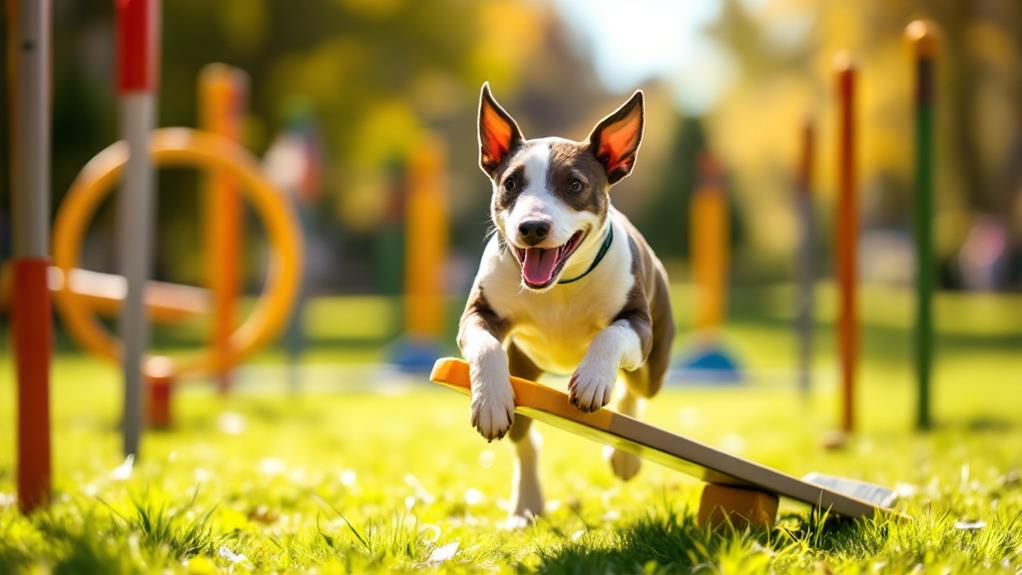
To complement their exercise and grooming routine, focusing on effective training strategies for your Miniature Bull Terrier is essential. Start by implementing positive reinforcement techniques. These dogs respond exceptionally well to rewards like praise, petting, and treats. Avoid punishment, as it can lead to more harm than good. Remember, consistency is key; practice commands regularly to cement obedience and strengthen your bond.
Early socialization is another important aspect of training. Introduce your Miniature Bull Terrier to diverse people, environments, and sounds early on. This exposure reduces anxiety and fosters adaptability, helping them grow into well-rounded companions. Keep training sessions short and engaging. Their playful nature means they can easily get distracted, so brief, focused sessions are more effective.
Incorporate mental stimulation into their routine to challenge their intelligence and keep boredom at bay. Interactive toys and puzzles are excellent tools to engage their minds and prevent mischievous behavior. Always make sure the activities are fun and varied to maintain their interest. By following these training tips, you'll nurture a well-behaved, happy, and confident Miniature Bull Terrier, ready to excel in any situation.
Ideal Living Environment
A Miniature Bull Terrier thrives best in an environment that caters to its dynamic nature and need for activity. You'll find that these dogs are perfect for active households where their high energy can be channeled positively. They need about an hour of daily exercise to maintain their health and prevent obesity. But don't worry if you live in an apartment; as long as they get enough physical and mental stimulation, they adapt well to different living spaces.
To provide an ideal living environment, consider the following:
- Daily Exercise: Confirm your Miniature Bull Terrier gets at least an hour of exercise each day to stay fit and healthy.
- Playful Nature: Provide interactive toys and engaging activities to channel their mischievous energy.
- Socialization: Introduce them early to diverse environments and people to help develop a well-rounded temperament.
- Garden Space: A small to medium-sized garden is ideal, offering them a safe area to play and investigate.
Special Care Needs
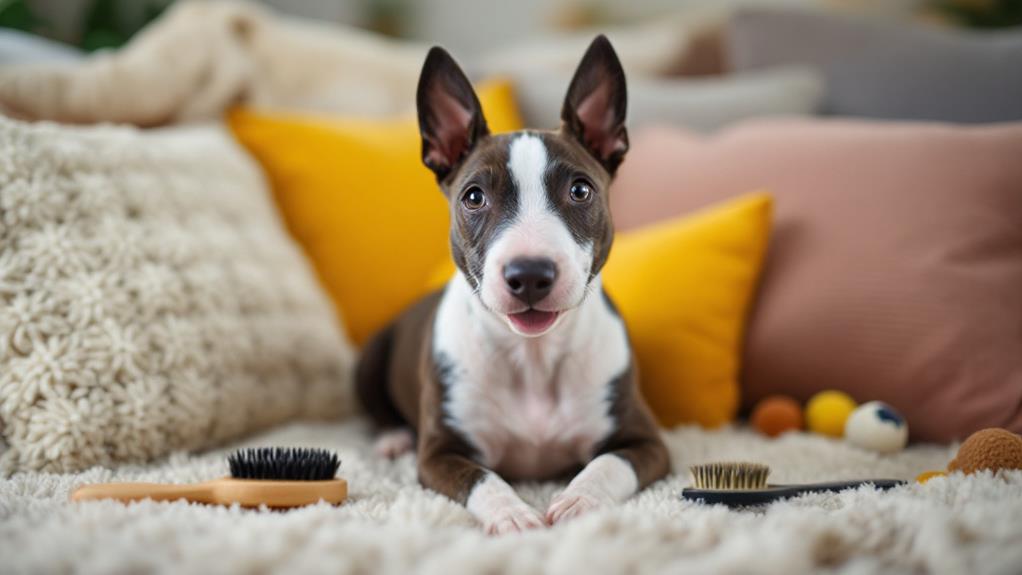
Caring for a Miniature Bull Terrier involves more than just meeting its basic needs. This healthy breed requires a special diet and regular vet check-ups to guarantee they thrive. Start by providing high-quality dog food appropriate for their stage of life and development, making certain they always have access to fresh water. This special diet will help maintain their energy and general health. Regular vet check-ups are vital, including annual kidney function tests and eye exams, to catch any potential health issues early on.
Exercise is another significant component of their care routine. Full-grown Miniature Bull Terriers need at least an hour of daily exercise to prevent obesity and keep them mentally stimulated. However, be cautious with puppies—limit their activity to prevent injury. Weekly grooming is also necessary. Brush their coat to manage moderate shedding, trim their nails regularly due to their fast growth, and give them occasional baths based on odor.
Lastly, focus on behavioral management. Their energetic and mischievous nature demands consistent training and mental stimulation. This helps prevent boredom-related mischief, making sure your Miniature Bull Terrier remains a well-adjusted companion. By addressing these special care needs, your dog will lead a happy, healthy life.