Is It Safe to Keep Small Spiders as Pets? Pros and Cons
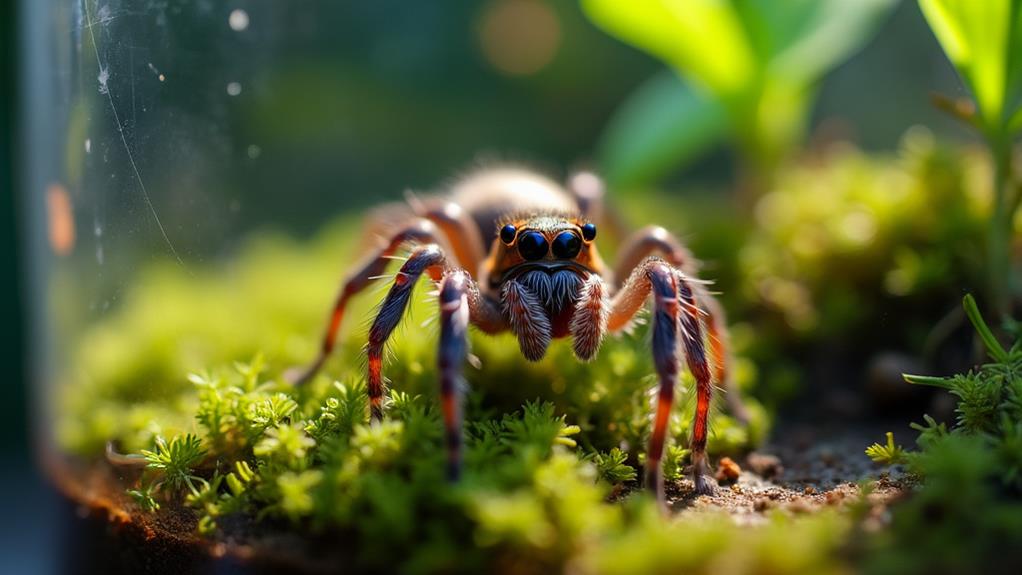
Keeping small spiders as pets is generally safe and comes with both pros and cons. You'll find them low maintenance, requiring minimal space and food, all while providing unique educational opportunities. However, you'll need to guarantee security since spiders can escape through small openings. Consistent monitoring of temperature and humidity is essential, and handling should be limited to minimize stress. While most spiders are harmless, some have venom that can cause mild reactions. It's significant to select species that are suitable for beginners, like Chilean rose tarantulas. Uncover more detailed considerations to make informed decisions on spider ownership.
Key Takeaways
- Spiders are low-maintenance pets, needing minimal care and space.
- Secure enclosures are essential to prevent spider escapes.
- Some species have venom; bites are painful but not typically dangerous.
- Spiders offer educational value through their unique behaviors.
- Handling is limited to ensure safety and reduce stress.
Benefits of Pet Spiders
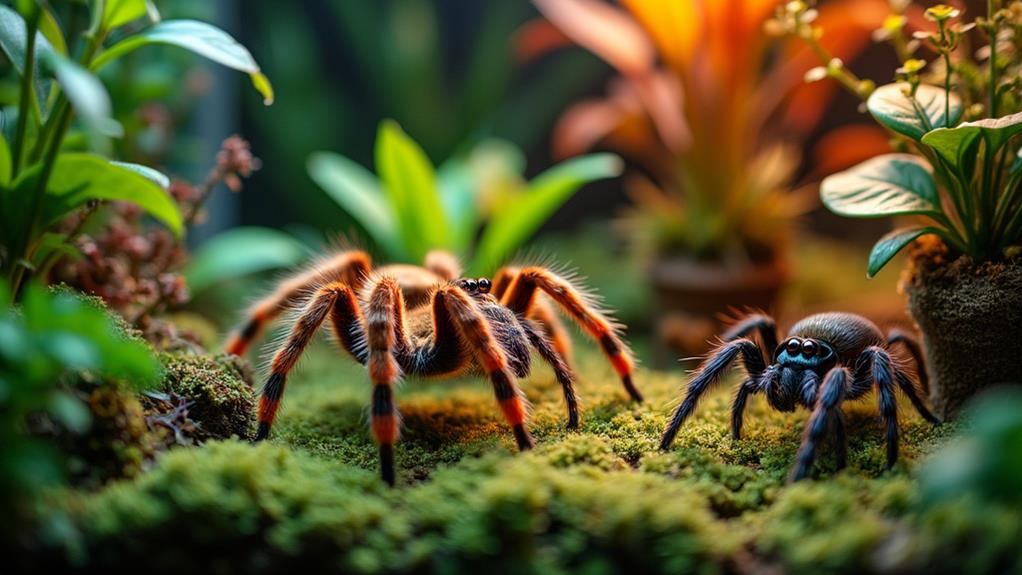
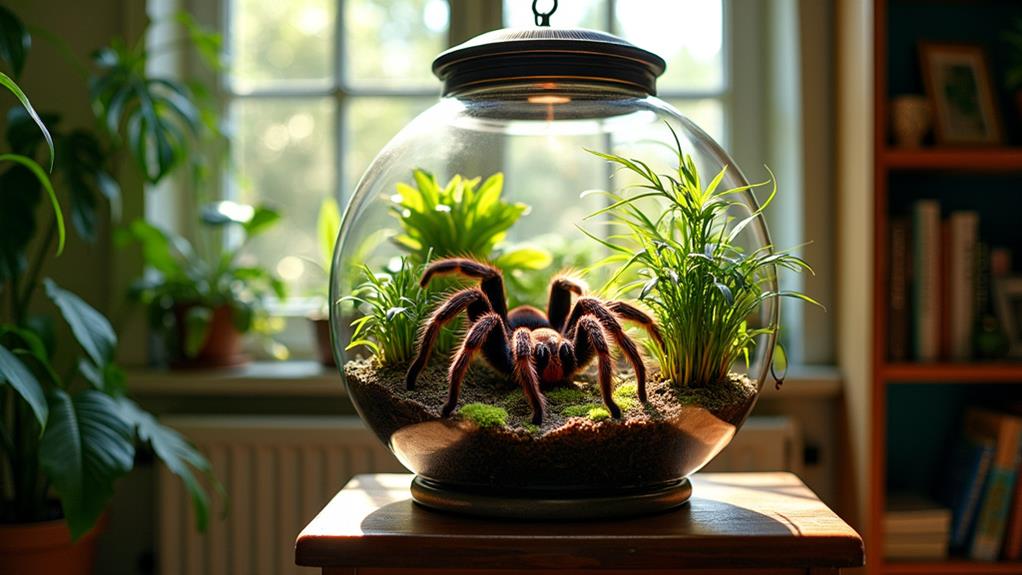
Considering a pet that's both low-maintenance and interesting? Pet spiders might just be the perfect choice for you. These intriguing creatures, such as tarantulas, require minimal care and thrive beautifully in small terrariums. This makes them an ideal option if you have limited living space. Their care routine is simple and budget-friendly, involving only the occasional feeding of 1-2 crickets per week and basic habitat maintenance. This keeps not just your costs low but also your time commitment manageable.
Owning pet spiders can also provide an engaging experience, as you observe their unique behaviors like web weaving and hunting techniques. It's an educational hobby that's both interesting and rewarding. Unlike traditional pets, spiders are quiet companions; they don't produce noise or create a mess, so your home remains serene and tidy.
Moreover, with some species boasting long lifespans—female tarantulas can live for 20-30 years—you can enjoy a long-term commitment that brings both stability and intrigue. So, if you're looking for a pet that offers an interesting blend of ease and engagement, pet spiders might just be the ideal match for your lifestyle.
Challenges of Spider Ownership
Owning small spiders can present a unique set of challenges that you should be prepared to manage. Initially, ensuring the spiders' safety requires secure enclosures since these creatures are experts at finding tiny openings. If they escape, it poses a risk not only to them but potentially to your household as well. Their specific habitat needs, like temperature and humidity control, add another layer of complexity. Keeping these conditions stable demands consistent monitoring, which can be time-consuming but is essential for their well-being.
Handling small spiders is another challenge. They're fragile, and mishandling can lead to stress or injury. Even a small drop can be harmful, so it's best to limit direct interaction. You also need to be cautious of the venom some species possess. Although usually not life-threatening, their bites can be painful, akin to bee stings, requiring careful handling to prevent incidents.
Choosing a Spider Species
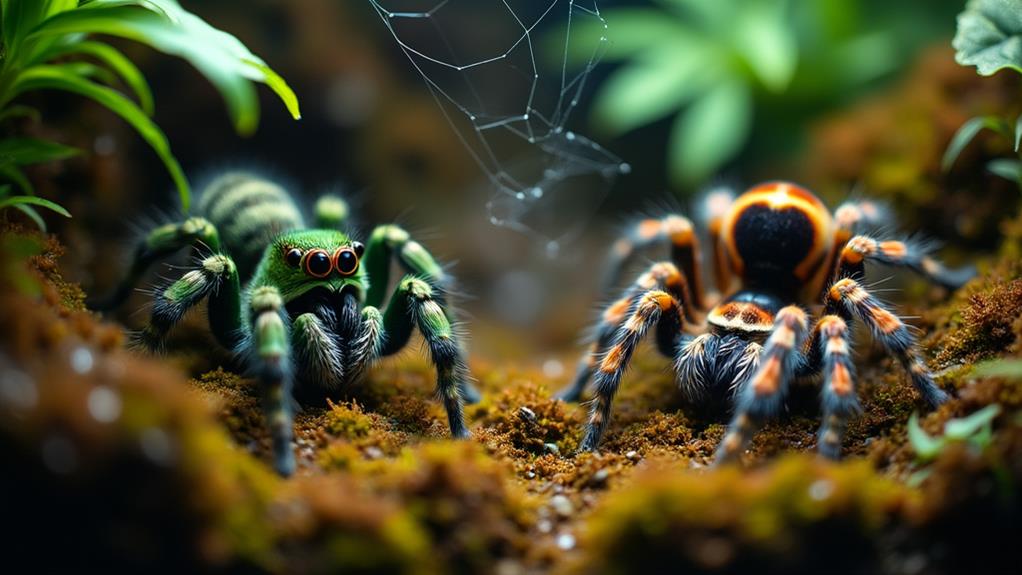
Selecting the right spider species is a critical step in guaranteeing a positive pet ownership experience. When you're choosing a spider species, consider beginner-friendly options like the Chilean rose and Mexican Redleg. These species are popular among tarantula owners for their low venom potency and docile temperaments, making them great choices if you're new to keeping spiders. However, keep in mind that each species has specific habitat and dietary needs. Research is key to understanding the humidity and temperature conditions your spider will require to thrive.
Additionally, consider the lifespan of your chosen species. Tarantulas can live between 20-30 years, but male tarantulas often have shorter lifespans, averaging about 5 years. This long-term commitment is one of the pros and cons you'll need to weigh.
Assess the potential risks of venomous species. Understanding a spider's temperament and defensive behaviors is important for safe ownership. Some species might be more prone to defensive actions, which can be intimidating for beginners. Finally, think about how your spider will interact with its environment. Some thrive in small terrariums, while others need space to construct webs or burrow. Choose wisely to guarantee a rewarding experience.
Habitat and Space Needs
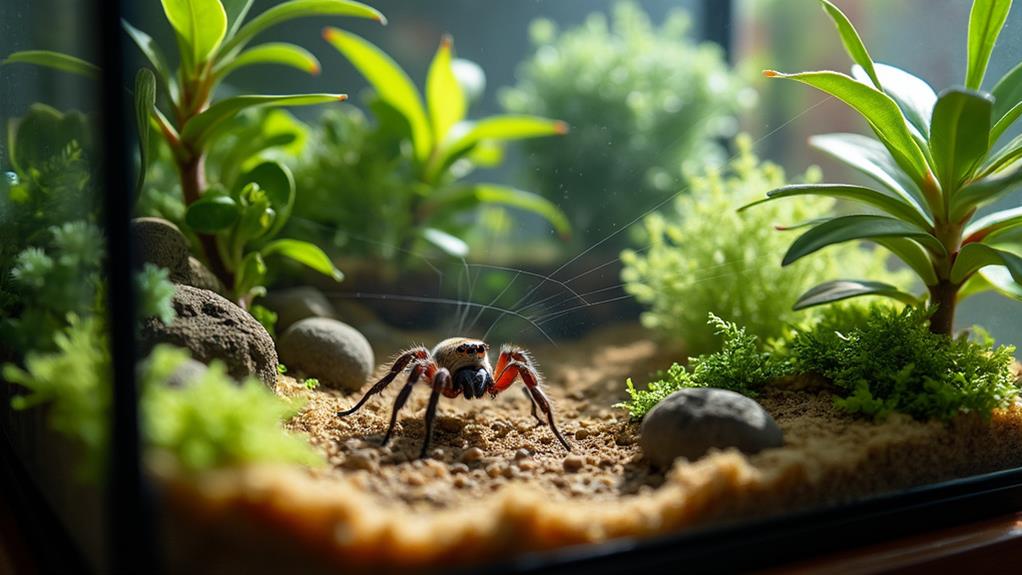
Creating a suitable habitat for your small spider is critical to its health and happiness. When setting up an enclosure, consider the specific needs of the species you've chosen. Most small spiders, like tarantulas, thrive in 5-10 gallon enclosures, making them perfect for small spaces like apartments or classrooms. A well-designed habitat should include proper substrates, hides, and adequate ventilation to mimic their natural environment.
Don't overlook the importance of maintaining the right heat and humidity levels, as many spider species have precise requirements. Regularly monitor these conditions to prevent stress or health issues. Investing in a small thermometer and hygrometer can help keep track of these important statistics.
Water is also necessary, and using a small water dish, such as a repurposed bottle cap, can guarantee your spider stays hydrated. This simple addition supports its complete well-being within the confined space.
Safety and Handling Tips
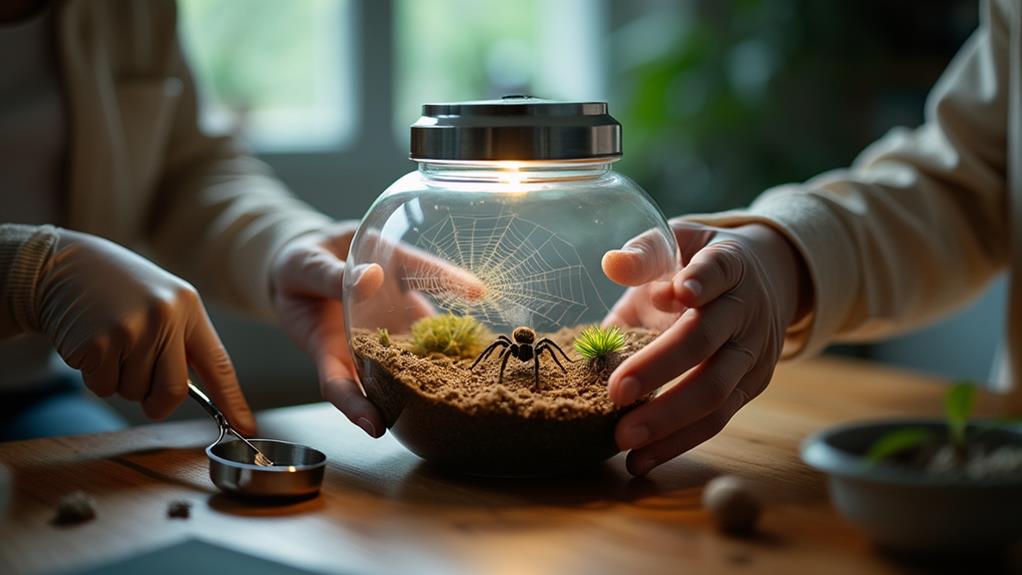
After confirming your spider's habitat meets its needs, focus on safety and handling practices to keep both you and your pet secure. Safety starts with a secure enclosure, as many small spiders are skilled escape artists. Check for gaps and verify all lids and doors close properly to prevent an unexpected adventure.
Handling your spider requires care. Experts advise against frequent handling as it can cause stress for these delicate creatures. Some species may become aggressive if disturbed too often. Use gloves or feeding tongs when interaction is necessary, minimizing direct contact and the risk of bites. This approach is particularly crucial for venomous species where a bite could have serious consequences.
Familiarize yourself with your spider's temperament and venom potency. Knowing the specific risks associated with your spider can help you manage safe handling practices. Limit interactions to vital care tasks to keep stress levels low.
Always have an emergency plan in place for potential bites. Know the symptoms and have access to medical assistance, especially if you're dealing with venomous species. By following these guidelines, you'll guarantee a safe and stress-free environment for both you and your small spider.
Legal and Ethical Considerations
When thinking about keeping a small spider as a pet, it's significant to initially reflect on the legal and ethical implications. Before acquiring your eight-legged friend, verify local laws and regulations. The legality of owning certain spider species can vary by region, and some may even be restricted or prohibited. This is especially vital for venomous animals, which might require special permits or licenses. Not only does this protect you legally, but it also guarantees you're acting as a responsible pet owner.
Ethically sourcing your spider is similarly significant. Avoid capturing wild spiders and instead look for captive-bred individuals. This approach supports conservation efforts and promotes responsible pet ownership. Here are some steps to reflect on:
- Check local laws and regulations to verify you can legally own the spider species you're interested in.
- Opt for captive-bred individuals to avoid impacting wild populations negatively.
- Research the specific care needs of your chosen species for responsible stewardship.
Common Misconceptions
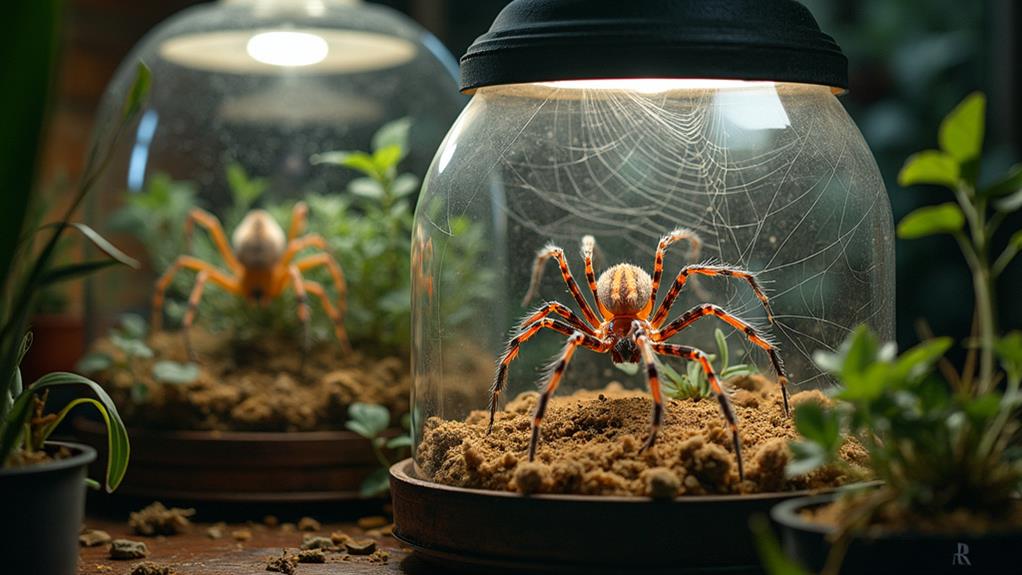
Having considered the legal and ethical aspects, it's essential to address common misconceptions about keeping spiders as pets. Many people see all spiders as dangerous, often due to misleading media portrayals. However, most pet species, like the Chilean rose tarantula, have low venom potency and are generally docile. The fear of spiders, known as arachnophobia, often leads to the belief that they're all harmful. In reality, many common pet spiders are safe and can even offer educational value.
You might worry about encountering highly venomous species, but the truth is, the majority of pet spiders pose minimal risk. With proper handling and adherence to care guidelines, potential dangers are greatly reduced. While spiders don't exhibit affection like dogs or cats, their unique behaviors and characteristics can captivate you and foster a sense of fascination and respect.
Another common misconception is that spiders demand extensive care. In fact, they are low maintenance pets. With minimal daily attention and simple habitat setups, they thrive remarkably well. Understanding these facts can help dispel fears and misconceptions, allowing you to appreciate these fascinating creatures for what they truly are.
Personal Suitability Assessment
Before you decide to bring a spider into your home, it's crucial to assess your personal suitability for this unique pet. Start by evaluating your comfort level with arachnids. If you have arachnophobia or feel uneasy around eight-legged creatures, owning a spider might not be the best choice. However, if you're open to the idea, consider starting with beginner-friendly spiders like the Chilean rose or Mexican Redleg, as these species have manageable temperament and care requirements.
Reflect on your commitment level and lifestyle. Spiders don't need daily interaction, but they do have specific environmental and dietary needs. You'll need to verify their terrarium is secure and meets habitat standards, so evaluate your living situation for space availability.
- Assess your comfort level with arachnids.
- Consider beginner-friendly spiders for manageable care.
- Reflect on your lifestyle and commitment level.
Lastly, think about the type of companionship you're seeking. Spiders aren't affectionate like cats or dogs, which might not suit everyone. If you're comfortable with a more observational pet, then a spider could be a fascinating enhancement to your home.