Is a Parrotlet a Good Pet Bird? Everything You Need to Know
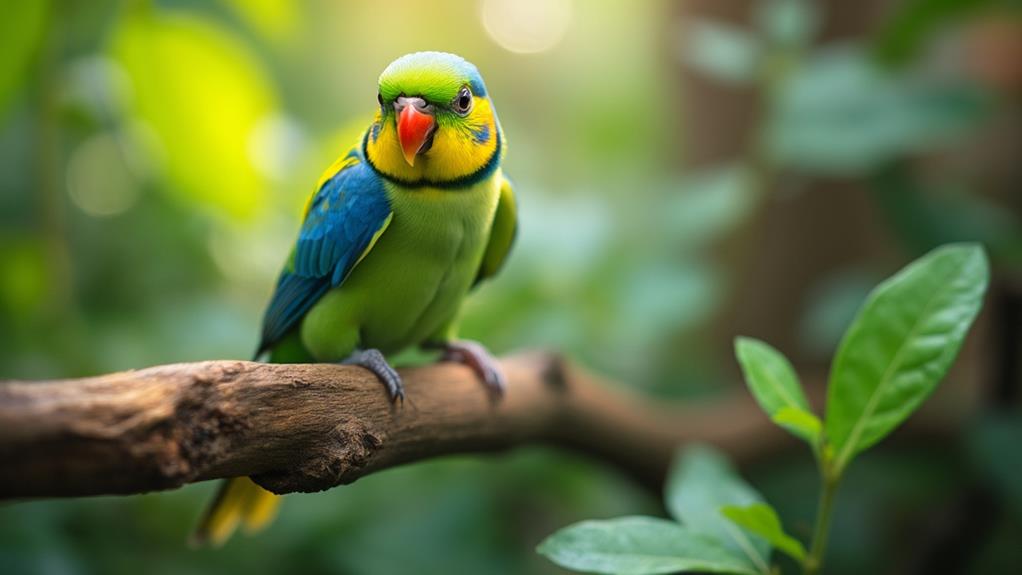
Parrotlets are fantastic pets if you're ready for a feisty and affectionate bird. They're highly intelligent and thrive on daily interaction, making them delightful companions capable of learning tricks and mimicking words. You'll need a spacious cage, engaging toys, and a balanced diet including pellets, seed mix, and fresh produce. Regular wing clipping and supervision are vital when they're exploring outside the cage. Keep in mind, they're a long-term commitment, living up to 20 years, with annual care costs around $300 CAD. Curious about how to best integrate one into your family? There's more you might be interested in.
Key Takeaways
- Parrotlets are intelligent, affectionate birds that form strong bonds with their owners.
- They require daily interaction and mental stimulation to maintain their well-being.
- Proper care includes a balanced diet, regular wing clipping, and supervised out-of-cage time.
- Initial setup and annual maintenance costs can be significant, requiring careful financial consideration.
- With a lifespan of 15-20 years, parrotlets demand a long-term commitment.
Parrotlet Personality and Traits
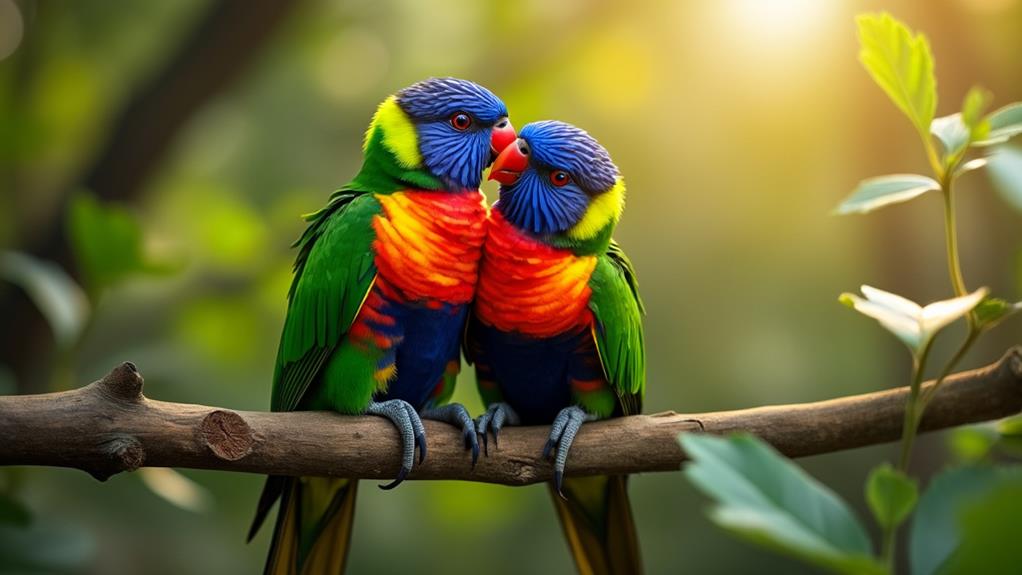
Parrotlet Personality and Traits: Parrotlets pack a punch with their feisty and sassy personalities, often surprising owners with their big character despite their small size. If you're considering these little birds as pets, you're in for a delightful experience. Pet parrotlets are highly intelligent and thrive on daily interaction, which is crucial for their mental well-being. You'll find that they're not just decorative creatures; they're engaging companions that can learn tricks and even mimic words and phrases. This intelligence means they require regular stimulation to prevent boredom and destructive behavior.
As you bond with your parrotlet, you'll notice their affectionate side. They can form strong connections with their owners, becoming incredibly social when properly raised. Keep in mind that these little birds have a playful nature and an active mindset, so it's important to provide them with toys and opportunities for social interaction. Their vocal nature contributes another layer of charm, and with patience, you might be surprised at the vocabulary they can develop. If you're ready to invest time and energy into understanding and engaging with them, parrotlets can be a rewarding enhancement to your life.
Care and Maintenance Essentials
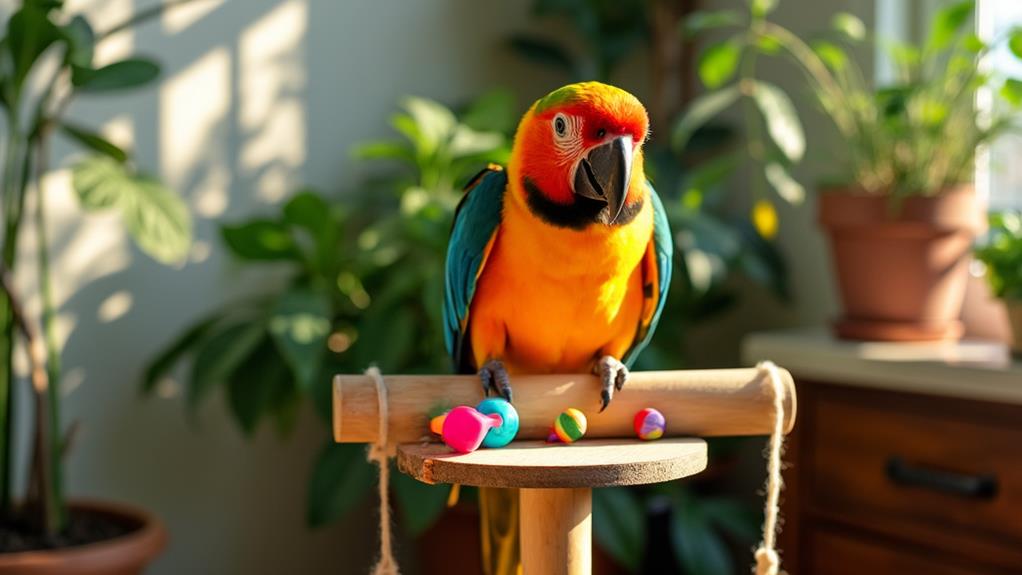
Caring for these charming birds involves attention to their living environment and dietary needs. Parrotlets make great pets, but to guarantee they thrive, you'll need to provide a spacious cage measuring at least 18 x 18 inches with bar spacing between 1/2 and 5/8 inches. This size guarantees they have enough room to move around comfortably. Inside the cage, include natural wood perches made from safe materials and a variety of toys to play with, which are vital for their physical activity and mental stimulation. This setup helps prevent boredom and reduces the risk of destructive behaviors.
Keeping your parrotlet safe involves regular wing clipping to prevent accidents. Since these little birds are naturally curious, it's vital to supervise them when they're outside their cage. Take precautions to avoid exposure to toxins, such as Teflon-coated cookware and harmful foods like chocolate and avocado. Furthermore, maintaining proper hygiene by replacing fresh food and water twice daily supports their health.
- Guarantee cage size and bar spacing are appropriate
- Include natural wood perches and toys for stimulation
- Regularly clip parrotlets' wings for safety
- Supervise them closely when outside the cage
Dietary Needs and Feeding
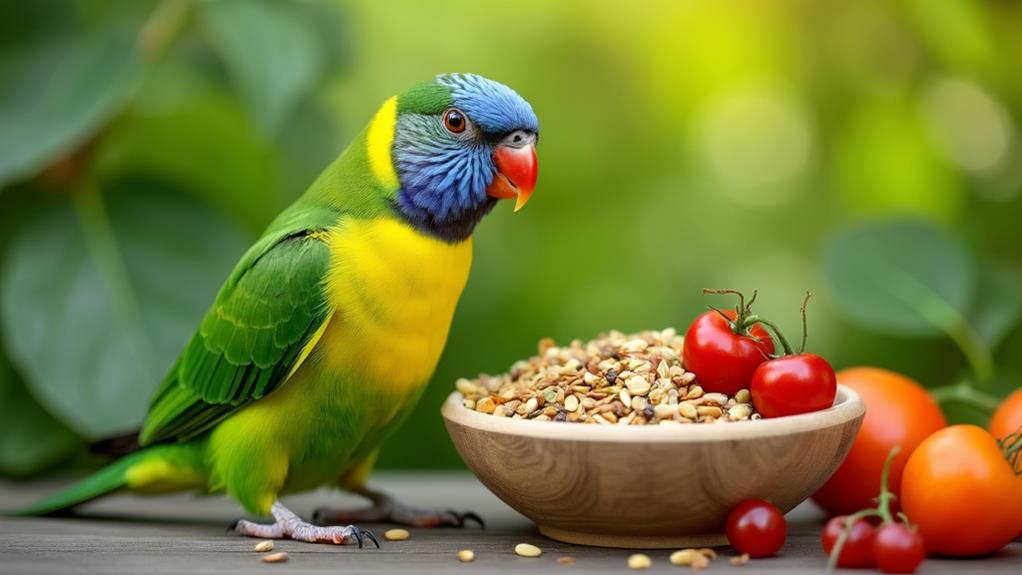
Now that you've set up a comfortable and safe environment for your parrotlet, let's focus on their dietary needs. A parrotlet's diet should be well-rounded to guarantee they thrive. Aim for a balanced diet consisting of 25-45% pellets, 15-25% low-fat seed mix, and 30-50% fresh produce. This combination provides crucial nutrients, supports their health, and prevents nutritional deficiencies.
Fresh fruits and vegetables like apples, carrots, and bananas are excellent choices, offering important vitamins and minerals. Always replace fresh food and water twice daily to avoid spoilage and contamination, keeping their feeding environment clean and safe.
Be cautious of toxic foods, such as chocolate and avocado, which can be harmful or even fatal to parrotlets. Furthermore, steer clear of harmful substances like Teflon-coated products in their vicinity, as these can release dangerous fumes when heated.
Monitor your parrotlet's food intake carefully. An uncontrolled diet can lead to obesity, affecting their general health and vitality. By managing their diet and avoiding toxic foods, you'll provide a nurturing environment for your feathered friend, guaranteeing they live a long, healthy life.
Housing and Enrichment
Creating a suitable living environment is vital for your parrotlet's well-being. Start with the right cage size; for a single parrotlet, an 18 x 18-inch cage with bar spacing between 1/2 to 5/8 inches is ideal to prevent escapes. This cage should provide ample space for flying and playing. Natural wood perches are a must for comfort and to prevent foot injuries, so skip the sandpaper covers since they can be harmful.
Mental stimulation is significant for your parrotlet's health. Incorporate a variety of toys like ropes, ladders, and chewables. Parrotlets love to climb, swing, and engage in interactive play, mimicking natural behaviors. To guarantee safety, regularly inspect these toys for wear and potential hazards.
Proper placement of the cage is also vital. Choose a draft-free, quiet area in your home. At night, cover the cage to create a restful environment, guaranteeing your bird gets at least 12 hours of darkness. This helps them relax and recharge.
- Cage size: Minimum 18 x 18 inches with proper bar spacing
- Perches: Natural wood recommended
- Mental stimulation: Use varied toys
- Darkness: Cover cage at night for restful sleep
Assessing Suitability and Costs
While guaranteeing a nurturing environment is vital, evaluating if a parrotlet suits your lifestyle and budget is just as significant. Parrotlets can live up to 15-20 years, so you're committing for a long time. Before deciding, confirm you're ready for the ongoing care and lifestyle adjustments this entails. The Humane Society advises that pet ownership requires serious consideration, not just enthusiasm.
Costs are a fundamental factor. Initially, you'll need several hundred dollars for a cage and supplies, with cages often over $200. Annual expenses, including food, toys, and veterinary care, typically reach around $300 CAD. Specialized avian veterinary care can be pricey, so it's wise to budget for health emergencies and routine check-ups.
Owning more than one parrotlet may seem appealing, but they need individual interaction. Housing them together could reduce their bond with you and lead to behavioral issues. Therefore, if you're considering more than one, be prepared for increased costs and time for interaction.
Ultimately, confirm you have both the financial resources and the time commitment before welcoming a parrotlet into your life. Thoughtful planning will guarantee a rewarding relationship with your feathered friend.