Is a Cockatoo the Right Pet Bird for You? Essential Considerations
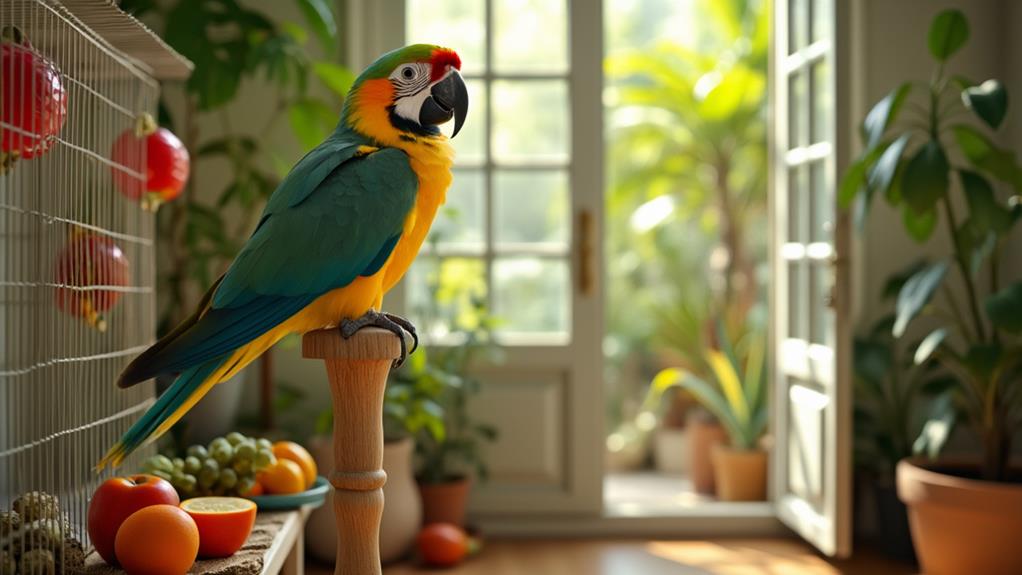
Considering a cockatoo as a pet requires understanding their profound social needs and behavior. They're known for forming strong bonds and need daily interaction to avoid issues like feather plucking and screaming. Expect to spend 3 to 5 hours each day with them. These birds thrive in spacious cages with toys to guarantee mental stimulation. Their diet should include breed-specific pellets and fresh produce. Cockatoos live long, often 40 to 80 years, needing committed, continuous care and financial planning. Success lies in building trust through play and involving family in their routines. Identify what else they need to thrive.
Key Takeaways
- Cockatoos require daily interaction, dedicating 3 to 5 hours, to meet their social and emotional needs.
- Long-term commitment is essential, as cockatoos can live up to 80 years.
- Spacious, durable cages and bird-proofed environments ensure safety and mental stimulation.
- A balanced diet with breed-specific pellets, fruits, and vegetables is crucial for health.
- Financial planning is necessary, with initial costs up to $3,000 and monthly expenses for care and supplies.
Understanding Cockatoo Behavior
Understanding cockatoo behavior is significant if you're considering one as a pet. These birds form strong attachments to their caregivers, so it's imperative you provide them with the love and attention they crave. Without proper interaction, they might exhibit behaviors like feather plucking or excessive screaming. To prevent this, engage them regularly with toys and activities that offer mental stimulation. A mentally stimulated cockatoo is a happy cockatoo, reducing the risk of destructive behaviors.
You'll also want to make certain your bird receives regular veterinary care. Routine check-ups are critical for catching any health issues early, which can affect both their physical and behavioral wellbeing. A healthy bird is more likely to have a stable temperament, making your bond stronger.
Building trust and respect is another key aspect of understanding cockatoo behavior. Interactive play and training sessions are excellent ways to strengthen your relationship. Remember, it's not just about cuddles but also about meaningful interactions. By investing time in understanding your bird, you'll foster a harmonious environment where your cockatoo feels secure and loved. This preparation guarantees you're ready for the responsibility of having such an intelligent companion in your life.
Social and Emotional Needs
Having a cockatoo means recognizing their complex social and emotional needs. These birds thrive on social interaction and require daily engagement to stay happy and healthy. Without sufficient interaction, cockatoos can develop behavioral issues like feather plucking and excessive screaming. They need companionship and mental stimulation to prevent such problems. Forming strong attachments to their caregivers, cockatoos can become jealous or aggressive if their emotional needs aren't met or if they aren't socialized with multiple family members.
To prevent stress and separation anxiety, it is crucial to establish a routine that includes playtime and bonding activities. Encouraging independence through exploration and interactive play helps them grow, as excessive cuddling can lead to inappropriate bonding behaviors in mature birds. Cockatoos benefit from proper socialization, which allows them to develop trust and respect with their owners, reducing the likelihood of behavioral issues arising from boredom or fear.
Time and Commitment
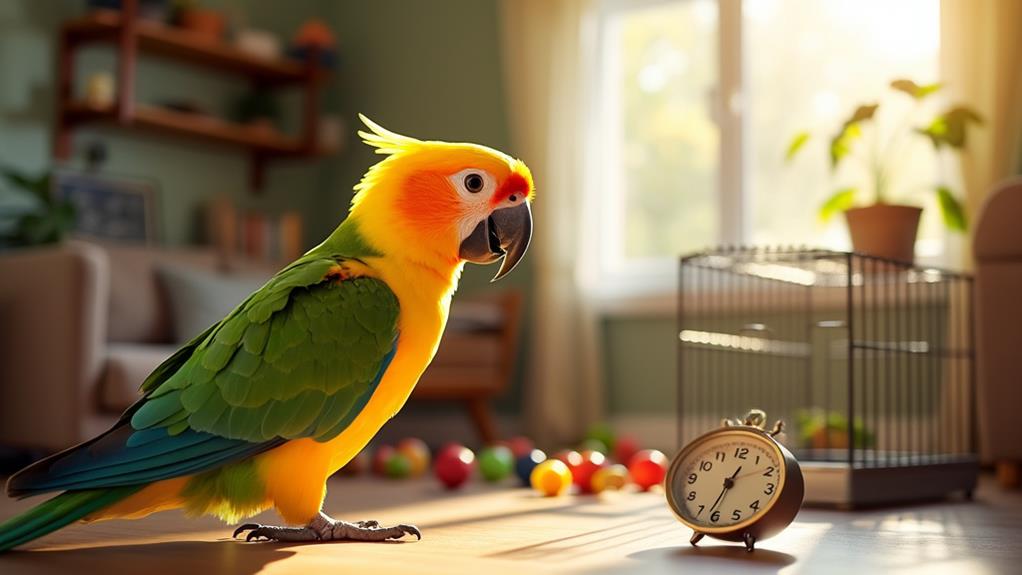
When considering a cockatoo as a pet, it is essential to recognize the substantial time and commitment required to keep these intelligent birds happy and healthy. Cockatoos demand a significant daily time investment, often needing 3 to 5 hours of social interaction and playtime. This commitment isn't just about keeping them entertained; it's imperative for their emotional and mental well-being. Without this interaction, cockatoos can develop behavioral problems like feather plucking, which results from stress and inadequate socialization.
These birds are highly social creatures and can suffer from separation anxiety if left alone too long. You'll need to guarantee that your schedule allows for regular companionship, not only from you but also from other family members. This kind of interaction helps to prevent behavioral issues and guarantees your cockatoo feels like an integrated part of the family.
With a lifespan of 40 to 80 years, owning a cockatoo means planning for long-term care, even considering their needs beyond your lifetime. This includes continually educating yourself about their complex needs, guaranteeing your feathered friend lives a healthy, happy life. Are you prepared for such a long-lasting time commitment?
Space and Housing Requirements
Providing the right space and housing for your cockatoo is vital for their health and happiness. As a pet bird owner, you'll need to guarantee their living environment meets specific space and housing requirements. Cockatoos require sturdy, spacious cages to facilitate climbing and exercise. For larger breeds, a minimum cage size of 24" x 36" x 48" is recommended. A parrot-specific cage is critical for durability since cockatoos have strong beaks that might damage weaker materials. Here are some key considerations:
- Cage Size and Durability: Opt for a spacious, parrot-specific cage to provide ample room for movement and withstand the cockatoo's strong beak.
- Enrichment: Incorporate hanging toys, puzzles, and destructible items inside the cage to keep your cockatoo mentally stimulated and prevent boredom.
- Exploration Area: Beyond the cage, create a safe play area for your cockatoo to investigate. This benefits their physical health and mental well-being.
- Bird-Proofing: Safeguard your home by bird-proofing it to prevent accidents. Keep windows closed, remove toxic plants, and hide electrical cords, as cockatoos are naturally curious.
Following these guidelines guarantees your cockatoo thrives under proper aviary care.
Diet and Nutrition Essentials
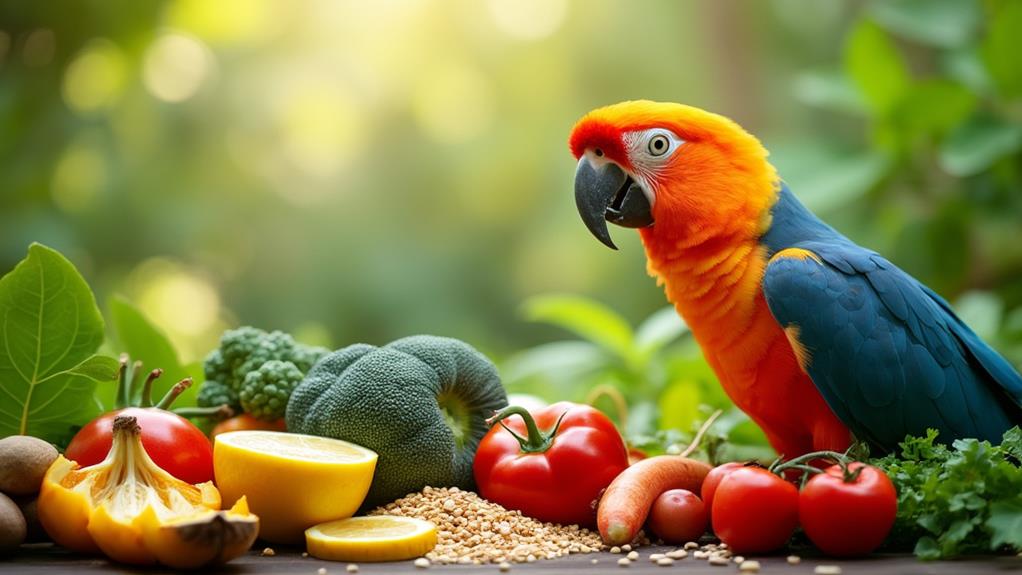
As you guarantee your cockatoo's living space is safe and enriching, it's important to focus on their diet and nutrition to keep them healthy and happy. A well-balanced diet primarily involves breed-specific pellets formulated for parrots, which provide the necessary nutrition for your cockatoo's general health. These pellets should be the core of their diet, making sure they receive all important nutrients.
Alongside pellets, offer fresh fruits and vegetables daily. Including options like romaine, kale, and bananas guarantees your feathered friend gets essential vitamins and minerals. Remember, occasional treats, such as cooked plain pasta, can be a delightful bonus, but shouldn't replace their staple diet. Cockatoos also thrive on foraging opportunities; provide nuts in their shells to encourage natural behaviors and prevent boredom.
A varied diet is critical for your cockatoo's long-term health and longevity. Poor nutrition can lead to serious health issues, emphasizing the importance of regular veterinary care. Your vet can help tailor a diet plan specific to your cockatoo's needs, making sure they're not only thriving but also enjoying a fulfilling life. By prioritizing their dietary needs, you help secure a lively and healthy future for your pet.
Health and Safety Precautions
Guaranteeing your cockatoo's health and safety requires attention to several key precautions. Initially, be aware of heat stress, especially in the summer. Cockatoos can suffer in high temperatures, showing symptoms like panting, lethargy, and fluffed feathers. To prevent this, make certain they have plenty of shade and fresh water.
Next, consider your cockatoo's environment. A safe, secure, and spacious cage is vital. Parrot-specific cages are recommended for their durability and ability to prevent escapes. Your bird's safety depends on a well-constructed habitat.
Bird-proofing your home is another significant step. Remove potential hazards to keep your feathered friend safe:
- Toxic Plants: Eliminate any plants that could harm your cockatoo if ingested.
- Open Windows: Make certain windows are closed or securely screened to prevent accidental escapes.
- Unsafe Electrical Cords: Cover or hide cords to prevent chewing accidents.
- Regular Check-ups: Schedule visits with an avian veterinarian to monitor your bird's health and nutrition.
Common Behavioral Challenges
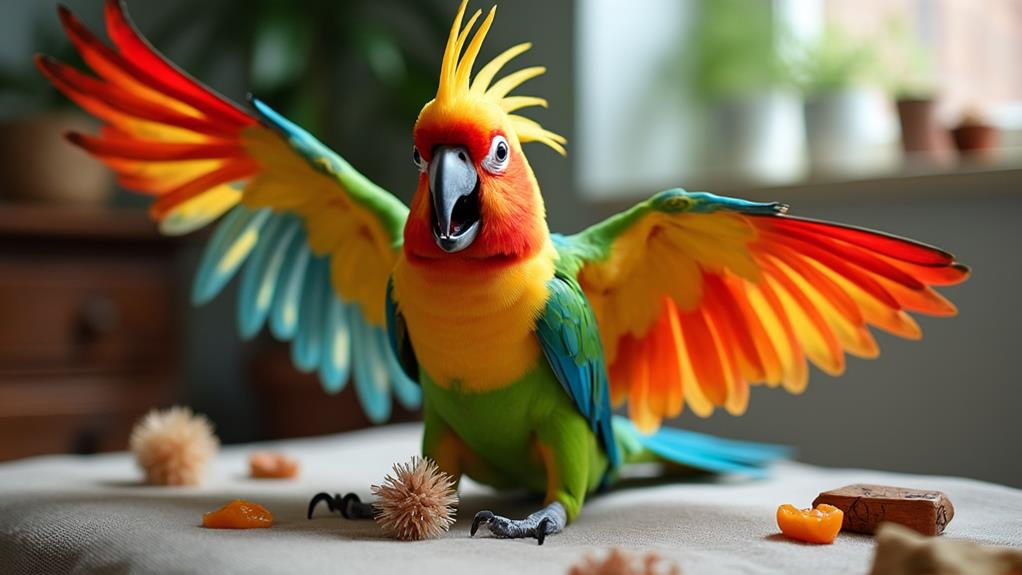
Having secured your cockatoo's health and safety, it is crucial to address their behavioral challenges. Cockatoos are known for their lively personalities, but they can also present behavioral issues like feather plucking. This behavior often arises from stress, boredom, or fear when their emotional needs aren't met. Providing mental stimulation through engaging toys can greatly reduce such behaviors, keeping your feathered friend content and entertained.
Excessive screaming is another common issue. Cockatoos are highly vocal and require ample social interaction. When they don't get enough attention, they may resort to loud vocalizations to express their needs. To mitigate this, make certain your cockatoo receives plenty of interaction and attention throughout the day, helping them feel secure and appreciated.
Aggression might develop if your cockatoo forms a strong attachment to one person, leading to jealousy or territorial behavior. To address this, encourage social interaction with different family members and use positive reinforcement techniques to promote desirable behaviors. These methods not only address behavioral issues but also strengthen the bond between you and your cockatoo, guaranteeing a harmonious living environment. By understanding and addressing these challenges, you'll foster a healthy and happy relationship with your cockatoo.
Bonding and Socialization Tips
Building a strong bond with your cockatoo is vital for a happy and harmonious relationship. Cockatoos thrive on social interaction, so daily engagement through play, training, and verbal communication is fundamental. To foster a deep connection, consider these tips:
- Use Positive Reinforcement: During training sessions, employ positive reinforcement techniques. Reward your cockatoo with treats or praise when they follow commands. This approach boosts trust and respect, laying the foundation for a solid bond.
- Encourage Independence: Provide a variety of toys and enrichment activities. Allow your cockatoo to investigate and play independently, which fosters healthy socialization skills. This independence can prevent dependency issues and promote a balanced relationship.
- Limit Cuddling: While cockatoos enjoy physical affection, excessive cuddling with mature birds can lead to inappropriate bonding behaviors. Instead, focus on interactive play that maintains a healthy balance in your relationship.
- Involve Family Members: Socialize your cockatoo with multiple family members to prevent jealousy or aggression. Encourage everyone to participate in care and playtime, creating a well-rounded social environment that benefits both your bird and your family.
Cost of Ownership
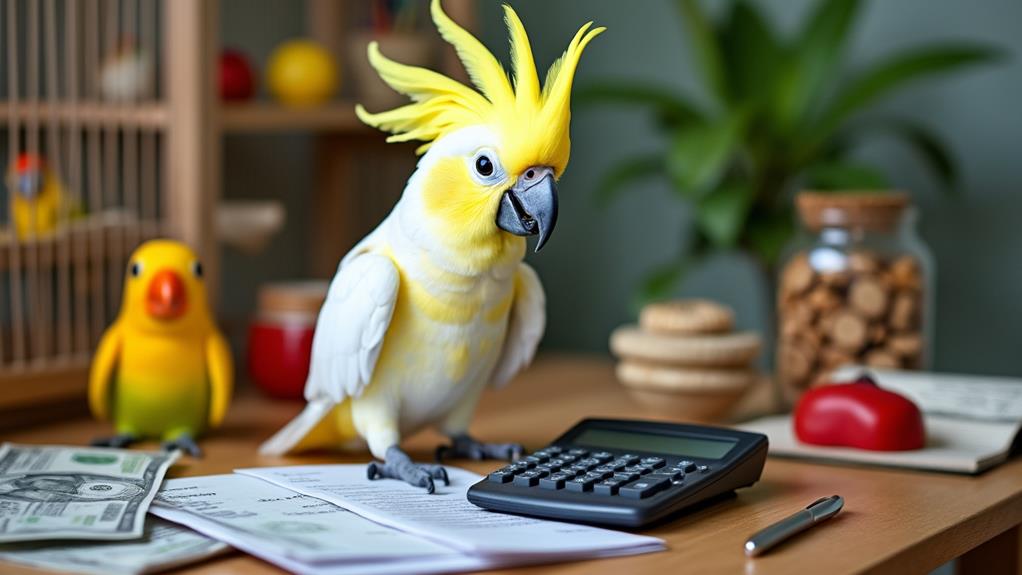
As you build a meaningful connection with your cockatoo, it's vital to contemplate the financial responsibilities that come with pet ownership. The cost of ownership starts with initial expenses ranging from $1,000 to $3,000. This includes the bird's purchase price, a sturdy cage, and necessary supplies like food and toys. But it doesn't stop there. You must also consider the monthly cost of a nutritious diet, which can set you back $50 to $100. A balanced diet should include breed-specific pellets, fresh fruits, and vegetables.
Routine veterinary care is another significant aspect, costing between $100 and $300 annually for check-ups and vaccinations. Emergencies could inflate these costs, so having a financial cushion is wise. Long-term expenses also encompass ongoing supplies such as toys and enrichment items, ranging from $20 to $50 monthly. Don't forget potential repairs due to wear and tear.
Given a cockatoo's lifespan of 40 to 80 years, you're signing up for considerable long-term financial commitments. It's important to plan beyond just the initial adoption costs, ensuring you're ready for the lifelong adventure of caring for your feathered friend.