Is a Budgerigar (Budgie) the Right Pet Bird for You?
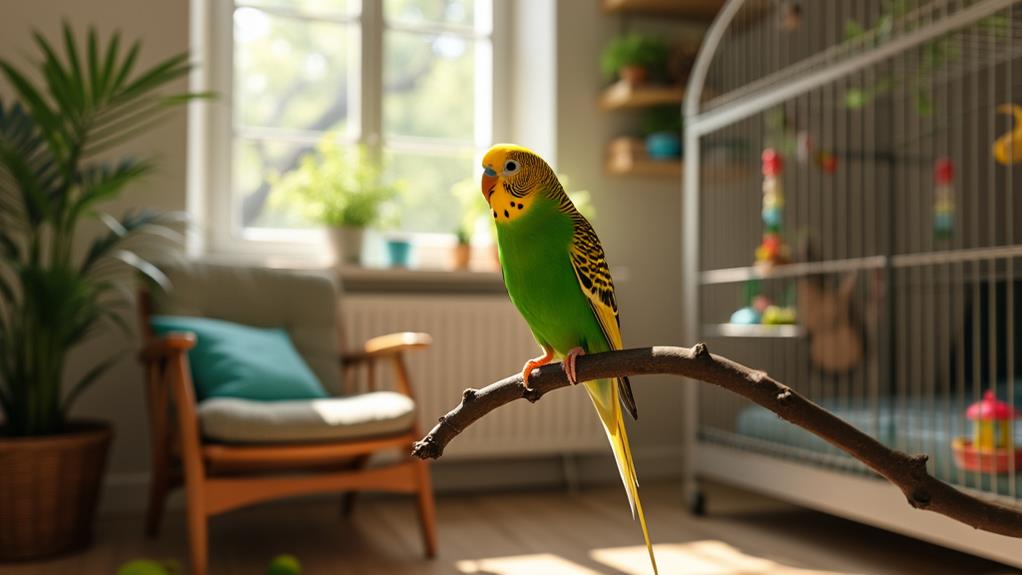
If you're considering a Budgerigar, or budgie, as a pet, they offer lively colors, engaging personalities, and the ability to mimic sounds - even human speech. These small, social birds thrive on interaction, needing both attention and a stimulating environment. A proper setup includes a spacious cage, a balanced diet of pellets, fruits, and veggies, and toys for mental stimulation. Regular vet visits and a clean habitat are crucial for their health. With a lifespan of 7 to 15 years, they require a long-term commitment and daily interaction. Uncover more about if budgies fit into your lifestyle and home.
Key Takeaways
- Budgies are social birds that require daily interaction and companionship to thrive.
- They have captivating colorful plumage and charming personalities that many find appealing.
- Budgies can mimic human speech, providing entertainment and engagement for owners.
- A balanced diet of pellets, fruits, and vegetables is essential for their health.
- With a lifespan of 7 to 15 years, budgies require long-term commitment and care.
Budgie Characteristics
Budgerigars, or budgies, are delightful small parrots that captivate with their lively colors and playful nature. These charming birds, measuring about 7 to 8 inches, make excellent companions due to their social nature. They thrive on interaction and companionship, making them perfect pets if you can engage with them regularly. Budgies are not just pretty faces; they're also known for their impressive ability to mimic sounds, including human speech. With a bit of patience and practice, your budgie might surprise you with a few words, often speaking with clarity that rivals larger parrots.
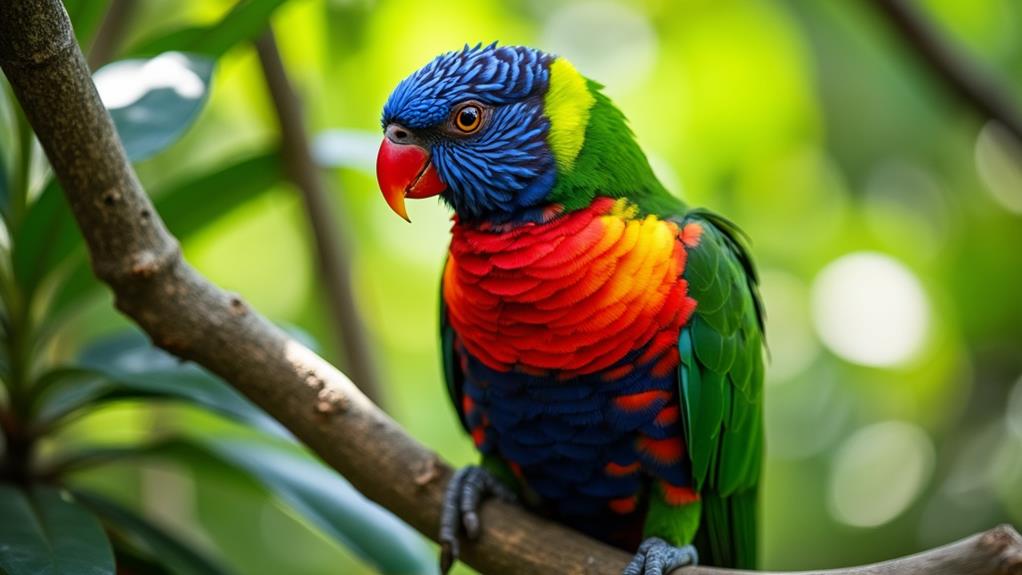
The dynamic colors of budgies are an attraction in themselves. While natural colorations mainly showcase a striking combination of yellow and green, numerous color mutations are available, adding to their appeal. When considering a budgie, keep in mind that proper care is essential. With the right environment, balanced diet, and regular veterinary check-ups, these social creatures can enjoy an average lifespan of 7 to 15 years. If you're looking for a cheerful, interactive pet with a touch of vocal talent, a budgie might just be the perfect companion for you. They promise to bring color and joy into your life.
Care and Maintenance
Guaranteeing your budgie's well-being starts with providing a spacious cage equipped with suitable perches and engaging toys. Budgies need plenty of room to move around, stretch their wings, and stay active. Keeping the cage clean is vital for their health, so make it a habit to regularly remove waste and replace bedding. A sanitary environment reduces the risk of disease and keeps your feathered friend happy.
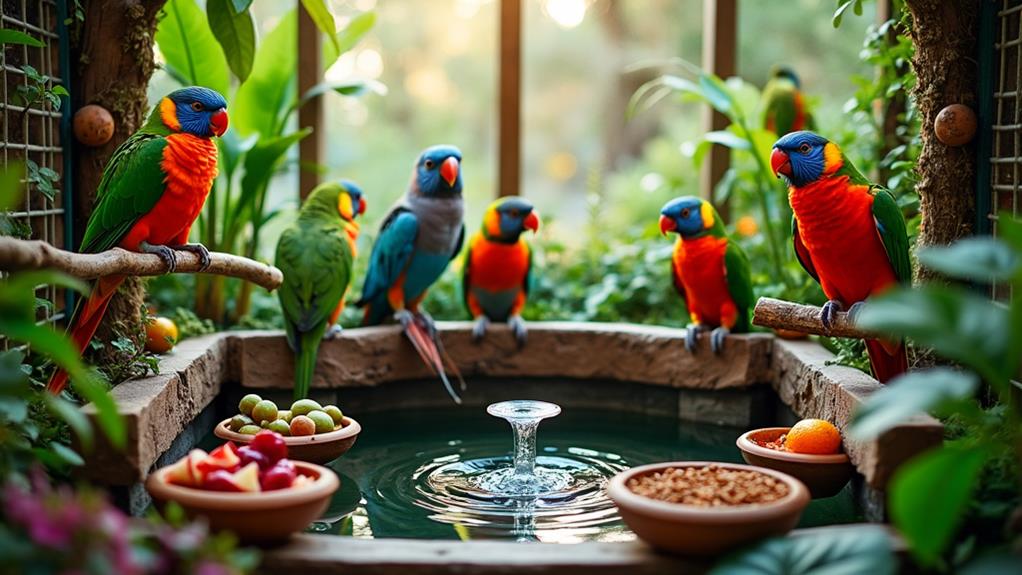
A balanced diet is fundamental for your budgie's health. Incorporate formulated pellets, fresh fruits, and vegetables into their meals, offering seeds sparingly. Fresh water must be available at all times to keep them hydrated. Don't forget regular veterinary check-ups to monitor their general health and address any concerns promptly.
Daily interaction is key to a budgie's happiness. They thrive on love and attention, so make time each day to engage with them, regardless of whether it's through talking, hand-feeding, or play. This interaction helps prevent boredom and related behavioral issues. While it's significant to think about their social needs, your direct involvement plays a major role in their well-being. By providing proper care, you'll guarantee your budgie enjoys a healthy, fulfilling life.
Social Needs
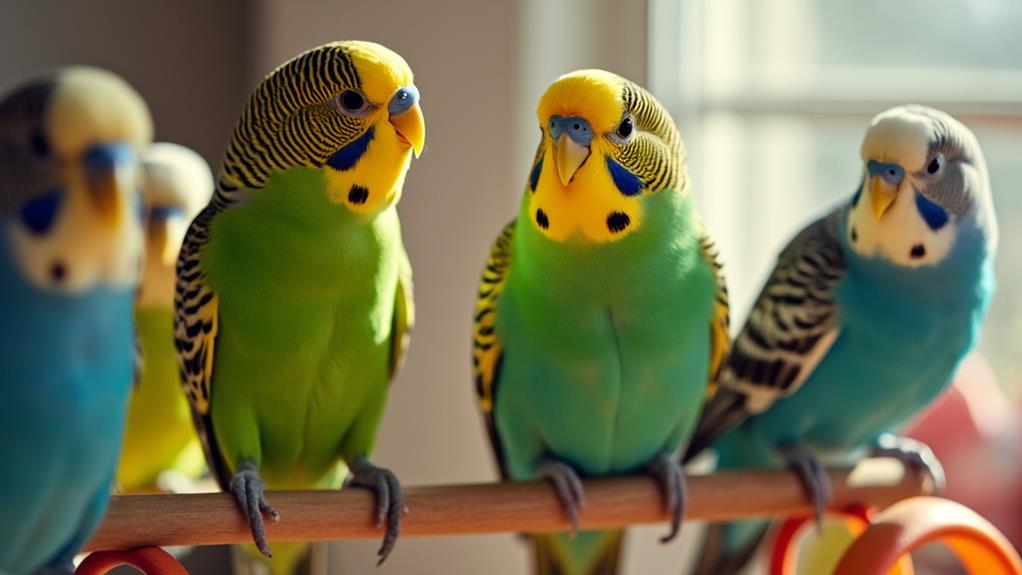
Often, budgies thrive on companionship, making it crucial to address their social needs. These birds are naturally social creatures, enjoying the company of others, regardless of whether it's fellow budgies or human companions. As pets, they require regular interaction to maintain their emotional well-being. Without this, solitary budgies might experience loneliness, leading to depression and other behavioral issues. Keeping them in pairs or groups can greatly improve their happiness and general health.
Daily socialization should be a priority for their happiness. When you engage with your budgie, you're not just providing companionship but also enriching their lives with meaningful interaction. Budgies form strong bonds with their owners, and regular playtime can strengthen these connections. This interaction is not only beneficial for their mental health but also for their physical well-being.
Initially, when introducing a budgie to a new environment or companion, gradual socialization is key. This helps reduce stress and allows them to adjust more comfortably. By understanding and fulfilling their social needs, you guarantee your budgie's life is filled with joy and contentment. Remember, a happy budgie is an indication of the companionship and care you provide as a responsible pet owner.
Training and Interaction
Meeting the social needs of your budgie naturally leads to another significant aspect: training and interaction. Budgerigars are intelligent birds that thrive on mental stimulation and companionship, making training a vital part of their care. As social creatures, they love learning tricks and can even mimic speech, providing endless entertainment if you dedicate time to interact with them.
Positive reinforcement is a powerful tool in your training arsenal. Your budgie will respond well to praise and rewards, allowing you to teach them everything from simple commands to more complex tricks. Make sure to spend about an hour daily interacting with your budgie to keep their mind sharp and nurture your bond.
It's important to pay attention to your budgie's body language during these sessions. By understanding their cues, you can communicate more effectively, ensuring your budgie feels comfortable and engaged. Since budgies flourish in pairs or small groups, incorporating more than one bird in your training sessions can improve social interaction and companionship.
Ultimately, regular training and interaction will lead to a happy, well-adjusted budgie, strengthening the connection between you and your feathered friend while providing vital mental stimulation.
Health Considerations

Caring for a budgerigar's health involves several key considerations to keep your feathered friend thriving. Paying attention to their well-being guarantees they lead a long, happy life. Initially and foremost, regular veterinary check-ups are vital. Budgies can be prone to respiratory issues and other ailments, so routine visits to the vet help catch any problems early.
To support your budgie's long-term health, a balanced diet is fundamental. They need more than just seeds, which should be a small part of their diet to prevent obesity. Instead, focus on a diet rich in pellets and fresh fruits and vegetables. This variety not only keeps them healthy but also engaged.
Equally significant is maintaining a clean environment. Fresh water daily and a tidy cage prevent diseases and guarantee their holistic well-being. Keep harmful foods like chocolate, caffeine, and alcohol out of reach to avoid toxicity.
Here's a quick checklist to keep your budgie healthy:
- Regular veterinary check-ups: Catch health issues early.
- Balanced diet: Include pellets, fresh fruits, and vegetables.
- Clean environment: Daily cleaning and fresh water to prevent diseases.
Choosing a Budgie
When reflecting on incorporating a budgerigar into your home, their colorful plumage and charming personalities are sure to captivate you. Budgies, being small, affectionate birds, make wonderful companion birds for both individuals and families. Before you choose the bird, there are a few significant things to know. Initially, contemplate your lifestyle. Budgies are social creatures and thrive when they're getting plenty of attention. They make good pets when kept in pairs, as this prevents loneliness and guarantees they have a constant companion.
Another factor to think about when getting a budgie is their diet. While they're relatively low-maintenance, you must provide a balanced diet that includes pellets, fresh fruits, and vegetables. Seeds should only be a small part of their diet. Budgies also require regular social interaction and mental stimulation. They're known for their communication skills, often mimicking human speech, which can be an entertaining aspect of their personality.
Lastly, keep in mind that budgies can live between 7 to 15 years with proper care. This long-term commitment requires time for toys, playtime, and interaction to keep them happy and healthy. Choose wisely, and your budgie will be a delightful enhancement to your home.